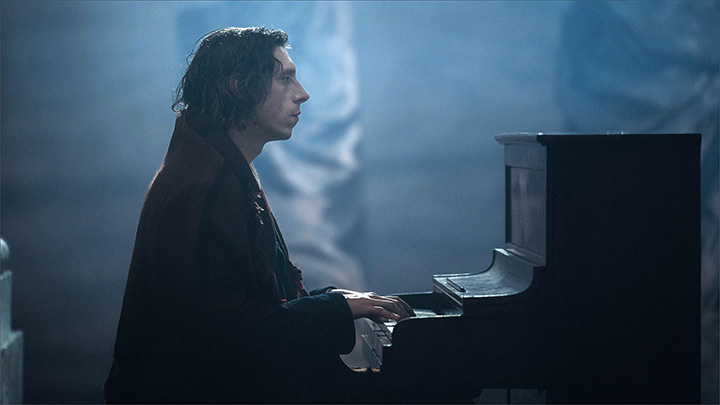
Idan Weiss jako Franz Kafka w filmie Agnieszki Holland, fot. Marlene Film Production
Franz Kafka. Nazwisko, które stało się przymiotnikiem. Kafkowski świat oznacza świat absurdalny, mroczny, bez wyjścia. Biurokratyczne labirynty, w których człowiek mierzy się z niewidzialną władzą, winą bez przyczyny, losem bez uzasadnienia. Ale Kafka, choć tak mocno obecny w wyobraźni zbiorowej XX i XXI wieku, był pisarzem zaskakująco intymnym, wręcz cichym. Pisał głównie nocą, w samotności, w przerwach od pracy urzędniczej w Towarzystwie Ubezpieczeniowym w Pradze. Chciał swoje dzieła zniszczyć. Nie przypuszczał, że jego głos zostanie jednym z najważniejszych w historii literatury.
Dziś Kafka należy do kanonu światowej kultury — jednak nie dzięki hałaśliwej wielkości, lecz poprzez pulsujący podskórny niepokój, który uchwycił z niezwykłą intuicją.
Człowiek pod presją istnienia
Franz Kafka urodził się w 1883 roku w wielokulturowej Pradze – w mieście, w którym przenikały się języki i kultury: niemiecka, czeska i żydowska. Sam pisał po niemiecku, choć dorastał w środowisku czeskim, co już od początku ustawiło go na granicy tożsamości, miejsca i przynależności. Ta niemożność pełnego zakorzenienia, wewnętrzne rozdarcie i nieustanne poczucie obcości stanie się później kluczowym tonem jego twórczości.
Jego relacja z ojcem — surowym, dominującym, pełnym oczekiwań kupcem Hermanem Kafką — była źródłem cierpienia i inspiracją do jednego z najważniejszych tekstów pisarza, Listu do ojca. W nim pojawia się dramat jednostki stłamszonej, która nie potrafi znaleźć głosu wobec siły — motyw przewodni całej jego prozy.
Kafka to pisarz egzystencjalnego lęku — ale lęku przetworzonego w sztukę, w słowa precyzyjne, chłodne, niemal chirurgiczne.
Idan Weiss jako Franz Kafka w filmie Agnieszki Holland, fot. Marlene Film Production
Światy, z których nie ma wyjścia
Choć jego dorobek nie jest objętościowo imponujący, każde dzieło stało się punktem odniesienia dla kolejnych pokoleń czytelników, filozofów, artystów.
Najważniejsze powiesci Kafki to:
„Proces” (1925) – historia Józefa K., który zostaje postawiony w stan oskarżenia bez wyjaśnienia winy. Wielopiętrowa metafora biurokracji, alienacji i bezradności wobec systemu.
„Zamek” (1926) – opowieść o człowieku próbującym uzyskać dostęp do tajemniczej władzy — zamku, do którego drzwi nigdy się nie otwierają.
„Ameryka” (1927) – wizja Nowego Świata jako miejsca chaosu i utraty kontroli.
Do tego liczne opowiadania, m.in. „Przemiana”, „Kolonia karna”, „Głodomór”, „Wyrok”, „Lekarz wiejski”, które dopełniają jego panoramę samotności, strachu i absurdu codzienności.
Kafka pisał prozą klarowną, niemal ascetyczną. Jego zdania są gęste od znaczeń, lecz pozbawione ornamentu. W tej surowości tkwi siła – odarta z ozdobników forma pozwala czytelnikowi zobaczyć sedno: bezbronnego człowieka wobec świata, którego nie rozumie.
Idan Weiss jako Franz Kafka w filmie Agnieszki Holland, fot. Marlene Film Production
Kultura XX i XXI wieku w cieniu Kafki
Kafka nie publikował wiele za życia. Jego dzieła miały zostać spalone zgodnie z testamentem. Uratował je przyjaciel, Max Brod — wbrew woli autora. To jedna z największych paradoksalnych „zdrad” w historii literatury, dzięki której świat poznał twórczość praskiego wizjonera.
Dziś wpływ Kafki jest niepodważalny. W literaturze — od Alberta Camusa po José Saramago. W filozofii — od egzystencjalizmu po prace Hannah Arendt o totalitaryzmie. W kulturze masowej — w filmie, teatrze, grafice, a nawet współczesnych grach komputerowych.
Najbardziej niezwykłe jest jednak to, jak kafkowskie stały się nasze czasy:
Systemy biurokratyczne, w których zderzenie z „regulaminem” staje się metafizycznym doświadczeniem.
Społeczne poczucie winy i kontroli — od mediów po kontrolowanie nas przez systemy cyfrowe.
Trudności z odnalezieniem swojej tożsamości w epoce migracji i cyfrowego życia.
Lęk przed światem pozornie racjonalnym, który niesie absurd i bezradność.
Kafka nie opisuje przeszłości — on diagnozuje teraźniejszość.
Idan Weiss jako Franz Kafka w filmie Agnieszki Holland, fot. Marlene Film Production
Dlaczego Franz Kafka jest aktualny do dziś?
Bo Kafka nie dawał odpowiedzi. Dawał pytania, które nadal są z nami:
Co oznacza być człowiekiem w świecie, którego nie da się w pełni zrozumieć?
Czy wina może istnieć bez winy?
Czy jesteśmy wolni — czy tylko wydaje nam się, że jesteśmy?
Jego bohaterowie — bez imion lub z inicjałem, w wiecznym stanie oczekiwania — to my. Mieszkańcy świata, który wymaga od nas zrozumienia zasad, których nie rozumiemy.
Franz Kafka zmarł w 1924 roku, w wieku zaledwie 40 lat. Milczący geniusz, który nie wierzył w swój własny głos. A jednak ten głos rozbrzmiewa do dziś — w każdym pytaniu o sens, w każdym zetknięciu z systemem silniejszym niż jednostka, w każdym ludzkim strachu przed nieskończonym.
Oprac. Joanna Sokołowska-Gwizdka
20. Festiwal Polskich Filmów w Austin, Teksas
W ramach 20. Festiwalu Polskich Filmów w Austin, będzie można zobaczyć film „Franz”, w reż. Agnieszki Holland – polski kandydat do Oskara, podczas Gali zamknięcia, 9 listopada 2025.
Michał Kwieciński’s new film Chopin, Chopin! has stirred a wave of emotions and discussions in Poland. For some, it is a groundbreaking work in the way it portrays the composer; for others – a controversial one. The director departs from the romantic myth of the “suffering poet of the piano” and instead shows a living, energetic man struggling with illness, fame, and his own genius.
Joanna Sokołowska-Gwizdka talks with the director about the film, its origins, and the Chopin we have never known.
***
Joanna Sokołowska-Gwizdka: The film „Chopin, Chopin!” made a profound impression on me. It presents a completely different Chopin from the one we know in our culture. It is not a biography in the classical sense – it is a film about the process of saying farewell to life, about the struggle of genius with the passing moment, about creativity that grants immortality. Was this your intention from the very beginning?
Michał Kwieciński: Yes. From the very beginning, I wanted Chopin to be a universal symbol – the embodiment of the creator and the genius. I did not personally know many geniuses, but based on his letters and on the literature, I came to understand that Chopin truly was one. My main inspiration was Ferdinand Hoesick’s four-volume biography Chopin. Life and Works. It is a brilliant scholarly study, published at the beginning of the 20th century, based on rich literature and 19th-century sources. After reading it, most later books seemed to me trivial, failing to capture Chopin as he appears in Hoesick’s work. That is why I wanted to portray our great composer in a way that, in my view, comes closest to the truth.
Joanna Sokołowska-Gwizdka: So you devoted a great deal of time to preparation and to studying the literature from Chopin’s era.
Michał Kwieciński: For more than six months, I read letters, documents, and memoirs. I know French, so I could access the originals—many of them referenced by Hoesick. Among other things, I read George Sand’s letters to Wojciech Grzymała, which revealed what plans she had for Chopin. Over time, my perception of Chopin changed completely—his patriotism, his illness, his relationships with people. I assumed that letters do not lie.
Joanna Sokołowska-Gwizdka: I noticed that some quotations from the letters are almost literally transferred onto the screen.
Michał Kwieciński: I tried to stay true to the sources. For instance, in the scene where Chopin receives a letter from his favorite student, Carl Filtsch, the words spoken are almost exactly the ones that were actually written. Viewers might think that many scenes were invented for the film, but wherever possible, I clung tightly to historical truth.
Still from the film „Chopin, Chopin!„, photo by Jarosław Sosiński
Joanna Sokołowska-Gwizdka: Whose letters provide the most detailed insights into Chopin’s everyday life?
Michał Kwieciński: You should read the letters of his student, Friederike Müller. She came to him for lessons and then wrote forty-page letters to her aunts, describing each lesson in minute detail. She must have watched him very closely, because she even notes how Chopin “bent his hand” or “spat into the fireplace.” She was a person who practically obsessed over him—today we would call her a stalker.
Joanna Sokołowska-Gwizdka: In his book The Purgatory of Fame: Chopin and His Paris, Piotr Witt describes the composer’s life before his spectacular success. He shows that Chopin’s Paris debut did not, as is often claimed, take place immediately in the prestigious Pleyel Hall, but earlier, at the Palace of the Society of Friends of the Arts, known as the Hôtel de Monaco. In your film, however, we see Chopin at the very beginning riding to the Pleyel Hall, surrounded by a crowd of admirers.
Michał Kwieciński: I wanted to show Chopin right away as a celebrity. We don’t know whether he enjoyed that—I think he would rather not have been a servant to the crowds. Fame may have been a burden to him. My goal, however, was not to reconstruct the facts of his life but to reach into his psyche. In many places, I deliberately abandoned literal accuracy if it did not serve to express what he might have felt.
For example, in Mallorca—I knew it was raining heavily, that the owner expelled them from the villa when he learned of Chopin’s tuberculosis, and that they took refuge in the abandoned Carthusian monastery in Valldemossa. These facts helped me depict his state of mind. But I did not include the thread of George Sand’s children or her conflict with them, because I wanted to focus on the emotions and experiences that influenced Chopin’s decisions.
Still from the film „Chopin, Chopin!„, photo by Jarosław Sosiński
Joanna Sokołowska-Gwizdka: When I was a representative of the Chopin Festival in Nohant, France, I often visited George Sand’s house. Chopin’s presence could still be felt there. The soundproofed door to his room has been preserved—he was often nervous and dissatisfied with what he composed. He would strike the keys, shout, throw himself on the floor. That is how people remembered him—the household couldn’t sleep.
Michał Kwieciński: There is also a scene of creative torment in the film. Paris is in the grip of a cholera epidemic; people are terrified, and the sounds coming from Chopin’s apartment become increasingly unbearable. Finally, someone shouts to him: “Stop playing already! You are unbearable!”
Joanna Sokołowska-Gwizdka: In Nohant, recipes from George Sand’s time have survived. We know that Chopin was on a special diet—he ate light dishes; his favorite meals were pullet and rice stew. This also shapes our image—we tend to imagine Chopin as a frail, sickly, withdrawn man. But your Chopin is not like that.
Michał Kwieciński: I was surprised to learn that Chopin walked very quickly. That contradicts the myth of the delicate artist barely dragging his feet. He couldn’t have moved slowly, since his contemporaries said he loved to joke around, did excellent voice imitations, was sociable, and returned from night outings at ten in the morning. All those “soirées” fascinated him. In the film, he is therefore a lively, energetic man.
Joanna Sokołowska-Gwizdka: I always thought Chopin was an introvert, withdrawn, spending long hours at the piano.
Michał Kwieciński: I think he was an introvert—but an introvert often plays the role of an extrovert, not wanting to be seen as closed off. An introvert isn’t necessarily a recluse—he can be the soul of the company, only showing a different face to the world.
Still from the film „Chopin, Chopin!„, photo by Jarosław Sosiński
Joanna Sokołowska-Gwizdka: The film is set in nineteenth-century Paris. We see many social and cultural details, the richness of costumes, and magnificent sets. What was the work on this historical layer like?
Michał Kwieciński: The film was prepared with great care—we worked on it meticulously for a year and a half. Modern Paris no longer resembles the nineteenth-century city, so we filmed in Bordeaux instead. That city still looks the way Paris did in Chopin’s time—gray, stone streets, old townhouses, and the atmosphere of that era. It’s no surprise that many films seeking to capture the spirit of nineteenth-century Paris are shot there.
Joanna Sokołowska-Gwizdka: For me, „Chopin, Chopin!” is one of the best biographical films I’ve ever seen. It’s deeply human and authentic—each of us can find a part of ourselves in it. The film’s Chopin evokes compassion as we witness his dramatic struggle for immortality, for capturing every fleeting moment in music. Why, then, do you think the film has caused such controversy?
Michał Kwieciński: Probably because viewers expect a typical biography, whereas this is a psychological drama. When I attend screenings, I always step onto the stage and say: “Let go of your own Chopin.” Each of us carries an image of him—from school, from trips to Żelazowa Wola, from concerts. That’s why it’s important to encourage audiences not to approach the film defensively, but simply to let themselves be immersed in it.
20th Austin Polish Film Festival, Texas As part of the 20th Austin Polish Film Festival, the film Chopin, Chopin! will be screened during the Opening Gala on November 2, 2025. More information is available on our website:
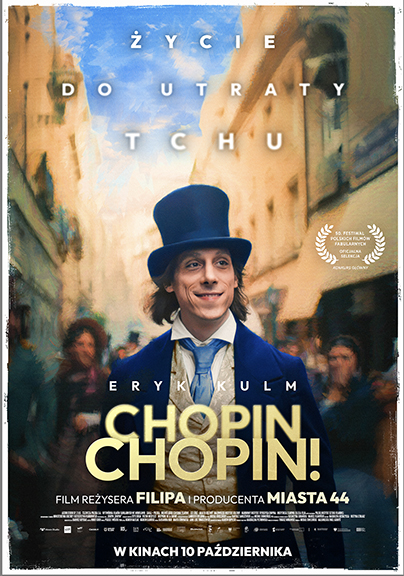
Nowy film Michała Kwiecińskiego Chopin, Chopin! wywołał w Polsce falę emocji i dyskusji. Dla jednych to dzieło przełomowe w sposobie ukazania postaci kompozytora, dla innych – kontrowersyjne. Reżyser odchodzi od romantycznego mitu „cierpiącego poety fortepianu” i pokazuje człowieka żywego, pełnego energii, zmagającego się z chorobą, sławą i własnym geniuszem.
Z reżyserem o filmie, jego genezie i o Chopinie, jakiego nie znaliśmy – rozmawia Joanna Sokołowska-Gwizdka.
***
Joanna Sokołowska-Gwizdka: Film Chopin, Chopin! zrobił na mnie ogromne wrażenie. Pokazuje zupełnie innego Chopina niż ten, który funkcjonuje w naszej kulturze. Nie jest to biografia w klasycznym sensie – to film o procesie żegnania się z życiem, o zmaganiu się geniuszu z uciekającą chwilą, o twórczości, która daje nieśmiertelność. Czy taki był Pana zamysł od początku?
Michał Kwieciński: Tak. Od początku chciałem, by Chopin był symbolem uniwersalnym – uosobieniem twórcy i geniusza. Wprawdzie nie znałem osobiście wielu geniuszy, ale na podstawie listów i literatury zrozumiałem, że Chopin właśnie nim był. Zainspirowała mnie głównie czterotomowa biografia Ferdynanda Hoesicka Chopin. Życie i twórczość. To genialne, naukowe opracowanie wydane na początku XX wieku, oparte na bogatej literaturze i XIX-wiecznych źródłach. Po jej lekturze większość późniejszych książek wydała mi się banalna, nieoddająca Chopina takiego, jakim jawi się u Hoesicka. Dlatego chciałem pokazać naszego wielkiego twórcę w sposób, który – moim zdaniem – jest najbliższy prawdzie.
Joanna Sokołowska-Gwizdka: Poświęcił Pan zatem wiele czasu na przygotowania i zgłębianie literatury z czasów Chopina.
Michał Kwieciński: Przez ponad sześć miesięcy czytałem listy, dokumenty, wspomnienia. Znam francuski, więc sięgałem po oryginały, w dużej części wskazane przez Hoesicka. Czytałem między innymi listy George Sand do Wojciecha Grzymały, z których wynikało, jakie miała wobec Chopina plany. Z czasem całkowicie zmieniło się moje wyobrażenie o Chopinie – o jego patriotyzmie, chorobie, relacjach z ludźmi. Wyszedłem z założenia, że listy nie kłamią.
Joanna Sokołowska-Gwizdka: Zauważyłam, że niektóre cytaty z listów są niemal dosłownie przeniesione na ekran.
Michał Kwieciński: Starałem się być wierny źródłom. Na przykład w scenie, gdy Chopin dostaje list od swojego ulubionego ucznia Carla Filtscha, pojawiają się niemal dokładne słowa, które wtedy rzeczywiście padły. Widzowie mogą sądzić, że wiele scen jest wymyślonych na potrzeby filmu, tymczasem ja, tam gdzie mogłem, kurczowo trzymałem się historii.
Kadr z filmu „Chopin, Chopin!”, fot. Jarosław Sosiński
Joanna Sokołowska-Gwizdka: Czyje listy dostarczają najwięcej szczegółów z codziennego życia Chopina?
Michał Kwieciński: Proszę przeczytać listy jego uczennicy Friederike Müller. Przychodziła do niego na lekcje, a potem pisała do swoich ciotek czterdziestostronicowe listy, relacjonując każdą z tych lekcji w najdrobniejszych szczegółach. Musiała go bacznie obserwować, bo opisuje, jak Chopin „zgiął rękę” czy „splunął do kominka”. To była osoba, która go wręcz prześladowała – dziś nazwalibyśmy ją stalkerką.
Joanna Sokołowska-Gwizdka: W książce Przedpiekle sławy. Chopin i jego Paryż Piotr Witt opisuje życie kompozytora przed spektakularnym sukcesem. Udowadnia, że jego debiut w Paryżu nie odbył się – jak się często podaje – od razu w prestiżowej sali Pleyela, lecz wcześniej, w Pałacu Towarzystwa Przyjaciół Sztuk Pięknych, zwanym Hôtel de Monaco. W filmie już na początku widzimy Chopina jadącego do Sali Pleyela, otoczonego tłumem wielbicieli.
Michał Kwieciński: Chciałem od razu pokazać Chopina jako celebrytę. Nie wiemy, czy on to lubił, myśle, że raczej nie chciał być sługą tłumów. Popularność mogła mu ciążyć. Moim celem nie było jednak odtwarzanie faktów z jego życia, lecz dotarcie do jego psychiki. W wielu miejscach świadomie odrzuciłem dosłowność, jeśli nie służyła pokazaniu tego, co mógł czuć. Na przykład na Majorce – wiedziałem, że była ulewa, że właściciel wyrzucił ich z willi, gdy dowiedział się o gruźlicy Chopina, że schronili się w opuszczonym klasztorze kartuzów w Valldemossie. Te fakty były mi potrzebne do opisania jego stanu ducha. Nie włączyłem natomiast wątku dzieci George Sand i konfliktu z nimi, bo zależało mi na skupieniu się na emocjach i przeżyciach, które miały wpływ na jego decyzje.
Kadr z filmu „Chopin, Chopin!”, fot. Jarosław Sosiński
Joanna Sokołowska-Gwizdka: Kiedy byłam przedstawicielką Festiwalu Chopinowskiego w Nohant we Francji, wielokrotnie odwiedzałam dom George Sand. Chopin był tam wciąż obecny. Zachowały się choćby wygłuszone drzwi do jego pokoju, bo komponując, bywał bardzo nerwowy i niezadowolony z tego, co tworzył. Uderzał w klawisze, krzyczał, rzucał się na podłogę. Tak go zapamiętano – domownicy nie mogli spać.
Michał Kwieciński: W filmie też jest scena męki twórczej. W Paryżu panuje epidemia cholery, ludzie są przerażeni, a dźwięki dochodzące z mieszkania Chopina stają się coraz bardziej uciążliwe. W końcu ktoś krzyczy do niego: „Niech pan wreszcie przestanie grać, jest pan nieznośny!”.
Joanna Sokołowska-Gwizdka: W Nohant zachowały się przepisy z czasów George Sand. Wiemy, że Chopin był na specjalnej diecie – jadł potrawy lekkostrawne, jego ulubionymi daniami była pularda i potrawka z ryżu. To również kształtuje nasz obraz – wyobrażamy sobie Chopina jako człowieka wątłego, schorowanego, wycofanego. Pana Chopin taki nie jest.
Michał Kwieciński: Zaskoczyła mnie informacja, że Chopin chodził bardzo szybko. To zaprzeczenie mitu o wątłym artyście, który ledwo powłóczy nogami. Nie mógł poruszać się wolno, skoro współcześni mówili, że lubił się wygłupiać, świetnie naśladował głosy, był towarzyski i wracał po nocnych zabawach dopiero o dziesiątej rano. Te wszystkie „melanże” bardzo go pociągały. W filmie jest więc człowiekiem żywym, energetycznym.
Joanna Sokołowska-Gwizdka: Myślałam, że Chopin był introwertykiem, zamkniętym w sobie, spędzającym długie godziny przy fortepianie.
Michał Kwieciński: Wydaje mi się, że był introwertykiem – ale introwertyk często gra ekstrawertyka, nie chce, by postrzegano jako zamkniętego. Introwertyk to niekoniecznie odludek – często jest duszą towarzystwa, tylko na zewnątrz pokazuje inną twarz.
Kadr z filmu „Chopin, Chopin!”, fot. Jarosław Sosiński
Joanna Sokołowska-Gwizdka: Diagnoza śmiertelnej choroby dopada więc Chopina w pełni sił – człowieka żywotnego, odnoszącego sukcesy, a nie ospałego, schorowanego, biednego artysty. W filmie pokazane są wszystkie etapy umierania: zaprzeczanie, ignorowanie, bunt i wreszcie pogodzenie się z losem.
Michał Kwieciński: Dokładnie o to mi chodziło – dlatego oparłem film na tej diagnozie. Wiemy, że śmierć jest nieuchronna, ale i tak szukamy nadziei. Chodzimy do znachorów, którzy nie gwarantują wyzdrowienia, a mimo to wierzymy, że może nasze działania opóźnią to, co nieuniknione.
Joanna Sokołowska-Gwizdka: W postać Chopina wcielił się Eryk Kulm. Jego kreacja jest niezwykła – miałam wrażenie, że aktor stał się Chopinem, a nie tylko go grał. Wiem, że sam wykonywał wszystkie utwory fortepianowe.
Michał Kwieciński: Tak, Eryk Kulm sam grał – to był mój warunek. Nie jest zawodowym pianistą, więc nie wszystko brzmiało perfekcyjnie, dlatego w niektórych fragmentach dźwiękowo wspierał go pianista Tomasz Ritter. Ale wszystkie ujęcia gry są autentyczne. Kulm przygotowując się do roli, wyjechał na cztery miesiące do Francji, odciął się od świata i uczył się gry na fortepianie oraz francuskiego. To duży koszt – skazanie się na samotność i pustelnię. Wtedy zapewne narodził się w nim ten Chopin, którego widzimy na ekranie. Myślę też, że aktor sam ma wiele cech wspólnych z Chopinem – i to pomogło mu stworzyć tę rolę.
Kadr z filmu „Chopin, Chopin!”, fot. Jarosław Sosiński
Joanna Sokołowska-Gwizdka: Film osadzony jest w XIX-wiecznym Paryżu. Widać wiele obyczajowych detali, bogactwo kostiumów, wspaniałą scenografię. Jak wyglądała praca nad tą warstwą historyczną?
Michał Kwieciński: Film został bardzo starannie przygotowany – pracowaliśmy nad nim z pietyzmem przez półtora roku. Współczesny Paryż nie przypomina już XIX-wiecznego, dlatego zdjęcia realizowaliśmy w Bordeaux. To miasto wygląda tak, jak Paryż w czasach Chopina – szare, kamienne ulice, stare kamienice, klimat tamtej epoki. Nic dziwnego, że kręci się tam wiele filmów mających oddać atmosferę XIX-wiecznej stolicy Francji.
Joanna Sokołowska-Gwizdka: Dla mnie Chopin, Chopin! jest jednym z najlepszych filmów biograficznych, jakie widziałam. To film bardzo ludzki, prawdziwy – każdy z nas może się w nim odnaleźć. Filmowy Chopin budzi współczucie, gdy widzimy jego dramatyczną walkę o nieśmiertelność, o zatrzymanie w muzyce każdej uciekającej chwili. Dlaczego więc, według Pana, film budzi takie kontrowersje?
Michał Kwieciński: Pewnie dlatego, że widzowie spodziewają się typowej biografii, a to jest dramat psychologiczny. Kiedy uczestniczę w pokazach, zawsze wchodzę na scenę i mówię: „Wyrzućcie z siebie swojego Chopina”. Każdy z nas ma w sobie jakiś jego obraz – ze szkoły, z wycieczek do Żelazowej Woli, z koncertów. Dlatego trzeba widzów zachęcić, by nie stawali w pozie konfrontacyjnej, tylko po prostu poddali się temu filmowi.
20. Festiwal Polskich Filmów w Austin, Teksas
W ramach 20. Festiwalu Polskich Filmów w Austin, będzie można zobaczyć film „Chopin, Chopin!” podczas Gali otwarcia, 2 listopada 2025. Więcej informacji na naszej stronie Internetowej.
George Sand’s Manor in Nohant, France, photo by the George Sand Museum in Nohant
Joanna Sokołowska-Gwizdka(Austin, Texas)
When, in the mid-1990s, I became the Polish press officer for the Chopin Festival in Nohant, I could never have imagined what a long and extraordinary adventure my encounter with Fryderyk Chopin and George Sand would become.
It was a warm summer. The whole region of Berry was in bloom, its meadows spread across rolling hills. From time to time, the view was crossed by a stream and, beside it, a mill surrounded by a tangle of wild grapevines climbing the stone walls, with the mill wheel turning in rhythm with the falling water. A pond or a lake added shades of blue to the green–yellow–red palette of the landscape. Tiny houses with picturesque shutters and tiled roofs, nestled in lush greenery in small hamlets, were a constant feature of the area—just like the numerous, still fairly well-preserved medieval castles scattered throughout the region.
I stayed with a very kind French family in a house typical of Berry—charming, full of atmosphere, and steeped in tradition passed down from generation to generation. Every morning I was served fresh rolls “à la George Sand” for breakfast, and each day I was made to feel that, as a compatriot of Chopin, I was a special guest.
The George Sand estate is a small hamlet with a unique character. The country manor, built in the Louis XV style and surrounded by a wild park, was rather neglected at the time. Although open to visitors and listed as a national historic monument—thus under state protection—it did not have the air of a museum. It felt more like a slightly disordered home that its inhabitants had hurriedly left after a “storm,” taking only what was necessary. Yet within its walls and furnishings lingered the warmth of a refuge, memories of happy moments, and traces of the many visits and lively gatherings of remarkable guests.
***
George Sand was born in Paris on July 1, 1804 — six years before Chopin — as Aurora, the daughter of a Napoleonic officer named Dupin. He died when Aurora was only four years old, thrown from his horse near their home. On her father’s side, she was the great-granddaughter of Maurice de Saxe, a French marshal and the illegitimate son of Augustus II the Strong, King of Poland. On her mother’s side, she was a distant cousin of Louis XVI. Her mother, the child of a socially unequal marriage, did not continue the royal traditions. As the daughter of a bird seller on the banks of the Seine in Paris, she became a minor actress. When Aurora was born, her mother already had a daughter from a previous relationship.
J. Sokołowska-Gwizdka inside George Sand’s manor in NohantJ. Sokołowska-Gwizdka inside George Sand’s manor in Nohant
*
Aurora Dupin (later known as George Sand) was raised first in a convent and later in her paternal grandmother’s home — in an atmosphere of freedom, unrestrained by convention or social constraints. At the age of sixteen, according to her grandmother’s will, she became the owner of the country estate in Nohant and inherited a substantial sum of money. This made her wealthy and gave her independence and a sense of self-determination.
At eighteen, she married Baron Dudevant of Gascony — a young, educated man but, reportedly, a terrible spendthrift who had been deprived of his inheritance by his stepmother. The marriage was ill-matched from the start — physically, emotionally, and intellectually. The baron soon transformed from a former officer into a rustic reveler. He drank daily, disappeared without a word, slept with the servants, dozed off over books, and could not stand music.
The young baroness therefore sought emotional and spiritual fulfillment elsewhere — suddenly leaving home without explanation and riding aimlessly through the countryside. The couple’s children, Maurice and Solange, were deprived of affection and raised by servants, creating in their imagination myths that gave them the love and security they lacked.
This situation lasted eight years until Aurora, after yet another quarrel with her husband, announced that she was leaving for Paris. Her mother had urged her before the wedding to sign a prenuptial agreement, but Aurora, proud of her independence, refused — to her later regret. The laws of the time discriminated against women: an unfaithful wife could be imprisoned, and all property belonged to her husband. This injustice deeply angered the future writer and led to her later adoption of a masculine image — both in appearance and in the choice of a male pseudonym.
Through her strong will, she eventually secured a divorce on her own terms and retained ownership of Nohant. Throughout her life, she sought love and intense emotional experiences. Her numerous informal relationships — with prominent figures of Parisian bohemia, artists, titled individuals, as well as with lesser-known men such as her household doctor or a shy law student — were widely discussed in Paris, keeping George Sand constantly in the public eye.
***
Interior of George Sand’s manor in Nohant, photo by the George Sand Museum in Nohant
There are many rooms in Nohant, but only a few reflect the vivid and exuberant imagination of its former inhabitants. These are the rooms of Chopin and George Sand. The others—such as those of Solange and Maurice—are quiet and submissive, coated with the patina of time, powerless in the face of their mother’s strong individuality.
The legend of Chopin and George Sand has never left this place. Chopin’s stay in Nohant and the eccentric personality of the estate’s owner have ennobled the surrounding community. The locals feel themselves heirs to their genius and thus, generation after generation, they preserve the traditions of this place and keep the memories alive. One has the impression of speaking to people who truly knew them. In a small antique shop in nearby La Châtre, I once admired an old carafe. When I picked it up, the owner told me its story: it had supposedly been found in the park beneath George Sand’s window, thrown out in anger by the mistress of the house after a stormy quarrel with Chopin. Whether this story is true or merely a local legend created for convenience, no one knows. Yet the people of the region have preserved in their memory the storms and passions of that relationship.
Chopin’s first years in Nohant passed in harmony. The creative freedom, artistic atmosphere, and George Sand’s flamboyance deeply impressed him. At last, he found the refuge he had long sought. Nohant became a substitute for the family home he so greatly missed. When Chopin met George Sand, he was still engaged to Maria Wodzińska. The failed engagement—broken by Maria’s parents due to Chopin’s poor health—caused a spiritual crisis and deepened his depression born of the unfulfilled dream of a real home. His relationship with George Sand offered him a home, artistic inspiration, and the fulfillment of his most intimate desires.
During their first summer in Nohant in 1839, Chopin and George Sand spent most of their time in the bedroom, upholstered in blue fabric, under a lace canopy, pausing only for horseback rides through the countryside. They visited nearby medieval castles and climbed hills to admire the landscape from above. After returning from their rides, they would again retreat beneath the canopy, exhausted, while the servants brought their meals to the room. At that time, their apartments were connected.
Gradually, however, things began to change. Conflicts appeared. Chopin and George Sand spent the winters in Paris, returning to Nohant in spring and remaining there until autumn. Chopin’s room was on the first floor, with windows overlooking the garden. From his room one entered the guest salon with the piano. George Sand’s room was nearby, with a charming writing desk full of secret compartments, drawers, and boxes locked with tiny keys, and a delicate, feminine dressing table with an oval mirror. Only Chopin’s room had special soundproof shutters and thickly padded doors.
George Sand worked mainly at night and slept during the day. Chopin was the opposite—he slept at night and worked in the daylight. The residents of Nohant remembered him as a deeply complex man. Seemingly gentle, quiet, and withdrawn into his imagination, he could suddenly erupt in bursts of anger and nervous tension. Everything disturbed him. He would shut himself in his room, close the shutters, block out all light, and remain that way for weeks.
Chopin was convinced that he was far from a genius. A perfectionist, he strove endlessly to be the best. He would spend hours at the piano, bent over his scores, trying to capture his thoughts. He often fell into fits of despair—throwing himself on the floor, shouting, tearing up his music, pounding the keys, claiming that he was talentless and would never compose anything worthwhile, that he was just another mediocrity in the world. His self-doubt and constant revisions exhausted his publishers, as engraved plates often had to be redone.
George Sand said that Chopin composed in a burst of emotion, then spent months at the keyboard crossing out and rewriting, only to return, after much toil, to his first version. For the household, his fits of rage were exhausting, hence his room remained an isolated fortress—with soundproofed doors and windows.
The paths of the two artists gradually diverged. It is said that George Sand found a new partner, while her children—deprived of a father and of the love of a mother absorbed in herself—were growing up. Maurice tried to attract her attention, but his attempts at painting evoked little enthusiasm from her. Feeling wronged and rejected, he directed his resentment toward Chopin, whom he saw as the man who had taken his mother away.
Dining room in George Sand’s manor in Nohant, photo by the George Sand Museum in Nohant
A different kind of bond developed between Chopin and Solange. During the seven years of Chopin’s relationship with George Sand, Solange grew from an eleven-year-old girl into an eighteen-year-old young woman, and she projected her first romantic feelings onto Fryderyk. To her, he was a prince from a fairy tale—someone who partly filled the void left by the absence of parental love. Chopin, accustomed to the little girl running around the house, one day suddenly realized that she had become a woman. George Sand was often away, their relationship was nearing its end, and under the same roof, a young and innocent affection began to bloom. No one knew when they fell in love. One day, George Sand returned from Paris earlier than expected and found Chopin with her daughter. Feeling humiliated and rejected, burdened by her age, she flew into a rage.
George Sand’s room looked as if someone might return to it at any moment; Chopin’s, however, was in ruins—devastated by a storm of hatred and jealousy. George Sand took cruel revenge on them both. She threw Chopin out of the house. To erase all memories of him, she ordered his room to be destroyed. All the furniture was burned in the courtyard, the wallpaper torn down to the plaster, even the floorboards ripped out. Only the soundproof shutters and doors—remnants of the hours the great Fryderyk spent composing—remained to remind of its former occupant.
Solange was married off to a coarse sculptor, Auguste Clésinger, much older than she, who had once been her mother’s lover. She received an estate as her dowry, and George Sand never wanted to see her again.
That, at least, is what people say—but historical sources seem to contradict this version. Surviving letters suggest that Solange was already married to Clésinger when she quarreled with her mother. Since Chopin tried to mediate between them, and in 1847 wrote a letter to George on Solange’s behalf, George was enraged by what she saw as his open siding with “the enemy camp” and broke off their relationship. She destroyed his letters and declared that she had long been weary of him.
Krystyna Skarbek – Spy, Lady, the Inspiration for James Bond
Krystyna Skarbek, also known as Christine Granville, France, August 1944, photographer unknown, source: Wikimedia Commons
She was a woman from another time — an era when people still believed in honor, truth, and courage. Krystyna Skarbek, the daughter of a Polish count, was born in Warsaw in 1908, when the old empires still stood and Poland was yet to be reborn. Her childhood unfolded in the shadow of the manor house, among whispers of ancestors who had served kings and emperors, of horses, hunts, and salons where people discussed Chopin and Sienkiewicz.
Her father, Count Jerzy Skarbek, came from an old noble family bearing the Abdank coat of arms, whose history dated back to the Middle Ages. Family stories echoed with the past glory of the Skarbeks — landowners, benefactors, and patrons of the arts. It was the Skarbeks of Żelazowa Wola who owned the manor where Fryderyk Chopin was born and who became his godparents. Yet, by Krystyna’s time, that world was fading. Debts, squandered fortunes, and social change meant that noble titles had become mere echoes of former grandeur.
Krystyna’s mother, Stefania Goldfeder, came from a completely different world — that of Jewish bankers from Łódź, wealthy and modern, whose fortunes were built in banks and factories. It was her dowry that saved the Skarbek name from ruin. And yet, deep in Krystyna’s soul lived what she had inherited from her father: pride and an untamed need for freedom.
From Polish Manors to the Underground
When war broke out, Krystyna was already a woman seasoned by life and marriage, but it was the war that became her true destiny. In 1939, in Paris, she volunteered for the British secret service. She was 31, with the beauty of a film star, flawless French, and a courage that would become legendary. She was accepted into the Special Operations Executive (SOE) — the secret organization created by Churchill to “set Europe ablaze.”
Under the alias Christine Granville, she embarked on a game where the stakes were life and death — her own and that of hundreds of others. Her first mission already made her a near-mythical figure. In the winter of 1940, wearing a fur coat and ski boots, she crossed the Tatra Mountains, carrying messages and microfilms from Hungary into occupied Poland. In the cold and wind, often alone, she was guided only by instinct and bravery. Her mountain guide from Zakopane later recalled that he had “never seen a woman so calm in the face of death.”
In Budapest, where she was stationed for several months, she built a network of contacts and communications that delivered the first credible reports on the situation in occupied Poland to London. She used many aliases — including Paulina Armand and Madame Granville — and could win over aristocrats, diplomats, and simple soldiers alike.
After the fall of France and Hungary, she was sent on new missions to North Africa and France. There she performed one of the boldest acts in the history of Allied intelligence — she rescued two SOE agents, Francis Cammaerts and Xan Fielding, who had been captured by the Gestapo. She walked into the prison and spoke to a German officer, relying not only on her charm but also on financial persuasion and the threat of swift retribution once the Allies triumphed. Within hours, the prisoners were free.
Morgane Polanski as Krystyna Skarbek in the film “The Partisan”, directed by James Marquand, 2024, photo: press materials
Krystyna Skarbek never carried a weapon and never used violence. Her weapons were intelligence, courage, and feminine charm. In British intelligence reports, she was described as “irreplaceable,” “brilliant,” and “unpredictable.” She had the gift of winning people over — one moment she could laugh lightheartedly, and the next, look with cold determination, like someone who already knew the price of death.
She was also a master of disguise. When needed, she changed her accent, her walk, or the color of her hair. One day she played a French countess, another a poor refugee. She could infiltrate enemy circles with astonishing ease. Her superior, Colonel Colin Gubbins, once said that he had “never before seen anyone play with fate so gracefully.”
For her service, she was awarded the Order of the British Empire (OBE) and the George Medal — among the highest British civilian honors. To the French, she was a heroine; to the Poles, a legend. To herself, simply a woman who had fulfilled her duty to her country.
After the War – The Loneliness of a Heroine
When victory came, there was no longer a place for people like her. Krystyna was too brave to fade quietly into postwar London and too proud to ask for help. She worked as a stewardess, cleaner, and receptionist — a woman of noble birth who had saved lives, now struggling to survive.
In the Shelbourne Hotel on Lexham Gardens in London, in a stuffy room overlooking a brick courtyard, time seemed to stop. It was there, on June 15, 1952, that she was murdered by a man who was in love with her.
She died as she had lived — beautiful, independent, and untamed. At her funeral in St. Mary’s Cemetery in Kensal Green, only a handful of people were present.
Inspiration for James Bond
Her extraordinary personality — elegance, magnetism, and fearlessness — became an inspiration for writer Ian Fleming, who worked in British intelligence during the war. Fleming knew Krystyna personally and was deeply impressed by her charm and audacity. Many biographers believe that Krystyna Skarbek was one of the prototypes for James Bond, and that her life and adventures also inspired the creation of Fleming’s female characters.
The Legacy of the Skarbek Family
The Skarbek family has vanished from the map of Polish aristocracy — their manors and estates now exist only as names on yellowed maps. But the memory of Krystyna endures. In London, on the wall of the building where she died, a blue plaque reads: Christine Granville – Krystyna Skarbek (1908–1952), Agent of the Special Operations Executive.
Compiled by Joanna Sokołowska-Gwizdka
Blue commemorative plaque unveiled in 2020 by English Heritage at 1 Lexham Gardens, Kensington, London, W8 5JL, Royal Borough of Kensington and Chelsea, source: Wikimedia Commons
20th Austin Polish Film Festival, Texas
As part of the 20th Austin Polish Film Festival, audiences will have the opportunity to see the film “Skarbek”, inspired by the story of Krystyna Skarbek and directed by James Marquand. The Festival’s special guest will be Morgane Polanski, daughter of Roman Polanski, who stars in the leading role.
Krystyna Skarbek – szpieg, dama, pierwowzór Jamesa Bonda
Krystyna Skarbek, występująca też jako Christine Granville, Francja, sierpień 1944, fotograf nieznany, źródło: Wikimedia Commons
Była kobietą z innego czasu — z epoki, w której jeszcze wierzono w honor, prawdę i odwagę. Krystyna Skarbek, córka polskiego hrabiego, przyszła na świat w Warszawie w 1908 roku, gdy stare imperia jeszcze trwały, a Polska dopiero miała się odrodzić. Jej dzieciństwo upłynęło w cieniu dworu, wśród szeptów o przodkach, którzy służyli królowi i cesarzowi, o koniach, polowaniach i salonach, w których dyskutowano o Chopinie i Sienkiewiczu.
Ojciec, Jerzy hrabia Skarbek, pochodził ze starego rodu herbu Abdank, którego historia sięgała średniowiecza. W rodzinnych opowieściach powracały echa świetności dawnych Skarbków — właścicieli ziem, dobroczyńców, mecenatów sztuki. To właśnie Skarbkowie z Żelazowej Woli byli właścicielami dworku, w którym urodził się Fryderyk Chopin i jego rodzicami chrzestnymi. Jednak w czasach Krystyny ich świat chylił się ku końcowi. Długi, roztrwonione majątki i przemiany społeczne sprawiły, że tytuły szlacheckie stawały się już tylko wspomnieniem dawnej chwały.
Matka Krystyny, Stefania z Goldfederów, pochodziła z zupełnie innego świata — z rodziny żydowskich bankierów, bogatych i nowoczesnych, których fortuny powstawały w bankach i fabrykach Łodzi. To jej posag ocalił nazwisko Skarbków przed upadkiem. A jednak w duszy Krystyny grało to, co odziedziczyła po ojcu: dumę i nieokiełznaną potrzebę wolności.
Z polskich dworów do podziemia
Gdy wybuchła wojna, Krystyna była już kobietą doświadczoną przez życie i małżeństwa, lecz to właśnie wojna stała się jej prawdziwym przeznaczeniem. W 1939 roku, w Paryżu, zgłosiła się na ochotnika do brytyjskich służb specjalnych. Miała 31 lat, urodę filmowej gwiazdy, perfekcyjny francuski i odwagę, która stała się legendą. Została przyjęta do Special Operations Executive (SOE) — tajnej organizacji utworzonej przez Churchilla, której zadaniem było „zapalenie Europy”.
Pod przybranym nazwiskiem Christine Granville rozpoczęła grę, w której stawką było życie — jej własne i setek innych ludzi. Już pierwsza misja uczyniła z niej postać niemal mityczną. Zimą 1940 roku, w futrze i narciarskich butach, przemykała przez Tatry, przewożąc meldunki i mikrofilmy z Węgier do okupowanej Polski. W mrozie, w wichrze, często sama, kierowała się intuicją i odwagą. Jej przewodnik, góral z Zakopanego, wspominał później, że „nigdy nie widział kobiety tak spokojnej w obliczu śmierci”.
W Budapeszcie, gdzie stacjonowała przez kilka miesięcy, stworzyła sieć kontaktów i przekazów, dzięki którym do Londynu trafiały pierwsze wiarygodne raporty o sytuacji w okupowanej Polsce. Używała wielu nazwisk, w tym Paulina Armand i Madame Granville, potrafiła zjednać sobie arystokratów, dyplomatów i prostych żołnierzy.
Po upadku Francji i Węgier została wysłana na kolejne misje do Afryki Północnej i Francji. Tam właśnie dokonała jednego z najśmielszych czynów w historii alianckiego wywiadu — uratowała dwóch agentów SOE, Francisa Cammaertsa i Xana Fieldinga, uwięzionych przez Gestapo. Weszła do więzienia, rozmawiała z niemieckim oficerem, używając nie tylko uroku, lecz i argumentów finansowych, a także groźby rychłego odwetu po zbliżającym się zwycięstwie aliantów. W ciągu kilku godzin więźniowie byli wolni.
Morgane Polanski jako Krystyna Skarbek w filmie „Skarbek”, w reż. Jamesa Marquanda, 2024 r., fot. materiały prasowe
Krystyna Skarbek nie nosiła broni, nie używała przemocy. Jej bronią była inteligencja, odwaga i kobiecy wdzięk. W raportach brytyjskiego wywiadu opisywano ją jako „niezastąpioną”, „genialną”, „nieprzewidywalną”. Miała dar zjednywania sobie ludzi — w jednej chwili potrafiła roześmiać się beztrosko, w drugiej spojrzeć z chłodną determinacją, jak ktoś, kto zna już cenę śmierci.
Była też mistrzynią kamuflażu. W razie potrzeby zmieniała akcent, sposób chodzenia, kolor włosów. Raz grała francuską hrabinę, innym razem biedną uchodźczynię. Potrafiła przeniknąć do środowisk wroga z niebywałą łatwością. Jej przełożony, płk Colin Gubbins, mówił, że „nigdy wcześniej nie widział kogoś, kto z taką gracją potrafił igrać z losem”.
Za swoją działalność została odznaczona Orderem Imperium Brytyjskiego (OBE) i George Medal – jednymi z najwyższych brytyjskich odznaczeń cywilnych. Dla Francuzów była bohaterką, dla Polaków – legendą. Dla samej siebie – po prostu kobietą, która spełniła obowiązek wobec ojczyzny.
Po wojnie – samotność bohaterki
Kiedy przyszło zwycięstwo, dla takich jak ona nie było już miejsca. Krystyna była zbyt odważna, by wtopić się w powojenny Londyn i zbyt dumna, by prosić o pomoc. Pracowała jako stewardessa, sprzątaczka, recepcjonistka – kobieta o arystokratycznym rodowodzie, która uratowała ludzi, teraz musiała walczyć o przetrwanie.
W hotelu Shelbourne przy Lexham Gardens w Londynie, w dusznym pokoju z widokiem na ceglane podwórko, zatrzymał się czas. To tam, 15 czerwca 1952 roku, została zamordowana przez zakochanego w niej mężczyznę.
Zginęła, jak żyła – piękna, niezależna, nieujarzmiona. Na jej pogrzebie na cmentarzu St Mary’s w Kensal Green obecnych było zaledwie kilka osób.
Inspiracja dla postaci Jamesa Bonda
Jej niezwykła osobowość – elegancja, magnetyzm i nieustraszoność – stała się inspiracją dla pisarza Iana Fleminga, który w czasie wojny pracował w brytyjskim wywiadzie. Fleming znał Krystynę osobiście i był pod ogromnym wrażeniem jej uroku oraz brawury. Wielu biografów uważa, że to właśnie Krystyna Skarbek była jednym z pierwowzorów Jamesa Bonda, a jej postać i przygody zainspirowały także kobiece bohaterki jego powieści.
Dziedzictwo rodu i pamięć
Ród Skarbków zniknął z mapy polskiej arystokracji – ich dwory i ich ziemie są dziś tylko nazwami na pożółkłych planach. Ale pamięć o Krystynie przetrwała. W Londynie na ścianie budynku, w którym zginęła, błękitna tablica głosi: Christine Granville – Krystyna Skarbek (1908–1952), Agent of the Special Operations Executive.
Niebieska tablica pamiątkowa wzniesiona w 2020 roku przez English Heritage pod adresem 1 Lexham Gardens, Kensington, Londyn, W8 5JL, Royal Borough of Kensington and Chelsea, źródło: Wikimedia Commons
Oprac. Joanna Sokołowska-Gwizdka
20. Festiwal Polskich Filmów w Austin, Teksas
W ramach 20. Festiwalu Polskich Filmów w Austin, będzie można zobaczyć film „Skarbek” inspirowany historią Krystyny Skarbek, w reż. Jamesa Marquanda. Gościem Festiwalu będzie odtwórczyni głównej roli Morgane Polanski, córka Romana Polanskiego. Zapraszamy!
Kadr z filmu „Nieciekawa historia” na podstawie opowiadania A. Czechowa, w reż. W.J. Hasa, 1982 r., fot. WFDiF
Wspomnienie Marka Probosza
Łódź lata osiemdziesiąte, tytuł filmu Wojciecha Hasa „Nieciekawa historia” scenariusz w oparciu o opowiadanie Anntona Czechowa, napisał sam reżyser. Jestem studentem wydziału aktorstwa w Łódzkiej Filmówce (1980-83), w filmie otrzymałem do zagrania mały epizod studenta, który wyrwał się z kumplem do domu publicznego i tam poza wiadomymi uciechami, dokonuje również obserwacji podnieconych twarzy klientów w rozmaitych atrakcyjnych sytuacjach.
Pamiętam mocne kolory czerwieni podsycające atmosferę tego przybytku rozkoszy, bo ta „nieciekawa historia”, była fascynująca. Has poruszał się w skupieniu, i właściwie szeptem wydawał komendy, uwagi, inscenizował dokonując poprawek na planie, jak malarz pędzlem na płótnie. Wszystko musiało być dokładnie tak, jak sobie to wcześniej wyobraził. Nie mówił dużo, wizja mistrza polskiego kina była przejrzysta i w mig odczytywana przez jego ekipę i aktorów. Poprawki bywały czasochłonne, dopracowywane do perfekcji. Wyczuwało się smutną dziwność, którą tworzył artysta, był stanowczy, a jednocześnie delikatny. Ta nocna przygoda trwała prawie do świtu.
Miałem 23 lata, Wojciech Has wykładał w tej samej Filmówce na wydziale reżyserii, jego studenci często współpracowali z naszym wydziałem aktorskim przy swoich krótkich filmach, pracując nad jednym z nich czułem, że reżyseruje mnie student ze szkoły Hasa. Poetyckość i głęboki sposób opowiadania obrazów był znakiem rozpoznawczym mistrza.
Po latach, w opisie noweli Czechowa przeczytałem „Bohater uświadamia sobie całą niedorzeczność otaczającej go sławy i okazywanej mu czci: w głębi duszy jest człowiekiem zrozpaczonym, spostrzega bowiem, że w jego życiu wraz ze wszystkimi zasługami brak było duchowego centrum, jakiejś ogólnej idei, że w gruncie rzeczy było to życie bezsensowne, życie człowieka zrozpaczonego”.
Moim zdaniem Wojciech Has w tworząc w mrocznych czasach komuny, swoimi filmami próbował wyłowić właśnie tę OGÓLNĄ IDEĘ, gdzie artysta nie może nie być poetą.
Marek Probosz na okładce magazynu „Film”, 1984 r., fot. arch. M. Probosza