The Piano and the Pen

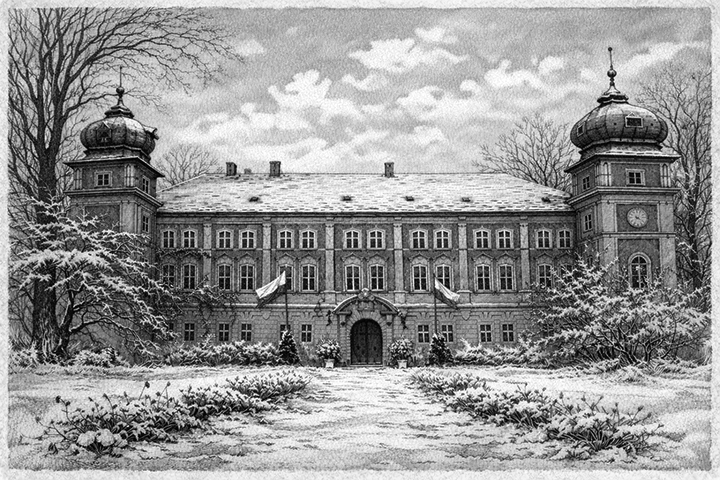
George Sand’s Manor in Nohant, France, photo by the George Sand Museum in Nohant

Joanna Sokołowska-Gwizdka (Austin, Texas)

When, in the mid-1990s, I became the Polish press officer for the Chopin Festival in Nohant, I could never have imagined what a long and extraordinary adventure my encounter with Fryderyk Chopin and George Sand would become.

It was a warm summer. The whole region of Berry was in bloom, its meadows spread across rolling hills. From time to time, the view was crossed by a stream and, beside it, a mill surrounded by a tangle of wild grapevines climbing the stone walls, with the mill wheel turning in rhythm with the falling water. A pond or a lake added shades of blue to the green–yellow–red palette of the landscape. Tiny houses with picturesque shutters and tiled roofs, nestled in lush greenery in small hamlets, were a constant feature of the area—just like the numerous, still fairly well-preserved medieval castles scattered throughout the region.

I stayed with a very kind French family in a house typical of Berry—charming, full of atmosphere, and steeped in tradition passed down from generation to generation. Every morning I was served fresh rolls “à la George Sand” for breakfast, and each day I was made to feel that, as a compatriot of Chopin, I was a special guest.

The George Sand estate is a small hamlet with a unique character. The country manor, built in the Louis XV style and surrounded by a wild park, was rather neglected at the time. Although open to visitors and listed as a national historic monument—thus under state protection—it did not have the air of a museum. It felt more like a slightly disordered home that its inhabitants had hurriedly left after a “storm,” taking only what was necessary. Yet within its walls and furnishings lingered the warmth of a refuge, memories of happy moments, and traces of the many visits and lively gatherings of remarkable guests.

***

George Sand was born in Paris on July 1, 1804 — six years before Chopin — as Aurora, the daughter of a Napoleonic officer named Dupin. He died when Aurora was only four years old, thrown from his horse near their home. On her father’s side, she was the great-granddaughter of Maurice de Saxe, a French marshal and the illegitimate son of Augustus II the Strong, King of Poland. On her mother’s side, she was a distant cousin of Louis XVI. Her mother, the child of a socially unequal marriage, did not continue the royal traditions. As the daughter of a bird seller on the banks of the Seine in Paris, she became a minor actress. When Aurora was born, her mother already had a daughter from a previous relationship.

*

Aurora Dupin (later known as George Sand) was raised first in a convent and later in her paternal grandmother’s home — in an atmosphere of freedom, unrestrained by convention or social constraints. At the age of sixteen, according to her grandmother’s will, she became the owner of the country estate in Nohant and inherited a substantial sum of money. This made her wealthy and gave her independence and a sense of self-determination.

At eighteen, she married Baron Dudevant of Gascony — a young, educated man but, reportedly, a terrible spendthrift who had been deprived of his inheritance by his stepmother. The marriage was ill-matched from the start — physically, emotionally, and intellectually. The baron soon transformed from a former officer into a rustic reveler. He drank daily, disappeared without a word, slept with the servants, dozed off over books, and could not stand music.

The young baroness therefore sought emotional and spiritual fulfillment elsewhere — suddenly leaving home without explanation and riding aimlessly through the countryside. The couple’s children, Maurice and Solange, were deprived of affection and raised by servants, creating in their imagination myths that gave them the love and security they lacked.

This situation lasted eight years until Aurora, after yet another quarrel with her husband, announced that she was leaving for Paris. Her mother had urged her before the wedding to sign a prenuptial agreement, but Aurora, proud of her independence, refused — to her later regret. The laws of the time discriminated against women: an unfaithful wife could be imprisoned, and all property belonged to her husband. This injustice deeply angered the future writer and led to her later adoption of a masculine image — both in appearance and in the choice of a male pseudonym.

Through her strong will, she eventually secured a divorce on her own terms and retained ownership of Nohant. Throughout her life, she sought love and intense emotional experiences. Her numerous informal relationships — with prominent figures of Parisian bohemia, artists, titled individuals, as well as with lesser-known men such as her household doctor or a shy law student — were widely discussed in Paris, keeping George Sand constantly in the public eye.

***

Interior of George Sand’s manor in Nohant, photo by the George Sand Museum in Nohant

There are many rooms in Nohant, but only a few reflect the vivid and exuberant imagination of its former inhabitants. These are the rooms of Chopin and George Sand. The others—such as those of Solange and Maurice—are quiet and submissive, coated with the patina of time, powerless in the face of their mother’s strong individuality.

The legend of Chopin and George Sand has never left this place. Chopin’s stay in Nohant and the eccentric personality of the estate’s owner have ennobled the surrounding community. The locals feel themselves heirs to their genius and thus, generation after generation, they preserve the traditions of this place and keep the memories alive. One has the impression of speaking to people who truly knew them. In a small antique shop in nearby La Châtre, I once admired an old carafe. When I picked it up, the owner told me its story: it had supposedly been found in the park beneath George Sand’s window, thrown out in anger by the mistress of the house after a stormy quarrel with Chopin. Whether this story is true or merely a local legend created for convenience, no one knows. Yet the people of the region have preserved in their memory the storms and passions of that relationship.

Chopin’s first years in Nohant passed in harmony. The creative freedom, artistic atmosphere, and George Sand’s flamboyance deeply impressed him. At last, he found the refuge he had long sought. Nohant became a substitute for the family home he so greatly missed. When Chopin met George Sand, he was still engaged to Maria Wodzińska. The failed engagement—broken by Maria’s parents due to Chopin’s poor health—caused a spiritual crisis and deepened his depression born of the unfulfilled dream of a real home. His relationship with George Sand offered him a home, artistic inspiration, and the fulfillment of his most intimate desires.

During their first summer in Nohant in 1839, Chopin and George Sand spent most of their time in the bedroom, upholstered in blue fabric, under a lace canopy, pausing only for horseback rides through the countryside. They visited nearby medieval castles and climbed hills to admire the landscape from above. After returning from their rides, they would again retreat beneath the canopy, exhausted, while the servants brought their meals to the room. At that time, their apartments were connected.

Gradually, however, things began to change. Conflicts appeared. Chopin and George Sand spent the winters in Paris, returning to Nohant in spring and remaining there until autumn. Chopin’s room was on the first floor, with windows overlooking the garden. From his room one entered the guest salon with the piano. George Sand’s room was nearby, with a charming writing desk full of secret compartments, drawers, and boxes locked with tiny keys, and a delicate, feminine dressing table with an oval mirror. Only Chopin’s room had special soundproof shutters and thickly padded doors.

George Sand worked mainly at night and slept during the day. Chopin was the opposite—he slept at night and worked in the daylight. The residents of Nohant remembered him as a deeply complex man. Seemingly gentle, quiet, and withdrawn into his imagination, he could suddenly erupt in bursts of anger and nervous tension. Everything disturbed him. He would shut himself in his room, close the shutters, block out all light, and remain that way for weeks.

Chopin was convinced that he was far from a genius. A perfectionist, he strove endlessly to be the best. He would spend hours at the piano, bent over his scores, trying to capture his thoughts. He often fell into fits of despair—throwing himself on the floor, shouting, tearing up his music, pounding the keys, claiming that he was talentless and would never compose anything worthwhile, that he was just another mediocrity in the world. His self-doubt and constant revisions exhausted his publishers, as engraved plates often had to be redone.

George Sand said that Chopin composed in a burst of emotion, then spent months at the keyboard crossing out and rewriting, only to return, after much toil, to his first version. For the household, his fits of rage were exhausting, hence his room remained an isolated fortress—with soundproofed doors and windows.

The paths of the two artists gradually diverged. It is said that George Sand found a new partner, while her children—deprived of a father and of the love of a mother absorbed in herself—were growing up. Maurice tried to attract her attention, but his attempts at painting evoked little enthusiasm from her. Feeling wronged and rejected, he directed his resentment toward Chopin, whom he saw as the man who had taken his mother away.

Dining room in George Sand’s manor in Nohant, photo by the George Sand Museum in Nohant

A different kind of bond developed between Chopin and Solange. During the seven years of Chopin’s relationship with George Sand, Solange grew from an eleven-year-old girl into an eighteen-year-old young woman, and she projected her first romantic feelings onto Fryderyk. To her, he was a prince from a fairy tale—someone who partly filled the void left by the absence of parental love. Chopin, accustomed to the little girl running around the house, one day suddenly realized that she had become a woman. George Sand was often away, their relationship was nearing its end, and under the same roof, a young and innocent affection began to bloom. No one knew when they fell in love. One day, George Sand returned from Paris earlier than expected and found Chopin with her daughter. Feeling humiliated and rejected, burdened by her age, she flew into a rage.

George Sand’s room looked as if someone might return to it at any moment; Chopin’s, however, was in ruins—devastated by a storm of hatred and jealousy. George Sand took cruel revenge on them both. She threw Chopin out of the house. To erase all memories of him, she ordered his room to be destroyed. All the furniture was burned in the courtyard, the wallpaper torn down to the plaster, even the floorboards ripped out. Only the soundproof shutters and doors—remnants of the hours the great Fryderyk spent composing—remained to remind of its former occupant.

Solange was married off to a coarse sculptor, Auguste Clésinger, much older than she, who had once been her mother’s lover. She received an estate as her dowry, and George Sand never wanted to see her again.

That, at least, is what people say—but historical sources seem to contradict this version. Surviving letters suggest that Solange was already married to Clésinger when she quarreled with her mother. Since Chopin tried to mediate between them, and in 1847 wrote a letter to George on Solange’s behalf, George was enraged by what she saw as his open siding with “the enemy camp” and broke off their relationship. She destroyed his letters and declared that she had long been weary of him.


Krystyna Skarbek – Spy, Lady, the Inspiration for James Bond

Krystyna Skarbek, also known as Christine Granville, France, August 1944, photographer unknown, source: Wikimedia Commons

She was a woman from another time — an era when people still believed in honor, truth, and courage. Krystyna Skarbek, the daughter of a Polish count, was born in Warsaw in 1908, when the old empires still stood and Poland was yet to be reborn. Her childhood unfolded in the shadow of the manor house, among whispers of ancestors who had served kings and emperors, of horses, hunts, and salons where people discussed Chopin and Sienkiewicz.

Her father, Count Jerzy Skarbek, came from an old noble family bearing the Abdank coat of arms, whose history dated back to the Middle Ages. Family stories echoed with the past glory of the Skarbeks — landowners, benefactors, and patrons of the arts. It was the Skarbeks of Żelazowa Wola who owned the manor where Fryderyk Chopin was born and who became his godparents. Yet, by Krystyna’s time, that world was fading. Debts, squandered fortunes, and social change meant that noble titles had become mere echoes of former grandeur.

Krystyna’s mother, Stefania Goldfeder, came from a completely different world — that of Jewish bankers from Łódź, wealthy and modern, whose fortunes were built in banks and factories. It was her dowry that saved the Skarbek name from ruin. And yet, deep in Krystyna’s soul lived what she had inherited from her father: pride and an untamed need for freedom.

From Polish Manors to the Underground

When war broke out, Krystyna was already a woman seasoned by life and marriage, but it was the war that became her true destiny. In 1939, in Paris, she volunteered for the British secret service. She was 31, with the beauty of a film star, flawless French, and a courage that would become legendary. She was accepted into the Special Operations Executive (SOE) — the secret organization created by Churchill to “set Europe ablaze.”

Under the alias Christine Granville, she embarked on a game where the stakes were life and death — her own and that of hundreds of others. Her first mission already made her a near-mythical figure. In the winter of 1940, wearing a fur coat and ski boots, she crossed the Tatra Mountains, carrying messages and microfilms from Hungary into occupied Poland. In the cold and wind, often alone, she was guided only by instinct and bravery. Her mountain guide from Zakopane later recalled that he had “never seen a woman so calm in the face of death.”

In Budapest, where she was stationed for several months, she built a network of contacts and communications that delivered the first credible reports on the situation in occupied Poland to London. She used many aliases — including Paulina Armand and Madame Granville — and could win over aristocrats, diplomats, and simple soldiers alike.

After the fall of France and Hungary, she was sent on new missions to North Africa and France. There she performed one of the boldest acts in the history of Allied intelligence — she rescued two SOE agents, Francis Cammaerts and Xan Fielding, who had been captured by the Gestapo. She walked into the prison and spoke to a German officer, relying not only on her charm but also on financial persuasion and the threat of swift retribution once the Allies triumphed. Within hours, the prisoners were free.

Morgane Polanski as Krystyna Skarbek in the film “The Partisan”, directed by James Marquand, 2024, photo: press materials

Krystyna Skarbek never carried a weapon and never used violence. Her weapons were intelligence, courage, and feminine charm. In British intelligence reports, she was described as “irreplaceable,” “brilliant,” and “unpredictable.” She had the gift of winning people over — one moment she could laugh lightheartedly, and the next, look with cold determination, like someone who already knew the price of death.

She was also a master of disguise. When needed, she changed her accent, her walk, or the color of her hair. One day she played a French countess, another a poor refugee. She could infiltrate enemy circles with astonishing ease. Her superior, Colonel Colin Gubbins, once said that he had “never before seen anyone play with fate so gracefully.”

For her service, she was awarded the Order of the British Empire (OBE) and the George Medal — among the highest British civilian honors. To the French, she was a heroine; to the Poles, a legend. To herself, simply a woman who had fulfilled her duty to her country.

After the War – The Loneliness of a Heroine

When victory came, there was no longer a place for people like her. Krystyna was too brave to fade quietly into postwar London and too proud to ask for help. She worked as a stewardess, cleaner, and receptionist — a woman of noble birth who had saved lives, now struggling to survive.

In the Shelbourne Hotel on Lexham Gardens in London, in a stuffy room overlooking a brick courtyard, time seemed to stop. It was there, on June 15, 1952, that she was murdered by a man who was in love with her.

She died as she had lived — beautiful, independent, and untamed. At her funeral in St. Mary’s Cemetery in Kensal Green, only a handful of people were present.

Inspiration for James Bond

Her extraordinary personality — elegance, magnetism, and fearlessness — became an inspiration for writer Ian Fleming, who worked in British intelligence during the war. Fleming knew Krystyna personally and was deeply impressed by her charm and audacity. Many biographers believe that Krystyna Skarbek was one of the prototypes for James Bond, and that her life and adventures also inspired the creation of Fleming’s female characters.

The Legacy of the Skarbek Family

The Skarbek family has vanished from the map of Polish aristocracy — their manors and estates now exist only as names on yellowed maps. But the memory of Krystyna endures. In London, on the wall of the building where she died, a blue plaque reads: Christine Granville – Krystyna Skarbek (1908–1952), Agent of the Special Operations Executive.

Compiled by Joanna Sokołowska-Gwizdka

Blue commemorative plaque unveiled in 2020 by English Heritage at 1 Lexham Gardens, Kensington, London, W8 5JL, Royal Borough of Kensington and Chelsea, source: Wikimedia Commons
20th Austin Polish Film Festival, Texas

As part of the 20th Austin Polish Film Festival, audiences will have the opportunity to see the film “Skarbek”, inspired by the story of Krystyna Skarbek and directed by James Marquand. The Festival’s special guest will be Morgane Polanski, daughter of Roman Polanski, who stars in the leading role.

You are warmly invited!

https://www.austinpolishfilm.com/


Krystyna Skarbek – szpieg, dama, pierwowzór Jamesa Bonda

Krystyna Skarbek, występująca też jako Christine Granville, Francja, sierpień 1944, fotograf nieznany, źródło: Wikimedia Commons 

Była kobietą z innego czasu — z epoki, w której jeszcze wierzono w honor, prawdę i odwagę. Krystyna Skarbek, córka polskiego hrabiego, przyszła na świat w Warszawie w 1908 roku, gdy stare imperia jeszcze trwały, a Polska dopiero miała się odrodzić. Jej dzieciństwo upłynęło w cieniu dworu, wśród szeptów o przodkach, którzy służyli królowi i cesarzowi, o koniach, polowaniach i salonach, w których dyskutowano o Chopinie i Sienkiewiczu.

Ojciec, Jerzy hrabia Skarbek, pochodził ze starego rodu herbu Abdank, którego historia sięgała średniowiecza. W rodzinnych opowieściach powracały echa świetności dawnych Skarbków — właścicieli ziem, dobroczyńców, mecenatów sztuki. To właśnie Skarbkowie z Żelazowej Woli byli właścicielami dworku, w którym urodził się Fryderyk Chopin i jego rodzicami chrzestnymi. Jednak w czasach Krystyny ich świat chylił się ku końcowi. Długi, roztrwonione majątki i przemiany społeczne sprawiły, że tytuły szlacheckie stawały się już tylko wspomnieniem dawnej chwały.

Matka Krystyny, Stefania z Goldfederów, pochodziła z zupełnie innego świata — z rodziny żydowskich bankierów, bogatych i nowoczesnych, których fortuny powstawały w bankach i fabrykach Łodzi. To jej posag ocalił nazwisko Skarbków przed upadkiem. A jednak w duszy Krystyny grało to, co odziedziczyła po ojcu: dumę i nieokiełznaną potrzebę wolności.

Z polskich dworów do podziemia

Gdy wybuchła wojna, Krystyna była już kobietą doświadczoną przez życie i małżeństwa, lecz to właśnie wojna stała się jej prawdziwym przeznaczeniem. W 1939 roku, w Paryżu, zgłosiła się na ochotnika do brytyjskich służb specjalnych. Miała 31 lat, urodę filmowej gwiazdy, perfekcyjny francuski i odwagę, która stała się legendą. Została przyjęta do Special Operations Executive (SOE) — tajnej organizacji utworzonej przez Churchilla, której zadaniem było „zapalenie Europy”.

Pod przybranym nazwiskiem Christine Granville rozpoczęła grę, w której stawką było życie — jej własne i setek innych ludzi. Już pierwsza misja uczyniła z niej postać niemal mityczną. Zimą 1940 roku, w futrze i narciarskich butach, przemykała przez Tatry, przewożąc meldunki i mikrofilmy z Węgier do okupowanej Polski. W mrozie, w wichrze, często sama, kierowała się intuicją i odwagą. Jej przewodnik, góral z Zakopanego, wspominał później, że „nigdy nie widział kobiety tak spokojnej w obliczu śmierci”.

W Budapeszcie, gdzie stacjonowała przez kilka miesięcy, stworzyła sieć kontaktów i przekazów, dzięki którym do Londynu trafiały pierwsze wiarygodne raporty o sytuacji w okupowanej Polsce. Używała wielu nazwisk, w tym Paulina Armand i Madame Granville, potrafiła zjednać sobie arystokratów, dyplomatów i prostych żołnierzy.

Po upadku Francji i Węgier została wysłana na kolejne misje do Afryki Północnej i Francji. Tam właśnie dokonała jednego z najśmielszych czynów w historii alianckiego wywiadu — uratowała dwóch agentów SOE, Francisa Cammaertsa i Xana Fieldinga, uwięzionych przez Gestapo. Weszła do więzienia, rozmawiała z niemieckim oficerem, używając nie tylko uroku, lecz i argumentów finansowych, a także groźby rychłego odwetu po zbliżającym się zwycięstwie aliantów. W ciągu kilku godzin więźniowie byli wolni.

Morgane Polanski jako Krystyna Skarbek w filmie „Skarbek”, w reż. Jamesa Marquanda, 2024 r., fot. materiały prasowe

Krystyna Skarbek nie nosiła broni, nie używała przemocy. Jej bronią była inteligencja, odwaga i kobiecy wdzięk. W raportach brytyjskiego wywiadu opisywano ją jako „niezastąpioną”, „genialną”, „nieprzewidywalną”. Miała dar zjednywania sobie ludzi — w jednej chwili potrafiła roześmiać się beztrosko, w drugiej spojrzeć z chłodną determinacją, jak ktoś, kto zna już cenę śmierci.

Była też mistrzynią kamuflażu. W razie potrzeby zmieniała akcent, sposób chodzenia, kolor włosów. Raz grała francuską hrabinę, innym razem biedną uchodźczynię. Potrafiła przeniknąć do środowisk wroga z niebywałą łatwością. Jej przełożony, płk Colin Gubbins, mówił, że „nigdy wcześniej nie widział kogoś, kto z taką gracją potrafił igrać z losem”.

Za swoją działalność została odznaczona Orderem Imperium Brytyjskiego (OBE) i George Medal – jednymi z najwyższych brytyjskich odznaczeń cywilnych. Dla Francuzów była bohaterką, dla Polaków – legendą. Dla samej siebie – po prostu kobietą, która spełniła obowiązek wobec ojczyzny.

Po wojnie – samotność bohaterki

Kiedy przyszło zwycięstwo, dla takich jak ona nie było już miejsca. Krystyna była zbyt odważna, by wtopić się w powojenny Londyn i zbyt dumna, by prosić o pomoc. Pracowała jako stewardessa, sprzątaczka, recepcjonistka – kobieta o arystokratycznym rodowodzie, która uratowała ludzi, teraz musiała walczyć o przetrwanie.

W hotelu Shelbourne przy Lexham Gardens w Londynie, w dusznym pokoju z widokiem na ceglane podwórko, zatrzymał się czas. To tam, 15 czerwca 1952 roku, została zamordowana przez zakochanego w niej mężczyznę.

Zginęła, jak żyła – piękna, niezależna, nieujarzmiona. Na jej pogrzebie na cmentarzu St Mary’s w Kensal Green obecnych było zaledwie kilka osób.

Inspiracja dla postaci Jamesa Bonda

Jej niezwykła osobowość – elegancja, magnetyzm i nieustraszoność – stała się inspiracją dla pisarza Iana Fleminga, który w czasie wojny pracował w brytyjskim wywiadzie. Fleming znał Krystynę osobiście i był pod ogromnym wrażeniem jej uroku oraz brawury. Wielu biografów uważa, że to właśnie Krystyna Skarbek była jednym z pierwowzorów Jamesa Bonda, a jej postać i przygody zainspirowały także kobiece bohaterki jego powieści.

Dziedzictwo rodu i pamięć

Ród Skarbków zniknął z mapy polskiej arystokracji – ich dwory i ich ziemie są dziś tylko nazwami na pożółkłych planach. Ale pamięć o Krystynie przetrwała. W Londynie na ścianie budynku, w którym zginęła, błękitna tablica głosi: Christine Granville – Krystyna Skarbek (1908–1952), Agent of the Special Operations Executive.

Niebieska tablica pamiątkowa wzniesiona w 2020 roku przez English Heritage pod adresem 1 Lexham Gardens, Kensington, Londyn, W8 5JL, Royal Borough of Kensington and Chelsea, źródło: Wikimedia Commons

Oprac. Joanna Sokołowska-Gwizdka

20. Festiwal Polskich Filmów w Austin, Teksas

W ramach 20. Festiwalu Polskich Filmów w Austin, będzie można zobaczyć film „Skarbek” inspirowany historią Krystyny Skarbek, w reż. Jamesa Marquanda. Gościem Festiwalu będzie odtwórczyni głównej roli Morgane Polanski, córka Romana Polanskiego. Zapraszamy!

https://www.austinpolishfilm.com/


W czerwonym świetle Hasa

Kadr z filmu „Nieciekawa historia” na podstawie opowiadania A. Czechowa, w reż. W.J. Hasa, 1982 r., fot. WFDiF
Wspomnienie Marka Probosza

Łódź lata osiemdziesiąte, tytuł filmu Wojciecha Hasa „Nieciekawa historia” scenariusz w oparciu o opowiadanie Anntona Czechowa, napisał sam reżyser. Jestem studentem wydziału aktorstwa w Łódzkiej Filmówce (1980-83), w filmie otrzymałem do zagrania mały epizod studenta, który wyrwał się z kumplem do domu publicznego i tam poza wiadomymi uciechami, dokonuje również obserwacji podnieconych twarzy klientów w rozmaitych atrakcyjnych sytuacjach.

Pamiętam mocne kolory czerwieni podsycające atmosferę tego przybytku rozkoszy, bo ta „nieciekawa historia”, była fascynująca. Has poruszał się w skupieniu, i właściwie szeptem wydawał komendy, uwagi, inscenizował dokonując poprawek na planie, jak malarz pędzlem na płótnie. Wszystko musiało być dokładnie tak, jak sobie to wcześniej wyobraził. Nie mówił dużo, wizja mistrza polskiego kina była przejrzysta i w mig odczytywana przez jego ekipę i aktorów. Poprawki bywały czasochłonne, dopracowywane do perfekcji. Wyczuwało się smutną dziwność, którą tworzył artysta, był stanowczy, a jednocześnie delikatny. Ta nocna przygoda trwała prawie do świtu.

Miałem 23 lata, Wojciech Has wykładał w tej samej Filmówce na wydziale reżyserii, jego studenci często współpracowali z naszym wydziałem aktorskim przy swoich krótkich filmach, pracując nad jednym z nich czułem, że reżyseruje mnie student ze szkoły Hasa. Poetyckość i głęboki sposób opowiadania obrazów był znakiem rozpoznawczym mistrza.

Po latach, w opisie noweli Czechowa przeczytałem „Bohater uświadamia sobie całą niedorzeczność otaczającej go sławy i okazywanej mu czci: w głębi duszy jest człowiekiem zrozpaczonym, spostrzega bowiem, że w jego życiu wraz ze wszystkimi zasługami brak było duchowego centrum, jakiejś ogólnej idei, że w gruncie rzeczy było to życie bezsensowne, życie człowieka zrozpaczonego”. 

Moim zdaniem Wojciech Has w tworząc w mrocznych czasach komuny, swoimi filmami próbował wyłowić właśnie tę OGÓLNĄ IDEĘ, gdzie artysta nie może nie być poetą.

Marek Probosz na okładce magazynu „Film”, 1984 r., fot. arch. M. Probosza


Between Word and Image – The Literary Inspirations of Wojciech Jerzy Has

“Has’s Journeys,” exhibition at the National Center for Film Culture in Łódź, August 2025, photo by J. Sokołowska-Gwizdka

The work of Wojciech Jerzy Has represents one of the most beautiful encounters between literature and cinema in the history of Polish culture. A director endowed with an extraordinary visual imagination and a deep sensitivity to the written word, Has was able to translate prose into the language of images in a profoundly original way. His films are not faithful illustrations of literary works—they are poetic interpretations, painterly records of emotion, memory, and imagination. Has did not so much adapt literature as he painted it with light and shadow, transforming words into metaphors and stories into dreams.

Cinema Rooted in Literature

It is no coincidence that most of Has’s films are adaptations of Polish and world literary classics. Yet, the director did not treat the literary text as a ready-made screenplay, but rather as material for personal interpretation. In his films, prose becomes a starting point for philosophical reflection on the world, memory, and the human condition.

In The Manuscript Found in Saragossa (based on the novel by Jan Potocki), Has created a labyrinth of stories, where one tale gives birth to another, and dream blends with reality. In The Hourglass Sanatorium (after Bruno Schulz)—a visual masterpiece—the world of literary metaphor was translated into images of extraordinary plasticity. Each scene resembles a painting: dense, saturated with color, light, and texture.

Similarly, in The Codes (based on Andrzej Kijowski’s prose) and How to Be Loved (after Kazimierz Brandys), Has explored the relationships between past and present, memory and oblivion, giving them a universal dimension. In his hands, literature becomes a spiritual vehicle—a tool for delving into the depths of the human condition.

Image as Memory

Wojciech Has was an aesthete and a collector. In his films, every object—a faded photograph, a clock, a book, a folding fan—carries symbolic weight. It is the things that speak for people, for in them memory is preserved. Has’s camera not only tells a story but also observes and touches. The lens glides over the texture of fabrics, furniture, dust, and smoke, creating a world that feels almost tangible, rich in sensual detail.

In this sense, Has was a continuator of the painterly tradition of the Polish Film School—closely linked to 19th-century and Art Nouveau painting, with its attention to ornament and detail. Each of his films is a visual poem, where aesthetics serve not decoration but metaphor. His frames evoke the canvases of Hieronymus Bosch or Vermeer—mysterious, precise, and multilayered.

“Has’s Journeys,” exhibition at the National Center for Film Culture in Łódź, August 2025, photo by J. Sokołowska-Gwizdka

The World in the Mirror of Illusion

Has’s world is one of illusion, reflection, and dream. The director leads the viewer into an uncertain space, where time loses its linear quality. The protagonists of his films wander like in a labyrinth of memories, searching for meaning in the chaos of events. Has created a cinema of melancholy—filled with reflection on transience, the impossibility of recreating the past, and the loneliness of man within a world of symbols.

In this sense, film becomes for him a philosophical meditation, and image—a tool of understanding. As the director himself wrote, “Film is like a dream from which we do not wish to wake.”

The Legacy of a Visual Poet

The work of Wojciech Jerzy Has remains one of the most important chapters in the history of Polish art cinema. His films—with their union of literary depth and refined visual form—continue to inspire filmmakers around the world. In an age when cinema is often ruled by spectacle and plot, Has reminds us that the image can carry spiritual meaning.

He was a poet of cinema, painting with light and shadow. His frames—like the words of Schulz or Potocki—never age, for they touch what is timeless in the human soul: the longing for beauty, memory, and meaning.

„Has’s Journeys,” exhibition at the National Center for Film Culture in Łódź, August 2025, photo by J. Sokołowska-Gwizdka

Compiled by Joanna Sokołowska-Gwizdka

*

Films Directed by Wojciech Jerzy Has

The Noose (1957)
Based on the short story by Marek Hłasko.
A moving portrait of a man struggling with addiction and loneliness, unfolding over the course of a single day. Has preserved the psychological depth of Hłasko’s prose, giving it the rhythm of cinematic breathing.

Farewells (1958)
Based on the novel by Stanisław Dygat.
A coming-of-age story of a young intellectual during wartime, imbued with melancholy and irony. The film depicts the loss of illusions and the passing of youth—a theme close to both Dygat and Has.

Shared Room (1959)
Based on the novel by Zbigniew Uniłowski.
A portrait of the Warsaw bohemia of the 1930s, with its poverty, dreams, and restlessness. Has captures the atmosphere of the literary original with remarkable tenderness, creating a film about the disillusionments of a young generation.

Goodbye to the Past (1960)
Based on the short story by Stanisław Dygat.
A subtle tale of the end of love, rendered in a tone of reflection and sorrow. The film is also a poetic study of the transience of feelings and memories.

Gold (1962)
Based on the short story by Józef Hen.
The story of treasure hunters in post-war Lower Silesia. Has transforms Hen’s prose into a moral parable about human greed and the longing for redemption.

Barbara Krafftówna and Wojciech Has after the gala premiere of the film How to Be Loved on January 11, 1963, at the Moskwa Cinema in Warsaw.
Photo by Jerzy Troszczyński, source: exhibition Has’s Journeys.

How to Be Loved (1963)
Based on the short story by Kazimierz Brandys.
One of the greatest achievements of Polish psychological cinema. A woman who has survived the war returns to her memories. Has creates a film about memory, guilt, and solitude, in which literature becomes a confession of the soul.

The Manuscript Found in Saragossa (1964)
Based on the novel by Jan Potocki.
A masterpiece of world cinema—a baroque labyrinth of stories where reality mingles with fantasy. Has brought the novel’s multilayered structure to the screen with extraordinary visual mastery.

The Codes (1966)
Based on the short story by Andrzej Kijowski.
An intimate drama of a father and son trying to rebuild their bond after the war. Has presents the past as a space of uncertainty and silence, where every word carries the weight of mystery.

The Doll (1968)
Based on the novel by Bolesław Prus.
One of the most complete adaptations of a literary classic. In Has’s interpretation, Wokulski becomes a symbol of a man torn between love and reason, ideal and reality. The film enchants with its visual richness and psychological subtlety.

Exhibition “Has’s Journeys”

The Hourglass Sanatorium (1973)
Based on the stories by Bruno Schulz.
A poetic dream about time, memory, and death. Has transformed Schulz’s prose into a visual poem, where the world of objects and memories comes alive within the magical space of a dream.

From Nowhere to Nowhere (1975)
Original screenplay by the director, spiritually inspired by the works of Fyodor Dostoevsky and Bruno Schulz.
A metaphorical film about human confusion and the search for meaning in a purposeless world. Here, Has fuses philosophy and the poetry of the image.

An Uninteresting Story (1983)
Based on the short story by Anton Chekhov.
An intimate study of an aging professor taking stock of his life. With remarkable delicacy, Has portrays the drama of lost purpose and spiritual exhaustion.

Memoirs of a Sinner (1985)
Loosely inspired by the prose of Jerzy Harasymowicz.
An introspective tale of guilt and confession of the soul. Has creates a visual world of symbols and memories, where the boundary between dream and reality nearly disappears.

The Tribulations of Balthazar Kober (1988)
Based on the novel by Frédérick Tristan.
Has’s final film—a philosophical parable about a man seeking truth and meaning in a world filled with illusion. A mystical, masterfully photographed journey through the realms of knowledge and faith.

„Has’s Journeys,” exhibition at the National Center for Film Culture in Łódź, August 2025, photo by J. Sokołowska-Gwizdka
20th Austin Polish Film Festival, Texas

As part of the 20th Austin Polish Film Festival, audiences will have the opportunity to see both the documentary about Wojciech Jerzy Has, Rysopis znaleziony po latach (The Identification Marks Rediscovered), and his own film The Manuscript Found in Saragossa. The program will also feature an exhibition of posters for Has’s films, on loan from the Museum of Cinematography in Łódź.

https://www.austinpolishfilm.com/


Między słowem a obrazem – literackie inspiracje Wojciecha Jerzego Hasa

„Podróże Hasa”, wystawa w Narodowym Centrum Kultury Filmowej w Łodzi, sierpień 2025, fot. J. Sokołowska-Gwizdka

Twórczość Wojciecha Jerzego Hasa to jedno z najpiękniejszych spotkań literatury z kinem w historii polskiej kultury. Reżyser, obdarzony niezwykłą wyobraźnią wizualną i wrażliwością na słowo, potrafił przekładać prozę na język obrazu w sposób głęboko oryginalny. Jego filmy nie są wiernymi ilustracjami dzieł literackich – są ich poetycką interpretacją, malarskim zapisem emocji, pamięci i wyobraźni.
Has nie tyle ekranizował literaturę, ile ją malował światłem i cieniem, zamieniając słowa w metafory, a opowieści w sny.

Kino zakorzenione w literaturze

Nie przypadkiem większość filmów Hasa to adaptacje klasyki literatury polskiej i światowej. Reżyser nie traktował jednak tekstu literackiego jako gotowego scenariusza, lecz jako materiał do własnej interpretacji. W jego filmach proza staje się punktem wyjścia do filozoficznej refleksji nad światem, pamięcią i ludzkim losem.

W Rękopisie znalezionym w Saragossie (na podstawie powieści Jana Potockiego) Has stworzył labirynt opowieści, gdzie historia rodzi historię, a sen miesza się z jawą. W Sanatorium pod Klepsydrą (według Brunona Schulza) – arcydziele wizualnym – świat literackiej metafory został przetłumaczony na język obrazów o niezwykłej plastyczności. Każda scena przypomina tu malowidło: gęste, nasycone kolorem, światłem i fakturą.

Podobnie w Szyfrach (na podstawie prozy Andrzeja Kijowskiego) czy Jak być kochaną (według Kazimierza Brandysa) Has bada relacje między przeszłością a teraźniejszością, między pamięcią a zapomnieniem, nadając im wymiar uniwersalny. Literatura staje się w jego rękach wehikułem duchowym — narzędziem do zgłębiania ludzkiej kondycji.

Obraz jako pamięć

Wojciech Has był estetą i kolekcjonerem. W jego filmach każdy przedmiot – stara fotografia, zegar, książka, rozkładany wachlarz – ma znaczenie symboliczne. To rzeczy mówią za ludzi, to w nich przechowywana jest pamięć. Kamera Hasa nie tylko opowiada, lecz również ogląda i dotyka. Obiektyw przesuwa się po fakturze tkanin, mebli, kurzu i dymu, tworząc niemal dotykalny świat, pełen zmysłowych detali.

W tym sensie Has był kontynuatorem malarskiej tradycji polskiej szkoły filmowej – bliskim malarstwu XIX wieku i secesji, z jej dbałością o detal i ornament. Każdy z jego filmów to wizualny poemat, w którym estetyka służy nie dekoracji, lecz metaforze. Jego kadry przypominają płótna Hieronima Boscha czy Vermeera — tajemnicze, precyzyjne, wielowarstwowe.

„Podróże Hasa”, wystawa w Narodowym Centrum Kultury Filmowej w Łodzi, sierpień 2025, fot. J. Sokołowska-Gwizdka

Świat w lustrze iluzji

Świat Hasa to świat iluzji, odbić i snów. Reżyser wprowadza widza w przestrzeń niepewną, w której czas traci linearny charakter. Bohaterowie jego filmów błądzą jak w labiryncie wspomnień, próbując odnaleźć sens w chaosie zdarzeń. Has tworzy kino melancholii – pełne refleksji nad przemijaniem, niemożnością odtworzenia przeszłości i samotnością człowieka wobec świata symboli.

W tym ujęciu film staje się dla niego filozoficzną medytacją, a obraz – narzędziem poznania. Jak pisał sam reżyser, „film jest jak sen, z którego nie chcemy się obudzić”.

Dziedzictwo wizualnego poety

Twórczość Wojciecha Jerzego Hasa pozostaje jednym z najważniejszych rozdziałów w historii polskiego kina artystycznego. Jego filmy – z ich połączeniem głębi literackiej i wyrafinowanej formy wizualnej – wciąż inspirują twórców na całym świecie. W czasach, gdy kino często podporządkowane jest efektowi i fabule, Has przypomina, że obraz może być nośnikiem duchowej treści.

Był poetą kina, który malował światłem i cieniem. Jego kadry – jak słowa Schulza czy Potockiego – nie starzeją się, bo dotykają tego, co w człowieku trwałe: tęsknoty za pięknem, pamięcią i sensem.

„Podróże Hasa”, wystawa w Narodowym Centrum Kultury Filmowej w Łodzi, sierpień 2025, fot. J. Sokołowska-Gwizdka

Oprac. Joanna Sokołowska-Gwizdka

*

Filmy w reżyserii Wojciecha Jerzego Hasa

Pętla (1957)

Na podstawie opowiadania Marka Hłaski.
Poruszający portret człowieka zmagającego się z nałogiem i samotnością, rozgrywający się w ciągu jednego dnia. Has zachował psychologiczną głębię prozy Hłaski, nadając jej rytm filmowego oddechu.

Pożegnania (1958)

Na podstawie powieści Stanisława Dygata.
Historia dojrzewania młodego inteligenta w czasach wojny, utrzymana w tonie melancholii i ironii. Film ukazuje utratę złudzeń i przemijanie młodości – temat bliski zarówno Dygatowi, jak i Hasowi.

Wspólny pokój (1959)

Na podstawie powieści Zbigniewa Uniłowskiego.
Obraz warszawskiej bohemy lat 30., z jej biedą, marzeniami i niepokojem. Has z niezwykłą czułością oddaje atmosferę literackiego oryginału, tworząc film o rozczarowaniach młodego pokolenia.

Rozstanie (1960)

Na podstawie opowiadania Stanisława Dygata.
Subtelna opowieść o końcu miłości, ukazana w tonie refleksji i żalu. Film jest zarazem poetyckim studium przemijania uczuć i wspomnień.

Złoto (1962)

Na podstawie opowiadania Józefa Hena.
Historia poszukiwaczy skarbu na Dolnym Śląsku po wojnie. Has nadał prozie Hena wymiar moralnej przypowieści o ludzkiej chciwości i pragnieniu odkupienia.

Barbara Kraftówna i Wojciech Has po uroczystej premierze filmu „Jak być kochaną” 11 stycznia 1963 roku w kinie Moskwa w Warszawie, fot. Jerzy Troszczyński, źródło: wystawa „Podroże Hasa”

Jak być kochaną (1963)

Na podstawie opowiadania Kazimierza Brandysa.
Jedno z najwybitniejszych osiągnięć polskiego kina psychologicznego. Kobieta, która ocalała, po wojnie powraca do swoich wspomnień. Has tworzy film o pamięci, winie i samotności, w którym literatura staje się spowiedzią duszy.

Rękopis znaleziony w Saragossie (1964)

Na podstawie powieści Jana Potockiego.
Arcydzieło światowego kina, barokowy labirynt opowieści, w którym rzeczywistość miesza się z fantazją. Has przeniósł wielowarstwową strukturę powieści na ekran z niezwykłą maestrią wizualną.

Szyfry (1966)

Na podstawie opowiadania Andrzeja Kijowskiego.
Intymny dramat ojca i syna, próbujących odnaleźć więź po wojnie. Has ukazuje przeszłość jako przestrzeń niepewności i milczenia, w której każde słowo ma ciężar tajemnicy.

Lalka (1968)

Na podstawie powieści Bolesława Prusa.
Jedna z najpełniejszych adaptacji klasyki literackiej. Wokulski w interpretacji Hasa staje się symbolem człowieka rozdartego między miłością a rozumem, ideałem a realnością. Film urzeka bogactwem wizualnym i psychologiczną subtelnością.

Wystawa „Podróże Hasa”

Sanatorium pod Klepsydrą (1973)

Na podstawie opowiadań Brunona Schulza.
Poetycki sen o czasie, pamięci i śmierci. Has stworzył z prozy Schulza wizualny poemat, w którym świat przedmiotów i wspomnień ożywa w magicznej przestrzeni snu.

Znikąd donikąd (1975)

Scenariusz własny reżysera, inspirowany duchowością prozy Dostojewskiego i Schulza.
Film metaforyczny, o ludzkim zagubieniu i poszukiwaniu sensu w świecie pozbawionym celu. Has łączy tu filozofię i poezję obrazu.

Nieciekawa historia (1983)

Na podstawie opowiadania Antoniego Czechowa.
Kameralne studium starzejącego się profesora, dokonującego bilansu życia. Has z niezwykłą delikatnością ukazuje dramat utraty sensu i duchowego wypalenia.

Osobisty pamiętnik grzesznika przez niego samego spisany (1985)

Luźno inspirowany prozą Jerzego Harasymowicza.
Introspekcyjna opowieść o winie i spowiedzi duszy. Has tworzy wizualny świat symboli i wspomnień, w którym granica między jawą a snem niemal zanika.

Niezwykła podróż Baltazara Kobera (1988)

Na podstawie powieści Fredericka Tristana.
Ostatni film Hasa – filozoficzna przypowieść o człowieku poszukującym prawdy i sensu w świecie pełnym iluzji. Mistyczna, kunsztownie sfotografowana podróż przez przestrzeń wiedzy i wiary.

„Podróże Hasa”, wystawa w Narodowym Centrum Kultury Filmowej w Łodzi, sierpień 2025, fot. J. Sokołowska-Gwizdka
20. Festiwal Polskich Filmów w Austin, Teksas

W ramach 20. Festiwalu Polskich Filmów w Austin, będzie można zobaczyć zarówno film dokumentalny o Wojciechu Jerzym Hasie „Rysopis znaleziony po latach”, jak i film w jego reżyserii „Rękopis znaleziony w Saragossie” oraz zapoznać się z wystawą palaktów do filmów Wojciecha Jerzego Hasa, wypożyczoną z Muzeum Kinematografii w Łodzi.

https://www.austinpolishfilm.com/


“The Saragossa Manuscript” – the Labyrinth of Wojciech Jerzy Has’s Imagination

“The Saragossa Manuscript,” dir. Wojciech Jerzy Has, 1965.
As Alphonse van Worden: Zbigniew Cybulski.
Photo: press materials.

A Masterpiece Beyond Time

“The Saragossa Manuscript” (1965), directed by Wojciech Jerzy Has, is one of the most original and enigmatic works in the history of world cinema. The adaptation of the novel by Jan Potocki—an Enlightenment-era aristocrat, traveler, and writer—defies clear classification. It is at once an adventure film, a philosophical treatise, a grotesque, and a metaphor for the human condition and the search for meaning. Has created a complex world in which reality, dream, and fantasy continually intertwine.

The Plot as a Labyrinth

The story unfolds in Napoleonic Spain. Captain Alphonse van Worden (played by Zbigniew Cybulski) travels through the Sierra Morena mountains, where he experiences a series of extraordinary adventures. He encounters Arab princesses, Kabbalists, bandits, scholars, noblemen, and characters hovering between life and death. Each encounter opens a new story—often embedded within another—forming a tale within a tale structure reminiscent of The Thousand and One Nights or Boccaccio’s Decameron.

Has leads the viewer into a labyrinth of narratives, where stories nest inside one another, characters continually shift roles, and the boundary between illusion and reality dissolves entirely. The result is a kind of metaphysical theater of the world, in which humanity seeks to understand its own identity.

Time and Space – The Philosophy of Has

Wojciech Has was a filmmaker who treated cinema as an art of memory. In his films, time does not flow linearly—it becomes a collage of memories, dreams, and mental states. In The Saragossa Manuscript, time loops back on itself, and space transforms. The protagonist returns to the same places and encounters the same characters, as if taking part in a ritual of repetition.

This is a cinema about the impossibility of escaping the labyrinth of one’s own consciousness. There is no true beginning or end—only a constant unveiling of new layers of reality. Has uses this form to challenge faith in a logical order of the world and to portray the human being as an existence caught in a state of eternal cognitive wandering.

“The Saragossa Manuscript,” dir. Wojciech Jerzy Has, 1965.
Photo: press materials.

The Character of Alphonse van Worden

Van Worden is a quintessential Hasian hero—lost, uncertain, and suspended between worlds. Zbigniew Cybulski, known for his iconic role as Maciek Chełmicki in Ashes and Diamonds, undergoes a complete transformation here. Instead of rebellion and action, he conveys constant wonder, his face reflecting bewilderment before the mystery of existence.

In van Worden’s character lies a universal symbol: a human being in search of the absolute, continually confronted with new illusions. His journey becomes a spiritual initiation—a passage from naïveté to knowledge, though this knowledge is never complete.

The supporting cast includes Leon Niemczyk, Iga Cembrzyńska, Bogumił Kobiela, Gustaw Holoubek, and Elżbieta Czyżewska—each adding a distinct tone to the film’s mosaic of meanings.

The Aesthetics and Style of Has

The Saragossa Manuscript is also a visual masterpiece. Cinematographer Mieczysław Jahoda crafted images rich in symbolism, color, and light, evoking the atmosphere of the Spanish desert, mysterious caves, and opulent palatial interiors. The set design by Jerzy Skarżyński borders on the surreal—the décor seems to belong more to the realm of dreams than to that of reality.

Has, a master of cinematic space, builds tension through rhythm and repetition. The viewer feels drawn into a ritual, a journey not so much across Spain as through the human mind. It is no coincidence that the film is often interpreted as an allegory of the artist’s life and the human condition in a world devoid of final answers.

“The Saragossa Manuscript,” dir. Wojciech Jerzy Has, 1965.
Photo: press materials.

The Film’s Philosophy – On Knowledge, Identity, and Illusion

The Saragossa Manuscript is a film about knowledge as an infinite process. Has asks whether it is possible to reach truth if every story only leads to another, and every truth turns out to be part of a greater illusion.

The film can also be read as an allegory of representation itself—and thus, of cinema. Each scene becomes a screen reflecting another screen, just as cinema reflects upon itself. In this sense, Has was ahead of his time—his film anticipates postmodern reflections on narrative and consciousness.

The Meaning of the Journey

Wojciech Jerzy Has created a film that cannot be fully understood—it can only be experienced. His protagonist, like each of us, seeks truth but discovers above all the infinity of interpretation. The Saragossa Manuscript thus remains not only a cinematic masterpiece but also a parable about the human mind, forever wandering through the labyrinth of imagination.

Reception and Legacy

When it premiered in 1965, the film met with mixed reactions—praised for its originality yet criticized for excessive complexity. Only years later did The Saragossa Manuscript become a cult classic. Admirers such as Martin Scorsese, Luis Buñuel, David Lynch, and Francis Ford Coppola championed it; thanks to their involvement, the film was restored in 1999, bringing it back to international audiences.

Today, The Saragossa Manuscript is regarded as one of the greatest achievements of Polish cinema. It belongs to the tradition of metaphysical films that—like Fellini’s or Tarkovsky’s Stalker—transcend genre boundaries to become philosophical meditations on the nature of existence.

“The Saragossa Manuscript,” dir. Wojciech Jerzy Has, 1965.
Photo: press materials.

Screenings with Live Music

Although The Saragossa Manuscript by Wojciech Jerzy Has was made in 1965, the film continues to inspire new generations of artists. One of the most remarkable forms of its reinterpretation has been screenings with live music, held in recent years both in Poland and abroad. These events give Has’s work an entirely new dimension—it becomes not only a film but also an audiovisual spectacle, where image and sound together create a hypnotic experience.

The original score for the film was composed by Krzysztof Penderecki, already a renowned figure of avant-garde music at the time. His composition combined classical instrumentation with unsettling sonorities and experimental effects, perfectly capturing the film’s dreamlike and labyrinthine atmosphere.

Contemporary musical projects inspired by Has’s film have taken this idea even further. During the 50th Polish Film Festival in Gdynia, a screening with live music took place at the Witold Gombrowicz Municipal Theatre. On stage performed the group Małe Instrumenty, known for their sound experiments, together with the Elbląg Chamber Orchestra conducted by Katarzyna Tomala-Jedynak. Their task was exceptional—the original Penderecki score had not survived in full, so the musicians reconstructed it note by note from archival recordings. Among the guests was Wanda Ziembicka-Has, the director’s widow.

“The Saragossa Manuscript,” dir. Wojciech Jerzy Has, 1965.
Photo: press materials.

Meeting of Eras

Such events create a remarkable bridge between past and present. Audiences, seated in a cinema or concert hall, become participants in a new cinematic ritual—an experience in which the classics of film meet the living energy of contemporary music.

These screenings confirm that Has’s film continues to inspire—not only directors and critics, but also composers and performers. The Saragossa Manuscript thus lives on, not in a museum, but in the space between the arts.

Compiled by Joanna Sokołowska-Gwizdka

20th Austin Polish Film Festival, Texas

As part of the 20th Austin Polish Film Festival, audiences will have the opportunity to see Wojciech Jerzy Has’s masterpiece The Manuscript Found in Saragossa.
We warmly invite you to join us.

https://www.austinpolishfilm.com/