On Alex Storozynski’s film „Kosciuszko: A Man Before His Time”
*
Joanna Sokołowska-Gwizdka
Years ago, I watched a documentary about Tadeusz Kościuszko whose title I no longer remember. The filmmakers traveled to the American town of Kosciusko, Mississippi, and asked people on the street whether they knew who the man was whose name their town bears. One response stayed with me in particular. Someone was astonished to learn that Kościuszko was Polish. All their life, they had assumed he was Native American.
Years later, that scene came back to me while I was watching Alex Storozynski’s documentary Kosciuszko: A Man Before His Time. Kościuszko’s name is, after all, inscribed in the American landscape: towns, counties, streets, bridges, schools, and mountains bear his name, and monuments to him stand in many places across the United States. And yet the man behind that name remains surprisingly little known to many Americans.
American filmmaker, photographer, and writer Floyd Webb, who was born in Mississippi, has described an almost identical experience. He passed through the town of Kosciusko many times while visiting family or traveling between Mississippi and Chicago. The town’s name seemed entirely natural to him, as if it had simply always been there. Yet no one had ever told him where it came from. Only many years later, during visits to Warsaw and Kraków, did Polish friends tell him about Tadeusz Kościuszko. Webb then realized that he had known Kościuszko’s name all his life — first from Mississippi, later from the monument in Chicago — without knowing the man himself. As he observed, sometimes history stands in plain sight before us for an entire lifetime before we truly begin to see it.
A Journalist Fascinated by a Polish Hero
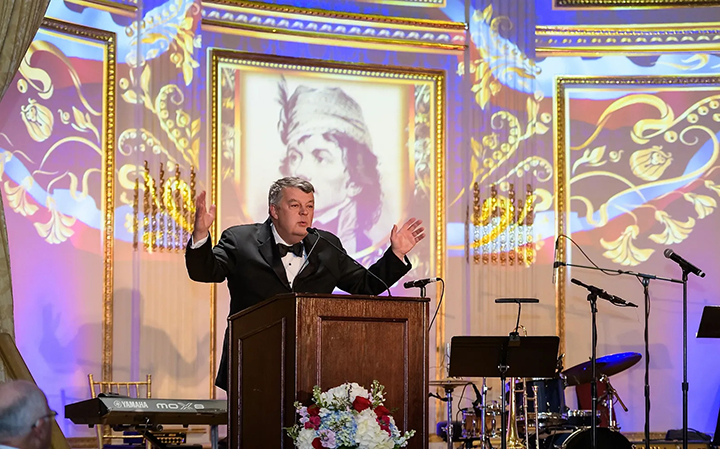
Alex Storozynski was born in New York City in 1961 into a family of Polish immigrants. He grew up in Brooklyn and Queens. His father, Dionizy, came from Lwów, while his mother, Irena, was from Volhynia. Polish history was therefore present in his home from childhood. As a boy, he accompanied his father to gatherings of Polish veterans, where portraits of Pulaski and Kościuszko hung on the walls.
He graduated from the State University of New York at New Paltz and later from Columbia University’s Graduate School of Journalism. He went on to build a distinguished career in American journalism. He was a member of the editorial board of the New York Daily News, the founding editor-in-chief of the free daily newspaper amNewYork, and city editor of The New York Sun. In 1999, the editorial board of the New York Daily News, of which he was a member, received the Pulitzer Prize for its campaign to save Harlem’s legendary Apollo Theater.
For many years he has also been associated with The Kosciuszko Foundation in New York. In 2008 he became its president and executive director, and he currently serves as chairman of its Board of Trustees.
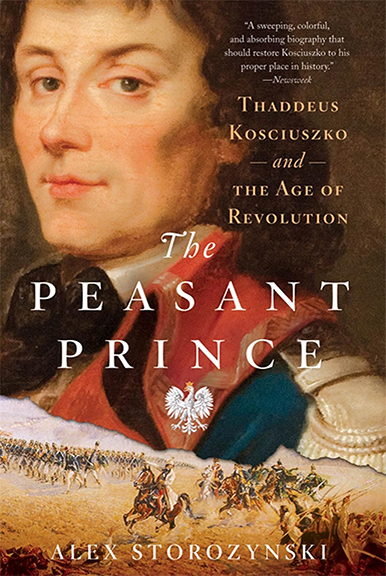
Tadeusz Kościuszko, however, became much more to him than the patron of a Polish-American institution. Storozynski spent around ten years working on his biography, researching archives, correspondence, and accounts left by people who had known the Polish commander. In 2009, The Peasant Prince: Thaddeus Kosciuszko and the Age of Revolution was published in the United States and later appeared in Polish as Kościuszko. Książę chłopów. The biography received, among other distinctions, the Fraunces Tavern Museum Book Award.
What fascinated Alex Storozynski above all was how different the real man behind the textbook monument was from the simplified image of a national hero.
A Man Before His Time
The documentary Kosciuszko: A Man Before His Time was made in 2015. Storozynski wrote the screenplay and directed the film, which was based on his book. American actor Blair Underwood served as narrator, while Olek Krupa provided the voice of Kościuszko. Filming took place in Saratoga, West Point, Philadelphia, and Poland, among other locations. Historians appear in the film, as does Zbigniew Brzezinski. The documentary was broadcast by PBS stations in the United States.
The title of the film is key to the way Alex Storozynski tells the story of his subject. He is interested not only in Kościuszko the general, military engineer, hero of Saratoga, and designer of the fortifications at West Point. Above all, he asks what the word freedom meant to Kościuszko.
Kościuszko lived in a world that was not ready for his ideas. He understood freedom as a right that should not belong only to society’s privileged classes. He thought about peasants, townspeople, Jews, women, and, in America, Black people as well.
Before Kościuszko became a hero of two continents, however, he was a young man whose life was changed by an unfulfilled love.
Ludwika Sosnowska
After graduating from Warsaw’s School of Chivalry and spending time in France, Kościuszko returned to Poland but was unable to find a position in the army. He became tutor to the daughters of Józef Sosnowski, Field Hetman of Lithuania. One of them was Ludwika Sosnowska.
The young teacher and his pupil fell in love. Ludwika was well educated and interested in new economic ideas, including physiocracy, which also fascinated Kościuszko. Alex Storozynski points out that the two were connected not only by affection but also by a similar way of thinking about society.
Ludwika’s father, however, had no intention of giving his daughter in marriage to an impoverished nobleman without great wealth or social standing. Kościuszko and Ludwika attempted to elope, but their plan failed. Ludwika later became the wife of Prince Józef Aleksander Lubomirski.*
Kościuszko left Poland. Before long, he found himself on the other side of the Atlantic, where a revolution was beginning that would change the world.
1776 — The Birth of America
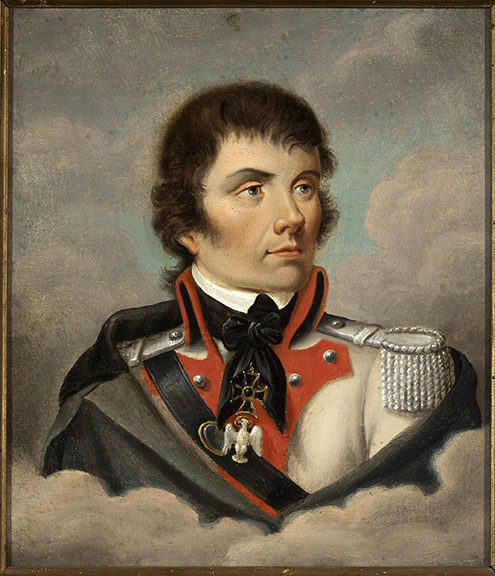
Kościuszko arrived in America in the year the Declaration of Independence was proclaimed. In October 1776, Congress appointed him a colonel and engineer in the Continental Army.
His talent became particularly evident during the Saratoga campaign. It was Kościuszko who selected and prepared the American defensive positions at Bemis Heights, making brilliant use of the terrain.
Later, Tadeusz Kościuszko was entrusted with building a system of fortifications at West Point on the Hudson River, a strategically crucial location whose loss could have divided the rebellious colonies in two. He created fortifications that helped make West Point one of the most important defensive strongholds of the young nation.
Kościuszko was therefore one of the people who helped make the creation of the United States possible.
Freedom — But for Whom?
It is here that the most contemporary aspect of Alex Storozynski’s story begins. The American Revolution proclaimed the equality of human beings, while at the same time the new republic remained a society built to a considerable extent on slavery.
Kościuszko recognized this contradiction.
In 1798, before leaving the United States once again, Kościuszko drew up an extraordinary will. He entrusted his American estate to Thomas Jefferson and instructed that the money be used to purchase the freedom of enslaved people and to provide them with vocational training and the means to begin independent lives.
Return to Poland
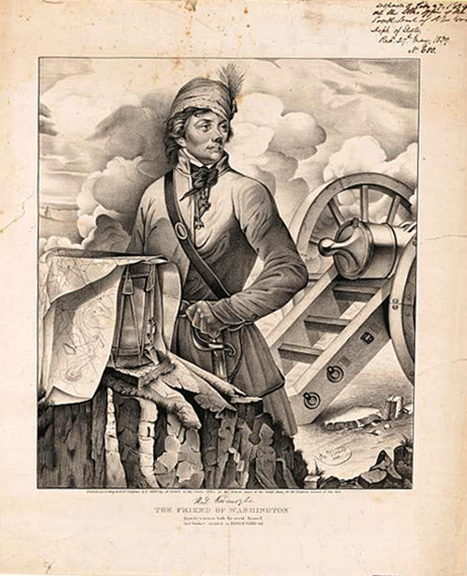
Kościuszko returned to Europe as a hero of the American War of Independence. Several years later, he became the leader of the 1794 uprising in Poland.
Here, too, his understanding of independence extended beyond the interests of the nobility. After the victory at Racławice, he put on a peasant’s homespun coat, while the Proclamation of Połaniec limited the personal subjugation of peasants and reduced the compulsory labor obligations of those who took part in the uprising. Kościuszko attempted to create a political community broader than the traditional noblemen’s Polish-Lithuanian Commonwealth.
This is why Alex Storozynski describes him as a man before his time. Not because every modern concept of human rights can simply be attributed to him, but because, against the background of the eighteenth century, he consistently sought to broaden the circle of people entitled to freedom.
Not a Monument, but a Man
Alex Storozynski’s film is at its most compelling when it allows us to see Kościuszko not as a bronze monument but as a human being — first as a young man in love with Ludwika, a talented draftsman and engineer; later as an emigrant who set out for another continent without yet knowing that he would find himself at the center of one of the most important events of the eighteenth century; an officer who built his career through talent rather than wealth or birth.
Above all, however, we see a man who persistently asked an uncomfortable question:
If we demand freedom for ourselves, can we deny it to others?
Perhaps this is precisely why Kościuszko fascinated Alex Storozynski so deeply.
250 Years Later
In 2026, Kościuszko’s story takes on an additional significance. The United States is celebrating the 250th anniversary of the Declaration of Independence, while the year also marks the 280th anniversary of Tadeusz Kościuszko’s birth.
Floyd Webb, who for decades passed through Kosciusko, Mississippi, and by the Kościuszko monument in Chicago before learning who the man behind the name actually was, has written that history can preserve names while quietly setting aside the ideas that once gave those names meaning.
Alex Storozynski’s film attempts to restore both. Not only Kościuszko’s name, but also the man behind it.
____________________
Note:
*While working on my master’s thesis, The Castle Theater in the Residence of the Lubomirski and Potocki Families in Łańcut, I was examining archival materials preserved at Łańcut Castle when I came across the memoirs of Teofil Bauman, the son of Fryderyk Bauman, an architect and stucco artist who worked at Łańcut for Princess Marshal Izabela Lubomirska.
There I found the story of how, during a visit to the Lubomirski family in Równe, Princess Marshal became so enchanted with their young son Henryk that she decided to take him with her. She hid the child in a large fur muff and drove away with him, informing his parents only afterward.
It turned out that the boy’s mother was Ludwika Sosnowska, Tadeusz Kościuszko’s beloved, who, as the wife of Józef Lubomirski, gave birth to their son in 1777. In letters to her mother, Ludwika complained of how deeply she missed her child, but eventually it was agreed that Henryk would remain with Princess Marshal, who provided him with the finest education and upbringing available at the time.
__________
Sources:
- Alex Storozynski, The Peasant Prince: Thaddeus Kosciuszko and the Age of Revolution, Thomas Dunne Books/St. Martin’s Press, New York, 2009.
- Alex Storozynski, Kosciuszko: A Man Before His Time, documentary film, 2015.
- U.S. National Park Service, Saratoga National Historical Park — “Tadeusz Kosciuszko.” Biography. Tadeusz Kosciuszko – National Park Service
- Library of Congress — “Our Founding Uncle, Thaddeus K.” Materials on Kościuszko’s role in the American Revolution and his will. Our Founding Uncle, Thaddeus K. – Library of Congress
- Polish History — Kościuszko – a man before his time, Interview with Alex Storozynski.
- The Kosciuszko Foundation — materials on Alex Storozynski’s activities, his journalistic career, his book on Kościuszko, and his work with The Kosciuszko Foundation. The Kosciuszko Foundation – Mission and History
- Floyd Webb — “An Opportunity to Mean It,” 2026. A personal reflection by the American filmmaker. An Opportunity to Mean It