Paintings That Stepped Out of the Frame

Wilhelm Sasnal’s Paintings in The Assistant

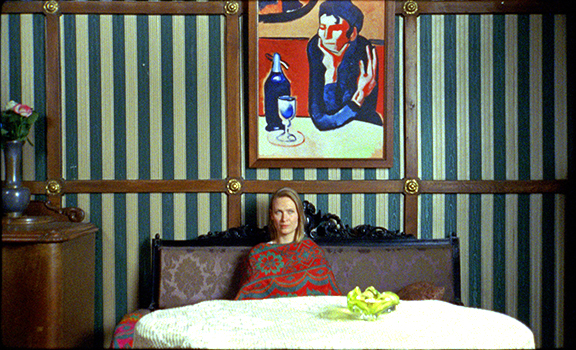
Anka Sasnal and Wilhelm Sasnal „The Assistant” (2025), film still, photo by Marek Gardulski, courtesy of the artist.

Joanna Sokołowska-Gwizdka

The paintings were created for a film. They were meant to hang on the walls of an elegant villa, accompany the characters, and help shape the atmosphere of the story. Yet before Anka and Wilhelm Sasnal’s film The Assistant reached cinemas, the canvases painted by Wilhelm had already found their way into the Stedelijk Museum in Amsterdam. What was intended as part of a film set became the subject of an artistic story of its own.

These paintings echo the work of the great masters of the European avant-garde — Henri Matisse, Pablo Picasso, and Georges Braque. Sasnal, however, does not simply copy their works. Instead, he enters into a dialogue with them, drawing on recognizable motifs and giving them new meanings.

Masters of the Avant-Garde in the Toblers’ Villa

The Assistant, inspired by Robert Walser’s 1908 novel, takes us, among other places, into the elegant villa of the inventor Carl Tobler. Inside, among the furniture and everyday objects, hang paintings that are sure to catch the eye of anyone familiar with the history of modern art.

Familiar shapes, colors, and compositions emerge, as though Matisse, Picasso, and Braque had been invited into the Toblers’ home. Yet none of these canvases was painted by their hands. All were created by Wilhelm Sasnal, who moves freely among the artistic inspirations of these great masters.
Wilhelm Sasnal
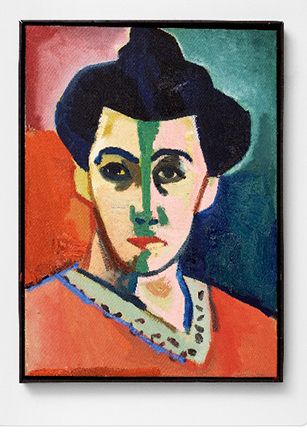
Untitled (after Henri Matisse’s “The Green Stripe”), 2023,
Oil on canvas, wooden frame, 72.5 × 52.5 cm,
Photo by Marek Gardulski, courtesy of the artist.

Particularly striking is a 2023 portrait inspired by Henri Matisse’s famous Portrait of Madame Matisse. The Green Stripe (1905). In the original painting, Matisse portrayed his wife, Amélie, dividing her face with a bold green stripe. The intense, almost clashing colors made the portrait one of the most recognizable works of Fauvism.

More than a century later, Wilhelm Sasnal revisits this composition. The familiar face appears in a new context, in a different time and a different story. In one scene, the portrait hangs on the wall behind the characters as they converse. It remains silent, yet it is difficult to escape the impression that it, too, is taking part in the scene. After all, it carries a history of its own, one that reaches far beyond the events unfolding on screen.
Wilhelm Sasnal
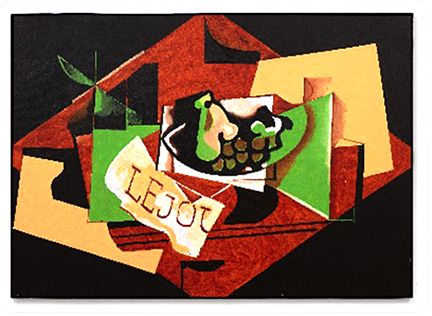
Untitled (after Georges Braque’s “Still Life”), 2023,
Oil on canvas, wooden frame, 202.5 × 142.5 cm,
Photo by Marek Gardulski, courtesy of the artist.

The same is true of a still life inspired by the work of Georges Braque. Fragmented forms, geometric divisions, and overlapping perspectives bring a sense of unease to the villa’s interior, reflecting the Cubist way of seeing the world. The painting hangs above Mrs. Tobler’s bed. As Sasnal explained in an interview with Apollo Magazine, the Cubist fragmentation of reality was intended to mirror the disintegration of the Tobler family’s seemingly orderly world. Beneath an outward appearance of stability and harmony lie deep internal fractures.
Wilhelm Sasnal
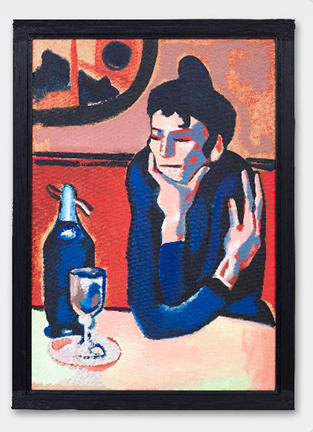
Untitled (after Pablo Picasso’s “The Absinthe Drinker”), 2023,
Oil on canvas, wooden frame, 110 × 80 cm,
Photo by Marek Gardulski, courtesy of the artist.

Among the paintings created for the film is also Sasnal’s interpretation of Pablo Picasso’s The Absinthe Drinker. In a conversation with Adam Szymczyk, Wilhelm Sasnal recalled that, in choosing the colors for this canvas, he sought to convey Mrs. Tobler’s loneliness. The painting is therefore more than a reference to art history. It also becomes a subtle commentary on the character’s emotional state.

An Encounter Between Eras

Why Matisse, Picasso, and Braque?

Robert Walser’s novel was published in 1908, at a time when European art was undergoing one of its most profound transformations. Just a year earlier, Picasso had painted Les Demoiselles d’Avignon, heralding a radically new way of seeing and representing reality. Matisse was experimenting with color, while Braque was breaking objects down into geometric forms. Painting was freeing itself from the obligation to faithfully reproduce the visible world.

Wilhelm Sasnal evokes the spirit of this artistic upheaval without attempting to reconstruct the period with museum-like precision. Here, the past meets the present, and the boundaries of time become surprisingly fluid.

Alongside references to the early twentieth-century avant-garde, motifs from entirely different decades appear. In one scene, Joseph Marti hangs a painting by Sasnal in his room, inspired by the cover of a 1984 album by the British band The Smiths. The film also makes room for a copy of a 1924 sculpture by Katarzyna Kobro, created by Sasnal himself.
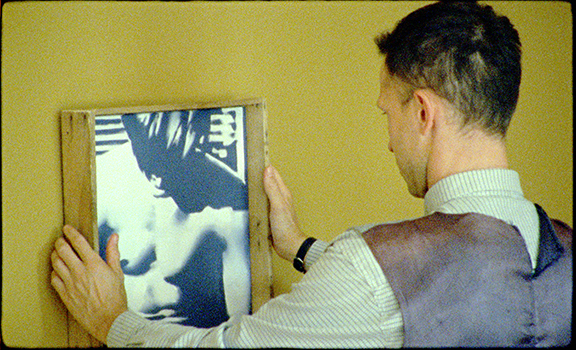
Anka Sasnal i Wilhelm Sasnal „Człowiek do wszystkiego”, 2025 – kadr z filmu.
Joseph Marti wiesza w swoim pokoju obraz W. Sasnala inspirowany okładką albumu brytyjskiego zespołu The Smiths z 1984 r., fot. Marek Gardulski, dzięki uprzejmości artysty.

The result is a space where different eras and artistic styles mingle freely, much like memories that do not always follow a chronological order.

The paintings also reveal something about the villa’s owner. Carl Tobler is an ambitious man, confident in his abilities and eager to be seen as an inventor and a man of the modern age. The art he surrounds himself with may reflect his taste, but also his aspirations and desire for social recognition.

The interior of the house thus becomes a kind of portrait of its owner. What hangs on the walls speaks not only of Tobler’s artistic preferences, but also of the image he wishes to project.
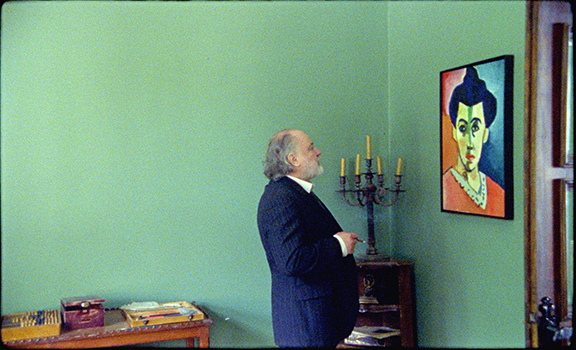
Anka Sasnal and Wilhelm Sasnal, „The Assistant” (2025), film still. Photo by Marek Gardulski, courtesy of the artist.
Paintings That Step Out of the Frame

The story of these canvases, however, does not end on the film set.

In 2024, while The Assistant was still in production, the Stedelijk Museum in Amsterdam presented an exhibition titled Wilhelm Sasnal: Painting as Prop. It was curated by Adam Szymczyk, a Polish art critic known, among other things, for serving as the artistic director of documenta 14 in Kassel and Athens.

The exhibition, on view from March 30 to September 1, 2024, featured 25 paintings, including canvases created for the film as well as other works by Sasnal exploring recurring themes of art history, photography, and memory. The exhibition had already been planned while the film was in production, giving the paintings an opportunity from the outset to exist in both cinematic and museum settings.

The exhibition’s title itself suggested a certain paradox. Does a painting created as a film prop remain merely a prop? Is its meaning defined by the setting for which it was made?

In a film, paintings are part of a larger whole. The camera may linger on them for a moment or pass them by as it follows the characters. In a museum, the relationship is reversed. The paintings themselves take center stage, and viewers can devote as much time to them as they wish.

Yet the story of these paintings did not end with the final clap of the clapperboard. Wilhelm Sasnal returned to some of the canvases, reworking their compositions, enriching their painted surfaces, and moving further away from their original inspirations. In an interview with Apollo Magazine, he acknowledged that the paintings had initially been created rather quickly, primarily as film props. Only later did he feel the need to give them greater depth and independence as works of art.

And so their second life began. Created for the camera, they were now free from its gaze. In the museum, they no longer had to accompany the characters or serve the film’s narrative. They could speak in a language of their own — the language of painting.
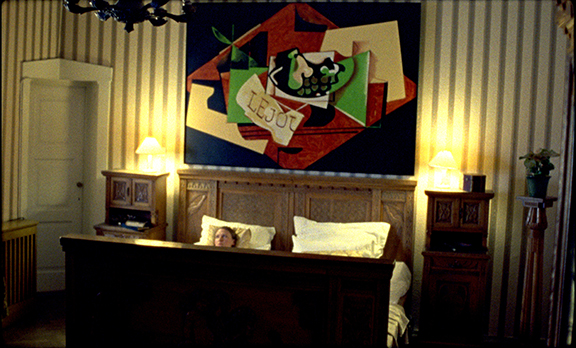
Anka Sasnal and Wilhelm Sasnal, „The Assistant” (2025), film still. Photo by Marek Gardulski, courtesy of the artist.
Between Painting and Cinema

Wilhelm Sasnal is both a painter and a filmmaker, although he is reluctant to treat these two aspects of his work as a single artistic practice. In interviews, he emphasizes the differences between them. For him, cinema is primarily about storytelling unfolding over time, shaped by movement, events, and relationships between people. Painting follows a different set of rules.

And yet, in The Assistant, these two worlds come together in a particularly compelling way.

The paintings are more than mere decorations. They bring their own histories and meanings into the film. At times they remain almost unnoticed; at others, they catch the viewer’s eye with a familiar motif or an unexpected combination of colors. Together, they create a second, subtle layer of storytelling.

One can follow the story of Joseph Marti without recognizing a single artistic reference. But a closer look reveals another story unfolding behind the characters — the story of art itself, continually returning, taking on new meanings, and finding its place in new contexts.

In Anka and Wilhelm Sasnal’s film, painting moves beyond the boundaries of its frame to become part of cinema. It then leaves the screen and returns to the gallery, carrying with it the experience of another story.

For a painting, even one created for a film, need not remain in its shadow.


Sources:

  1. Stedelijk Museum, Amsterdam — Wilhelm Sasnal: Painting as Prop, exhibition, March 30 – September 1, 2024.
  2. Conversation between Wilhelm Sasnal and Adam Szymczyk, Stedelijk Museum, 2024.
  3. “The Set Pieces of Wilhelm Sasnal,” Apollo Magazine, March 21, 2025.
  4. Art Basel — materials on Wilhelm Sasnal’s paintings and his exhibition at the Stedelijk Museum.
  5. Robert Walser, Der Gehülfe (The Assistant), 1908.


Obrazy, które wyszły z kadru

Malarstwo Wilhelma Sasnala w filmie „Człowiek do wszystkiego”
Anka Sasnal i Wilhelm Sasnal „Człowiek do wszystkiego”, 2025 – kadr z filmu, fot. Marek Gardulski, dzięki uprzejmości artysty

Joanna Sokołowska-Gwizdka

Obrazy powstawały z myślą o filmie. Miały zawisnąć na ścianach eleganckiej willi, towarzyszyć bohaterom, współtworzyć atmosferę opowieści. Zanim jednak film Anki i Wilhelma Sasnalów „Człowiek do wszystkiego” trafił do kin, płótna namalowane przez Wilhelma znalazły się w amsterdamskim Stedelijk Museum. To, co miało być częścią scenografii, stało się przedmiotem osobnej artystycznej opowieści.

W tych obrazach pobrzmiewają echa wielkich mistrzów europejskiej awangardy — Henriego Matisse’a, Pabla Picassa i Georges’a Braque’a. Sasnal nie ogranicza się jednak do kopiowania ich dzieł. Podejmuje z nimi dialog, sięgając po rozpoznawalne motywy i nadając im nowe znaczenia.

Mistrzowie awangardy w willi Toblerów

Film „Człowiek do wszystkiego”, inspirowany powieścią Roberta Walsera z 1908 roku, przenosi nas między innymi do eleganckiej willi wynalazcy Carla Toblera. W jej wnętrzach, pośród mebli i przedmiotów codziennego użytku, wiszą obrazy, które przyciągną uwagę widza znającego historię nowoczesnego malarstwa.

Można tu odnaleźć znajome kształty, kolory i kompozycje. Jakby Matisse, Picasso i Braque zostali zaproszeni do domu Toblerów. A jednak żadne z tych płócien nie wyszło spod ich pędzla. Wszystkie namalował Wilhelm Sasnal, swobodnie poruszając się po świecie malarskich inspiracji.

Wilhelm Sasnal
Bez tytułu (według „Zielonej kreski” Henri Matisse’a), 2023
olej na płótnie, drewniana rama, 72,5 x 52,5 cm
fot. Marek Gardulski, dzięki uprzejmości artysty

Szczególną uwagę zwraca portret z 2023 roku, nawiązujący do słynnego „Portretu pani Matisse. Zielona kreska” z 1905 roku. Henri Matisse przedstawił w nim swoją żonę Amélie, przecinając jej twarz wyrazistą zieloną smugą. Intensywne, niemal zderzające się ze sobą barwy sprawiły, że portret stał się jednym z najbardziej rozpoznawalnych dzieł fowizmu.

Ponad sto lat później Wilhelm Sasnal powraca do tej kompozycji. Znajoma twarz pojawia się w nowym kontekście, w innym czasie i w innej opowieści. W jednej ze scen filmu portret wisi na ścianie za rozmawiającymi bohaterami. Milczy, lecz trudno oprzeć się wrażeniu, że również uczestniczy w tej scenie. Ma przecież własną historię, znacznie starszą od filmowych wydarzeń.

Wilhelm Sasnal
Bez tytułu (według „Martwej natury” Georgesa Braque’a), 2023,
olej na płótnie, drewniana rama, 202,5 x 142,5 cm,
fot. Marek Gardulski, dzięki uprzejmości artysty

Podobnie jest z martwą naturą inspirowaną twórczością Georges’a Braque’a. Rozbite formy, geometryczne podziały i przenikające się perspektywy wnoszą do wnętrza willi niepokój właściwy kubistycznemu spojrzeniu na świat. Obraz wisi nad łóżkiem pani Tobler. Jak wyjaśniał Sasnal w rozmowie z „Apollo Magazine”, kubistyczne rozbicie rzeczywistości miało odzwierciedlać rozpad pozornie uporządkowanego świata rodziny Toblerów. To, co z zewnątrz wydaje się stabilne i harmonijne, kryje wewnętrzne pęknięcia.

Wilhelm Sasnal
Bez tytułu (według „Pijącej absynt” Pabla Picassa), 2023,
olej na płótnie, drewniana rama, 110 x 80 cm,
fot. Marek Gardulski, dzięki uprzejmości artysty

Wśród obrazów powstałych do filmu znalazła się również interpretacja „Pijącej absynt” Pabla Picassa. W rozmowie z Adamem Szymczykiem Wilhelm Sasnal wspominał, że dobierając kolorystykę tego płótna, starał się oddać samotność pani Tobler. Obraz nie jest więc jedynie cytatem z historii sztuki. Staje się także dyskretnym komentarzem do psychologicznej sytuacji bohaterki.

Spotkanie epok

Dlaczego właśnie Matisse, Picasso i Braque?

Powieść Roberta Walsera ukazała się w 1908 roku, w chwili, gdy europejska sztuka przeżywała jeden ze swoich największych przełomów. Rok wcześniej Picasso namalował „Panny z Awinionu”, zapowiadając narodziny nowego sposobu widzenia i przedstawiania rzeczywistości. Matisse eksperymentował z kolorem, Braque rozbijał przedmioty na geometryczne formy. Malarstwo uwalniało się od obowiązku wiernego naśladowania świata.

Wilhelm Sasnal przywołuje atmosferę tego artystycznego fermentu, nie próbując jednak odtwarzać epoki z muzealną dokładnością. Przeszłość spotyka się tu ze współczesnością, a granice czasu okazują się zaskakująco płynne.

Obok odniesień do awangardy początku XX wieku pojawiają się motywy należące do zupełnie innych dziesięcioleci. W jednej ze scen Joseph Marti wiesza w swoim pokoju obraz Sasnala inspirowany okładką albumu brytyjskiego zespołu The Smiths z 1984 roku. W filmowym świecie znalazło się także miejsce dla wykonanej przez artystę kopii rzeźby Katarzyny Kobro z 1924 roku.

Anka Sasnal i Wilhelm Sasnal „Człowiek do wszystkiego”, 2025 – kadr z filmu.
Joseph Marti wiesza w swoim pokoju obraz W. Sasnala inspirowany okładką albumu brytyjskiego zespołu The Smiths z 1984 r., fot. Marek Gardulski, dzięki uprzejmości artysty.

Powstaje w ten sposób przestrzeń, w której epoki i style przenikają się swobodnie, jak w pamięci, która nie zawsze przestrzega chronologii.

Obrazy mówią również coś o właścicielu willi. Carl Tobler jest człowiekiem ambitnym, przekonanym o własnych możliwościach, pragnącym uchodzić za wynalazcę i człowieka nowoczesnego. Sztuka, którą się otacza, może być świadectwem jego gustu, ale także aspiracji i potrzeby społecznego uznania.

Wnętrze domu staje się więc rodzajem portretu jego mieszkańca. To, co wisi na ścianach, opowiada nie tylko o upodobaniach Toblera, lecz również o tym, za kogo chciałby uchodzić.

Anka Sasnal i Wilhelm Sasnal „Człowiek do wszystkiego”, 2025 – kadr z filmu, fot. Marek Gardulski, dzięki uprzejmości artysty

Obrazy wychodzą z kadru

Historia tych płócien nie kończy się jednak na filmowym planie.

W 2024 roku, gdy „Człowiek do wszystkiego” pozostawał jeszcze w realizacji, amsterdamskie Stedelijk Museum zaprosiło publiczność na wystawę „Wilhelm Sasnal: Painting as Prop” — „Malarstwo jako rekwizyt”. Jej kuratorem był Adam Szymczyk, polski krytyk sztuki, znany między innymi jako dyrektor artystyczny documenta 14 w Kassel i Atenach.

Wystawa, prezentowana od 30 marca do 1 września 2024 roku, obejmowała 25 obrazów, wśród nich płótna stworzone do filmu, a także inne prace Sasnala, w których powracają historia sztuki, fotografia i pamięć. Projekt wystawy był planowany już podczas pracy nad filmem. Obrazy miały więc od początku szansę zaistnieć zarówno w przestrzeni filmowej, jak i muzealnej.

Sam tytuł wystawy zawierał pewien paradoks. Czy obraz, który powstał jako filmowy rekwizyt, pozostaje tylko rekwizytem? Czy jego znaczenie wyznacza miejsce, dla którego został namalowany?

W filmie obrazy są częścią większej całości. Kamera może zatrzymać się na nich na chwilę albo przesunąć obok, podążając za bohaterami. W muzeum sytuacja się odwraca. To one stają się bohaterami, a widz może poświęcić im tyle czasu, ile zechce.

Historia tych obrazów nie skończyła się wraz z ostatnim klapsem na planie filmowym. Wilhelm Sasnal powrócił do niektórych płócien, poprawiając ich kompozycję, wzmacniając materię malarską, oddalając się od pierwowzorów. W rozmowie z „Apollo Magazine” przyznał, że obrazy powstawały początkowo w pośpiechu, przede wszystkim jako filmowe rekwizyty. Dopiero później poczuł potrzebę nadania im większej głębi i niezależności.

Tak zaczęło się ich drugie życie. Stworzone dla kamery, uwolniły się od jej spojrzenia. W muzealnej przestrzeni nie musiały już towarzyszyć bohaterom ani podporządkowywać się filmowej narracji. Mogły przemawiać własnym językiem — językiem malarstwa.

Anka Sasnal i Wilhelm Sasnal „Człowiek do wszystkiego”, 2025 – kadr z filmu, fot. Marek Gardulski, dzięki uprzejmości artysty

Między malarstwem a kinem

Wilhelm Sasnal jest zarówno malarzem, jak i reżyserem, choć sam niechętnie łączy te dwie dziedziny swojej twórczości w jedną. W wywiadach podkreśla ich odmienność. Film to dla niego przede wszystkim opowieść rozwijająca się w czasie, zbudowana z ruchu, wydarzeń i relacji między ludźmi. Malarstwo rządzi się innymi prawami.

A jednak w „Człowieku do wszystkiego” te dwa światy spotykają się w sposób szczególny.

Obrazy nie są jedynie ozdobą wnętrz. Wnoszą do filmu własną historię i znaczenia. Czasem pozostają niemal niezauważone, czasem przyciągają wzrok znajomym motywem lub niespodziewanym zestawieniem barw. Tworzą drugą, dyskretną warstwę opowieści.

Można oglądać losy Josepha Martiego, nie rozpoznając żadnego z malarskich odniesień. Można jednak spojrzeć uważniej i odkryć, że za plecami bohaterów toczy się jeszcze jedna historia — historia sztuki, która nieustannie powraca, zmienia znaczenia i odnajduje się w nowych okolicznościach.

W filmie Anki i Wilhelma Sasnalów malarstwo przekracza granice własnej ramy, by stać się częścią kina. Potem opuszcza ekran i wraca do galerii, już z doświadczeniem innej opowieści.

Bo obraz, nawet namalowany dla filmu, nie musi pozostać w jego cieniu.


Źródła:

  1. Stedelijk Museum, Amsterdam — „Wilhelm Sasnal: Painting as Prop”, wystawa, 30 marca – 1 września 2024.
  2. Rozmowa Wilhelma Sasnala z Adamem Szymczykiem, Stedelijk Museum, 2024.
  3. „The Set Pieces of Wilhelm Sasnal”, Apollo Magazine, 21 marca 2025.
  4. Art Basel — materiały dotyczące malarstwa Wilhelma Sasnala i wystawy w Stedelijk Museum.
  5. Robert Walser, „Der Gehülfe” („Pomocnik”), 1908.