Bolesław Prus’s „The Doll” – A Penetrating Portrait of Polish Society
Joanna Sokołowska-Gwizdka
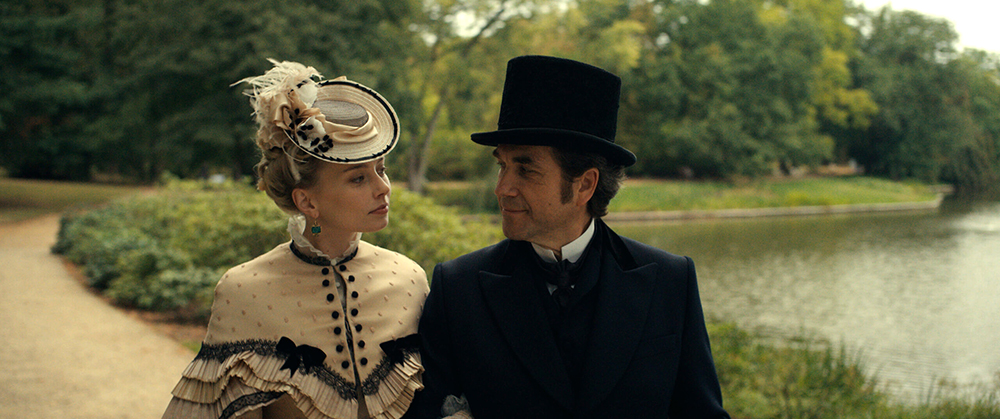
Bolesław Prus’s The Doll was written at a time when Poland no longer existed on the map of Europe, and the failures of successive national uprisings had prompted a period of reflection on the nation’s future. Without abandoning the dream of independence, Poles began seeking other ways to strengthen their society. Following the defeat of the January Uprising of 1863, the Positivist ideals of organic work and grassroots education gained particular importance. The development of entrepreneurship, education, and science, along with overcoming social divisions, was intended to strengthen a nation deprived of its own state. These ideas found widespread expression in the literature of the period.
Against this historical background, Bolesław Prus took a close look at Warsaw society in the second half of the nineteenth century, when the city was under Russian rule. He created a multifaceted portrait of its social divisions, aspirations, prejudices, and contradictions between professed values and actual behavior. At the same time, he explored with remarkable insight the human desire for love, success, and social recognition. As a result, more than 130 years after its first publication, The Doll continues to invite new interpretations, while many of Prus’s observations remain relevant today.
Bolesław Prus – The Writer’s Life and Experiences
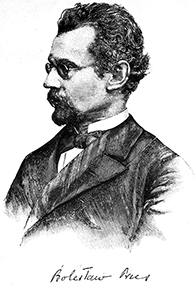
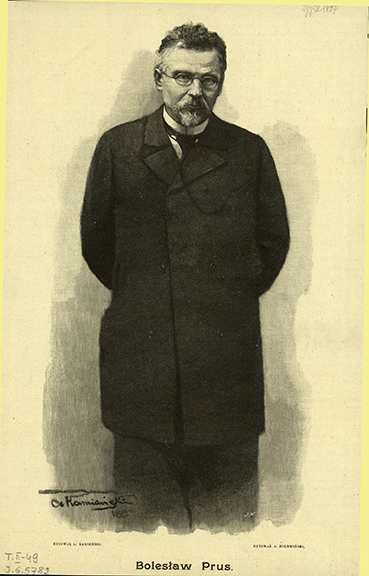
Bolesław Prus, whose real name was Aleksander Głowacki, was born in 1847 in Hrubieszów, into an impoverished noble family. His father, Antoni Głowacki, belonged to a family bearing the Prus I coat of arms, from which the writer adopted his literary pseudonym. Having lost much of its former wealth, the family was forced to earn a living through paid employment.
In 1863, at the age of sixteen, Aleksander took part in the January Uprising against Russian rule. He was wounded in a skirmish and taken prisoner by Russian forces. The defeat of the uprising left a lasting mark on his generation, which had been raised in the Romantic tradition of fighting for national freedom. Prus later became one of the leading figures of Polish Positivism.
He was deeply interested in mathematics, physics, and technological advances. He dreamed of pursuing a scientific career, but financial difficulties led him toward journalism and literature. He gained popularity through his Weekly Chronicles, published in the Warsaw press. With humor, irony, and social sensitivity, he portrayed the city’s everyday life: new inventions, entrepreneurial activity, aristocratic customs, the struggles of its poorer inhabitants, and developments in commerce and education. These observations provided the foundation for The Doll, in which he offered a critical examination of the society of his time.
Warsaw Under Foreign Rule
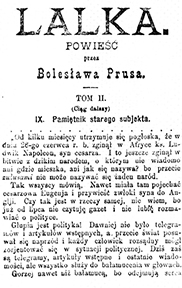
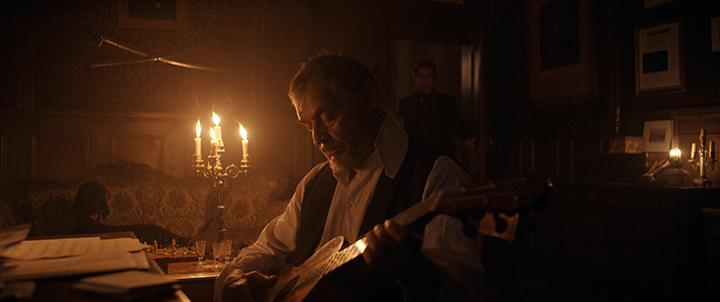
The Doll was published in installments in the Kurier Codzienny newspaper between 1887 and 1889, with its first book edition appearing in 1890. The novel is set primarily in Warsaw in 1878–1879, when the city was under Russian rule.
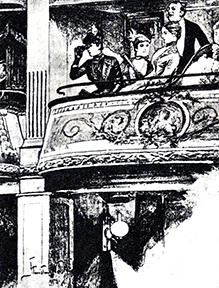
Prus’s Warsaw is a city of contrasts. Elegant salons and lavish social gatherings exist alongside the poverty of the Powiśle district. People from different social classes cross paths in the streets and shops, yet they remain divided not only by wealth but also by social background, customs, and mutual prejudices.
Prus portrays the aristocracy critically, exposing its attachment to inherited privileges, its disdain for work and entrepreneurship, and its indifference to poverty. He also recognizes the opportunities for progress that society squanders because of its own limitations. The Doll is therefore not merely a portrait of Warsaw under foreign rule, but also an attempt to understand the weaknesses of a society upon which the country’s future depended.
Stanisław Wokulski – Between Romanticism and Positivism
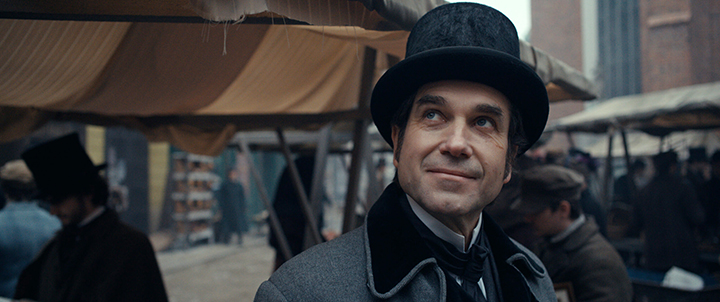
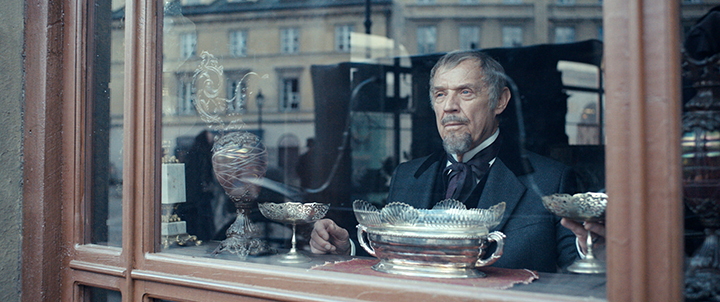
Stanisław Wokulski is one of the most complex characters in Polish literature. He is an entrepreneur who amasses considerable wealth through intelligence, hard work, and determination, yet remains a Romantic who subordinates his life to his love for Izabela Łęcka.
Two eras converge in his character. His youth was shaped by the Romantic tradition of fighting for freedom, while his later life reflects the Positivist belief in work, knowledge, and economic progress. Wokulski recognizes opportunities that others overlook and is willing to take risks. He could play an important role in modernizing society, but his ambitions become increasingly bound to his desire to win Izabela’s love and gain acceptance within aristocratic circles.
He discovers that money alone cannot overcome social barriers. Despite his wealth and personal achievements, the aristocracy continues to regard him as a man of inferior social standing. His tragedy also lies in the fact that he begins to measure his own worth by the standards of a social class whose limitations he understands all too well.
Alongside Wokulski are Ignacy Rzecki, devoted to the ideals of the past and the Napoleonic legend, and the young Julian Ochocki, fascinated by science and the technological future. Prus even considered calling his novel Three Generations. Rzecki, Wokulski, and Ochocki represent three generations of idealists whose aspirations encounter the resistance of reality.
Why Does The Doll Remain Relevant Today?
Although nearly a century and a half separates us from the events depicted by Prus, many of the social and psychological dynamics explored in the novel remain relevant today.
One of them is the way society judges individuals. In the world of The Doll, family background, wealth, and personal connections often matter more than talent or individual achievement. Today, aristocratic titles have lost their significance, but exclusive social circles, hierarchies of prestige, and social barriers have not disappeared. A person’s standing may still depend on family ties, influential connections, prestigious educational institutions, or membership in certain professional circles.
Equally relevant is Prus’s portrayal of the psychology of love. Wokulski loves not only Izabela herself but also the image he has created of her. He sees her as the embodiment of beauty and of the world to which he longs to belong. He fails to recognize the gap between his idealized vision and reality.
Today’s culture of image-making, particularly prevalent on social media, gives these dynamics a new form. Much like in the salons of Prus’s era, how one presents oneself, the company one keeps, social standing, and the opinions of others continue to matter.
Both Wokulski and Izabela are, to some extent, prisoners of social expectations. He tries to win love and recognition through wealth, while she cannot imagine a life beyond the conventions of her own social class. Their inability to understand one another is therefore not merely personal but also rooted in the society to which they belong.
From today’s perspective, Julian Ochocki is another particularly interesting character. His dreams of scientific discoveries and inventions seem eccentric to those around him, while he sees in them the future of civilization. In an age of artificial intelligence and rapid technological development, this aspect of the novel takes on new significance. Prus raises the question of whether society is capable of appreciating science and supporting those whose ideas are ahead of their time.
This article was prepared with the assistance of ChatGPT (GPT-6, OpenAI) in researching sources and verifying historical information.
Historical and Literary Sources:
- Culture.pl – “Bolesław Prus (Aleksander Głowacki): Life and Works.”
- National Library of Poland – “Everything About Bolesław Prus’s The Doll.”
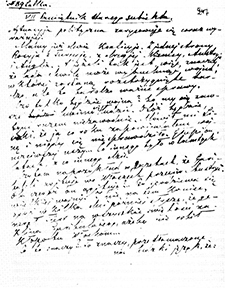
- Bolesław Prus – The Doll (Lalka), Warsaw: Gebethner and Wolff, 1890. The original text of the novel, available in three volumes through the Polona Digital Library.