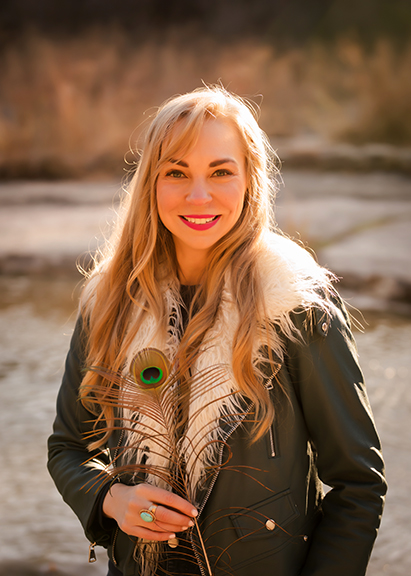
Ahead of her recital in Austin, Texas, Polish soprano Dominika Zamara speaks about artistic journeys, the meaning of voice, and the inner work behind performance. She reflects on Italy as her artistic home, the emotional truth of opera, and why music continues to transcend borders. Interview by Joanna Sokołowska-Gwizdka.
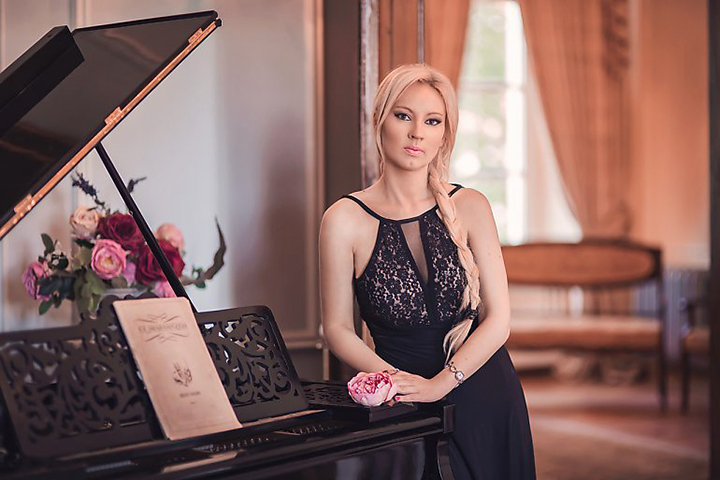
Dominika Zamara, photo by Aneta Pawska
Joanna Sokołowska-Gwizdka: You come from Wrocław, but you left for Italy very early. What shaped that decision?
Dominika Zamara: It felt like destiny. Italy was, for me, a kind of Promised Land. Opera was born there, and I knew I had to go. I received a scholarship to the Conservatory in Verona, where I completed my vocal studies. Italy also gave me my operatic debut—Puccini’s La Bohème in Padua. Only by living there can you truly enter into a kind of symbiosis with opera.
Joanna Sokołowska-Gwizdka: You worked with remarkable teachers in Italy. Is there someone who left a lasting impression?
Dominika Zamara: There are many, but Maestro Enrico De Mori was especially important. He worked with Maria Callas and had a profound influence on me, both musically and personally. He gave me lessons, supported my development, and conducted my operatic debut. He was demanding—nothing escaped his attention—but he also had great generosity. He believed in me, and that stays with me.
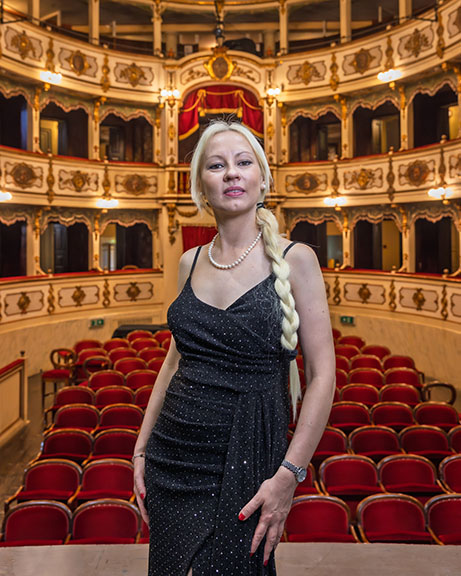
Dominika Zamara, photo by Paolo Gepri
Joanna Sokołowska-Gwizdka: You’ve performed on major stages worldwide—from Carnegie Hall to European opera houses. How do audiences differ between Europe and the United States?
Dominika Zamara: American audiences are very warm and open. In Europe, audiences can be more reserved, sometimes more analytical. Italy is unique—listeners are often deeply knowledgeable, even critical, many knowing entire librettos by heart. But what I truly appreciate in the U.S. is that immediate warmth.
Joanna Sokołowska-Gwizdka: Your repertoire ranges from Baroque to contemporary music. What connects these different worlds?
Dominika Zamara: Music itself. If we look at someone like Vivaldi, he was already innovative in his time, and his influence continues to this day. I see historical periods as a way of understanding evolution. At the same time, I am fortunate that contemporary composers write for my voice. I enjoy premiering new works—it feels like being part of something alive, still unfolding.
Joanna Sokołowska-Gwizdka: Chopin holds a special place in your repertoire. How do you approach his songs?
Dominika Zamara: Chopin’s songs are, for me, the essence of the Polish soul. They carry tradition, memory, even the rhythms of Polish dances. I have recorded and performed them in many places, including Teatro alla Scala. I sing them with a sense of longing—something deeply rooted in my identity.
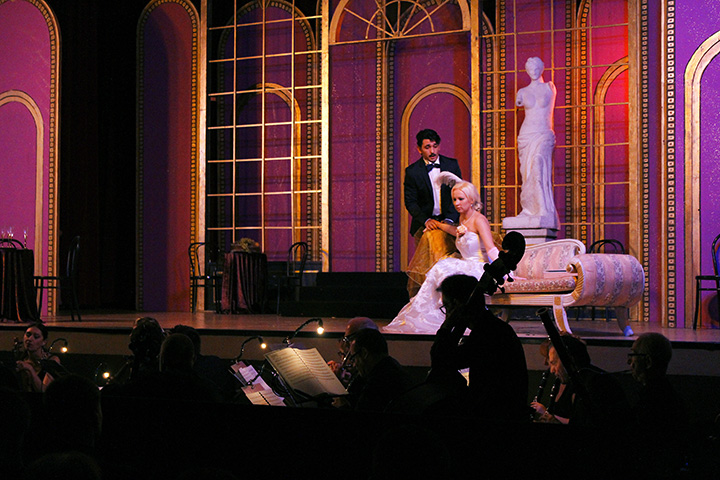
Dominika Zamara, ”La Traviata”, Milan, photo by Enrico Bertato
Joanna Sokołowska-Gwizdka: You often promote Polish music abroad. How is it received?
Dominika Zamara: Very well. Many listeners know only Chopin’s piano works and are surprised by his vocal music. When they hear it, they are moved. With composers like Karłowicz or Moniuszko, there is often a sense of discovery—especially in places like Italy, where audiences respond with genuine enthusiasm.
Joanna Sokołowska-Gwizdka: What can audiences in Texas expect from your recital?
Dominika Zamara: A surprise [laughs]. There will certainly be Polish songs, including Chopin, as well as Italian bel canto repertoire.
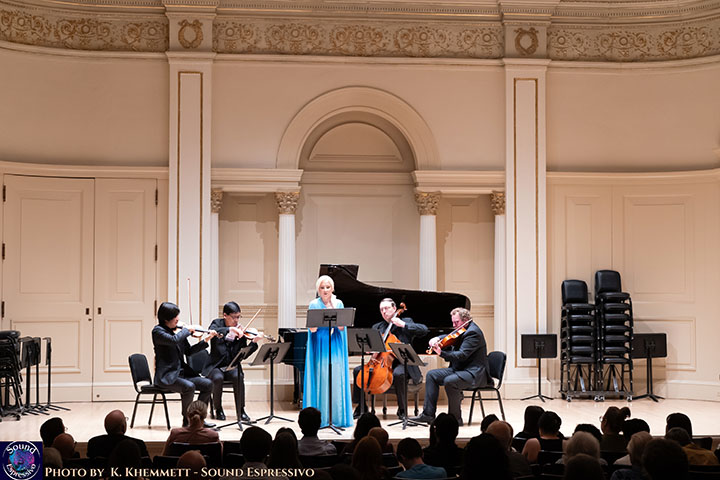
Dominika Zamara, Carnegie Hall, New York, photo by K. Khemmett, Sound Espressivo
Joanna Sokołowska-Gwizdka: What do you discover about yourself through singing?
Dominika Zamara: It is a continuous process of self-reflection. Each role reveals something new. Sometimes you are pushed physically or emotionally, especially in opera, where you must fully enter the character. Working with a score for hours is like standing in front of a mirror—it’s a confrontation with yourself, with the text, with emotion.
Joanna Sokołowska-Gwizdka: Is there still a role you dream of?
Dominika Zamara: Of course. Art has no boundaries. I am always developing, always learning new repertoire. In recent years, I’ve been involved in many world premieres of contemporary works—in Italy, Poland, and the U.S. I collaborate with the New York Composers Circle and perform premieres, including at Carnegie Hall.
About the Artist
Dominika Zamara is a Polish soprano and graduate of the Academy of Music in Wrocław. She continued her studies in Italy, including at the Conservatory in Verona, working with distinguished teachers such as Alida Ferrarini, Bruno Pola, and Enrico De Mori. She made her operatic debut in 2010 as Mimì in Puccini’s La Bohème.
She has performed internationally across Europe, the United States, Latin America, Asia, and Australia. Her appearances include Carnegie Hall and Lincoln Center in New York, Teatro alla Scala in Milan, Teatro Olimpico in Vicenza, and the Protomoteca Hall in Rome. Her repertoire spans opera, art song, chamber music, and contemporary works.
She is the recipient of numerous awards, including the American Prize (2023) in chamber vocal music, and has been featured in encyclopedias of Polish musicians worldwide. In 2023, she joined the New York Composers Circle.
Recital in Austin
Austin Polish Society invites you to a recital by Dominika Zamara
May 3, 2026 | 5:30 PM Draylen Mason Music Studio KMFA Classical 89.5 41 Navasota St, Austin, TX
The Legacy of Memory
An Interview with Isabella Skrzypczak
Listen to AI generated conversation by Google NotebookLM
Some stories begin the moment someone knocks on the door in the middle of the night.
Isabella Skrypczak, translator of her grandmother’s Siberian memoirs
The history of the twentieth century left Europe marked by countless tragedies. Yet not all of them have found equal space in the world’s collective memory. In the shadow of dominant World War II narratives lies the fate of hundreds of thousands of Poles deported by Soviet authorities to Siberia and Kazakhstan.
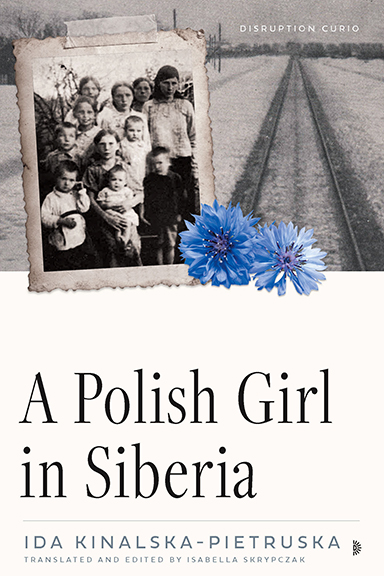
One of them was Ida Kinalska-Pietruska. She was only six years old when, in 1940, Soviet soldiers broke down the door of her home and sent her, together with her mother, into exile — in cattle cars, deep into Stalin’s empire. Her memories, recorded years later from the perspective of a child, remain a haunting testimony of that time.
Decades later, her story has been brought to new audiences by her granddaughter, Isabella Skrzypczak, who translated the memoir into English and enriched it with her own reflections. In doing so, she not only preserved a family history, but also gave voice to a larger, often overlooked human experience.
With Isabella Skrypczak — translator of her grandmother Ida Kinalska-Pietruska’s book A Polish Girl in Siberia — Joanna Sokołowska-Gwizdka discusses how family memory shapes subsequent generations, why certain experiences remain invisible in Western narratives of the war, and what it means to tell one’s grandmother’s story to the world.
*
Joanna Sokołowska-Gwizdka:
You were born and raised in Houston, yet you speak Polish beautifully. What kind of Poland did you come to know during your childhood visits to your grandmother?
Isabella Skrypczak:
I grew up in a home where Polish was the only language spoken, so it naturally became my first language. My parents sent me to a Polish school in Houston, so Polish identity was always a central part of who I am. But it was the time I spent in Poland with my family that truly shaped me.
The Poland I first encountered in the 1980s was marked by scarcity and grayness — a lack of basic goods, rows of concrete apartment blocks, a certain heaviness in the air. As a child, I felt a quiet sadness there, as if something essential was missing, even within myself.
Then came the 1990s — a country in transition, newly independent, slowly opening itself to the world. There was a sense that Poland was finally beginning to breathe again, although the process was far from easy. I remember small Fiat cars, Polonez vehicles, and even horse-drawn carts still present on the roads. In the countryside, there were houses with thatched roofs, and most families lived in apartment blocks, escaping on weekends to modest garden plots on the outskirts of cities.
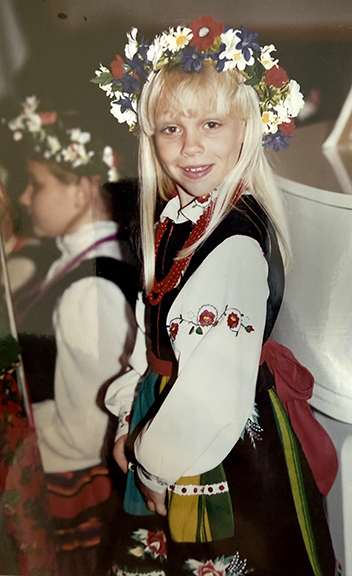
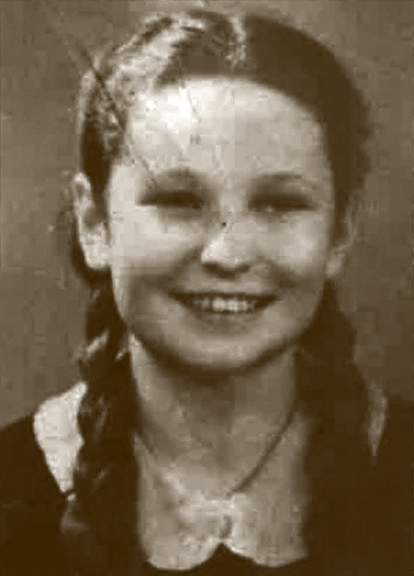
Iza, as a Kraków girl, photo from the author’s archive
Shops were few, and their shelves often empty. My grandmother treated rural patients, and in return received eggs, cream, or milk — simple exchanges that felt deeply human. There was no internet, only a handful of television channels, so we children lived mostly outdoors, often barefoot, inventing our own worlds. Those memories remain among the most vivid and joyful of my childhood.
By the early 2000s, Poland had changed dramatically. Joining the European Union and NATO, it began to flourish. New buildings appeared, the streets filled with different cars, and there was a sense of renewal. I remember feeling relief — as if Poland was finally being seen and valued.
At that time, I was interning at a law firm, volunteering, and studying abroad at the Warsaw School of Economics. Despite occasional remarks — being called “the American,” or gently teased about my grammar — I felt a deep sense of belonging in Poland. In many ways, more than in the United States, where I often felt like an outsider despite being born there.
Today, the Poland I see is vibrant, stable, and forward-looking — a place where people are consciously working to heal the wounds and traumas of previous generations. I feel grateful to be part of that process.
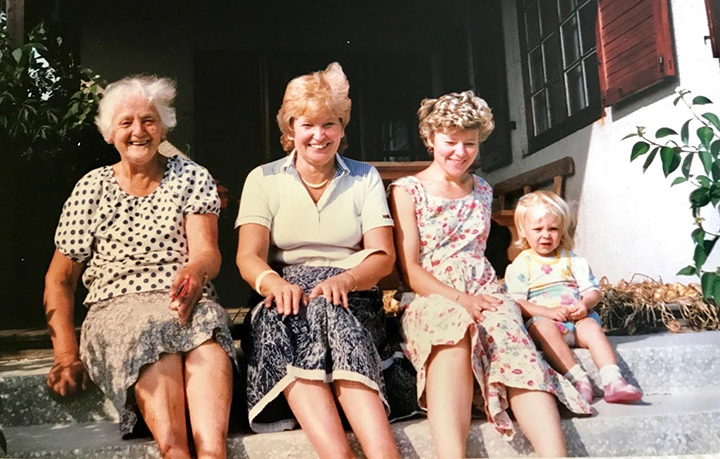
Four generations of women in 1988 – 43 years after the end of the war. From the left: Leokadia Sidorowicz, Ida Teresa Kinalska (the author’s grandmother), Małgorzata Kinalska (the author’s mother), and Isabella Skrypczak, photo from the author’s archive.
*
Joanna Sokołowska-Gwizdka:
Your grandmother’s story begins like a scene from a drama — a night raid, Soviet soldiers, deportation. When did you first hear this story?
Isabella Skrypczak:
I must have been about two years old. My grandmother was telling someone about that night — how soldiers entered her home with weapons. She didn’t realize I was in the room, listening.
I remember feeling an overwhelming fear, as though the story were happening to me.
Joanna Sokołowska-Gwizdka:
You write that, as a child in Texas, you were afraid of a “Soviet soldier,” even though the war had long ended. Would you say this reflects intergenerational trauma?
Isabella Skrypczak:
Yes — without question.
After years of therapy, personal healing, and studying intergenerational trauma and epigenetics — as well as working with others in similar contexts — I can say with certainty that this was a clear example of inherited trauma. There is substantial research that supports this phenomenon.
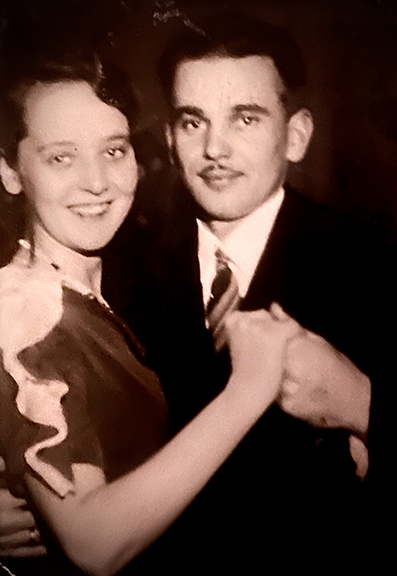
Leokadia Sidorowicz and Włodzimierz Soroko – the parents of the author’s grandmother, when they began seeing each other, photo from the author’s archive
Joanna Sokołowska-Gwizdka:
Did your grandmother speak openly about her experiences, or was there a long silence?
Isabella Skrypczak:
She did speak — with family, with colleagues, with neighbors. She shared fragments of her story: the deportation, the hunger, the uncertainty about her father, the people who helped her.
But these were general recollections. She rarely entered into detail.
Even so, we could feel the emotional weight behind her words — the grief of a lost childhood, the fear, the longing. It was only when she wrote everything down that the full depth of her experience became clear — and, with it, the origins of emotions I had carried myself.
Joanna Sokołowska-Gwizdka:
What prompted you to bring this story to an English-speaking audience?
Isabella Skrypczak:
At first, I translated the memoir for my daughter. I wasn’t sure she would be able to read it in Polish one day.
Then the war in Ukraine began.
My family has roots in Lviv, and I felt a deep sense of pain seeing war return to that part of the world. My grandmother took in a young Ukrainian woman and her eight-year-old daughter, Kira. I spoke with them often over FaceTime.
Kira was clearly traumatized — her breathing shallow, her body tense, her responses hesitant. It was unmistakable.
My grandmother said to her: “Kira, my dear, I know what this is like. Russia invaded my country too. I was afraid too. But I survived — and you will survive as well. You will return home. Right now, you are safe.”
I watched my 88-year-old grandmother comfort that child — as if she were speaking to her younger self.
In that moment, something became very clear to me. I could not remain passive. In Kira, I saw my grandmother — and my daughter.
That was when I decided to translate and publish the book. So that children like Kira could live in peace. So that no child, anywhere in the world, would have to grow up in fear.
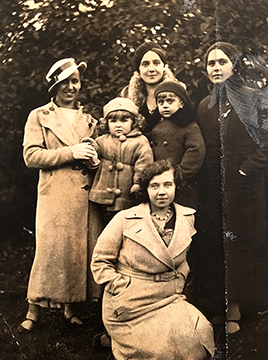
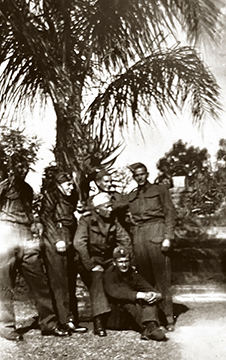
Leokadia Sidorowicz (top center) and her daughter Ida with friends in 1936, photo from the author’s archiveWłodzimierz Soroko (first from the right), in the Polish Armed Forces in the West, most likely in Palestine in 1942, photo: author’s archive
*
Joanna Sokołowska-Gwizdka:
How did you approach translating such a deeply personal story into English?
Isabella Skrypczak:
It was a long and demanding process, one that required many pauses — moments to search for the right words. Polish allows for a remarkable range of emotional nuance, and when I first translated my grandmother’s text literally into English, I realized that something essential was missing. The emotional depth, the imagery — the elements that allow a reader to truly enter the experience — were not fully there.
So I had to reshape the narrative. In many places, I expanded descriptions and restructured passages in order to convey not only the meaning, but also the emotional truth of the original.
At some point, I realized that the story did not truly end with my grandmother’s departure from Siberia. I began speaking with her for hours, conducting dozens of conversations to fill in the missing parts. Her two years in Kharkiv were extremely difficult, and her journey back to Poland was far from simple.
I also spoke with my mother, who sent me archival materials — articles about my great-grandfather, as well as documents detailing my grandmother’s later achievements in medicine. I studied all of these carefully and incorporated them into the book.
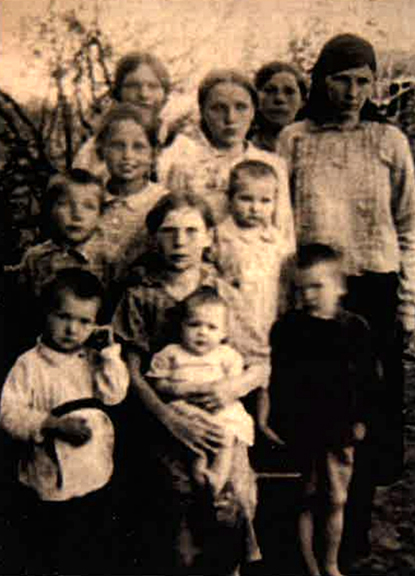
A group of students on the steppe. Ida is at the top left, smiling, photo from the author’s archive.
When I shared the manuscript with my father, he told me: “Iza, this is excellent. But an English-speaking audience will not understand Soviet terminology or the historical context. You need to provide more background.” He was right.
I turned to historical works — books by Anne Applebaum, Norman Davies, and others — and gradually expanded the contextual framework of the narrative. It was a time-consuming process, because I wanted to be as precise and responsible as possible. The final text was reviewed by my godmother, who has worked with the United Nations and is an outstanding historian, as well as by professional fact-checkers at my publishing house.
Joanna Sokołowska-Gwizdka:
In the book, you reflect on how American education covers World War II extensively, yet says very little about the deportations of Poles to the Soviet Union. Why do you think this part of history remains relatively unknown?
Isabella Skrypczak:
The Soviet Union was part of the Allied forces. The United States, together with Stalin, emerged victorious from the war. Afterward, the U.S. became involved in the Nuremberg Trials, and by that time, the Cold War had already begun.
Including Stalin in those processes would have significantly escalated tensions. As a result, certain aspects of history — including the fate of deported Poles — became politically inconvenient and were largely left unaddressed.
In a sense, this history was pushed aside in order to avoid further conflict.
Joanna Sokołowska-Gwizdka:
Were there moments during the translation when the story stopped being “a story” and became something deeply personal and emotionally overwhelming?
Isabella Skrypczak:
Yes — many times.
The most difficult passages for me were those describing my grandmother’s separation from her father, the experience of hunger, the loneliness, and the impossibility of returning home.
Ida’s first school photo after returning to Poland from Siberia, at the age of fourteen, photo: author’s archive
It felt as though entire generations of family history had been erased — as if they had never existed.
What affected me most profoundly was the dehumanization — the stripping away of dignity, of identity.
Joanna Sokołowska-Gwizdka:
Your grandmother’s story is not only about suffering, but also about extraordinary resilience. What qualities do you admire most in her?
Isabella Skrypczak:
She has an extraordinary intuition. She connects with people very easily — there is something about her that naturally draws others in.
And she carries within her an immense inner strength. It is something you can feel — something she radiates.
Joanna Sokołowska-Gwizdka:
After returning from Siberia, your grandmother became a distinguished physician and scientist — a diabetologist and endocrinologist, and a recipient of multiple honorary doctorates. Do you believe her childhood experiences influenced her later path?
Isabella Skrypczak:
Yes, I do.
I believe her achievements are deeply connected to what she received from others during her time in Siberia — acts of kindness, gestures of the heart.
In the midst of fear and displacement, she encountered humanity. And I think she carried that energy within her throughout her life — passing it on to her patients and to everyone she encountered.
Joanna Sokołowska-Gwizdka:
You describe translating this book as “an act of love.” Do you feel that this publication closes a chapter in your family’s history — or opens a new one?
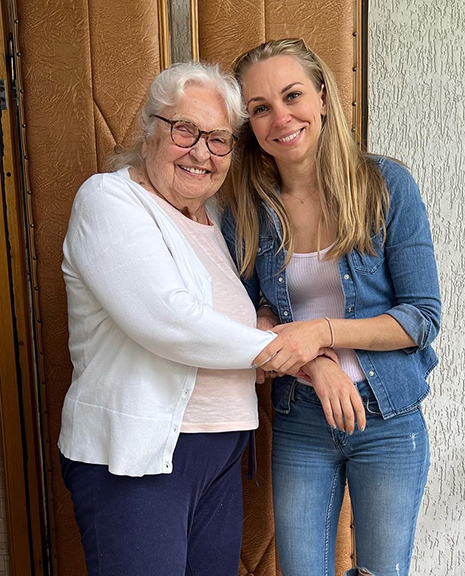
Isabella Skrypczak with her grandmother, Ida Kinalska-Pietruska, photo from the author’s archive
Isabella Skrypczak:
It allows my family to understand ourselves more deeply — our relationships, our emotional world.
It helps us recognize our pain and release it — to separate our own lived experiences from the trauma we have inherited.
It teaches us how to honor our family history without passing its weight on to future generations.
Joanna Sokołowska-Gwizdka:
Do you feel that, through this book, you are giving voice not only to your grandmother, but to an entire generation of children deported to Siberia?
Isabella Skrypczak:
Absolutely.
This is not only the story of my grandmother, or even of Polish deportees. It is also the story of many other nations — Russian, Ukrainian, Belarusian, Jewish, and people from the Baltic countries.
There are many of us in the world who share this history.
Joanna Sokołowska-Gwizdka:
What universal message do you believe readers can take from this book today?
Isabella Skrypczak:
That the force of life is the most powerful force in the world.
That human pain is real — and deserves to be seen and met with compassion.
That acts of kindness matter.
And that a human being, stripped of labels, is sacred.
If we take the time to understand our family histories and work through intergenerational trauma, we may find peace.
And perhaps — just perhaps — we may move closer to a world without war.
*
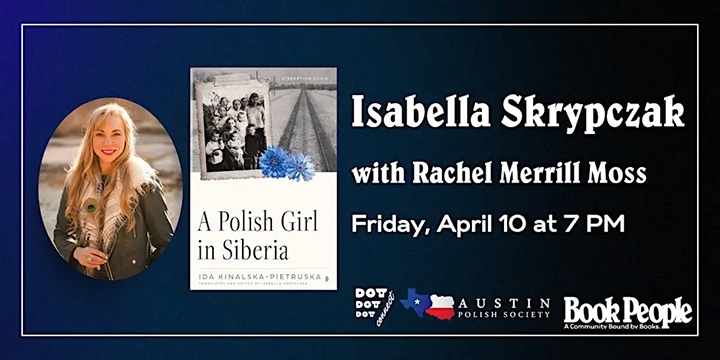
We invite you to a meeting with the author at the Book People bookstore in Austin:
Painterly Vision of Władysław Reymont’s „The Peasants”
An Interview with Dorota Kobiela Welchman – Co-director and Creator of the Visual Concept of the Film, on the Adaptation of the Nobel-Winning Novel.
*
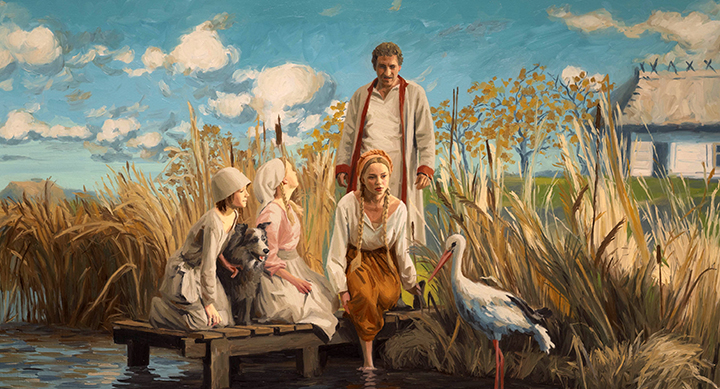
Kamila Urzędowska as Jagna and Cezary Łukaszewicz as the Blacksmith Michał in the film „The Peasants”, photo by Małgorzata Kuźnik, Courtesy of Sony Pictures Classics
*
Joanna Sokołowska-Gwizdka:
What motivated you to bring Władysław Reymont’s novel to the screen?
Dorota Kobiela Welchman:
First and foremost, a deep admiration for the literature. Reymont’s The Peasants is an outstanding work of prose that won the Nobel Prize, surpassing works such as Thomas Mann’s Buddenbrooks. Reymont himself did not believe he stood a chance for such a prestigious award.
The novel is set in the late 19th century in the small village of Lipce, which symbolizes a typical Polish countryside. The social portrait depicted in The Peasants appeared exotic to the Nobel committee, while also vividly reflecting the human experience, with its passions, love, anger, and jealousy. You have managed to bring out and highlight all these values, making the scene from over a hundred years ago contemporary and universal.
It was this universality of the literary image that captivated us. There are so many modern themes one can find in this novel. It was very important to me to address issues in the film that are relevant in today’s world. This wasn’t just an adaptation treated like a homework assignment.
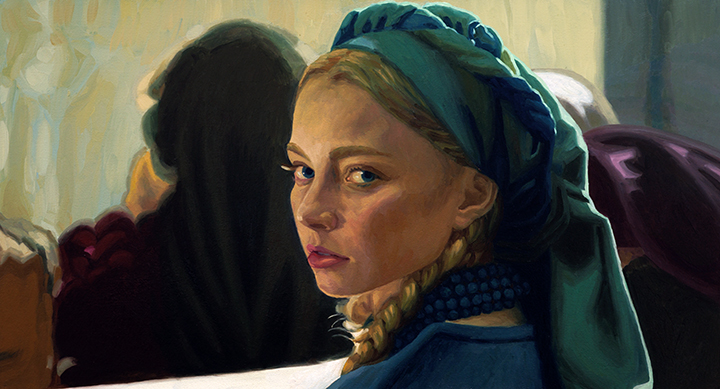
Kamila Urzędowska as Jagna and Robert Gulaczyk as Antek in the film „The Peasants”, photo courtesy of press materials, www.chlopifilm.pl
Joanna Sokołowska-Gwizdka:
For us, The Peasants was a school reading; everyone who finished school in Poland knows it. But how did your husband, an Englishman who wasn’t raised on Polish literature, perceive the novel?
Dorota Kobiela Welchman:
My husband, Hugh, read the book from a different perspective. I was curious how he would receive it. But he said it was one of the best universal novels about humanity and emotions he had ever read, and it describes a social group that is rarely featured in books and often underappreciated—peasants.
Typically, peasants are depicted in a stereotypical way: the poor farmer exploited by the cruel landowner, without character or personality. In the book, we see the individuality of each member of this community and the motivations behind their actions.
In the film, we wanted to preserve this literary value; here, the peasant is also vivid, colorful, and interesting. The excellent supporting cast helps shape a distinct collective protagonist, which adds depth and authenticity to the entire portrayal.
In the adaptation, the central character is Jagna; the events unfold around her, and she is the one who evokes emotions and arouses passions. In the book, this character is left open-ended and ambiguous.
The ambiguous way Reymont presented Jagna gave us immense opportunities in creating the script. We looked for ways to best portray her sensitivity. We decided that her artistic talents—her paper cutouts—would be an excellent symbol of her inner experiences.
Women in such communities did not know what individuality was; they conformed to the norms and customs widely accepted. Being different was not acceptable.
The theme of otherness and Jagna’s situation as a young woman, contrasted with the dominant voice of the majority, is, in my opinion, very relevant today. Jagna primarily wanted to live her life her own way. From the beginning, when she refused to cut her braids during the wedding ceremony, she was rebellious. Her defiance of the general rules aroused growing fear in the community, and fear breeds aggression.
Joanna Sokołowska-Gwizdka:
Why did you decide on painterly animation, similar to Loving Vincent?
Dorota Kobiela Welchman:
When I was listening to the audiobook of The Peasants while driving, I discovered that Reymont’s language is very rich but also incredibly visual. So the decision to use a painterly technique seemed natural.
You once mentioned in an interview that a painting is static for you, and that’s where the idea for painted films came from. Do you still think that way?
Dorota Kobiela Welchman:
I believe so. While working on Loving Vincent, I was always tempted to go „behind the scenes” of the paintings featured in the film. My painting professor used to say to look at still lifes as if they were actors, and that approach has stayed with me.
The scale was immense, with a dynamic camera and numerous group scenes. Unlike Vincent, here the story was already established, and we sought the visual layer to match it.
Joanna Sokołowska-Gwizdka:
The Peasants is a grand spectacle full of painterly details. What challenges did this production present?
Was every element of the film created first and then painted? Wouldn’t it be easier to simply paint a complex piece of costume or decoration?
Dorota Kobiela Welchman:
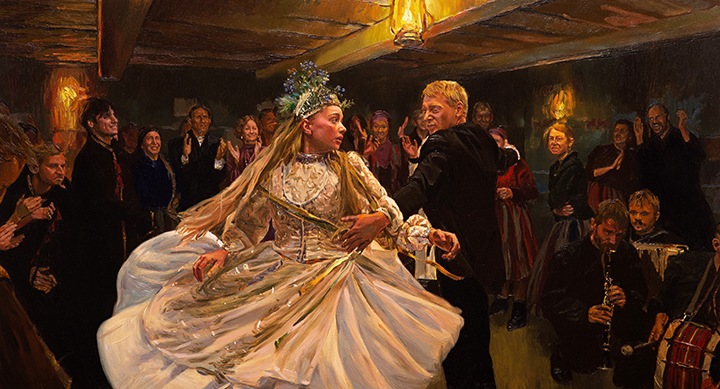
Sometimes on set, we joked that if someone lost, for example, an earring, the painter would just paint it in. But everything had to be prepared in advance. For instance, the wedding crown for Jagna was designed by artist and graphic designer Professor Katarzyna Stanny. The work took days and nights. First, an embroidered headdress was created, and then the second, final part was made, consisting of a golden mesh onto which various decorative elements were applied. It became a true work of art.
Joanna Sokołowska-Gwizdka:
The film heavily relies on the aesthetics of the Young Poland movement; the referenced works of Józef Chełmoński and Ferdynand Ruszczyc perfectly complement the narrative of the novel. However, the music doesn’t originate from Reymont’s time, yet it feels as though it not only belongs to the era but also carries the spirit of a broader Slavic identity.
Dorota Kobiela Welchman:
The music was composed by Łukasz Rostkowski, who previously was a rapper under the stage name L.U.C. He approached us with the idea of writing music for the film, and although he had never done it before, we decided to take a chance. As we started working together, it quickly became clear that his talent harmonized perfectly with our vision.
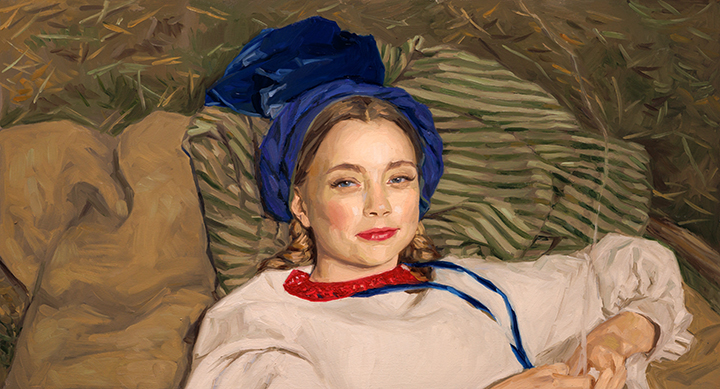
Kamila Urzędowska as Jagna in the film „The Peasants”, Courtesy of Sony Pictures Classics
Joanna Sokołowska-Gwizdka:
In November, we will be showing The Peasants at the Austin Polish Film Festival in Texas. What do you think an American viewer will notice?
Dorota Kobiela Welchman:
I think viewers worldwide will notice the universal story that resonates with contemporary issues, such as double standards or patriarchy. These are themes that can be understood in any part of the world. The issues shown in the film are not exclusive to the Slavic world but are also indicative of our times and the modern human experience.
Joanna Sokołowska-Gwizdka:
What does this film mean to you personally?
Dorota Kobiela Welchman:
That’s a very emotional question. For me, it is an intimate story about my experiences, feelings, and my relationship with the character of Jagna. Besides that, this film is the result of four years of work by a large artistic team, their dedication, and the energy they gave us.
The film inspires thought and encourages the reevaluation of stereotypes. It is also a beautiful piece with high aesthetic values. You have created a great work that, regardless of time, opinions, or judgments, is timeless and will go down in history.
*
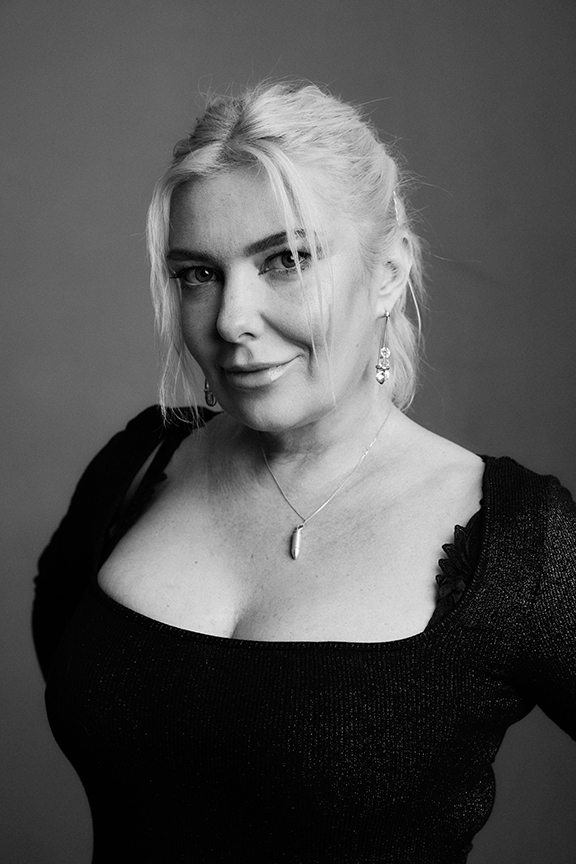
Dorota Kobiela Welchman, photo by PORTRAIT STUDIO Norman Wong
*
We invite you to the film screening during the Gala of the 19th Austin Polish Film Festival, on November 8, at 6:30 pm. More information on the website:
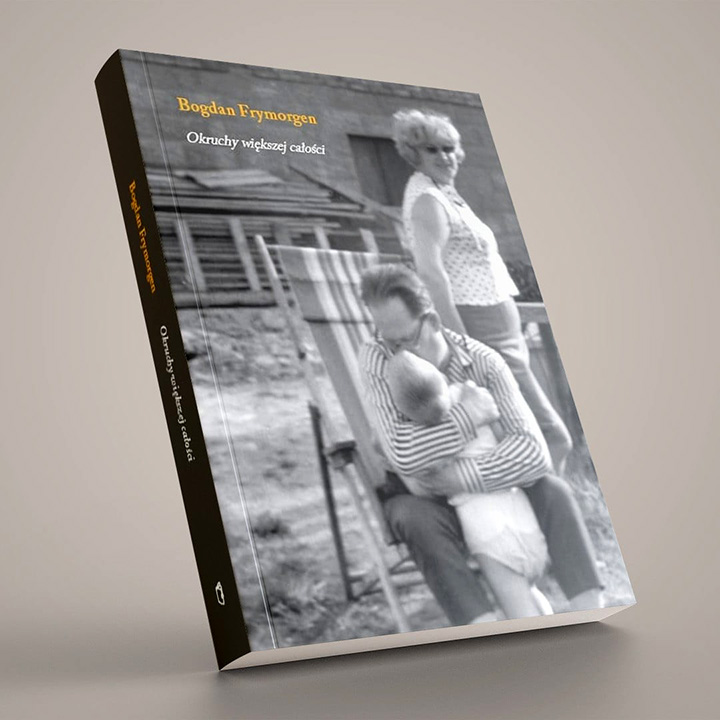
Interview with Bogdan Frymorgen, a Polish-British journalist and photographer, whose literary debut Okruchy większej całości (“Crumbs of a Bigger Picture”) deals with the memories of his childhood marked with the family struggles with father’s bipolar disease.
By Bożena U. Zaremba
*
A literary debut at the age of 58 is quite unusual. However, writing has been part of your professional life for many years.
When someone called my book a debut, I was shocked. This manuscript came to life in a very natural way, without any plans for publication. It has also been called a biography, but I am not describing my life here, rather some snips of my memory, which I decided to evoke when the pandemic shut us all at our homes. In the evenings, when my family went to bed, my dog Siena made herself comfortable at my side; I opened my computer and typed my thoughts. But it is true, I have indeed been dealing with the word for quite some time – as a correspondent for the Polish Radio RMF FM, and before, when I worked for BBC. Let me stress – I work with the Polish language. This is important to remember because, after having lived in Great Britain for 35 years, working among and socializing with the English, if I were to speak in public or write, I would choose the English language. However, this book had to be written in Polish because this is the language of my memory, my childhood, the language I grew up with. I have always made every effort to cultivate my Polish – first of all, because this is the source of my income as a journalist, and secondly because I wanted my kids to be proficient. We have always spoken Polish at our home, and my grown-up sons – one is 30, the other is 27 – are bilingual and bicultural. I suspect you would never realize they were born, raised, and educated here. So, to sum up, this is a strange debut. Before this book, I had published photo albums with some text, but there, the writing is minimalistic, simple, yet precise.
You once said this book resulted from a need to untie some knots—to organize and simplify certain events from your life.
That is what I do in my photography, which has cunningly sneaked into this book. You could say that this book is a collection of photo frames from the past, which I recollect with great photographic precision and make them live, either through motion, sound, smell, emotions, or words. Still, even though all events are organized more or less in chronological order, my writing was not linear. Each chapter was born out of a spur-of-a-moment, out of some emotional craving. The chronology of my memory was the key.
You claim Carl Gustav Jung – creator of analytical psychology and psychotherapy – as one of your inspirations. Was writing a form of katharsis?
My writing was a natural continuation of the psychotherapy which I had undergone a few years ago. I have always been interested in Jung’s philosophy and in him as a person. When I turned 50 – and let’s face it, this is a pivotal moment in one’s life – I decided to give myself a gift in the form of ten therapy sessions. Besides, I have often heard from my wife (mainly during some spats) that my father was crazy, so I need to go to therapy [smiles]. I tried to resist it because I was certain that I had “processed” my father. However, we became empty-nesters, we paid off our mortgage, and, after 24 years, I retired from my work at BBS. These were quite critical turning points. During those sessions, it turned out pretty quickly that, although I had completely dealt with my father, with his mental disorder and growing up at a home that was saturated with his bipolar disease, I had not sorted out my grandmother nor my mother, and there were still some things I needed to settle with my brother. Suddenly, some of my soul’s “glands” opened, and I was able to talk about all those things comfortably. During those sessions, some truly incredible and revelatory matters revealed themselves. In such moments, you don’t believe what you are hearing is actually coming out of your mouth. This can result in the reprogramming of your consciousness and subconsciousness. I must say, this was absolutely mind-blowing. When I was giving these thoughts some literary form, I was physically shaking because, suddenly, it turned out that I was capable of liberating an event from the past that had been deeply buried in my subconsciousness. These moments are the strongest in the book, but I am not going to tell which. So, since the book is an extension of therapy, it became a therapy in itself.
Photo: Bogdan Frymorgen
Your stories are universal, and the book has been enthusiastically received. The aspect most commonly commented on is the honesty of your writing and lack of retouching. A Polish poet, Marcin Zygadło commented, “Frymorgen is a cautious photographer; he does not use filters. His lenses show the world without pretense…as if the author wanted to expose himself completely.” Was it so? Or did you keep some events secret, known only to you or perhaps your close ones?
But, of course! I wrote some chapters that could never become part of the book. I had to exercise some restraint. The most difficult chapter was about my brother. It is harshly sincere, but it was written with love. My brother senses and knows perfectly well that this is not an easy subject, but this book would not be possible without it because my brother filled a huge part of my life in the same way as my mother and father did. But I do not expose anything here. I went through a sort of transformation; in other words, I simplified some things inside of me. This is exactly what I do in my photography – I have always strived to create a clear-cut order in my photographic frames by getting rid of unnecessary elements. I have forever been interested in showing the desolation and silence, especially when I was surrounded by noise and fuss. That was the case with the shots of my kids, which started my so-called photographic career. They show my sons as lonely, quiet, and small creatures. When my wife saw those photos for the first time at an exhibition in Krakow, she could not believe they showed our sons. She remembered those moments as the time of clamor, screaming, bickering, and fighting. In contrast, I was looking for some calm. I sneaked into that crack and snapped a shot. In my book, I became a photo frame. In other words, I took that core of my photography and simplified and cleaned my humanity. That’s reflected in the language – there are no unnecessary words there; each word is chosen with a great degree of precision. When I was editing the manuscript, I tried to get rid of superfluous props. I hardly ever added anything – it was mainly cutting until I reached the point when deleting one word would cause the whole structure to collapse, just like a house of cards. Then I knew that was it.
You are being hard on your grandmother, I must say.
This came out of me spontaneously, like an exorcism. I expressed my contempt – I don’t want to use stronger words – towards my grandmother; it’s bitter story, and that was it. With my brother, on the other hand, the narrative is different because I know why he acted the way he did. He was four and a half years older than me and had experienced much more of my father’s illness. When I joined the “team,” I became a clown who made everyone laugh, while my brother had a different role – he had to provide support to our mother and be a confidante, which is a very heavy cross to carry. He still carries it to this day. I missed certain aspects of my relationship with my mother and my brother, but at some point, I realized that it gave me independence, which, in turn, helped me organize my life the way I wanted.
You write about your father and the struggle of the whole family with his bipolar disease quite blatantly and without any sentimentality, but at the same time, with lots of sensitivity, love, respect, and affection.
I could not do it any other way because, despite this abnormal situation, my childhood was filled with warmth, love, and the physical display of affection. In the beginning, I did not realize the tragic nature of the situation. As I write in the book, this was bread and butter – sometimes with jam, sometimes with mustard. I saw it as something natural, and, depending on my age, I understood it to the extent a child can.
How do you remember your father now?
I had two fathers. During the emotional highs, the so-called mania, my father became an innovator and a crazy inventor; he was a magic persona like a character from Garcia Marquez’s novel. The other unveiling, when my father fell into depression and plunged into such a state of catatonia that we thought he was going to die, was much more challenging. But since my mother, whom I call “Great She-Bear,” watched over us, I got everything a child should get – warmth, care, and safety. At least I felt safe because I understood the language, and I knew when the next mood swing was coming. A strange word or sentence at the table was enough for us to realize that we needed to change gear. Since we had this covered because we had dealt with the situation many times before, we operated like a Swiss watch. Everyone knew what to do. My job was to talk to the orderly. I always asked them to leave the straitjacket in the ambulance because just the sight of it drove my father mad. I was growing up, and so was my understanding of this mental condition. The terminology kept changing, from manic depression to affective bipolar disorder, but the disease remained the same.
Photo: Bogdan Frymorgen
Photo: Bogdan Frymorgen
It turns out that many famous people suffered from this disease, such as Robert Schumann, Gustav Mahler, Edward Munch, Isaak Newton, Graham Greene, or Frank Sinatra, and many times it ended with suicide (Ernest Hemingway, Vincent van Gogh, and Virginia Woolf). Do you think that lack of support could have played some role?
The people you have mentioned were exceptionally talented and sensitive. This disease likes such people. However, it is important to realize that this mental condition can have a wide range of amplitude. One can function fairly normally without the necessity of taking antidepressants for the whole life. It is true that people suffering from bipolar disorder, especially left to their own devices, have suicidal thoughts because this is a terrible disease. My father had the support of his family – his wife, sons, and the community. On the other hand, he did not have access to therapy, which is popular and accessible today. Not all people suffering from this disease have families, or their families break up. Their children give up on them or don’t know how to communicate with the sick person because if you have not learned the language and have not let it become part of your DNA, it can be difficult. I always had a gut feeling that it was my duty – although I never defined it that way – to be with and care for my father. My father died at the age I am at right now, and this is incredibly telling.
The question of genetic risk is something that comes to one’s mind naturally. In your book, you say that your mother made you and your brother believe that it was only girls that could inherit the bipolar disease, which is untrue. Did you contrive a similar tactic to protect your sons?
My mom is a sweet person, and I have no idea if what she used to say was premeditated or suggested by some professor in Krakow, where she used to go for consultations. If you keep hearing these words for all your life, you can be programmed. I never said anything like that to my sons, but I started talking very frankly about my father’s illness when they were old enough. I warned them about the destructive effect drugs can have on mental illness if one has a predisposition. This can be triggered even after one dose. Unfortunately, this has happened to some people I know. Our sons were in high school at that time, and we all know what is going on in schools, so, as the so-called responsible parent, I had to have this conversation. And one more thing – I never got the disease and never will (at my age, I can be sure), but I am absolutely aware where I came from. I am oversensitive on various levels. Still, I know where to direct this oversensitivity. My father’s illness is part of me and part of my upbringing, and I am not ashamed of it. With this book, in a way, I say goodbye to my father.
All those incredibly poignant, sometimes heart-breaking, stories together with your visual and expressive use of language would make a great screenplay.
My son has already offered to make a film based on the book, but for me, it’s too early to even think about it. Right now, I need to be humble and “process” the book and everything that is happening around it. I am enjoying its various unveilings – interviews, such as this one, and numerous comments that people, some of whom I have never met, share with me. It’s fantastic. I have also become an Ambassador of the Third Mental Health Congress.
So I have heard. How did this come about?
It was Congress that reached out to me. Why not, I thought. Obviously, I checked out what they do first because I never engage in any collaboration without verification. These are fantastic people. They work all year long, but once in three years, they organize a meeting with people from diverse background to talk about how to support people who have a mental illness. This is a grass-roots initiative. Its goal is to create local support centers for such people, especially in small towns and villages. There are 33 such centers now, and they plan to create 300. What spoke to me was that people involved in Congress struggle or have struggled with a mental illness or have encountered it in their family or community. My book became a passport to talk about mental issues with a certain dose of accountability. One of my duties is to spread the word about this initiative, and I must say, it is a great honor and pleasure.
Photo: Bogdan Frymorgen
Photo of the author’s son, which was used for the cover of Paweł Huell’s novel Weiser Dawidek (Photo: Bogdan Frymorgen)
How can your story help other people?
I talk about mental illness with an open mind and heart. I am frank and use relatively straightforward language. The more often and more sincerely we talk about these issues and without any prejudice, the better for those people and their close ones. Of course, my book is my story, but this disease can turn one’s life upside down. That is why the appropriate community support, therapy, and proper medications (which can be necessary) can help those people lead a somewhat normal life, have family, and keep their job. What is more, they can help other people, just like those involved with Congress. We cannot write these people off; we cannot hide them in a cellar. They have a right to normalcy as much as their abnormal situation allows.
It is clear in the book that you have a quite disapproving attitude toward the Catholic Church – as an institution and her dogma. On the other hand, religious symbolism and lexis are omnipresent. Let me recall just a few: a group of kids dragging their friend to a religious education class is called “Christ Knights” or “The Lamb of God,” who eventually become “rams”; you refer to your mother as “Madonna of the Beskids”; doctors are “angels.” Why such imagery?
When you are born in a small village in the Beskid Mountains, in a devout Catholic family, of course, this culture becomes an inherent part of you. Such connotations come to mind naturally. Why erase them? Spiritually, I have drifted away from the Church, from the concept of God and divinity, and when I go back to my little village of Komornice, I do not feel any spiritual connection. However, the moment I smell the frankincense and hear the organ, everything starts to spin. Still, it has nothing to do with the Mystery of the Transfiguration or holy sacraments. I was baptized and confirmed, but at some point, the relationship – for various reasons – crumbled. Still, the iconography remained.
I am not accusing you of hypocrisy, mind you. I see these connotations as an interpretation of certain religious concepts or symbols—an interpretation that is alternative to the one we were and are taught. You show their contemporary dimension.
I would not go that far. I simply describe my relationship with the Church, starting with the time when I first attended the Mass and literary fainted until the moment of breaking away when I realized that the Church was unable to nourish the soul of a growing boy. I dare say that there is an ample amount of spirituality in this book – there is a look at the spiritual needs of a young man that can be satisfied outside this institution and can lead to a life lived according to a certain moral and ethical canon, which we can pass onto the next generation. That happened to me. For sure, I did not want to sound pompous. This book presents only my subjective memory, and the memory is not the truth.
Someone noticed the musical qualities of your writing and that it reads well aloud. Recently, you have announced that at the beginning of next year, you are planning to read it on the Polish Radio RMF FM.
This book is musical because there is so much music inside of me. We have known each other for quite some time, so you know well that I have always been interested in music, which fills my life 24 hours a day. That is why this book has a certain rhythm. You can sense piano and forte; sometimes you hear an orchestra and sometimes—an instrument solo.
Are you planning to have it translated?
A friend translator has offered to tackle the translation. I told him to give it a try, and we shall see. I will never do it myself because the book was borne in Polish, and I want to enclose it in my Polish-ness. Since I mention this topic, I want to stress that I live here, my family and my work are based here, I love London, but all my creative work is in Poland and for Poland. My artistic endeavors are entirely unknown in the U.K. I go to Poland quite often; I am engaged in Polish affairs on many levels; I feel I am a full-fledged and full-blooded citizen who happens to live in London. I have made myself believe that I function in two worlds.
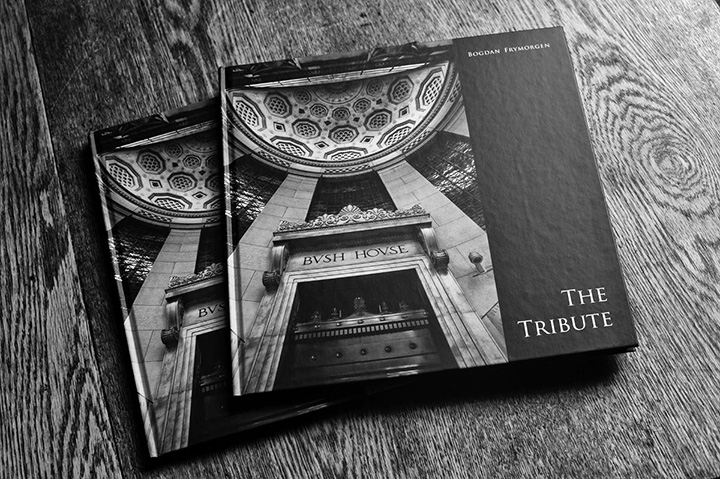
The album The Tribute dedicated to the BBC headquarters (Photo: Bogdan Frymorgen)
Why did you leave Poland in the first place?
I left in the mid-80s, a few years after the martial law was lifted in Poland. That was a time of hopelessness and lack of perspectives. I don’t consider myself a political emigrant, although I have always cared and been very much involved in what’s going on in Poland. For 30 years, I have been celebrating constructive progress in Poland, but now, I am bleeding inside. On the other hand, as a responsible and engaged citizen of Great Britain, I am worried about my adopted homeland, Brexit, the pandemic, not to mention what this country may face – potential Scottish independence or a unification of Ireland, which is quite conceivable.
You worked at BBC for 24 years as the so-called “studio manager.”
I enjoyed it very much. I love music and am generally very sensitive to sound. All this time, I simultaneously realized my Polish projects. I also hosted a radio program on classical music. My motto is to do as many things as possible.
The music which you consider your first love was Johan Sebastian Bach’s. In your book, you talk about your first encounter with his music played by the church organist. You even call Bach your sanctuary.
When I heard him for the first time, I didn’t know it was Bach. The only reason for my outings to church was to listen to the organ. When everybody left after the Mass, and our organist, Mr. Linert, could – at last – play freely, I was dumbfounded. By the way, his son has recently got in touch with me – he was so happy that somebody still remembered his father. I have never received any formal music education, but I tried to make up for this later in my life. I became interested in classical music, though I started with other composers. When I finally embraced Bach’s music, I never let him go. I listen to his music on a daily basis; he is my best friend, and I never feel lonely. There are other fantastic composers, but this “cathedral” is indestructible.
Let’s talk about photography. In your documentary about the British photographer, Gerald Howson, he comments on his photographs of Poland in the 50s and says that he always avoided being “too arty” or “too self-consciously poetic.” Looking at your photographs, one could assume that this has become your mantra, too.
When I met Gerald, I had been doing photography for quite some time, so I will say this – I do my own thing. However, when a fascinating person crosses my path, I drop everything and get absorbed with them entirely. It happened to me twice. First it was Gerald, and then, the Israeli writer Irit Amiel. Gerald took six years of my life, but I have no regrets. This was an incredible experience – first, when we discovered his archives with negatives that had been lying in his drawer for 50 years. Nobody had ever seen them. Then, we organized his exhibition in Krakow’s district of Kazimierz. Can you imagine those people, then in their 70’s who burst into tears once they recognized themselves in those photos as kids?! Gerald was a painter by profession, and he took photos with an eye of an artist. What is more, he had an unusual gift for talking about complicated issues in a simple language. He was an extraordinary man, and for me, a significant figure – a mentor, in a sense, although I was already 50 at that time. Irit Amiel played a similar role in my life. I fell in love with this 85-years-old woman, and the affection was mutual. Irit was born in Czestochowa as Irenka Librowicz. After miraculously surviving the ghetto, she emigrated to Israel, where she started a family and changed her name. She was an exquisite writer. I strongly recommend her autobiography Life: A Temporary Title. She showed up in my life virtually out of nowhere, but if I were to look for some divine providence, I would probably find it in such encounters, in this clash of extraordinary energies. There are still a lot of people like these out there. You just need to be open to recognize their uniqueness and offer them part of ourselves so that they do not sink into oblivion.
Tell us something about your photo albums that show the district of Kazimierz, formerly Jewish quarters.
I have published two albums, Kazimierz Without Words and, simply, Kazimierz. The former came into life out of a specific demand. In 2007, I buried my friend, Chris Schwarz, whom I helped create the Galicia Jewish Museum in Krakow. Chris left me a beautiful camera, which I kept for years on my mantel. I treated it as a relic, but at some point, I decided to touch it and take photos of Kazimierz. In this way, I paid tribute to my friend.
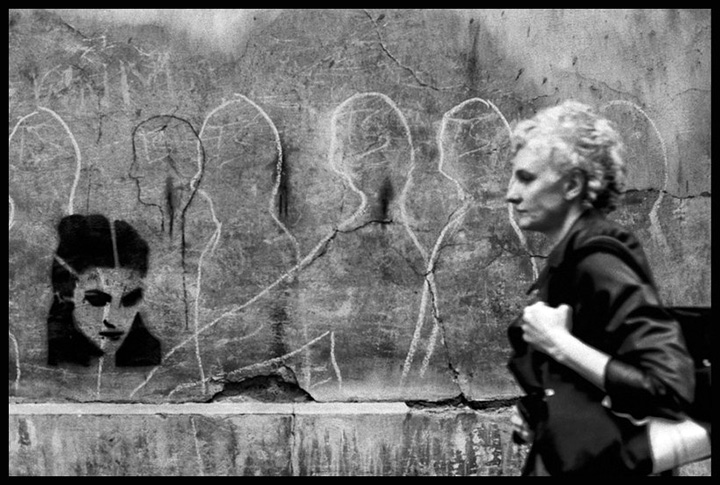
Photo from the album Kazimierz bez słów(Photo: Bogdan Frymorgen)
This particular photo caught my attention: a lady going about her daily matters photographed against a wall with the drawing of silhouettes, which, I assume, represent people who used to live there.
These strange outlines drawn on the wall with chalk resulted from the initiative I organized with the Galicia Museum and Chris on the anniversary of the expulsion of the Jews from Kazimierz to the ghetto on the other side of the town. We created a list of streets, and together with the Academy of Fine Arts students that I engaged, we lay on the road or glued ourselves to the wall and drew the outlines. When Kazimierz woke up on the next day, it was covered with hundreds of such silhouettes. This particular photo was taken a few years after this initiative and Chris’s death, but as you can see, some outlines are still visible.
Why did you become interested in the history of Polish Jews?
I was born 17 years after WWII, in a country where nobody talked about Jews and the Holocaust. This subject was taboo in my village, located about 12 miles from Auschwitz. I had no idea what had happened there. I went to Janusz Korczak Elementary School, and for eight years, never ever did I hear that he was Jewish. The narrative presented to us was that he was a Polish (assumed Catholic) doctor, who heroically died with Polish (assumed Catholic) children in Treblinka. When I went to high school in Bielsko-Biala, there was a chasm next to the building, where a beautiful synagogue stood before the war. During my four years at school, whenever we opened the windows to air the classroom and looked at that empty space, we had no clue. Finally, when I went to college in Krakow, I once saw the documentary Shoah by Claud Lanzaman, and the whole world crumbled. It was w mind-opener. I was in a state of shock. And revolt. And anger. I became interested in Kazimierz when I helped Chris launch the Galicia Museum. Together with my wife, we bought an apartment there, and I started exploring. My first photographs of Kazimierz were taken in 2006, but they look as if they could have been taken dozens of years ago. I dedicated my second album about Kazimierz to Irit, who wrote this inscription: “I am looking at the pages of my friend’s album… and I feel a total lack of Jewish life. For me, the whole Poland from bottom up, is one big cemetery, one painfully bleeding scar. The Polish-Jewish history is over. The album emanates this absence.” These are honest and accurate words, and what’s inside the album is just an attempt to show what is no longer there.
Why are all your photos black-and-white?
First of all, the camera I got from Chris had a black-and-white roll of film inside. Probably, if it had been a color roll, I would be taking color photos [laughs]. Secondly, I remember the black-and-white TV from my childhood, and the world on the screen seemed so authentic, honest, and genuine. Perhaps because we were children. Besides, when I study Kazimierz, I look through the eyes of people who used to live there. The same thing happens with Lanckorona*, which I see through my grandmother’s eyes. There was no color photography then. I use a digital camera, and all my photos start in color, which I eliminate later.
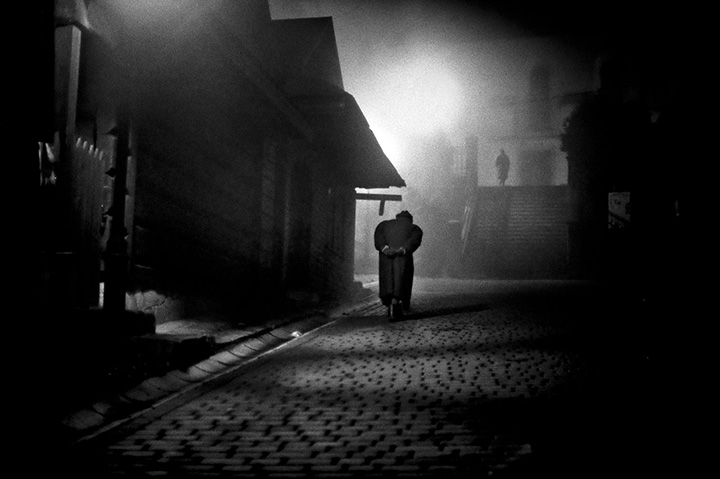
Photo from the album Lanckorona (Photo: Bogdan Frymorgen)
From the album dedicated to Lanckorona, I have chosen the photo showing an old lady walking towards a light, which is one of my favorite shots.
It is very telling indeed. This photo could have been taken at the end of the 19th century, but it was taken a few years ago, which is proof of what an enchanted place this is, what magical things can happen there. You just need to notice and snap them. This woman is going to church to attend Vespers, and the light you see comes from the streetlamp that stands next to the church. Only people who are familiar with this town can recognize the spot.
I see symbolism in this image—walking towards the light stands for death. There is no sadness in this shot, though.
Most of all, there is peace. The subject of death reappears in my book quite often as I am totally comfortable with the topic. Death is the same part of life as birth, and the further we go, the closer we get to it. Through photography, you can and should talk about everything. I like controversial photography; I like photographers who do thing out of the ordinary, who are not afraid to cross the lines. Truly, in art, nothing can be achieved without risk. Art without risk is just one big stereotype and is simply boring. I do not claim that what I do – either through photography or wiring – is revolutionary, but I do like to stick my head out.
(transl. buz)
*A historic and charming little town located about 20 miles south-west of Krakow.
*
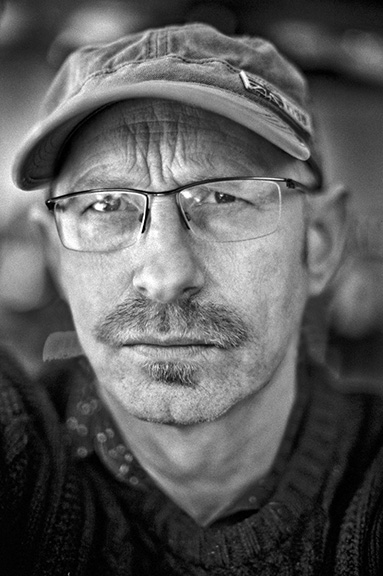
Bogdan Frymorgen, self-portrait
Bogdan Frymorgen is a journalist, photographer, author of a literary debut – a memoir about his childhood marked with his father’s mental illness. He studied English Language and Literature at the Jagiellonian University in Krakow. While in college, he co-founded, played the guitar, and sang in a musical trio BUS STOP, which presented mainly American folk music and won numerous awards at music festivals in Poland. Since 1986, he has been living in London. He worked as a studio manager for BBC for 24 years and hosted a radio program devoted to classical music for six years. He is a correspondent, reporter, and interviewer for the Polish Radio RMF FM. He has published the following photo albums: Kazimierz bez słów (2011), Kazimierz (2018), The Tribute(2015), dedicated to the BBS World Service headquarters (1932-2012), and Lanckorona (2015). He was a curator for a British photographer, Gerald Howson’s archives and exhibition, and made a documentary Gerald Howson: a very Polish Affair about Howson’s photos of 1950s Poland. He led the efforts to publish a bilingual collection of poetry by an Israeli poet and Holocaust survivor, Irit Amiel, Spóźniona/Delayed (Austeria). Bogdan Frymorgen collaborates with several cultural institutions in Poland. He is a member of the Polish Photographers Association and the Board of the Galicia Jewish Museum in Krakow and an ambassador of the Third Mental Health Congress. He is working on his next photo album, Human. The Polish version of the book Okruchy większej całości (2021) is available at the Austeria publisher’s website https://austeria.pl/produkt/okruchy-wiekszej-calosci/ (international shipping available). English translation pending.
*
For the Polish version of the interview (in two parts), click the links:Part OneandPart Two.
On the peaks of the world. Part 2.
Joanna Sokołowska-Gwizdka talks with Anna Borecka, a lonely climber, hitchhiking across continents, implementing the project „200 Peaks of the World”.
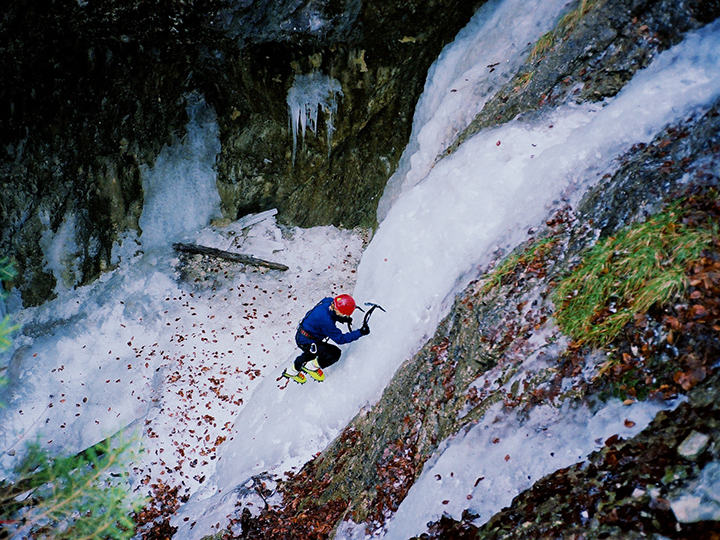
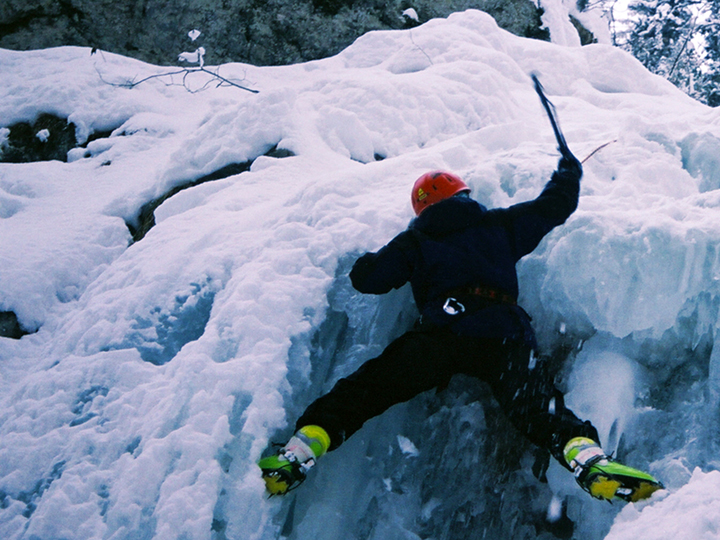
Ice climbing in the Slovak Paradise, photo by Stanisław Proszak.
Joanna Sokołowska-Gwizdka:
Which countries you have so far visited, you remember the most?
Anna Borecka:
The countries where I had the biggest problems, i.e. Iran and China. On the first day in Tehran, I was robbed by a taxi driver. Then I witnessed street demonstrations. I had to get through the chanting crowd and armed police cordon to reach the dormitory where I lived. It was even more difficult for me to cross the multi-million capital every day to get three visas to the post-Soviet countries. At one point, I was in a stalemate because I was stuck for good. So I started with the permission from Tajikistan, which was the last on my list. After having received a visa to neighboring Turkmenistan, I had to travel five hundred kilometers, changing the earlier planned route. In the meantime, I reached Demawand (5,610 m), the highest peak in Iran, so my efforts were rewarded.
There was martial law in West China, lots of armed police and soldiers in the streets, and purges in the Uyghur homes. One can not get along easily with officials in China. There was also a blockade of communication with the world, so I used to withdraw small amounts of money from an ATM to let my daughter know that I was alive.
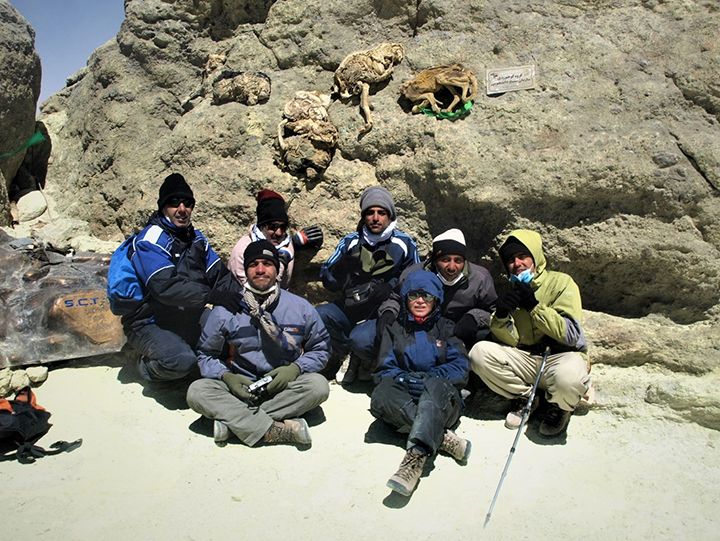
On Demavand (5,610 m a.s.l.) with a group of Iranians, photo from the collection of Anna Borecka.
Have you ever been in really dangerous situations?
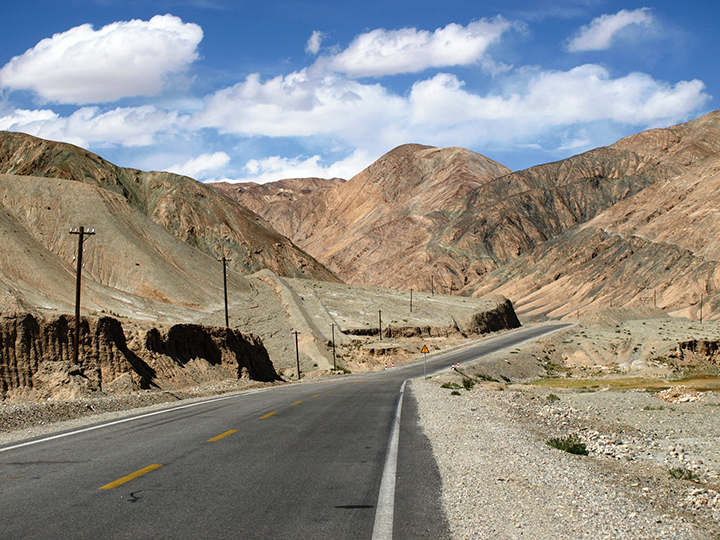
It often happened. In Tajikistan, for example, I got lost in the mountains of Pamir. I entered the military base and officers intended to arrest me and lock me up in prison for half a year. I quickly took out the map and showed them where I came from by hitchhiking and I explained that I came to climb alone in the mountains. I had never before spoke Russian so well. (Laugh) Surprised, they even fed me and drove me to the nearest village.
On the Karakorum Highway, Chinese police stopped me and forbade me to continue hitchhiking. When I opposed them, one of them jerked and pushed me and the other one raised the rifle up at me. I calmed down. I showed them my passport with visa and … I continued hitchhiking.
Hitchhiking across the Kazakh steppe, I escaped being raped only by miracle, but now I will not speak about it. Whoever wishes, will read about it in the second volume of “Alpinistka na autostopie” (Hitchhiker and climber). In Kosovo, I was alone in the mountains, when I heard quite close the Kalashnikov shots. I heard the voices of a few men, but I did not see them, because fortunately there was fog. Suddenly, one of them screamed so terribly that I crouched down and quietly, running along ruts, I left the dangerous area.
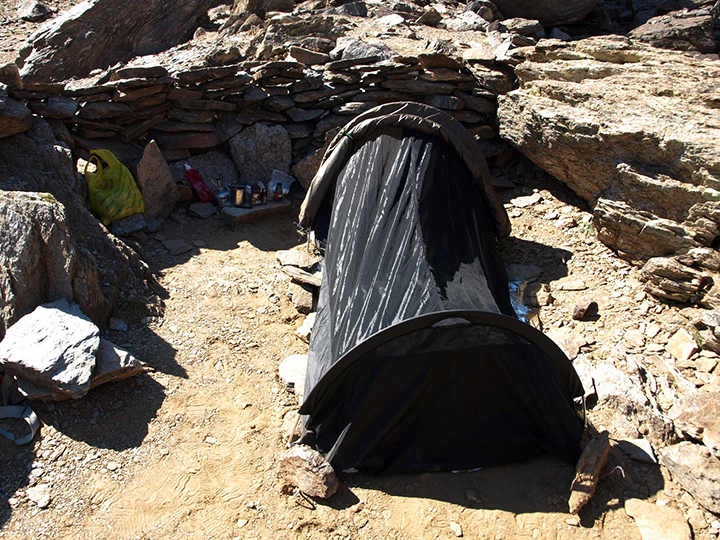
In the Alps, Pamir and Karakorum, I jumped alone through glacial crevasses at 4,000-6,000 meters and fell into them a few times, but fortunately not too deep. I put the ice ax in front of me, I stretched out on it and crawled out to finally stand up. In different mountains, I had several accidents and injuries including serious knee injuries, torn muscles and ligaments in both legs. And in the Balkans, when I sprained my right hand and it immediately swelled up like a bubble, I was worried about how I would hitch. I first had to come back from the mountains during the storm, hand wash my clothing, because everything was muddy, and pack a backpack. It was a torment, every move caused me pain, but after all I chose a lonely style of traveling. However, I never interrupted the trip, and I treated my injuries after returning home, even for half a year.
The previous summer, at Cape Verde, I climbed the rock and I tore a huge stone out of it. It hit my leg, but fortunately I did not fall off the wall. However, to this day I have a dimple in my thigh. Also, a taxi driver hit me, because he did not notice me when he tried to drive back. My spine ached a lot, but I had to put on a rucksack and go on, because I could not fight with a few angry Africans. However, I was so nervous that I hit the driver a few times on his head. These are just a few drastic situations that I experienced, but I definitely prefer to remember those positive ones.
Hitchhiking on Karakorum Highway, photo by Anna Borecka.
When you went alone to the mountains, did you happen to have some surprising encounters, unpredictable situations that you had to face?
I have already mentioned some of them, so now I will describe a funny episode for a change. In Andorra I came down from the mountains in the evening, although it would be wiser to camp somewhere in the forest. I could not catch a car for a long time. Finally, a bearded man stopped, but he spoke only Spanish. I tried to explain to him that I reach different peaks in Europe, and he smiled and invited me to the car. This way I traveled to Asturias, in the north of Spain where I discovered the mountains of the Picos de Europa, whose existence I did not know before. What could I do? I went to those mountains as well. It turned out that this bearded man, looking like Santa Claus, was a pensioner and lived in a motorhome. For four years he lived on the road, he visited the countries of Western Europe, although he did not know foreign languages. He would come home every three months for medical treatment, because for years he was seriously ill. And then he moved into the world again, saying that the trips were the best medicine for him, and the views from the window of a car were like the most beautiful television. He did not want to reveal his identity, so I called him Incognito.
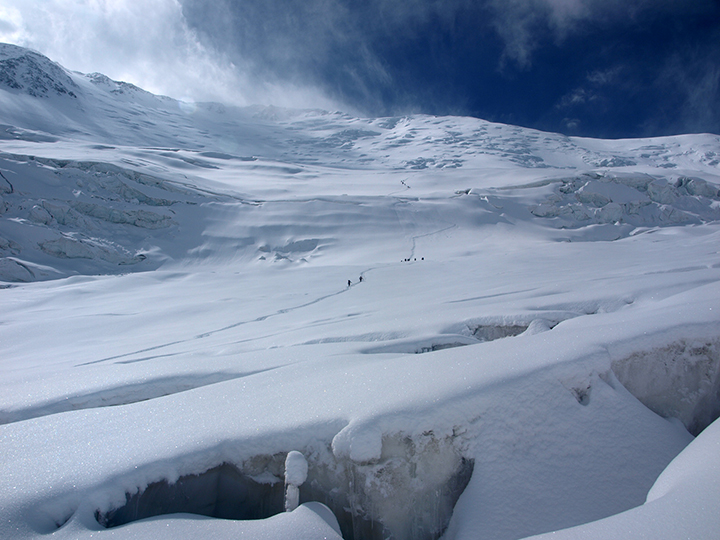
Hm, when it comes to a surprising meeting, it reminded me of a story. In Iceland, I went alone to the highest peak Hvannadalshnúkur (2,110 m). The mountain is small, but it is located on the treacherous, large Vatnajökull glacier. There, the weather changes every now and then, Arctic conditions often prevail. The crevasses are covered with snow and it is easy to get lost in the blizzard. No one goes there alone, without a rope and GPS … except me.
In my second approach towards the summit, the crystals of snow hit my face, I suddenly felt the blow of icy air, and then came thick fog. The visibility fell to zero and the sky turned black. I thought I had a problem with my sight, and I was scared, but the feeling of darkness quickly recurred during the day. At that moment, I did not see anything, not even the traces of shoes on the snow that previously led me. Suddenly, I heard a strange male voice, muffled and dull, like coming from under the glacier: „Turn back!”. I stopped, listening. I took two steps and again I heard: „Turn back!”. I stopped, took off my glasses, no one was around. However, I did not have to look around because I felt that this voice did not come from outside or from inside me. It was the voice from beyond the grave. With my seventh sense which had previously warned me several times I saw a man in his forties. He had gray, curly, short hair. He was a short, of medium-sized body, and was wearing a thick, gray wool sweater with long, bright bristles. I still remember that figure and the voice I have never heard before. That made me wonder, so I started to walk in circles, looking for footprints on the snow in order to go back. However, the wind blew them away. Luckily, after a few minutes, it cleared a little, and I saw a crevasse covered with snow in place where I wanted to go. My path should go straight up, but I listened to the voice of intuition and turned back.
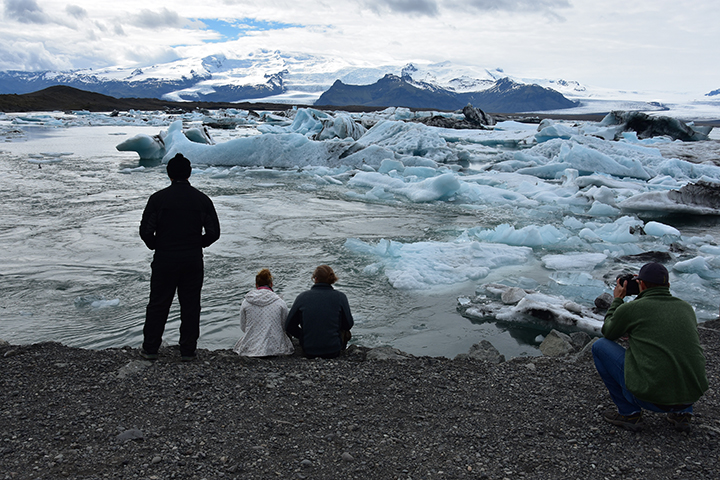
Jökulsárlón – tourist attraction on hitchhiking in Iceland, photo by Anna Borecka.
I hitchhiked the whole of Iceland, visiting some beautiful places. After a week, I returned to Hvannadalshnúkur. I only got to the top approaching it third time, but even then I had a strange experience. It was quite warm a day, so the conditions were much better. I stopped at the glacier, took a sip of thermos tea and heard a clear, resounding voice behind me: „Don’t go there!”. I looked surprised, but I did not see anybody. After a moment, the same voice repeated the warning from a distance in front of me, and again there was no one there. I recognized the voice as the voice of my guide from Ararat whom I met in 2008. It clearly was the Kurda’s voice speaking broken English and with a foreign accent in the rhythm of „ta ta ta”. „Don’t go there!”. It surprised me a little and even made me laugh. This time I did not listen, I went further, jumped through a few crevasses, and right before the top dome I dropped my right leg into the ice crack, all the way to the thigh. I quickly pulled it out using the ice ax and breathed a sigh of relief. As a reward for bravery I made a few photos from the top of the mountain when fog broke for a moment.
In short, the first warning voice could had come from the so-called collective memory. That’s what my friend said in Poland, giving me the goose bumps. However, I do not know how the Kurdish guide could speak to me. He probably does not even know where Iceland is. The boy had only several classes of elementary school. First, he grazed sheep on the slopes of Ararat, and when he was twenty years old, he started as the guide for tourists and alpinists. (Laugh) Yes, a person is never alone, even when convinced he/she is. Sometimes in the mountains we experience the third or even fourth degree encounters. (Smile)
You wrote, among others, the book entitled “Alpinistka na autostopie” (Hitchhiker and climber). Is hitchhiking a better chance to meet people, witness their daily lives, customs and dreams?
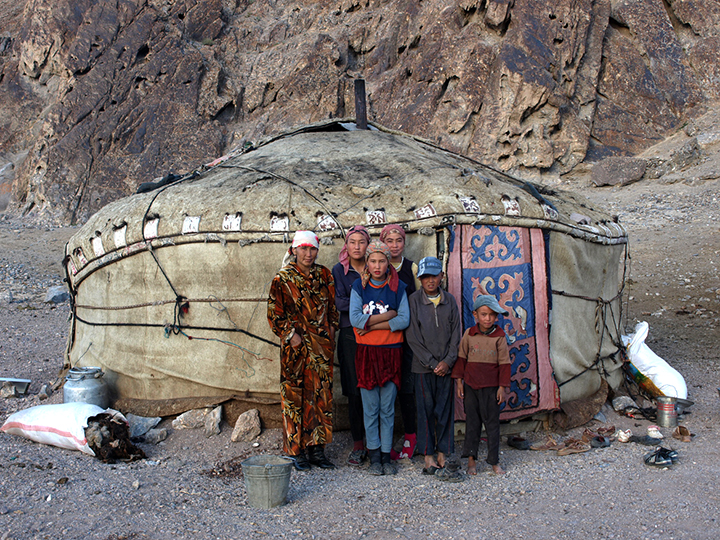
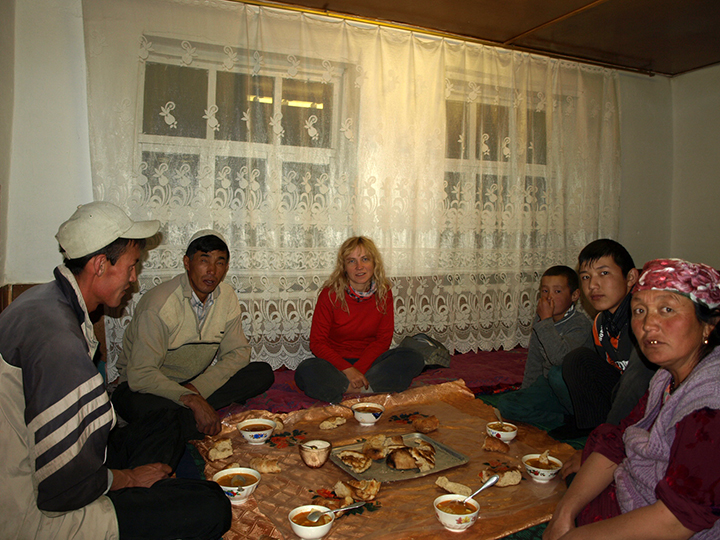
Yes, of course, often strangers invite me to their homes. We talk about their worldviews, everyday worries, but they rarely talk about their great dreams. They usually live here and now. I have the opportunity to get to know their everyday life. I know they enjoy the visits of an unexpected guest. I write about it in both volumes of “Alpinistka na autostopie”, describing people from Eastern Europe and Central Asia. Because of numerous meetings I gained knowledge about various countries and their inhabitants. I also have the opportunity to reach places that tourists do not know, e.g. I spent the night in a Kyrgyz yurt and got to know everyday life in the mountains of a big Muslim family.
Return to Pamir Highway after the overnight stay with hospitable Kyrgyz family, photo by Anna Borecka.
When it comes to hitchhiking, I have the opportunity to see different drivers’ behavior towards a female hitchhiker. Poles, Czechs and Slovaks like to complain about their fate, but countrymen will treat me with stuffed cabbage or bigos from a jar. Swiss only need information where I am from. The Icelanders will take me out of the way into the worst of turmoil. Finns have a gesture – with a golf coach as driver, I rode a sporty BMW worth 200,000 euros. With a nice Finnish couple, I traveled for two days to their home, where they invited me for an exquisite dinner and overnight stay. Inhabitants of the Balkans see comrades in Poles, so with every driver you have to drink at least one cup of coffee in a bar. Austrian men treat me like air, but Austrian women will always take me to the shopping center, although it is not on my way. Italians and Spaniards do not take hitchhikers, but if one of them stops the car, he already offers a long road. Traveling with Frenchman, Turk or Chinese, I can sometimes sit behind the wheel as a driver of a car or a pick-up. On the Pamir Highway, I drove a truck which belonged to a Kyrgyz. I drove it to Ak Baital (4,655 m), the highest pass on the road. With the inhabitants of the Azores I visited the island of Pico, and on Cape Verde I hitchhiked to the inhabited caldera, although noone rides there for free.
You say that all over the world there are people like us. In what respect are they the same?
So far I visited 63 countries on five continents and met people from many other countries. So I dare to say that people everywhere are similar because they have similar problems and dreams, and they only differ because of their place of birth. The place very much determines their lives, but in fact they are the same as us. Man is good by nature, because he comes into the world pure, innocent and trusting. Unfortunately, he later socializes. However, each of us strives to do the same: to ensure well being and safe life for oneself and the family. We need to cope with problems, set goals and realize our dreams as much as possible. I found out about it on hitchhiking, in mountain villages, in urban areas. Initially, some people were distrustful of me and others tried to play tricks on me. However, when I started talking to them and they found out that I was a normal person, they would become kind and helpful or they would leave me alone. It gives me faith in people. Each of us has some advantages and disadvantages, and creates different relationships with people, but in the majority, we are all normal, positive persons. And someone who emanates negative energy, he usually has problems that he cannot cope with by himself. Therefore, we should either help him if we feel strong enough, or we should steer clear of him. During the journey, I program myself positively, so usually I meet people with whom I can connect, even engage in normal, hearty conversation.
Dinner in a Tajik village, but in the house of Kirgiz, photo from the collection of Anna Borecka.
Have you ever said that jumping through the ice crevasses in Pamir you met your family in Canada? How do you mean by that?
This is obviously a figure of speech, but I like the vision of a big jump over two continents and an ocean. The story is extraordinary. In 2009, I wanted to climb the Avicenna Peak (7,134 m a.s.l.) in the Pamirs. On the glacier, about 5,000 meters above sea level, I found such ice crevasses that I could not jump over. However, risking a lot, I overcame these gaping abysses and reached the next camp, followed the Russian mountaineer. Unfortunately, due to a three-day hurricane and very low temperature, around -50 degrees Celsius, I decided no to attack the peak. In fact, a few Russian daredevils did not manage to get a seven-thousander, and one of them suffered amputation of several toes. When I was withdrawing from Razdielnaya Peak (6,148 m), I helped a Polish climber who had frostbitten fingers, to pack the backpack. Then he invited me to the “Rally of Tatra climbersin the seventies”, (Tatra climbers – łojanci, in the Polish mountain jargon it means climbers who explored the Tatra Mountains). In the mountain refuge of „Morskie Oko”, I got to know the living legends of Polish climbers, as they said about themselves. I noticed with surprise that these are wary people with a sense of humor, wiggling on the dance floor in a dance rhythm. There, I met another climber who invited me to Canada in 2014. Then I was seriously ill, so I accepted this invitation as a salvation. To get out of the disease, I had to find a specific goal, and in Canada I have never been before. So I wrote a message on Facebook to my three cousins, born in the country of the maple leaf, that I will be in their area, so I could visit them for a cup of coffee. Joe wrote to me first, that he would invite me to his son’s wedding. At that time, Adam was going to marry Amanda, a beautiful Indian-girl. Then I had the opportunity to meet the whole family. Well, I flew to Canada! I also arranged for a meeting with my friends from Ottawa, whom I met on my way to Aconcagua (6,960 m) in 2003. Summing up, standing in front of a big crevasse in the Pamirs, I did not retreat, but I overcame my own fear and jumped to the other side. Thanks to this, I met Polish climbers who led me to my family in Canada.
On the glacier in Pamir, about 4,500 m a.s.l., photo by Anna Borecka.
What did you learn from the mountains and travels?
I learnt how to be humble in the mountains, small and big, and how to behave in different situations. I also learnt respect for people who are culturally different, the ability to talk with almost every human being, overcome my own barriers, and discover the beauty of the world in small things. I call it the simplicity of bread. Sometimes a smile or greeting by an unknown person in a foreign country means more than meeting a large group of friends. I’ve learnt that the world is beautiful and people are good and very similar to us. For me, it does not matter what someone owns, but what a person is as a human being. During my expeditions, I meet poor but beautiful people who reveal joy and peace. I try to learn from them, although with varying results.
What do you expect from life?
Health and happiness for a close family and friends. Also, I would like to make everybody live better and more interesting lives. For myself, I want to implement the project „200 Peaks of the World” and to have „m & m’s”. It’s not about colorful chocolate balls, but about „man & money”. I need kind people all over the world helping me to achieve the mountain goals. In exchange I will write about them in my books and talk about presentations. I would also like to earn my living from my passions, not to hitch around the world and not to stay in a claustrophobic tent, somewhere in a remote area – but to sleep in a bed, in a hostel or even better in a jeep or a motorhome. Then I will continue the project faster and will take interested people on the trip. My mountain project is no longer a passion, but an imperative in life! This is a professional goal for the next ten years or until the stocks of countries and mountains are exhausted. And then I will write only bestsellers. (Laugh)
„Alpinizm – życie na haju”, (Mountaineering – life on high), the book published by the author, Wrocław, Poland 2006;
„Alpinistka na autostopie. Tom 1. Przez Karpaty na Ararat”, (Hitchhiker and climber. Volume 1. Through the Carpathians to Ararat), Publisher: Bernardinum, Pelplin, Poland 2015;
„Alpinistka na autostopie. Tom 2. Z Polski do Chin”, (Hitchhiker and climber. Volume 2. From Poland to China), Publisher: Bernardinum, Pelplin, Poland 2016.
„Śpiew lodowca” (Glacier song), book in progress, planned edition in Polish and English, in 2019.
Translated by: Anna Borecka, Ryszard Sawicki.
On the peaks of the world. Part 1.
Joanna Sokołowska-Gwizdka talks with Anna Borecka, a lonely climber, the hitchhiker traveling across continents and the author of the pioneering project „200 Peaks of the World”.
Poster for the project, photo and study by Anna Borecka.
Joanna Sokołowska-Gwizdka:
You are the author of the project „200 Peaks of the World”. So far, you’ve already reached 50 summits. What is this project about?
Anna Borecka:
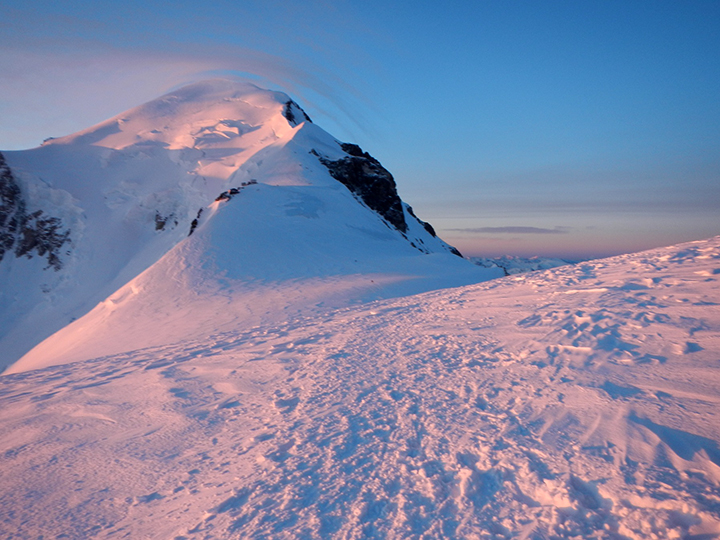
My goal is to reach the highest peaks in all countries in the world. This is a pioneering project, because nobody has done it yet. However, there are several more mountains than 200. In Colombia, there are two peaks of similar height: Cristóbal Colón and Simón Bolivar (5,775 m). It is not known which one is a little higher, so I have to climb both. However, in some African countries there are even three peaks to reach, because there are no accurate measurements, and different tribes believe that their area has the highest peak. I reached 50 peaks, mostly hitchhiking alone. I have been implementing the project for five years and in that period of time I ascended the 31 highest mountains. Some of them I have reached in teams and in different years. In total, I have in my collection such peaks as: Ararat (5,137 m), Demavand (5,610 m), Elbrus (5,642 m), Aconcagua (6,960 m) and all the highest peaks or points in European countries, except for Belarus. Recently, I added to that set Jabal Tubkal (4,167 m) in Morocco or Pico do Fogo (2,829 m) on Cape Verde. On the one hand, it’s a lot, and on the other hand, it’s a quarter of the project. However, I am an optimist. Since half a year ago, I left my job in a company in order to professionally pursue my mountain dreams – and now I am promoting a project – I think that soon someone will join me. And together, we can do more. Thanks to my publications and presentations, I already have followers in Poland and other countries, who transform their popular „Crown of Europe” into the „Crown of the Globe”. I am happy that I inspire others to get to know the world and fulfill their dreams at a high level. (Laugh)
However, the majority of enthusiasts of my idea prefer standards. Usually they organize quick and expensive trips to a particular mountain. I travel cheaply, but slowly, because I hitchhike and in several weeks I reach a few peaks in neighboring countries. Once the implementation of such a global project was a godly wish, and now it is a matter of experience, determination and finances. I’m good in the first two areas, but in the third, I still have to learn a lot. I have done many things voluntarily or for a small fee: presentations, articles, books. Now I dream of a long expedition for 3, 6 or 12 months to carry out the third stage of the project the 32 Peaks in America. Theoretically, I am already prepared, and physically probably too, because I train one and a half hour a day. I just need to make a big jump to find myself on the other side of the Atlantic.
Then, I will quickly and safely reach more volcanoes, hills hidden in the jungle or climb to impressive six-thousanders. I need a partner for some climbing, because the lonely climbing brings to much fear. So, I am approaching the next brake through in my life, but with the eyes of my imagination I can see only a mountain path towards the summit. I believe that someone will help me, someone who finds his role in the project „200 Peaks of the World”.
Collecting information before the expedition, photo by Michael Evers.
How do you prepare for expeditions?
Before the expedition to China, I spent as much as four months on preparations, and I spent three months on the way. It was my second lonely expedition and so far the longest. Now, I have a rule that every thing must be multifunctional, because otherwise that object doesn’t go with me for expedition. As the form of punishment it stays home, sits in a corner and waits for my return. Then I check again what I should take and what I should leave. Before leaving, I organize casting: I weigh, measure and choose the thing that is the lightest. In order to minimilize the load, I even cut off labels from the clothing. Instead of trekking shoes, I take running shoes. I pack much lighter, but thinner sleeping bag, than I should had brought with me. As to climbing equipment, I only take the necessary minimum: two carabiners, three tapes, one ice screw, crampons and ice ax. Otherwise, I takeonly affirmation and hope for a happy return. And of course, I get angry at myself when I do not have something in the mountains that I need, and when I’m soaking wet on the road or I’m freezing in the tent. I pack so meticulously in the minimalist manner, and I still have 20 kilos in my backpack.
I get information about the route and the mountains from the Internet, sometimes I also ask friends. I receive maps from my friend’s at „Księgarnia Podróżnika” (Traveler’s Bookshop). My daughter, Kalinka, finds cheap airline tickets to the island-states, and Kuba, my son-in-law, helps me with photography. An artist-traveler sometimes gives me good advice. Occasionally, someone else helps me to take care of different issues.
How do you care about health and beauty when traveling?
I take with me a mini towel and mini cosmetics, so it’s difficult to talk about taking care of beauty. After descending from the mountains, my pictures could scare children. Seriously! There is no mention of makeup in the mountains, but before returning to civilization, I must at least „make an eye” so not to frighten adults.
Until recently, I thought that the best cosmetics for a woman are mountain sun and wind. However, recently I changed my mind, because in fact it is a real SPA, which includes: solarium, sauna, facelift and massage – all in one. Often there are even water jets or cryotherapy – I have already frozen fingers and toes several times. In the Peruvian sun, I had a second-degree face burn, so my skin completely, but gradually peel off. At first, I looked like a peeled orange, but after sometime, I had a smooth face. In order to avoid the scars on my face, I protected myself with „Dermosan” – an ointment, which I received from my friend in the group. I was again lucky, although in the mountains you can find better cosmetics than in a theater wardrobe. Well, you get better make-up than the artists in horror movies. As the standard, it includes a face burnt by the sun-rays, swollen and with slight frostbite, lips shedding blood, damaged and torn hair. After a long trip, the process of returning to normal takes a few days. But the water in the mountains is wonderful, crispy and healthy, excluding glacier water. In Europe, the best water can be found in Iceland and Sweden, at least this is what the Scandinavian people say.
High-altitude selfie – Razdielnaya Peak (6,148 m a.s.l.), photo by Anna Borecka.
When did you discover your climbing passion?
Shortly after giving birth to my child. Seriously! But I will start from the beginning. My adventure with the mountains began when I was 12 years old. In the Beskids, in southern Poland, I was delighted with the beautiful view and said that I always wanted to walk in the mountains.
I ascended the first Tatras paths immediately after passing the final high school exams. In the third week of pregnancy, I reached Żabi Wyżni Peak (2,259 m) in Slovakia, and soon afterwards my daughter received the Tatra name. At that time, I was traveling in the Tatra Mountains with my husband and my sister. We were regular frequenters of the abandoned mountain hut in Rusinowa Polana, and there was a beautiful tree of viburnum (in Polish Kalina). This is how the idea of the name for our Kalinka was born. And then we raised the bar for the family. While climbing the rocks, Krystyna met her future husband, Robert, so we climbed in female and male teams.
When I became mother, my sister came to visit me and said she would enroll in a climbing course. I said, that I would also like to do it, but I was already a wife and mother. I was not yet 22 years old, but it seemed to me that many things come too late. However, my sister said that in life you always had to go forward, and I followed her advice.
In autumn, I attended a theoretical part of the course, and in the spring we had a practical course together in the Sokole Mountains, near Jelenia Góra. My daughter was nine months old, when I started to climb. It was an unusual way, because I was embalmed like a mummy. As a „Polish Nursing Mother” I could not deal with excess milk, but Krystyna found a way to do it. Then she was a nurse, so every day before climbing, she bandaged my torso. And so I passed the exam. I immediately caught the climbing bug. I were on a high doze of adrenaline. Sometimes I was scared, but also I was glad to overcome technical difficulties. At that time I weighed 53 kilograms, so I was curious to learn how to move vertically. I had only 62 centimeters at the waist, so the mountain climber sewing a climbing harness said he never had such a slim client.
Do you remember your first expedition?
First, there were climbing trips to the Sokole Mountains, then to the Tatras and the Alps, on weekends or holidays. We climbed with belaying, on climbing routes with difficulty of 3 or 4 degree. On the first climbing expedition I went to the Caucasus in 2003. In fact it was quite big, commercial group. In 26 days we climbed to a rock peak measuring 3,900 m, then to Uilpata (4,644 m), and yet we reached the top of Czeget Karabaszi (3,753 m), Kurmutau (4,045 m) and both peaks of Elbrus (5,642 m and 5,621 m). There was some climbing under the guidance of a professional instructor from Belarus, and a bit of trekking to not too difficult, but high top domes.
However, I have always been uphill in my life. Five days before this expedition, I had to call an ambulance. I stopped seeing, my heart was pounding and I was afraid that I would faint. I had anaphylactic shock because the antibiotic I was taking was probably rarely recommended by doctors. The ambulance doctor wanted to take me to the hospital, but I said that I had a paid holiday and I was leaving soon. I have not admitted that for almost a month I would carry 30 kg luggage in the Caucasus. Then I struggled to pack, and when I put on my backpack, I fell under his weight. Well, it worked after the third approach. In order to regain my strength, I slept during the two days of traveling by train. In North Ossetia, we slept in the old castle and there I had another attack, luckily weaker. Then one of the participants of the trip helped me, a former commando who knew the rules of first aid. In the mountains, I still felt weak and ready to faint, just before the avalanche hit us. However, I did not admit what was happening to me. I was surprised by the reaction of some people, because this avalanche was not so big. I was more afraid that I would reach my limit because of a wrong antibiotic than of small snow-ice nuggets.
Then there were other group expeditions: to the Aconcagua peak in Argentina (6,960 m), to Pisco (5,752 m) in Peru. There was also a climbing trip for seven four-thousanders in Monte Rosa massif, in Italy. Thanks to this, I gained experience needed for the implementation of lonely expeditions. I traveled through the Carpathians to Ararat, hitchhiked to China and climbed to over 6,000 meters, hitchhiked to the mountains in almost all European countries, and more recently even in Africa.
On the western peak of Elbrus (5,642 m a.s.l.), photo from the collection of Anna Borecka.
Once you climbed in a team, now alone. Did something happen that you decided on such courageous, independent expeditions?
From 2001 to 2006, I climbed in a male group, but in different, often incidental teams. Then I climbed to such peaks as Triglav (2,863 m), Mont Blanc (4,810 m), Grossglockner (3,798 m) and the mountains mentioned above. I also climbed the icefall of the Slovak Paradise and the Austrian Maltatal. It was a new element and a fascination with nature: 20 degrees below zero, frozen waterfall and incredible silence. Armed with ice axes and crampons and a little more equipment, I again climbed verticalily up. First, I learnt top rope climbing and then ice climbing in two- or three-member teams. The guys would not let me lead because they had 10-15 years of ice climbing experience and I was a “fresh-woman”. So, I solo climbed a few times, without belaying on small icefalls. Well, once or twice they let me lead climbing route.
In the summer of 2006, there was a breakthrough because I made an appointment online for climbing in the Sokole Mountains, with someone I did not know. And then I made a climbing route on which Darek, my husband died. Of course, I did not say anything about it to my new colleague. He learnt a little more about me, when we met about half a year later and I handed him my first book entitled „Mountaineering – life on high”. Here I described not only funny stories connected with team climbing and conquering the mountains until 2006, but also Darek’s accident, my trauma and the antidote which after many years proved to be mountains again.
In 2007, I decided that I would not climb anymore. However, in 2008, my friend died in the mountains, and his wife asked me to take care of the rescue operation and bring the body to Poland. Then I experienced another trauma, and when I recovered from it, paradoxically, I decided to organize a lonely expedition. I thought then, that at least no one else would die on it.
Climbing in the icefall of the Slovak Paradise, photo from the collection of Anna Borecka.
You speak about death in the mountains. When I was watching the documentary of Paweł Wysoczański „Jurek” about the mountaineer Jerzy Kukuczka, it filled me with emotions, from admiration to regret. I asked myself why alpinistsget married, why do they expose their loved ones to life in eternal fear? You lost your husband in the mountains in 1992. I can not imagine the trauma that you had to go through, staying alone with your two-year-old daughter. And yet … again you reach the peaks.
Unfortunately, every climber exposes his loved ones to great stress, me too… and I consider it as selfish. However, by organizing lonely expeditions, I choose mountains within my physical capabilities, in connection with my gained experience and with climbing difficulties. In my project „200 Peaks of the World”, there are many tourist mountains, but those which I have to fight, are simply more respectable. These are the ones I like the most.
When it comes to Darek’s accident… Darek was 25 years old when he died, and I was 24 years old. My daughter was two years old and she covered me with a diaper while I cried curled up as ball. For many years I felt guilty that we went to climb in a team of four, and we returned in a team of three, that the child lost her father, that I live… Thanks to my mother I got up because she told me I should live for my daughter. It was only after fourteen years that I was completely out of trauma, just when I climbed the rocky road on which Darek died. I wrote about it in the book because it was my personal catharsis. I’m still emotionally connected with my daughter to this day. Sometimes we even change roles when she’s like mother to me, but more often we are friends.
What is it about lonely expeditions that they attract you so much?
I have several reasons for organizing lonely expeditions, such as freedom, curiosity about the world and people, and a notorious lack of money. That’s the truth: on the one hand, I am the organizer, leader and participant, so I do everything as I want, considering the scarcity of funds. On the other hand, I’m happy to learn about new countries and interesting people, and that I manage difficult conditions during hitchhiking or in the mountains. I also discovered new skills that I had no idea about. It is a rapid decision-making in dangerous situations, in contacts with people and in the fight against the elements. It is a total concentration during solo climbing in a foreign area. Also, I go through mental training before and during the trip: I keep repeating like a mantra that I only meet good people. Finally, it is the use of intuition. There are also beautiful meetings with people, with kindred spirits, who immediately seem familiar to me. There are fabulous landscapes, there is time for photography and reverie. It is this independence that appeals to me. Besides, no one buzzes over my ear, telling about his problems at the time when he should concentrate on the trail or the beauty of the surrounding world. The mountains are also a great place to purify the psyche from mundane matters and the body – from urban smog. Yes, some mountain trips should be prescribed to people. (Laugh) And I can write these recipes.
There are also unusual encounters with nature. Once, when I set up a tent by the lake, in the Sierra Nevada mountains, in Spain, at an altitude of 3,000 meters – the Spanish ibex came to me. She jumped on a large boulder and looked down at me. I was cooking soup on a tourist stove. This wild goat saw me, yet stood on a rock with an outstretched neck, inhaling scents. I carefully reached for the camera, but she was faster. It’s a pity, because she would have a beautiful portrait from a distance of two meters, as a profile picture on the Facebook. (Laugh)
In the Sierra Nevada mountains, a mountain goat came to me, photo by Anna Borecka.
Are mountains a kind of addiction for you?
In the mountains, I feel like at home. Many people are afraid of wild nature, the elements, hardships. They avoid inconveniences and dangerous situations. When I go to the mountains, I laugh from ear to ear. This is my paradise on Earth, because the mountains are holy. Only there, a man can see how small he is and that he is only a part of nature. Then everything seems more simple. You see the distance from many things in life. In the mountains, it comes to my mind, that I do not have to do anything, so I can do everything. I can finally accomplish my dreams.
There are also moments of horror, when I ask God to send to me at least one person. This is strange, but sometimes it is easier to climb the icy ridge, when someone is next to you. Even when he is a stranger and climbing alone. Although, I had an amazing experience on my way to Mont Blanc, during a snowstorm. This was my second meeting with this mountain because my main goal was to climb the Mont Blanc de Courmayer (4,748 m), the highest peak of Italy. It was quite steep, cold and slippery, and I was alone. In addition to the difficulties, I only had mini crampons with six teeth instead of ten. My hands were freezing to the ice ax and trekking pole, the crampon blades hardly caught ice and I was scared. For a moment there was a strange silence which fell upon me. I thought then it did not matter what was about to happen, because I had already left my mark there. Even if I fell from the ridge, I already belonged to that mountain just as it belonged to me. It was so obvious that I calmed down and moved on.
Are mountains addictive? I do not know. For me it is a call. At some point some mountain begins to follow me, so I have to go to them and say hello; get to know each other and have my own opinion about it. With the rest, I think with reciprocity. (Laugh) And seriously speaking, mountains are a good school of life, a science of freedom in extreme conditions.
Sunrise on the way to Mont Blanc (4,810 m a.s.l.), photo by Anna Borecka.
The continuation of the conversation with Anna Borecka, about the countries traveled around, people met, adventures in the mountains, life goals and learning received from the mountains – will be released on …