„Andrzej Wajda: The Last Romantic of Polish Cinema”
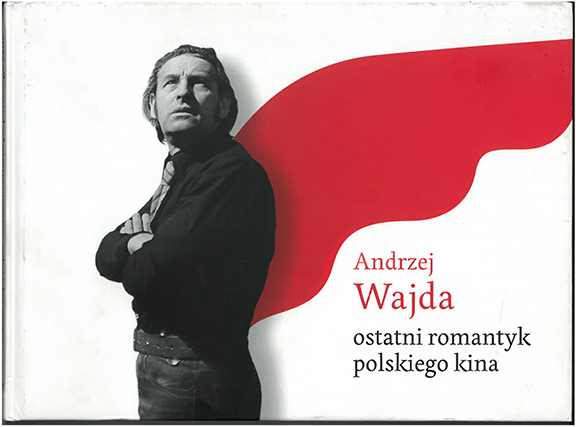
With Anna Serdiukow, co-author (together with Małgorzata Fiejdasz-Kaczyńska) of the book Andrzej Wajda: The Last Romantic of Polish Cinema, Joanna Sokołowska-Gwizdka discusses Wajda’s work, artistic vision, and enduring legacy.
*
*
Joanna Sokołowska-Gwizdka: While working on the book Andrzej Wajda: The Last Romantic of Polish Cinema, you spoke with many people who knew Wajda and worked with him. What portrait of the man and the artist emerged most often from those conversations? Was there a particular quality that kept coming up in the recollections of people from very different backgrounds?
Anna Serdiukow: He was a man deeply aware of where he came from. He felt a sense of responsibility for… well, many words would fit here. Responsibility for Poland, for the Polish people, for the filmmaking community, for the world around him, and for future generations of artists.
He felt less at ease outside Poland, and yet he was unquestionably an international artist. His cinema, though deeply rooted in his Polish identity, was universal. Andrzej Seweryn believes that Wajda was an artist in love with Poland, someone who could inspire that same love in others: a love of its language, its land, its light, its traditions, its nature, and its literature.
At Wajda’s funeral, Krystyna Janda described him as “the Simeon Stylites of the artistic community” (Simeon Stylites, c. 390–459, was a Syrian hermit and ascetic regarded as a symbol of spiritual steadfastness and moral authority — editor’s note).
Throughout our conversations, people repeatedly emphasized that Wajda remained true to himself and to a clearly defined set of values. He had profound respect for the Polish nation, its heritage, and its culture. This is evident, among other things, in the literary works he chose to adapt for the screen. After all, we are speaking of a filmmaker who brought works such as The Wedding (Wesele) and Pan Tadeusz to the cinema.
People also stressed that Wajda was a loyal friend. He repeatedly helped those close to him in times of trouble, regardless of what had caused their difficulties or how daunting the challenge might be.
He did not separate his personal and professional lives. He himself once said, “I have to start working on something, because I feel as though I’m dying when I’m not making films.” People used to say that only when he saw his name on a cinema screen did he know who he was. It was like that with every film; he never seemed to have enough.
But can one ever have enough of life, art, cinema, or anything else when one has miraculously escaped death as a child? Wajda was thirteen when World War II broke out. Until the end of his life, he retained something of a prewar Boy Scout: his impeccable manners and sense of duty, but also an acute awareness of life’s fragility. He had survived, and therefore felt compelled to live his life as intensely as possible.
And there was one final observation that returned like a refrain, no less important than the others. Many of my interviewees—or rather, our interviewees, since I worked on the book together with Małgorzata Fiejdasz-Kaczyńska—said that whenever they thought of Wajda, they invariably pictured two people together: Wajda and Zachwatowicz.
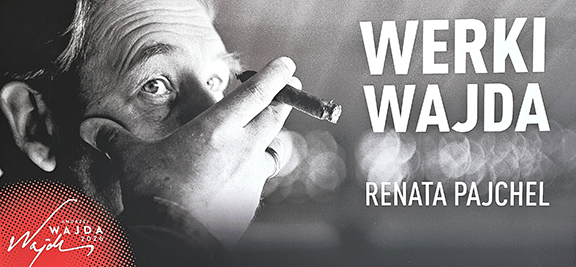
Joanna Sokołowska-Gwizdka: What surprised you most while working on the book? Did you discover anything about Wajda that changed the way you had previously viewed him and his films?
Anna Serdiukow: I heard time and again that he was… charming and seductive. He was not a conventional heartthrob. He captivated people through conversation, care, genuine interest, empathy, attentiveness, engagement, erudition, warmth, and elegance. He did not keep people at a distance; quite the opposite, he made them feel close to him.
When greeting someone, he would often say “Panie kolego” (“my dear colleague”), emphasizing that they belonged to the same filmmaking tribe. It might be a younger colleague, even someone with far less professional experience. To Wajda, that made no difference.
Joanna Sokołowska-Gwizdka: The title of your book describes him as “the last romantic of Polish cinema.” What exactly does the word “romantic” mean in Wajda’s case?
Anna Serdiukow: Being a Romantic certainly means something different in Poland than it does abroad. In Poland, a Romantic artist is someone concerned with Poland, the Polish spirit, Polish identity, and the Polish national cause. All of this is encompassed by our understanding of Romanticism.
It would be difficult to call Miłosz, Różewicz, or Kantor great Romantics. Piłsudski, Słowacki, Lechoń, and Wajda, on the other hand, certainly fit that description.
There was a time when people tried to describe Wajda as “the Matejko of cinema.” He disagreed, arguing that Matejko immortalized victories on canvas, whereas he portrayed defeats.
Wajda was—or perhaps still is—an heir to and a product of nineteenth-century Polish literature: Mickiewicz, Słowacki, and Wyspiański. While studying at the Academy of Fine Arts in Kraków, he attended Kazimierz Wyka’s lectures on Wyspiański and his Romantic roots. But the paintings of Jacek Malczewski also helped shape what we might call “Andrzej Wajda’s universe.”
There is no doubt that he was—and perhaps remains—a Romantic artist, possibly the last of such stature and significance in the landscape of Polish culture.
Joanna Sokołowska-Gwizdka: Andrzej Wajda was deeply rooted in Polish history and tradition. Yet his films were watched and understood around the world. How did he manage to transform distinctly Polish stories into universal cinema?
Anna Serdiukow: Andrzej Wajda made films that reflected his own way of seeing the world. It was the perspective of a Pole. He never wondered who would watch his films, never calculated or tried to cater to an audience.
I don’t know how to name or define that particular quality, that element which distinguished his cinema and made it accessible to audiences around the world. His films certainly did not achieve international success simply because of their Polish themes.
Perhaps it was because he was an artist who was never ashamed of his Polish identity. But it was never about pride or ego. It was about truth. Who knows? Perhaps that was what resonated with audiences.
Joanna Sokołowska-Gwizdka: The 1980s were an especially significant period for Wajda, both artistically and as a public figure. How did the people you interviewed remember those years? Did they feel that, for him, the role of the artist and responsibility toward society were inseparable?
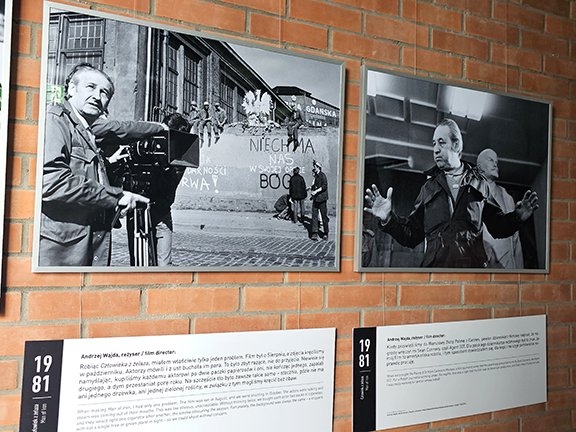
Anna Serdiukow: Andrzej Wajda never quite managed to realize his dream of a quiet family life. Five years after marrying Krystyna Zachwatowicz, he went to the Gdańsk Shipyard to support the film crew documenting the strikes, in his capacity as president of the Polish Filmmakers Association. But let me start at the beginning.
Wajda certainly began to see himself differently—and to reconsider what it meant to be an artist—after the events of March 1968 in Poland. He asked himself what a filmmaker could be, or perhaps what a filmmaker ought to be. Those events awakened in him a desire, or perhaps a vision, of helping to build a community and assuming responsibility for a particular group, for his professional community, and ultimately perhaps for Poland itself.
According to Anna Kaplińska-Struss, Andrzej Wajda would never have become the socially engaged figure he was—someone who felt responsible not only for the fate of his fictional characters but also for his fellow citizens—had it not been for Krystyna Zachwatowicz.
It is worth remembering that it was she who, in 1975, introduced Wajda to Stanisława Przybyszewska’s play The Danton Case (Sprawa Dantona). Anyone who saw the production at Warsaw’s Teatr Powszechny, starring Wojciech Pszoniak, understood that it was about the here and now—about contemporary reality, about history unfolding in the present.
That same year, Wajda and Zachwatowicz married. Five years later, Krystyna was active in the cultural commission attached to the leadership of the Solidarity trade union and in its National Coordinating Commission.
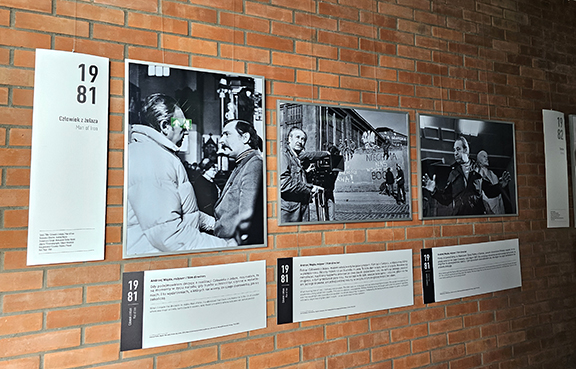
It was also during this period that Man of Iron (Człowiek z żelaza) was made. The film begins where Man of Marble (Człowiek z marmuru) ends: at the gates of the Gdańsk Shipyard.
Despite pressure from the censors, Wajda refused to remove the famous protest song Janek Wiśniewski padł (“Janek Wiśniewski Has Fallen”). It was then that he realized his presence at the Shipyard during the strikes had given him the support of a working-class community numbering in the millions. He had an entire trade union behind him.
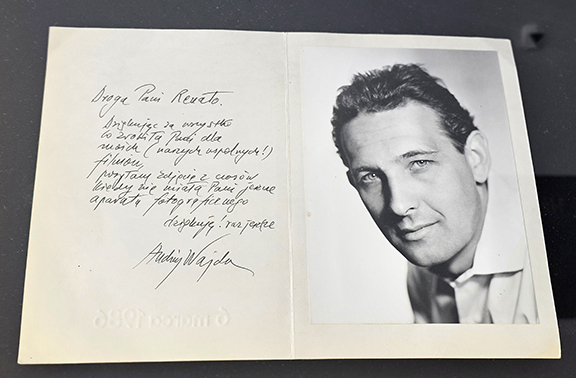
Wajda was never an artist detached from real life, living in a bubble. But he was undoubtedly too trusting when it came to politics. He owed much of his sense of direction in public life to Krystyna Zachwatowicz. Both paid an enormous price for their commitment, yet they remained inseparable, standing together through everything during their 43 years of marriage.
In their apartment on Hauke-Bosaka Street in Warsaw’s Żoliborz district, Wajda and Zachwatowicz always kept two emergency kits ready, containing soap, toothbrushes and toothpaste, towels, and medication. But for them, martial law was not primarily about fear. It was, above all, about Father Jerzy Popiełuszko’s sermons at the church in Żoliborz and the crowds of worshippers who gathered there. When Wajda was asked about those “faithful,” during Popiełuszko’s funeral, he replied that they were “faithful to the truth, faithful to the cause, faithful to Poland.”
When I think of Andrzej Wajda’s completed films, I see each one as an expression of the artist’s voice, but also as a political and civic commentary on the world around him: Man of Marble, Man of Iron, Danton, Ashes and Diamonds, The Ashes, Katyń, and Walesa: Man of Hope.
But I also think of the films he never managed to make, including adaptations of Günter Grass’s Cat and Mouse and Joseph Conrad’s Heart of Darkness, for which Andrzej Żuławski was to write the screenplay.
At one point, Wajda also envisioned inviting people from outside the film industry to collaborate with his Film Unit X (Zespół Filmowy X). He considered producing Beyond the Seventh Boundary (Za siódmą miedzą), a screenplay by Maciej Szumowski, creator of the well-known 1960s documentary series Poland Beyond the Seventh Boundary (Polska zza siódmej miedzy), which gave ordinary citizens a voice.
The subject matter and the way it was presented, however, proved too politically sensitive, and the authorities never approved the project for production. Many of Andrzej Wajda’s other projects met a similar fate.
Joanna Sokołowska-Gwizdka: The Honorary Oscar in 2000 was a major international recognition of Wajda’s work. How do you think he himself viewed the award? As the crowning achievement of his career, an honor for Polish cinema, or perhaps something more?
Anna Serdiukow: Before receiving the Oscar from Jane Fonda, Andrzej Wajda had been nominated for an Academy Award four times. When he finally accepted the statuette for his lifetime achievement, he delivered his speech in his native language, saying: “I will speak in Polish because I want to say what I think, and I always think in Polish.”
Of course, there was a significant language barrier—we should not pretend otherwise. On the other hand, this was undoubtedly an important moment for him, affirming his standing as a Polish filmmaker of international renown. But as he himself emphasized, he accepted the award not only as recognition of his own achievements, but also as a tribute to Polish cinema as a whole.
And in the end, he did not keep the statuette. In April 2000, he donated it to the Jagiellonian University Museum.
Joanna Sokołowska-Gwizdka: If you had to identify the most important thing Andrzej Wajda left behind—not only for Polish cinema, but for culture in a broader sense—what would it be?
Anna Serdiukow: His ability to establish lasting bonds that extended beyond professional relationships and grew stronger over time. Cinema was the beginning of something greater, deeper, and more meaningful. Film collaborations would come to an end, but the relationships, friendships, and human connections remained.
Mr. Andrzej gave so much of himself on a personal level. He invested an extraordinary amount of time, energy, respect, and empathy in other people’s lives. In that profoundly human sense, he was remarkable. He could give his attention to something seemingly small, yet something that might be essential, important, even life-changing to another person.
And all the while, he kept working. He worked constantly.
Time is a luxury, our most precious currency. We understand that particularly well today, surrounded by technological conveniences that, paradoxically, end up taking so much of our time.
In Mr. Andrzej’s case, we are talking about an extraordinarily full personal and creative life, much of it lived before mobile phones, Zoom, and social media existed. Yet despite his intense involvement in so many initiatives, not only cinematic ones, he was genuinely present. He was here and now. He was helpful, and he simply made time for people and their concerns.
I look with admiration at his friendships, so utterly selfless, and at the gratitude he felt toward others and expressed so generously.
This is something we desperately need today, and certainly not only in the world of cinema: the ability to build dialogue and bring people together, to be decent without giving up the ability to stand up for ourselves.
What matters is that we learn once again to listen to one another—to truly hear each other and look one another in the eye.
Culture needs… civility.
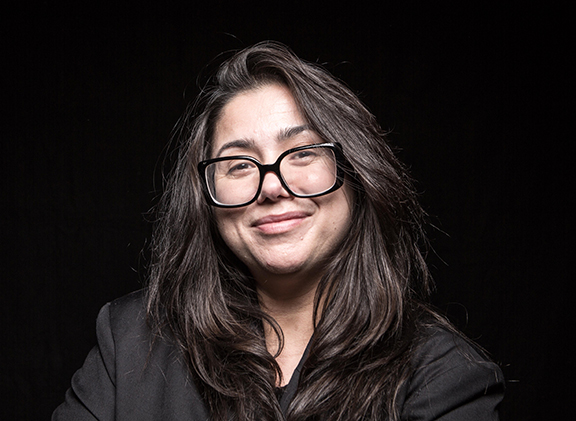
Journalist, film critic, translator, cultural programmer, and script consultant. From 2016 to 2019, she served as Artistic Director of the Cinergia European Cinema Forum in Łódź, and since 2024 she has been Program Director of the Młodzi i Film Festival in Koszalin, with which she has been associated since 2010.
She regularly publishes articles on cinema, including in the Polish Filmmakers Association’s Film Magazine. She is an editor and co-author of monographs on Andrzej Wajda, Roman Polanski, and Wojciech Jerzy Has.
She works on an ongoing basis with the Balapolis production company and the Polish Association of Arthouse Cinemas, programming, among other events, the Warsaw Arthouse Cinema Week. She is also involved in promoting Polish cinema both in Poland and internationally.
As a correspondent for the Polish press, she covers major international film festivals in Cannes, Venice, Berlin, and Karlovy Vary. She co-hosts the film program DOBRZE ZMONTOWANE on Chillizet radio.
She is a member of the Polish Film Academy, the International Federation of Film Critics (FIPRESCI), the Polish Filmmakers Association (SFP), the Association of Women Filmmakers, and the Ex Anima Film Foundation. She also serves as an expert for the Polish Film Institute.