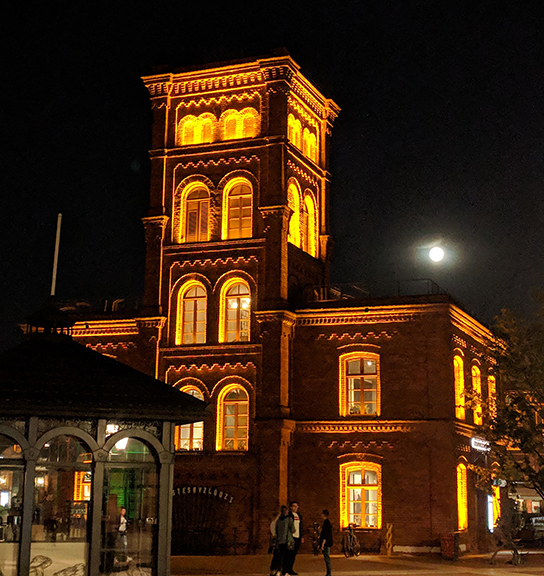
On Alex Storozynski’s film „Kosciuszko: A Man Before His Time”
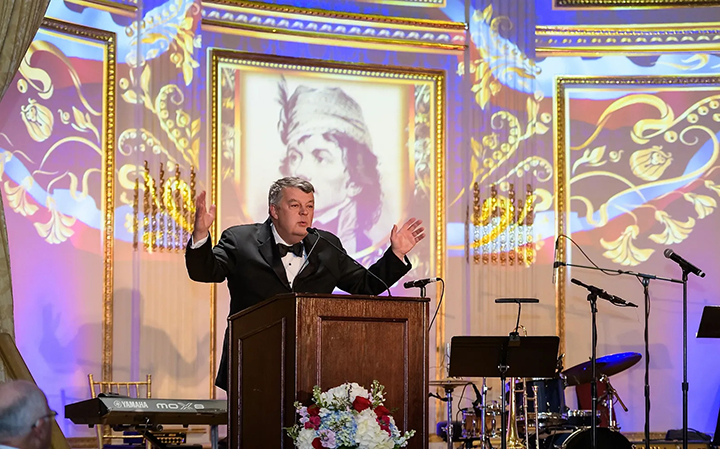
Alex Storozynski — journalist, author, and filmmaker; author of „The Peasant Prince: Thaddeus Kosciuszko and the Age of Revolution” and writer-director of the documentary „Kosciuszko: A Man Before His Time„. Photo courtesy of Alex Storozynski / storozynski.com.

Joanna Sokołowska-Gwizdka

Years ago, I watched a documentary about Tadeusz Kościuszko whose title I no longer remember. The filmmakers traveled to the American town of Kosciusko, Mississippi, and asked people on the street whether they knew who the man was whose name their town bears. One response stayed with me in particular. Someone was astonished to learn that Kościuszko was Polish. All their life, they had assumed he was Native American.

Years later, that scene came back to me while I was watching Alex Storozynski’s documentary Kosciuszko: A Man Before His Time. Kościuszko’s name is, after all, inscribed in the American landscape: towns, counties, streets, bridges, schools, and mountains bear his name, and monuments to him stand in many places across the United States. And yet the man behind that name remains surprisingly little known to many Americans.

American filmmaker, photographer, and writer Floyd Webb, who was born in Mississippi, has described an almost identical experience. He passed through the town of Kosciusko many times while visiting family or traveling between Mississippi and Chicago. The town’s name seemed entirely natural to him, as if it had simply always been there. Yet no one had ever told him where it came from. Only many years later, during visits to Warsaw and Kraków, did Polish friends tell him about Tadeusz Kościuszko. Webb then realized that he had known Kościuszko’s name all his life — first from Mississippi, later from the monument in Chicago — without knowing the man himself. As he observed, sometimes history stands in plain sight before us for an entire lifetime before we truly begin to see it.

A Journalist Fascinated by a Polish Hero

Alex Storozynski was born in New York City in 1961 into a family of Polish immigrants. He grew up in Brooklyn and Queens. His father, Dionizy, came from Lwów, while his mother, Irena, was from Volhynia. Polish history was therefore present in his home from childhood. As a boy, he accompanied his father to gatherings of Polish veterans, where portraits of Pulaski and Kościuszko hung on the walls.

He graduated from the State University of New York at New Paltz and later from Columbia University’s Graduate School of Journalism. He went on to build a distinguished career in American journalism. He was a member of the editorial board of the New York Daily News, the founding editor-in-chief of the free daily newspaper amNewYork, and city editor of The New York Sun. In 1999, the editorial board of the New York Daily News, of which he was a member, received the Pulitzer Prize for its campaign to save Harlem’s legendary Apollo Theater.

For many years he has also been associated with The Kosciuszko Foundation in New York. In 2008 he became its president and executive director, and he currently serves as chairman of its Board of Trustees.

Tadeusz Kościuszko, however, became much more to him than the patron of a Polish-American institution. Storozynski spent around ten years working on his biography, researching archives, correspondence, and accounts left by people who had known the Polish commander. In 2009, The Peasant Prince: Thaddeus Kosciuszko and the Age of Revolution was published in the United States and later appeared in Polish as Kościuszko. Książę chłopów. The biography received, among other distinctions, the Fraunces Tavern Museum Book Award.

What fascinated Alex Storozynski above all was how different the real man behind the textbook monument was from the simplified image of a national hero.
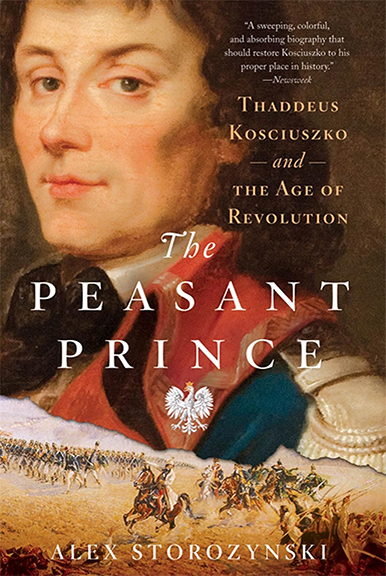
Alex Storozynski’s book about Tadeusz Kościuszko

A Man Before His Time

The documentary Kosciuszko: A Man Before His Time was made in 2015. Storozynski wrote the screenplay and directed the film, which was based on his book. American actor Blair Underwood served as narrator, while Olek Krupa provided the voice of Kościuszko. Filming took place in Saratoga, West Point, Philadelphia, and Poland, among other locations. Historians appear in the film, as does Zbigniew Brzezinski. The documentary was broadcast by PBS stations in the United States.

The title of the film is key to the way Alex Storozynski tells the story of his subject. He is interested not only in Kościuszko the general, military engineer, hero of Saratoga, and designer of the fortifications at West Point. Above all, he asks what the word freedom meant to Kościuszko.

Kościuszko lived in a world that was not ready for his ideas. He understood freedom as a right that should not belong only to society’s privileged classes. He thought about peasants, townspeople, Jews, women, and, in America, Black people as well.

Before Kościuszko became a hero of two continents, however, he was a young man whose life was changed by an unfulfilled love.

Ludwika Sosnowska

After graduating from Warsaw’s School of Chivalry and spending time in France, Kościuszko returned to Poland but was unable to find a position in the army. He became tutor to the daughters of Józef Sosnowski, Field Hetman of Lithuania. One of them was Ludwika Sosnowska.

The young teacher and his pupil fell in love. Ludwika was well educated and interested in new economic ideas, including physiocracy, which also fascinated Kościuszko. Alex Storozynski points out that the two were connected not only by affection but also by a similar way of thinking about society.

Ludwika’s father, however, had no intention of giving his daughter in marriage to an impoverished nobleman without great wealth or social standing. Kościuszko and Ludwika attempted to elope, but their plan failed. Ludwika later became the wife of Prince Józef Aleksander Lubomirski.*

Kościuszko left Poland. Before long, he found himself on the other side of the Atlantic, where a revolution was beginning that would change the world.
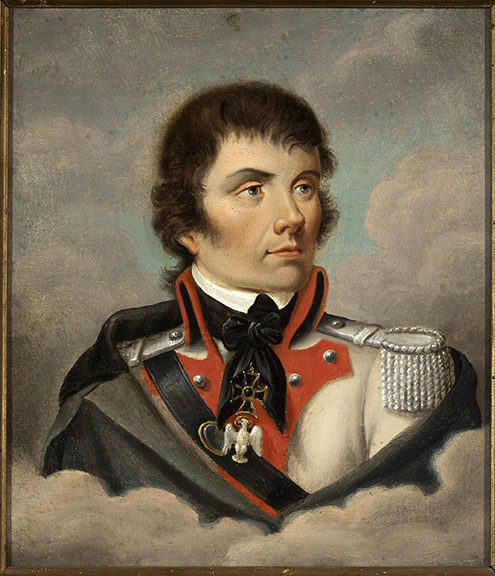
Tadeusz Kościuszko, artist unknown, National Museum in Warsaw, public domain

1776 — The Birth of America

Kościuszko arrived in America in the year the Declaration of Independence was proclaimed. In October 1776, Congress appointed him a colonel and engineer in the Continental Army.

His talent became particularly evident during the Saratoga campaign. It was Kościuszko who selected and prepared the American defensive positions at Bemis Heights, making brilliant use of the terrain.

Later, Tadeusz Kościuszko was entrusted with building a system of fortifications at West Point on the Hudson River, a strategically crucial location whose loss could have divided the rebellious colonies in two. He created fortifications that helped make West Point one of the most important defensive strongholds of the young nation.

Kościuszko was therefore one of the people who helped make the creation of the United States possible.

Freedom — But for Whom?

It is here that the most contemporary aspect of Alex Storozynski’s story begins. The American Revolution proclaimed the equality of human beings, while at the same time the new republic remained a society built to a considerable extent on slavery.

Kościuszko recognized this contradiction.

In 1798, before leaving the United States once again, Kościuszko drew up an extraordinary will. He entrusted his American estate to Thomas Jefferson and instructed that the money be used to purchase the freedom of enslaved people and to provide them with vocational training and the means to begin independent lives.
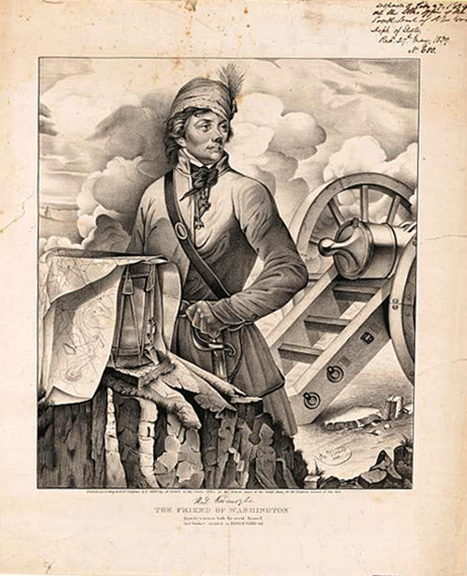
Tadeusz Kościuszko, Friend of Washington, A. Girard, ca. 1839. Photo: Library of Congress, Prints and Photographs Division, public domain.

Return to Poland

Kościuszko returned to Europe as a hero of the American War of Independence. Several years later, he became the leader of the 1794 uprising in Poland.

Here, too, his understanding of independence extended beyond the interests of the nobility. After the victory at Racławice, he put on a peasant’s homespun coat, while the Proclamation of Połaniec limited the personal subjugation of peasants and reduced the compulsory labor obligations of those who took part in the uprising. Kościuszko attempted to create a political community broader than the traditional noblemen’s Polish-Lithuanian Commonwealth.

This is why Alex Storozynski describes him as a man before his time. Not because every modern concept of human rights can simply be attributed to him, but because, against the background of the eighteenth century, he consistently sought to broaden the circle of people entitled to freedom.

Not a Monument, but a Man

Alex Storozynski’s film is at its most compelling when it allows us to see Kościuszko not as a bronze monument but as a human being — first as a young man in love with Ludwika, a talented draftsman and engineer; later as an emigrant who set out for another continent without yet knowing that he would find himself at the center of one of the most important events of the eighteenth century; an officer who built his career through talent rather than wealth or birth.

Above all, however, we see a man who persistently asked an uncomfortable question:

If we demand freedom for ourselves, can we deny it to others?

Perhaps this is precisely why Kościuszko fascinated Alex Storozynski so deeply.

250 Years Later

In 2026, Kościuszko’s story takes on an additional significance. The United States is celebrating the 250th anniversary of the Declaration of Independence, while the year also marks the 280th anniversary of Tadeusz Kościuszko’s birth.

Floyd Webb, who for decades passed through Kosciusko, Mississippi, and by the Kościuszko monument in Chicago before learning who the man behind the name actually was, has written that history can preserve names while quietly setting aside the ideas that once gave those names meaning.

Alex Storozynski’s film attempts to restore both. Not only Kościuszko’s name, but also the man behind it.

____________________

Note:

*While working on my master’s thesis, The Castle Theater in the Residence of the Lubomirski and Potocki Families in Łańcut, I was examining archival materials preserved at Łańcut Castle when I came across the memoirs of Teofil Bauman, the son of Fryderyk Bauman, an architect and stucco artist who worked at Łańcut for Princess Marshal Izabela Lubomirska.

There I found the story of how, during a visit to the Lubomirski family in Równe, Princess Marshal became so enchanted with their young son Henryk that she decided to take him with her. She hid the child in a large fur muff and drove away with him, informing his parents only afterward.

It turned out that the boy’s mother was Ludwika Sosnowska, Tadeusz Kościuszko’s beloved, who, as the wife of Józef Lubomirski, gave birth to their son in 1777. In letters to her mother, Ludwika complained of how deeply she missed her child, but eventually it was agreed that Henryk would remain with Princess Marshal, who provided him with the finest education and upbringing available at the time.

__________

Sources:

  1. Alex Storozynski, The Peasant Prince: Thaddeus Kosciuszko and the Age of Revolution, Thomas Dunne Books/St. Martin’s Press, New York, 2009.
  2. Alex Storozynski, Kosciuszko: A Man Before His Time, documentary film, 2015.
  3. U.S. National Park Service, Saratoga National Historical Park — “Tadeusz Kosciuszko.” Biography. Tadeusz Kosciuszko – National Park Service
  4. Library of Congress — “Our Founding Uncle, Thaddeus K.” Materials on Kościuszko’s role in the American Revolution and his will. Our Founding Uncle, Thaddeus K. – Library of Congress
  5. Polish History — Kościuszko – a man before his time, Interview with Alex Storozynski.
  6. The Kosciuszko Foundation — materials on Alex Storozynski’s activities, his journalistic career, his book on Kościuszko, and his work with The Kosciuszko Foundation. The Kosciuszko Foundation – Mission and History
  7. Floyd Webb — “An Opportunity to Mean It,” 2026. A personal reflection by the American filmmaker. An Opportunity to Mean It

O filmie Alexa Storożyńskiego „Kościuszko. Człowiek, który wyprzedził swoją epokę”

Alex Storożyński — dziennikarz, pisarz i filmowiec, autor książki „The Peasant Prince: Thaddeus Kosciuszko and the Age of Revolution” oraz scenarzysta i reżyser filmu dokumentalnego „Kosciuszko: A Man Before His Time„, fot. dzięki uprzejmości Alexa Storożyńskiego / storozynski.com.

Joanna Sokołowska-Gwizdka

Przed laty oglądałam film dokumentalny o Tadeuszu Kościuszce, którego tytułu dziś już nie pamiętam. Autorzy pojechali do amerykańskiego miasteczka Kosciusko w stanie Mississippi i pytali przypadkowych mieszkańców, czy wiedzą, kim był człowiek, którego nazwisko nosi ich miejscowość. Szczególnie zapamiętałam jedną z wypowiedzi. Ktoś ze zdumieniem dowiedział się, że Kościuszko był Polakiem. Przez całe życie był przekonany, że był Indianinem.

Po latach ta scena wróciła do mnie podczas oglądania dokumentu Alexa Storożyńskiego „Kosciuszko: A Man Before His Time”. Nazwisko Kościuszki jest przecież wpisane w amerykański krajobraz: noszą je miasta, hrabstwa, ulice, mosty, szkoły i góry, a jego pomniki stoją w wielu miejscach Stanów Zjednoczonych. A jednak człowiek, który kryje się za tym nazwiskiem, jest dla wielu Amerykanów zaskakująco mało znany.

Amerykański filmowiec, fotograf i pisarz Floyd Webb, urodzony w Mississippi, opisał niemal identyczne doświadczenie. Wielokrotnie przejeżdżał przez miejscowość Kosciusko, odwiedzając rodzinę lub podróżując z Mississippi do Chicago. Nazwa miasta była dla niego czymś oczywistym, istniejącym od zawsze. Nikt jednak nie powiedział mu, skąd się wzięła. Dopiero wiele lat później, podczas pobytów w Warszawie i w Krakowie, polscy znajomi opowiedzieli mu o Tadeuszu Kościuszce. Webb uświadomił sobie wtedy, że przez całe życie znał jego nazwisko — z Mississippi, później z pomnika w Chicago — ale nie znał człowieka. Jak napisał: historia czasami stoi przed nami na widoku przez całe życie, zanim zaczniemy ją naprawdę dostrzegać

Dziennikarz zafascynowany polskim bohaterem

Alex Storożyński urodził się w 1961 roku w Nowym Jorku w rodzinie polskich emigrantów. Wychował się na Brooklynie i Queensie. Jego ojciec Dionizy pochodził ze Lwowa, matka Irena z Wołynia. Historia Polski była więc obecna w jego domu od dzieciństwa. Jako chłopiec chodził z ojcem na spotkania polskich weteranów, gdzie na ścianach wisiały portrety Pułaskiego i Kościuszki.

Ukończył State University of New York at New Paltz, a następnie Graduate School of Journalism na Columbia University. Zrobił znaczącą karierę w amerykańskiej prasie. Był członkiem zespołu redakcyjnego „New York Daily News”, pierwszym redaktorem naczelnym bezpłatnego dziennika „amNewYork” oraz city editor „The New York Sun”. W 1999 roku zespół redakcyjny „New York Daily News”, którego był członkiem, otrzymał Nagrodę Pulitzera za kampanię na rzecz uratowania legendarnego Apollo Theatre na Harlemie.

Od lat jest związany z nowojorską The Kosciuszko Foundation. W 2008 roku został jej prezesem i dyrektorem wykonawczym, obecnie jest przewodniczącym Rady Powierniczej.

Tadeusz Kościuszko stał się jednak dla niego czymś więcej niż patronem polonijnej instytucji. Pracował nad jego biografią około dziesięciu lat, docierając do archiwów, korespondencji i świadectw ludzi, którzy znali Naczelnika. W 2009 roku ukazała się w Stanach Zjednoczonych książka „The Peasant Prince: Thaddeus Kosciuszko and the Age of Revolution”, później wydana po polsku jako „Kościuszko. Książę chłopów”. Biografia otrzymała m.in. Fraunces Tavern Museum Book Award.

Alexa Storożyńskiego fascynowało przede wszystkim to, jak bardzo człowiek ukryty za podręcznikowym pomnikiem różni się od uproszczonego obrazu narodowego bohatera.

Książka Alexa Storożyskiego o Tadeuszu Kościuszce

Człowiek, który wyprzedził swoją epokę

Dokument „Kosciuszko: A Man Before His Time”  powstał w 2015 roku. Dziennikarz napisał scenariusz i wyreżyserował film oparty na swojej książce. Narratorem został amerykański aktor Blair Underwood, głosu Kościuszce użyczył Olek Krupa, a zdjęcia realizowano m.in. w Saratodze, West Point, Filadelfii i w Polsce. W filmie wypowiadają się historycy oraz Zbigniew Brzeziński. Dokument był emitowany przez stacje PBS w Stanach Zjednoczonych.

Tytuł filmu jest kluczem do sposobu, w jaki Alex Storożyński opowiada o swoim bohaterze. Nie interesuje go wyłącznie Kościuszko — generał, inżynier wojskowy, bohater Saratogi i twórca fortyfikacji West Point. Pyta przede wszystkim, co dla Kościuszki oznaczało słowo wolność.

Kościuszko żył w świecie nieprzygotowanym na jego idee. Wolność rozumiał jako prawo nie tylko uprzywilejowanych warstw społeczeństwa. Myślał o chłopach, mieszczanach, Żydach, kobietach, a w Ameryce również o czarnoskórych.

Zanim jednak Kościuszko został bohaterem dwóch kontynentów, był młodym człowiekiem, którego los zmieniła niespełniona miłość.

Ludwika Sosnowska

Po ukończeniu warszawskiej Szkoły Rycerskiej i pobycie we Francji Kościuszko wrócił do kraju, ale nie znalazł dla siebie miejsca w wojsku. Został nauczycielem córek hetmana polnego litewskiego Józefa Sosnowskiego. Jedną z nich była Ludwika Sosnowska.

Między młodym nauczycielem i uczennicą narodziło się uczucie. Ludwika była dobrze wykształcona i interesowała się nowymi ideami ekonomicznymi, między innymi fizjokratyzmem, który fascynował także Kościuszkę. Alex Storożyński zwraca uwagę na to, że łączyło ich nie tylko uczucie, lecz także podobny sposób myślenia o społeczeństwie.

Ojciec Ludwiki nie zamierzał jednak oddać córki niezamożnemu szlachcicowi bez wielkiego majątku i pozycji. Kościuszko i Ludwika próbowali uciec, lecz plan się nie powiódł. Ludwika została później żoną księcia Józefa Aleksandra Lubomirskiego*.

Kościuszko wyjechał z Polski. Wkrótce znalazł się po drugiej stronie Atlantyku, gdzie rozpoczynała się rewolucja, która miała zmienić świat.

Tadeusz Kościuszko, autor nieznany, Muzeum Narodowe w Warszawie, domena publiczna

1776 – narodziny Ameryki

Kościuszko przybył do Ameryki w roku ogłoszenia Deklaracji Niepodległości. W październiku 1776 roku Kongres mianował go pułkownikiem i inżynierem Armii Kontynentalnej.

Jego talent ujawnił się szczególnie podczas kampanii pod Saratogą. To Kościuszko wybrał i przygotował amerykańskie pozycje obronne na Bemis Heights, znakomicie wykorzystując ukształtowanie terenu.

Później Tadeuszowi Kościuszce powierzono budowę systemu fortyfikacji w West Point nad rzeką Hudson, w strategicznym miejscu, którego utrata mogła przeciąć zbuntowane kolonie na dwie części. Stworzył fortyfikacje, dzięki którym miejsce to stało się jednym z najważniejszych punktów obronnych młodego państwa.

Kościuszko był więc jednym z ludzi, którzy pomogli wywalczyć powstanie Stanów Zjednoczonych.

Wolność — ale dla kogo?

I właśnie tutaj zaczyna się najbardziej współczesna część historii opowiadanej przez Alexa Storożyńskiego. Amerykańska rewolucja głosiła, że wszyscy ludzie są równi, a jednocześnie nowa republika pozostawała społeczeństwem opartym w znacznej mierze na niewolnictwie. Kościuszko tę sprzeczność dostrzegał.

W 1798 roku, przed ponownym opuszczeniem Stanów Zjednoczonych, Kościuszko sporządził niezwykły testament. Powierzył swój amerykański majątek Thomasowi Jeffersonowi i polecił przeznaczyć pieniądze na wykupienie niewolników i zapewnienia im zdobycia zawodu oraz możliwości rozpoczęcia samodzielnego życia.

Tadeusz Kościuszko, przyjaciel Waszyngtona, A. Girard, ok. 1839, fot. Library of Congress, Prints and Photographs Division, domena publiczna

Powrót do Polski

Kościuszko wrócił do Europy jako bohater amerykańskiej wojny o niepodległość. Kilkanaście lat później stanął na czele insurekcji 1794 roku.

Także tutaj jego rozumienie niepodległości wykraczało poza interesy szlachty. Po zwycięstwie pod Racławicami przywdział chłopską sukmanę, a Uniwersał Połaniecki ograniczał poddaństwo chłopów i zmniejszał pańszczyznę tych, którzy uczestniczyli w powstaniu. Kościuszko próbował stworzyć wspólnotę polityczną szerszą niż tradycyjna Rzeczpospolita szlachecka.

Dlatego Alex Storożyński nazywa go człowiekiem wyprzedzającym swój czas. Nie dlatego, że można bez zastrzeżeń przypisać mu wszystkie współczesne pojęcia praw człowieka, lecz dlatego, że na tle XVIII wieku konsekwentnie poszerzał krąg ludzi, którym przysługiwać miała wolność.

Nie pomnik, lecz człowiek

Film Alexa Storożyńskiego jest najciekawszy właśnie wtedy, kiedy pozwala zobaczyć Kościuszkę nie jako spiżowy pomnik, lecz jako człowieka – najpierw młodego mężczyznę zakochanego w Ludwice, utalentowanego rysownika i inżyniera, potem emigranta, który wyruszył na drugi kontynent, nie wiedząc jeszcze, że znajdzie się w centrum jednego z najważniejszych wydarzeń XVIII wieku, oficera, który zrobił karierę dzięki talentowi, nie dzięki pochodzeniu czy majątkowi. A przede wszystkim człowieka konsekwentnie zadającego niewygodne pytanie: jeżeli domagamy się wolności dla siebie, czy możemy odmawiać jej innym? I może właśnie dlatego Kościuszko tak bardzo zainteresował Alexa Storożyńskiego.

250 lat później

W 2026 roku historia Kościuszki nabiera dodatkowego znaczenia. Stany Zjednoczone obchodzą 250-lecie Deklaracji Niepodległości, a jednocześnie przypada 280. rocznica urodzin Tadeusza Kościuszki.

Floyd Webb, który przez dziesięciolecia mijał miejscowość Kosciusko w Mississippi i pomnik Kościuszki w Chicago, zanim dowiedział się, kim był ich bohater, napisał, że historia potrafi zachować nazwiska, a po cichu odłożyć na bok idee, które nadawały im znaczenie.

Film Alexa Storożyńskiego próbuje przywrócić jedno i drugie. Nie tylko nazwisko Kościuszki, lecz także człowieka, który za nim stoi.


Przypisy:

  • Pisząc pracę magisterską „Teatr Zamkowy w rezydencji Lubomirskich i Potockich w Łańcucie”, przeglądając zachowane w zamku archiwalia, trafiłam na pamiętnik Teofila Baumana, syna Fryderyka Baumana, architekta i sztukatora pracującego dla Lubomirskich. Opisane tam jedno z wydarzeń przykuło moja uwagę. Otóż Księżna Marszałkowa podczas pobytu u rodziny Lubomirskich w Równem zachwyciła się ich dzieckiem, małym Henrykiem, do tego stopnia, że postanowiła go zabrać. Ukryła dziecko w wielkiej futrzanej mufce i wyjechała z nim, a dopiero później zawiadomiła rodziców. Okazało się, że matką chłopca była Ludwika Sosnowska, ukochana Tadeusza Kościuszki, która jako żona Józefa Lubomirskiego urodziła mu syna w 1777 r. Ludwika w listach do matki skarżyła się na tęsknotę za synem. Ostatecznie jednak ustalono, że Henryk zostanie z Księżną Marszałkową, która zresztą zapewniła mu najlepsze wykształcenie i wychowanie, jakie można było wtedy zdobyć.

Źródła:

  1. Alex Storożyński, The Peasant Prince: Thaddeus Kosciuszko and the Age of Revolution, Thomas Dunne Books/St. Martin’s Press, New York 2009.
  2. Alex Storożyński, Kosciuszko: A Man Before His Time, film dokumentalny, 2015.
  3. U.S. National Park Service, Saratoga National Historical Park – „Tadeusz Kosciuszko”. Biografia. Tadeusz Kosciuszko – National Park Service
  4. Library of Congress – „Our Founding Uncle, Thaddeus K.” Materiały dotyczące udziału Kościuszki w rewolucji amerykańskiej oraz jego testamentu. Our Founding Uncle, Thaddeus K. – Library of Congress
  5. Polish History – „Kościuszko – a man before his time”. Wywiad z Alexem Storożyńskim. Kościuszko – a man before his time
  6. The Kosciuszko Foundation – materiały dotyczące działalności Alexa Storożyńskiego, jego kariery dziennikarskiej, książki o Kościuszce oraz pracy w Fundacji Kościuszkowskiej. The Kosciuszko Foundation – Mission and History
  7. Floyd Webb – „An Opportunity to Mean It”, 2026. Osobista refleksja amerykańskiego filmowca. An Opportunity to Mean It


The Many Faces of Film. Austin Polish Film Festival 2026.

Polish cinema in its many forms, conversations with filmmakers, an exhibition of posters for Andrzej Wajda’s films, and a closing piano concert — these are the highlights of the 21st Austin Polish Film Festival, which this year celebrates the 250th anniversary of the United States.

Design: Patrycja Longawa

Joanna Sokołowska-Gwizdka

When Tadeusz Kościuszko arrived in America in 1776, the young republic’s independence was still a promise that had to be fought for. Two and a half centuries later, his story will return to the screen in Austin, opening a broader exploration of Polish contributions to American life and world culture. This year’s Austin Polish Film Festival will spotlight people whose knowledge, talent, and imagination transcended borders, languages, and generations.

The festival’s 21st edition will take place November 5–8 and 15, 2026. Feature films and documentaries, a poster exhibition, conversations with guests, and a closing concert will weave together a multifaceted story of Polish-American ties. The main film events will be held at AFS Cinema, 6259 Middle Fiskville Road in Austin.

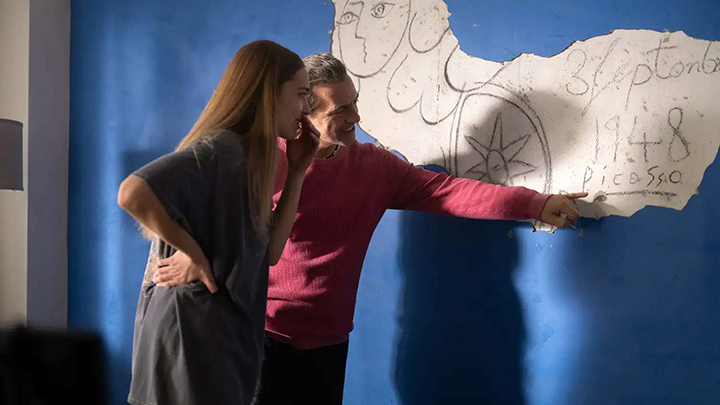
Picasso’s Mermaid (2026), directed by Janusz Zaorski. Photo: Jarosław Sadkowski, press materials.

Gala: From Kościuszko to Picasso

The gala on Friday, November 6, beginning at 6:30 p.m. with a reception featuring Polish cuisine, will include Alex Storozynski’s documentary about Tadeusz Kościuszko. The Polish military engineer arrived in Philadelphia in August 1776, just weeks after the adoption of the Declaration of Independence. His expertise in fortifications helped the Americans secure victory at Saratoga; he was later entrusted with fortifying West Point. A hero of the American Revolutionary War and later the leader of an uprising in Poland, Kościuszko linked the destinies of both nations through his life’s work.

The gala will also feature Janusz Zaorski’s Picasso’s Mermaid, a comic tale inspired by a true episode from Pablo Picasso’s visit to postwar Warsaw. A mermaid drawn on an apartment wall sets the stage for an extraordinary encounter between great art and everyday life. After the screening, audiences will join the director for a conversation about the film, its inspirations, and finding humor in unexpected situations.

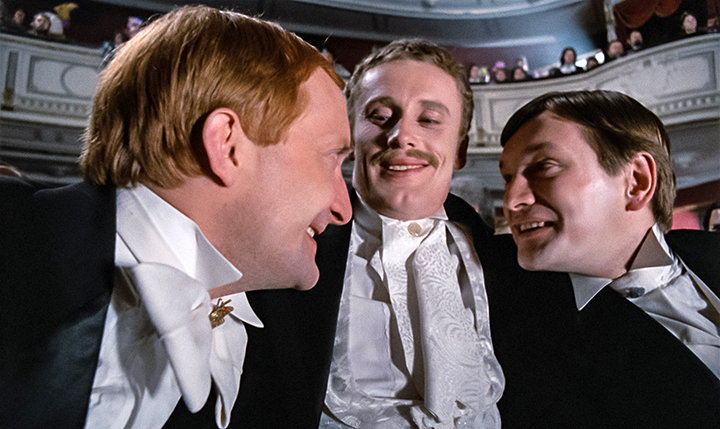
The Promised Land (1974), directed by Andrzej Wajda. Images courtesy of WFDiF / 35mm.online.

Wajda: A Polish Experience, a Universal Language

Andrzej Wajda will hold a special place in the program as we celebrate the centenary of his birth this year. Rooted in Polish history, literature, and painting, his cinema spoke to audiences around the world. Through his characters’ lives, he explored difficult choices, the tension between dreams and reality, and individual responsibility in the face of history. On March 26, 2000, he received an honorary Oscar in recognition of five decades of extraordinary film direction.

The festival’s opening evening will be dedicated to Wajda. On Thursday, November 5, an exhibition of posters for his films will open at 6:30 p.m., followed by a screening of The Promised Land at 7:30 p.m. The posters will offer a fresh perspective on his work through the imagination of artists who translated its dramatic intensity into metaphor, symbol, and color.

This adaptation of Władysław Reymont’s novel will transport audiences to nineteenth-century Łódź — a city of factory chimneys, burgeoning fortunes, and ambitions that come at a steep price. The sweeping scope and painterly power of The Promised Land remain captivating, while its questions about the limits of compromise and the cost of success continue to resonate.

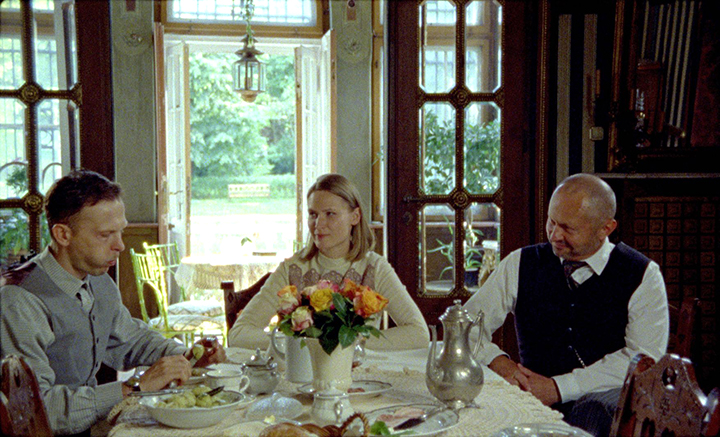
The Assistant, directed by Anka and Wilhelm Sasnal. Photo: press materials.

Literature Through the Lens of Cinema

Literary worlds will also come to life in The Doll, directed by Maciej Kawalski, and The Assistant by Anka and Wilhelm Sasnal, an adaptation of Robert Walser’s novel. Alongside the works of Prus and Reymont, the Swiss writer’s story will offer another perspective on individuals caught up in social hierarchies, financial dependencies, and the desire to change their fortunes.

The Sasnals’ film will also introduce audiences to a creative duo whose work brings together literature, painting, and cinema. Wilhelm, one of Poland’s most internationally recognized contemporary painters, brings a visual artist’s sensibility to their filmmaking; Anka, a director and screenwriter with a background in Polish literary studies, helps shape their distinctive cinematic language. The connection between the arts is particularly close here: paintings Sasnal created for The Assistant were also exhibited at the Stedelijk Museum in Amsterdam. After the screening, audiences will have the opportunity to speak with Piotr Trojan, who plays the title role.

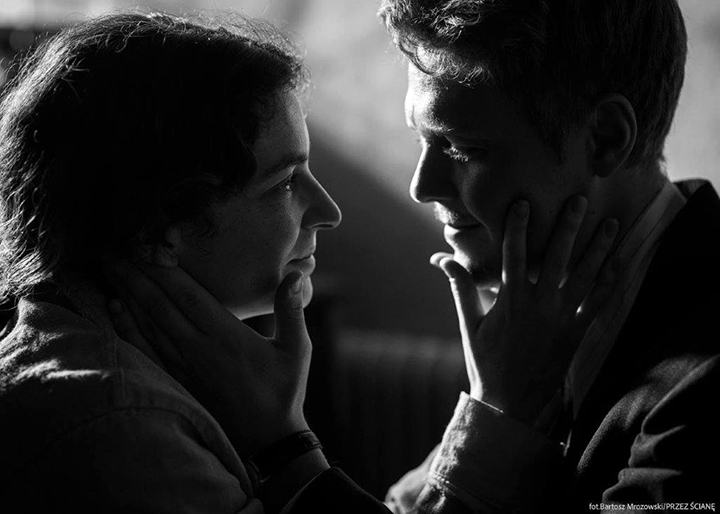
Through the Wall, directed by Maciej Sobieszczański. Photo: WFDiF.


From History to the Present

Among the historical films, a highlight will be Through the Wall by Maciej Sobieszczański, winner of the Golden Lions at this year’s Polish Film Festival in Gdynia. Inspired by the true experiences of prisoners during the Stalinist era, the film explores the strength of a bond forged in a world of violence and isolation.

Broadening this historical perspective is Covenant of Blood: The Last Soldiers of World War II by Patrick Ney and Stefan Tompson, a documentary about Poland’s anti-communist underground resistance. Both films remind us that the end of the war did not mean freedom for everyone. Stefan Tompson will travel to Austin to meet with audiences after the screening.

Meanwhile, Altar Boys, There Are No Ghosts on Dobra Street, and Memories of Insignificance will turn our attention to social tensions, family relationships, and the search for meaning. In these films, seriousness meets humor, rebellion encounters helplessness, and the longing for closeness confronts the difficulty of connecting with others. This is cinema that leaves room for viewers’ own emotions and questions.

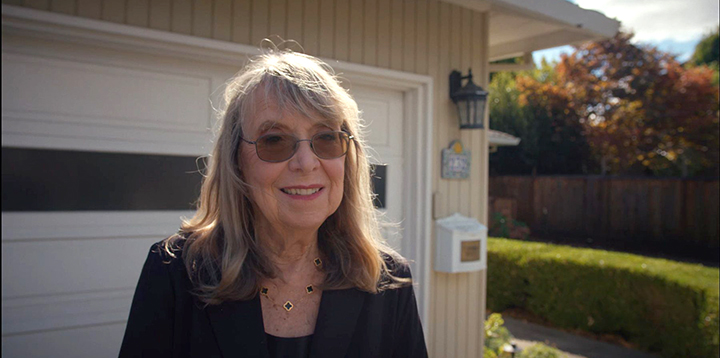
Esther Wojcicki. Photo: press materials.

The Wojcicki Family: Silicon Valley’s Polish Roots

On Saturday, November 7, at 2:30 p.m., we will screen The Godmother of Silicon Valley — a documentary about Esther Wojcicki, a teacher who helped generations of students develop independence, creativity, and the courage to think for themselves.

Polish experiences resonate deeply within this American story. Esther’s husband, Stanley Wojcicki, born Stanisław Jerzy Wójcicki, was a distinguished physicist, professor, and chair of Stanford University’s physics department. As a boy, he fled communist Poland with his mother and brother, reaching the United States via Sweden. His father remained in Poland, where he was imprisoned for political reasons.

Esther and Stanley’s three daughters made their mark in different fields: Susan helped build Google’s success and led YouTube for many years; Anne co-founded the genetic testing company 23andMe; and Janet devoted her career to anthropology, epidemiology, and research into children’s health. Their family’s story weaves the experience of immigration together with a belief in education and the ability to shape one’s own future.

Esther Wojcicki and the film’s directors, Łukasz Bernaś and Maciej Kawecki, will attend the festival. The post-screening conversation will explore the less visible foundations of success: trust, curiosity, and the everyday work of helping others grow.

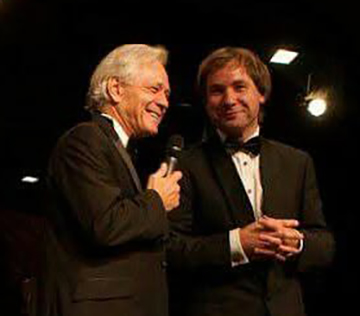
Marek Drewnowski and Michał Drewnowski. Photo: the artists’ archives.

The Drewnowskis, Bernstein, and Music Beyond Borders — the Festival’s Closing Concert

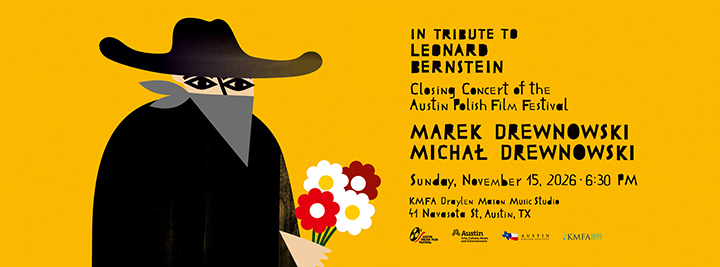
This year’s festival will conclude with In Tribute to Leonard Bernstein. On November 15 at 6:30 p.m., pianists Marek and Michał Drewnowski will perform at KMFA 89.5 Classical’s Draylen Mason Music Studio, 41 Navasota Street. The evening will bring together Polish and American music with Marek Drewnowski’s personal account of his collaboration with the legendary conductor and composer.

In 1985, Marek Drewnowski performed Brahms’s Piano Concerto No. 1 with the Boston Symphony Orchestra under Bernstein’s baton at Tanglewood. During the evening in Austin, his recollections, accompanied by archival photographs, will offer audiences a glimpse behind the scenes of working with one of the twentieth century’s greatest musicians.

The joint appearance of Marek and Michał Drewnowski will also make the concert a dialogue between generations. Father and son will each present their own interpretations before joining one another at the piano for a four-hand finale. The evening will bring the festival’s central theme full circle, recalling how Polish and American paths intersect through art, leaving a lasting impression on musicians and listeners alike.

Design: Patrycja Longawa

From Kościuszko to Wajda, from great literature to contemporary challenges, from a family screening to an evening of music — this year’s festival promises something for audiences with a wide range of interests and sensibilities. There will be time for laughter, emotion, and reflection, and above all for conversations that will continue long after the screenings end.

The festival is organized by the Austin Polish Society. For the full program and ticket information, visit austinpolishfilm.com.


See also:


Film niejedno ma imię. Austin Polish Film Festival 2026.

Projekt: Patrycja Longawa

Joanna Sokołowska-Gwizdka

Kiedy w 1776 roku Tadeusz Kościuszko przybył do Ameryki, niepodległość młodej republiki była jeszcze obietnicą, o której spełnienie trzeba było walczyć. Dwa i pół wieku później jego historia powróci na ekranie w Austin, rozpoczynając opowieść o polskich śladach w amerykańskim życiu i kulturze światowej. Tegoroczny Austin Polish Film Festival przywoła ludzi, których wiedza, talent i wyobraźnia przekraczały granice państw, języków i pokoleń.

21. edycja festiwalu odbędzie się 5–8 oraz 15 listopada 2026 roku. Kino fabularne i dokumentalne, wystawa plakatów, rozmowy z gośćmi oraz koncert finałowy stworzą wielowątkową opowieść o polsko-amerykańskich więzach. Główne wydarzenia filmowe odbędą się w AFS Cinema przy 6259 Middle Fiskville Road w Austin.

„Syrenka Picassa” (2026 r.), reż. Janusz Zaorski, fot. Jarosław Sadkowski, materiały prasowe

Gala: od Kościuszki do Picassa

Podczas gali w piątek, 6 listopada, rozpoczynającej się o godz. 18.30 przyjęciem z polską kuchnią, zobaczymy dokument Alexa Storozynskiego poświęcony Tadeuszowi Kościuszce. Polski inżynier wojskowy dotarł do Filadelfii w sierpniu 1776 roku, kilka tygodni po uchwaleniu Deklaracji Niepodległości. Jego wiedza fortyfikacyjna pomogła Amerykanom w zwycięstwie pod Saratogą; później powierzono mu umocnienie West Point. Bohater amerykańskiej wojny o niepodległość, a następnie przywódca insurekcji w Polsce, połączył w swojej biografii losy obu narodów.

Filmową propozycją gali będzie również „Syrenka Picassa” Janusza Zaorskiego, komediowa opowieść inspirowana autentycznym epizodem z wizyty Pabla Picassa w powojennej Warszawie. Rysunek syrenki pozostawiony na ścianie mieszkania staje się początkiem niezwykłego spotkania wielkiej sztuki ze zwyczajnym życiem. Po projekcji publiczność porozmawia z reżyserem o filmie, jego inspiracjach i odnajdywaniu humoru w nieoczekiwanych sytuacjach.

„Ziemia obiecana” (1974), reż. Andrzej Wajda, materiały fotograficzne: WFDiF / 35mm.online

Wajda: polskie doświadczenie, światowy język

Szczególne miejsce w programie zajmie Andrzej Wajda, którego setną rocznicę urodzin obchodzimy w tym roku. Jego kino wyrastało z polskiej historii, literatury i malarstwa, a zarazem przemawiało do widzów na całym świecie. W losach swoich bohaterów reżyser ukazywał dramaty wyboru, konflikt między marzeniami a rzeczywistością oraz odpowiedzialność człowieka wobec historii. 26 marca 2000 roku otrzymał honorowego Oscara w uznaniu pięciu dekad wybitnej twórczości reżyserskiej.

Wajdzie poświęcony będzie wieczór otwarcia festiwalu. W czwartek, 5 listopada, o godz. 18.30 rozpocznie się wystawa plakatów do jego filmów, a o godz. 19.30 pokaz „Ziemi obiecanej”. Plakaty pozwolą spojrzeć na dzieła reżysera poprzez wyobraźnię artystów, którzy przekładali ich dramatyzm na język metafory, znaku i koloru.

Ekranizacja powieści Władysława Reymonta przeniesie widzów do dziewiętnastowiecznej Łodzi — miasta fabrycznych kominów, rodzących się fortun i ambicji, za które przychodzi płacić wysoką cenę. Rozmach i malarska siła „Ziemi obiecanej” wciąż zachwycają, a pytania o granice kompromisu i cenę sukcesu pozostają aktualne.

„Czowiek do wszystkiego” reż. Anka i Wilhelm Sasnalowie, fot. materiały prasowe

Literatura w filmowym kadrze

Literackie światy powrócą także w „Lalce” w reżyserii Macieja Kawalskiego oraz w „Człowieku do wszystkiego” Anki i Wilhelma Sasnalów, adaptacji powieści Roberta Walsera. Obok prozy Prusa i Reymonta dzieło szwajcarskiego pisarza otworzy kolejną perspektywę spojrzenia na człowieka uwikłanego w społeczne hierarchie, materialne zależności i pragnienie odmiany losu.

Film Sasnalów będzie również spotkaniem z duetem łączącym doświadczenia literatury, malarstwa i kina. Wilhelm, jeden z najbardziej rozpoznawalnych na świecie polskich malarzy współczesnych, wnosi do ich wspólnej twórczości wrażliwość artysty obrazu; Anka, reżyserka, scenarzystka i z wykształcenia polonistka, współtworzy autorski język tych poszukiwań. Związek sztuk jest tu szczególnie bliski: obrazy namalowane przez Sasnala do „Człowieka do wszystkiego” prezentowano także w Stedelijk Museum w Amsterdamie. PO projekcji będzie można porozmawiać z odtwórcą tytułowej roli – Piotrem Trojanem.

„Przez ścianę”, reż. Maciej Sobieszczański, fot. WFFiD

Od historii do współczesności

Wśród filmów historycznych ważnym wydarzeniem będzie projekcja filmu „Przez ścianę” Macieja Sobieszczańskiego, nagrodzonego Złotymi Lwami na tegorocznym festiwalu w Gdyni. Inspirowana prawdziwymi losami więźniów okresu stalinowskiego opowieść ukazuje siłę więzi rodzącej się w świecie przemocy i izolacji.

Jej historyczną perspektywę poszerzy dokument „Covenant of Blood: The Last Soldiers of World War II” Patricka Neya i Stefana Tompsona, poświęcony polskiemu podziemiu antykomunistycznemu. Oba filmy przypominają, że zakończenie wojny nie dla wszystkich oznaczało odzyskanie wolności. Do Austin przyjedzie Stefan Tompson, z którym publiczność spotka się po projekcji.

Z kolei „Ministranci”, „Nie ma duchów w mieszkaniu na Dobrej” i „Zapiski śmiertelnika” skierują uwagę ku społecznym napięciom, rodzinnym relacjom i poszukiwaniu sensu. Powaga spotka się w nich z humorem, bunt z bezradnością, a potrzeba bliskości z trudnością porozumienia. To kino pozostawiające przestrzeń na własne emocje i pytania.

Esther Wójcicki, fot. materiały prasowe

Rodzina Wojcickich: polskie korzenie Doliny Krzemowej

W sobotę, 7 listopada, o godz. 14.30 zobaczymy „Matkę chrzestną Doliny Krzemowej” — dokument o Esther Wojcicki, nauczycielce, która pomagała kolejnym pokoleniom uczniów rozwijać samodzielność, kreatywność i odwagę myślenia.

W tej amerykańskiej historii mocno wybrzmiewają polskie losy. Mąż Esther, Stanley Wojcicki, urodzony jako Stanisław Jerzy Wójcicki, był wybitnym fizykiem, profesorem i kierownikiem wydziału fizyki Uniwersytetu Stanford. Jako chłopiec uciekł z matką i bratem z komunistycznej Polski, przez Szwecję docierając do Stanów Zjednoczonych. Jego ojciec pozostał w kraju i był więziony z powodów politycznych.

Trzy córki Esther i Stanleya zaznaczyły swoją obecność w różnych dziedzinach: Susan współtworzyła sukces Google i przez lata kierowała YouTube, Anne współzałożyła firmę badań genetycznych 23andMe, a Janet poświęciła się antropologii, epidemiologii i badaniom nad zdrowiem dzieci. W ich rodzinnej historii doświadczenie emigracji splata się z wiarą w edukację i możliwość kształtowania własnego losu.

W festiwalu wezmą udział Esther Wojcicki oraz reżyserzy filmu, Łukasz Bernaś i Maciej Kawecki. Rozmowa po projekcji pozwoli spojrzeć na sukces poprzez jego mniej widoczne źródła: zaufanie, ciekawość i codzienną pracę z drugim człowiekiem.

Marek Drewnowski i Michał Drewniowski, fot. arch. artystów

Drewnowscy, Bernstein i muzyka ponad granicami — koncert na zakończenie festiwalu

Muzycznym zakończeniem tegorocznej edycji będzie koncert „In Tribute to Leonard Bernstein”. 15 listopada o godz. 18.30 w Draylen Mason Music Studio radia KMFA 89.5 Classical, przy 41 Navasota Street, wystąpią pianiści Marek i Michał Drewnowscy. Wieczór połączy muzykę polską i amerykańską z osobistą opowieścią o współpracy Marka Drewnowskiego z legendarnym dyrygentem i kompozytorem.

W 1985 roku Marek Drewnowski wystąpił pod batutą Bernsteina z Bostońską Orkiestrą Symfoniczną w Tanglewood, wykonując I Koncert fortepianowy Brahmsa. Podczas wieczoru w Austin wspomnienia tego artystycznego spotkania, wzbogacone archiwalnymi fotografiami, pozwolą publiczności zajrzeć za kulisy współpracy z jednym z największych muzyków XX wieku.

Obecność Marka i Michała Drewnowskich nada koncertowi również wymiar dialogu pokoleń. Ojciec i syn zaprezentują własne interpretacje, by w finale spotkać się przy jednym fortepianie w grze na cztery ręce. Ten wieczór dopełni przewodnią myśl festiwalu: przypomni, jak polskie i amerykańskie drogi przecinają się w sztuce, pozostawiając ślad w życiu artystów i ich słuchaczy.

Projekt: Patrycja Longawa

Od Kościuszki po Wajdę, od wielkiej literatury po problemy współczesności, od rodzinnego seansu po koncertowy wieczór — tegoroczny festiwal zapowiada spotkania dla widzów o różnych zainteresowaniach i wrażliwości. Będzie czas na śmiech, wzruszenie i refleksję, a przede wszystkim na rozmowę, która trwać będzie jeszcze długo po zakończeniu projekcji.

Organizatorem festiwalu jest Austin Polish Society. Szczegółowy program i informacje o biletach: austinpolishfilm.com.


Zobacz też:


Bolesław Prus’s „The Doll” – A Penetrating Portrait of Polish Society

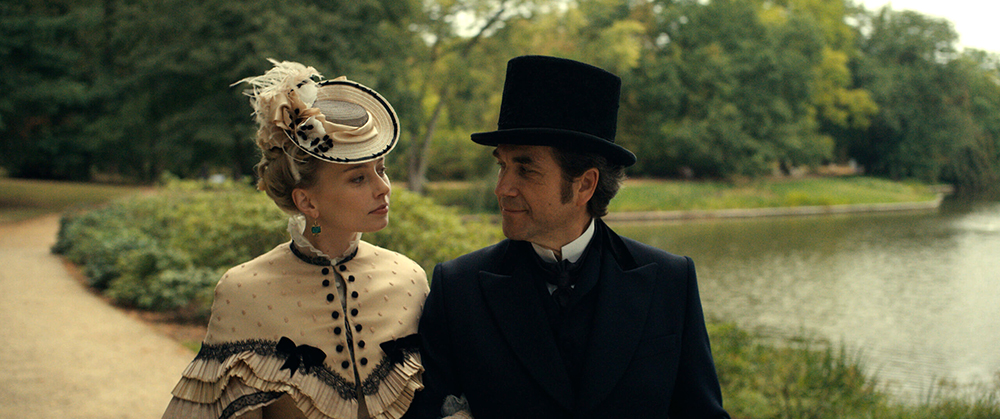
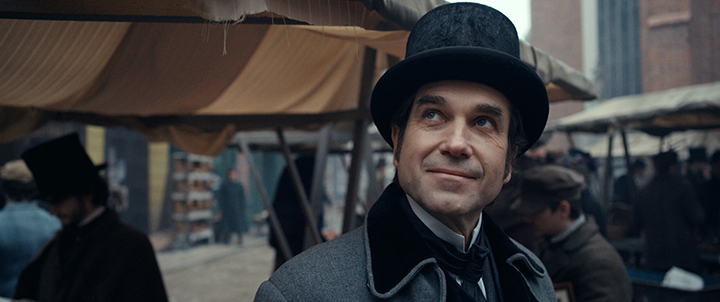
Marcin Dorociński as Stanisław Wokulski and Kamila Urzędowska as Izabela Łęcka in The Doll (2026), directed by Maciej Kawalski. Photo: Press materials / Kino Świat.

Joanna Sokołowska-Gwizdka

Bolesław Prus’s The Doll was written at a time when Poland no longer existed on the map of Europe, and the failures of successive national uprisings had prompted a period of reflection on the nation’s future. Without abandoning the dream of independence, Poles began seeking other ways to strengthen their society. Following the defeat of the January Uprising of 1863, the Positivist ideals of organic work and grassroots education gained particular importance. The development of entrepreneurship, education, and science, along with overcoming social divisions, was intended to strengthen a nation deprived of its own state. These ideas found widespread expression in the literature of the period.

Against this historical background, Bolesław Prus took a close look at Warsaw society in the second half of the nineteenth century, when the city was under Russian rule. He created a multifaceted portrait of its social divisions, aspirations, prejudices, and contradictions between professed values and actual behavior. At the same time, he explored with remarkable insight the human desire for love, success, and social recognition. As a result, more than 130 years after its first publication, The Doll continues to invite new interpretations, while many of Prus’s observations remain relevant today.

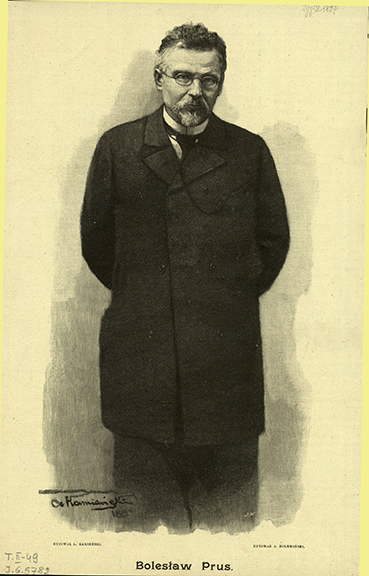
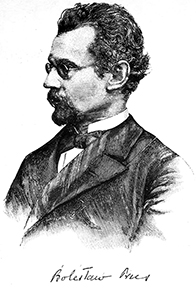
Bolesław Prus, 1897. Wood engraving by Józef Holewiński after Antoni Kamieński. National Library of Poland, Polona. Public domain.

Bolesław Prus – The Writer’s Life and Experiences

Bolesław Prus, whose real name was Aleksander Głowacki, was born in 1847 in Hrubieszów, into an impoverished noble family. His father, Antoni Głowacki, belonged to a family bearing the Prus I coat of arms, from which the writer adopted his literary pseudonym. Having lost much of its former wealth, the family was forced to earn a living through paid employment.

In 1863, at the age of sixteen, Aleksander took part in the January Uprising against Russian rule. He was wounded in a skirmish and taken prisoner by Russian forces. The defeat of the uprising left a lasting mark on his generation, which had been raised in the Romantic tradition of fighting for national freedom. Prus later became one of the leading figures of Polish Positivism.

He was deeply interested in mathematics, physics, and technological advances. He dreamed of pursuing a scientific career, but financial difficulties led him toward journalism and literature. He gained popularity through his Weekly Chronicles, published in the Warsaw press. With humor, irony, and social sensitivity, he portrayed the city’s everyday life: new inventions, entrepreneurial activity, aristocratic customs, the struggles of its poorer inhabitants, and developments in commerce and education. These observations provided the foundation for The Doll, in which he offered a critical examination of the society of his time.

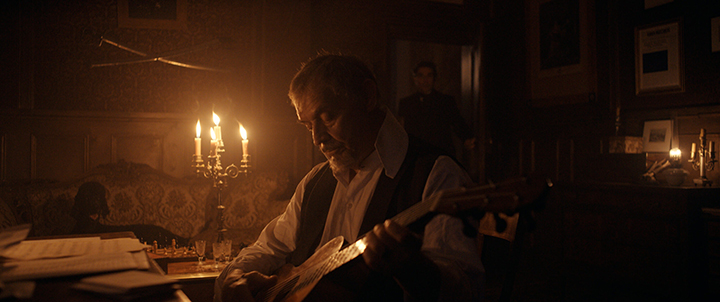
The Doll (2026), directed by Maciej Kawalski. Photo: Press materials / Kino Świat.

Warsaw Under Foreign Rule

The Doll was published in installments in the Kurier Codzienny newspaper between 1887 and 1889, with its first book edition appearing in 1890. The novel is set primarily in Warsaw in 1878–1879, when the city was under Russian rule.

Prus’s Warsaw is a city of contrasts. Elegant salons and lavish social gatherings exist alongside the poverty of the Powiśle district. People from different social classes cross paths in the streets and shops, yet they remain divided not only by wealth but also by social background, customs, and mutual prejudices.

Prus portrays the aristocracy critically, exposing its attachment to inherited privileges, its disdain for work and entrepreneurship, and its indifference to poverty. He also recognizes the opportunities for progress that society squanders because of its own limitations. The Doll is therefore not merely a portrait of Warsaw under foreign rule, but also an attempt to understand the weaknesses of a society upon which the country’s future depended.

Marcin Dorociński as Stanisław Wokulski in The Doll (2026), directed by Maciej Kawalski. Photo: Press materials / Kino Świat.

Stanisław Wokulski – Between Romanticism and Positivism

Stanisław Wokulski is one of the most complex characters in Polish literature. He is an entrepreneur who amasses considerable wealth through intelligence, hard work, and determination, yet remains a Romantic who subordinates his life to his love for Izabela Łęcka.

Two eras converge in his character. His youth was shaped by the Romantic tradition of fighting for freedom, while his later life reflects the Positivist belief in work, knowledge, and economic progress. Wokulski recognizes opportunities that others overlook and is willing to take risks. He could play an important role in modernizing society, but his ambitions become increasingly bound to his desire to win Izabela’s love and gain acceptance within aristocratic circles.

He discovers that money alone cannot overcome social barriers. Despite his wealth and personal achievements, the aristocracy continues to regard him as a man of inferior social standing. His tragedy also lies in the fact that he begins to measure his own worth by the standards of a social class whose limitations he understands all too well.

Alongside Wokulski are Ignacy Rzecki, devoted to the ideals of the past and the Napoleonic legend, and the young Julian Ochocki, fascinated by science and the technological future. Prus even considered calling his novel Three Generations. Rzecki, Wokulski, and Ochocki represent three generations of idealists whose aspirations encounter the resistance of reality.

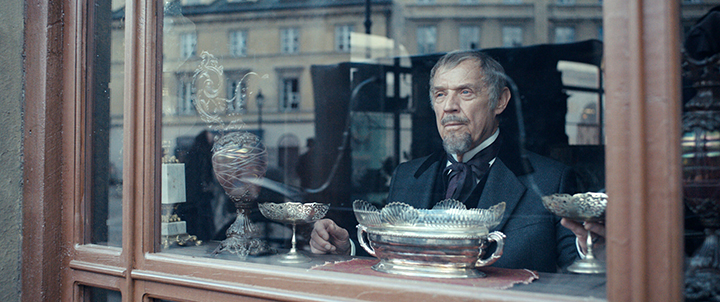
The Doll (2026), directed by Maciej Kawalski. Photo: Press materials / Kino Świat.

Why Does The Doll Remain Relevant Today?

Although nearly a century and a half separates us from the events depicted by Prus, many of the social and psychological dynamics explored in the novel remain relevant today.

One of them is the way society judges individuals. In the world of The Doll, family background, wealth, and personal connections often matter more than talent or individual achievement. Today, aristocratic titles have lost their significance, but exclusive social circles, hierarchies of prestige, and social barriers have not disappeared. A person’s standing may still depend on family ties, influential connections, prestigious educational institutions, or membership in certain professional circles.

Equally relevant is Prus’s portrayal of the psychology of love. Wokulski loves not only Izabela herself but also the image he has created of her. He sees her as the embodiment of beauty and of the world to which he longs to belong. He fails to recognize the gap between his idealized vision and reality.

Today’s culture of image-making, particularly prevalent on social media, gives these dynamics a new form. Much like in the salons of Prus’s era, how one presents oneself, the company one keeps, social standing, and the opinions of others continue to matter.

Both Wokulski and Izabela are, to some extent, prisoners of social expectations. He tries to win love and recognition through wealth, while she cannot imagine a life beyond the conventions of her own social class. Their inability to understand one another is therefore not merely personal but also rooted in the society to which they belong.

From today’s perspective, Julian Ochocki is another particularly interesting character. His dreams of scientific discoveries and inventions seem eccentric to those around him, while he sees in them the future of civilization. In an age of artificial intelligence and rapid technological development, this aspect of the novel takes on new significance. Prus raises the question of whether society is capable of appreciating science and supporting those whose ideas are ahead of their time.

This article was prepared with the assistance of ChatGPT (GPT-6, OpenAI) in researching sources and verifying historical information.


Historical and Literary Sources:

  1. Culture.pl – “Bolesław Prus (Aleksander Głowacki): Life and Works.”
  2. National Library of Poland – “Everything About Bolesław Prus’s The Doll.”
  3. Bolesław Prus – The Doll (Lalka), Warsaw: Gebethner and Wolff, 1890. The original text of the novel, available in three volumes through the Polona Digital Library.


„Lalka” Bolesława Prusa – wnikliwy portret polskiego społeczeństwa

Marcin Dorociński jako Stanisław Wokulski i Kamila Urzędowska jako Izabela Łęcka w filmie „Lalka” (2026), reż. Maciej Kawalski, fot. materiały prasowe / Kino Świat

Joanna Sokołowska-Gwizdka

„Lalka” Bolesława Prusa powstała w czasach, gdy Polska nie istniała na mapie Europy, a po klęskach kolejnych powstań narodowych nadszedł okres refleksji nad przyszłością narodu. Nie rezygnując z marzeń o niepodległości, poszukiwano innych sposobów wzmocnienia społeczeństwa. Po upadku powstania styczniowego szczególnego znaczenia nabrały pozytywistyczne hasła pracy organicznej i pracy u podstaw. Rozwój przedsiębiorczości, edukacji i nauki oraz przezwyciężanie podziałów społecznych miały budować siłę narodu pozbawionego własnego państwa. Idee te znalazły szerokie odzwierciedlenie w literaturze epoki.

W tym kontekście Bolesław Prus przyjrzał się społeczeństwu Warszawy drugiej połowy XIX wieku, pozostającej pod zaborem rosyjskim. Stworzył jego wielowymiarowy portret, ukazując podziały klasowe, aspiracje, uprzedzenia oraz sprzeczności między deklarowanymi wartościami a rzeczywistym postępowaniem. Zarazem z przenikliwością opisał ludzką potrzebę miłości, sukcesu i społecznego uznania. Dzięki temu ponad sto trzydzieści lat po pierwszym wydaniu „Lalka” nadal skłania do nowych interpretacji, a wiele obserwacji Prusa zachowuje aktualność.

Bolesław Prus, 1897, drzeworyt Józefa Holewińskiego według Antoniego Kamieńskiego, Biblioteka Narodowa, Polona, domena publiczna

Bolesław Prus – doświadczenia pisarza

Bolesław Prus, a właściwie Aleksander Głowacki, urodził się w 1847 roku w Hrubieszowie, w zubożałej rodzinie szlacheckiej. Jego ojciec, Antoni Głowacki, należał do rodu pieczętującego się herbem Prus I, od którego pisarz zaczerpnął swój literacki pseudonim. Utrata dawnego majątku sprawiła, że rodzina musiała szukać utrzymania w pracy zarobkowej.

W 1863 roku szesnastoletni Aleksander wziął udział w powstaniu styczniowym. Podczas jednej z potyczek został ranny i dostał się do rosyjskiej niewoli. Klęska powstania odcisnęła piętno na jego pokoleniu, wychowanym w romantycznej tradycji walki o wolność. Prus stał się później jednym z najważniejszych przedstawicieli polskiego pozytywizmu.

Interesował się matematyką, fizyką i osiągnięciami techniki. Marzył o pracy naukowej, lecz trudności materialne skierowały go ku dziennikarstwu i literaturze. Popularność przyniosły mu „Kroniki tygodniowe”, publikowane w warszawskiej prasie. Z humorem, ironią i społeczną wrażliwością opisywałcodzienne życie miasta: nowe wynalazki, działalność przedsiębiorców, obyczaje arystokracji, problemy ubogich mieszkańców oraz rozwój handlu i edukacji. Z tych obserwacji wyrosła „Lalka”, w której poddał krytycznej analizie społeczeństwo własnej epoki.

Podpisy:

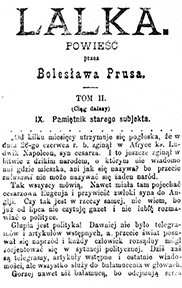
  1. Pierwodruk „Lalki” Bolesława Prusa w „Kurierze Codziennym”, 1889, domena publiczna
  2. Strona tytułowa pierwszego wydania „Lalki” Bolesława Prusa, Warszawa, Gebethner i Wolff, 1890, domena publiczna

Warszawa pod zaborami

„Lalka” ukazywała się w odcinkach na łamach „Kuriera Codziennego” w latach 1887–1889, a jej pierwsze wydanie książkowe opublikowano w 1890 roku. Akcja powieści rozgrywa się przede wszystkim w Warszawie lat 1878–1879, znajdującej się pod panowaniem rosyjskim.

Warszawa Prusa jest miastem kontrastów. Eleganckie salony i wystawne przyjęcia sąsiadują z ubóstwem Powiśla. Ludzie należący do różnych warstw społecznych spotykają się na ulicach i w sklepach, lecz dzielą ich nie tylko pieniądze, ale także pochodzenie, obyczaje i wzajemne uprzedzenia.

Pisarz krytycznie przedstawia arystokrację, przywiązaną do dawnych przywilejów, lekceważącą pracę i przedsiębiorczość, a jednocześnie obojętną wobec ubóstwa. Dostrzega również możliwości rozwoju, które społeczeństwo marnuje wskutek własnych ograniczeń. „Lalka” jest więc nie tylko obrazem Warszawy pod zaborami, lecz także próbą zrozumienia słabości społeczeństwa, od którego zależała przyszłość kraju.

Marcin Dorociński jako Stanisław Wokulski w filmie „Lalka” (2026), reż. Maciej Kawalski, fot. materiały prasowe / Kino Świat

Stanisław Wokulski – między romantyzmem a pozytywizmem

Stanisław Wokulski należy do najbardziej złożonych postaci polskiej literatury. Jest przedsiębiorcą, który dzięki inteligencji, pracowitości i odwadze zdobywa znaczny majątek, a jednocześnie romantykiem podporządkowującym życie uczuciu do Izabeli Łęckiej.

W jego osobowości spotykają się dwie epoki. Młodość ukształtowała romantyczna tradycja walki o wolność, późniejsze życie – pozytywistyczna wiara w pracę, wiedzę i rozwój gospodarczy. Wokulski dostrzega możliwości niedostępne innym i potrafi podejmować ryzyko. Mógłby odegrać istotną rolę w modernizacji społeczeństwa, lecz jego ambicje coraz silniej wiążą się z pragnieniem zdobycia miłości Izabeli oraz uznania arystokratycznego środowiska.

Odkrywa, że pieniądze nie wystarczają, aby przekroczyć bariery społeczne. Mimo majątku i osobistych osiągnięć pozostaje w oczach arystokracji człowiekiem niższego stanu. Jego dramat polega również na tym, że sam zaczyna oceniać własną wartość według kryteriów środowiska, którego ograniczenia dobrze rozumie.

Obok Wokulskiego pojawiają się Ignacy Rzecki, wierny dawnym ideałom i legendzie napoleońskiej oraz młody Julian Ochocki, zafascynowany nauką i techniczną przyszłością świata. Prus rozważał nawet tytuł „Trzy pokolenia”. Rzecki, Wokulski i Ochocki reprezentują bowiem trzy generacje idealistów, których aspiracje napotykają opór rzeczywistości.

Podpisy:

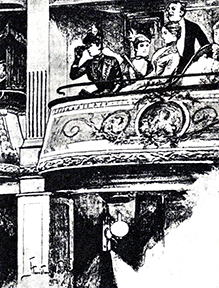
  1. Stanisław Wolski (1859–1894), „Loża pierwszego piętra”, ilustracja do „Lalki” Bolesława Prusa, domena publiczna
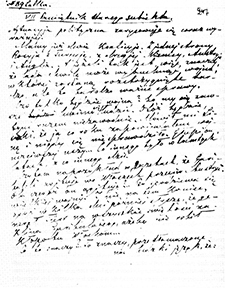
  2. Fragment rękopisu „Lalki” Bolesława Prusa, około 1889 roku, domena publiczna

Dlaczego „Lalka” pozostaje współczesna?

Choć od wydarzeń opisanych przez Prusa dzieli nas niemal półtora wieku, wiele przedstawionych w powieści mechanizmów społecznych i psychologicznych pozostaje aktualnych.

Jednym z nich jest sposób oceniania człowieka. W świecie „Lalki” pochodzenie, majątek i znajomości często znaczą więcej niż talent czy osobiste osiągnięcia. Współcześnie dawne tytuły arystokratyczne straciły znaczenie, ale nie zniknęły elitarne środowiska, hierarchie prestiżu i bariery społeczne. O pozycji człowieka nadal mogą decydować rodzinne powiązania, wpływowe znajomości, ukończone uczelnie czy przynależność do określonych kręgów zawodowych.

Równie aktualna jest psychologia miłości przedstawiona przez Prusa. Wokulski kocha nie tylko Izabelę, ale także wyobrażenie, które o niej stworzył. Widzi w niej uosobienie piękna i świata, do którego chciałby należeć. Nie dostrzega sprzeczności pomiędzy własnym ideałem a rzeczywistością.

Współczesna kultura wizerunku, szczególnie obecna w mediach społecznościowych, nadaje tym mechanizmom nową formę. Podobnie jak w salonach epoki Prusa, znaczenie mają sposób prezentowania siebie, towarzystwo, pozycja i opinia innych.

Zarówno Wokulski, jak i Izabela są w pewnej mierze więźniami społecznych oczekiwań. On usiłuje zdobyć miłość i uznanie dzięki pieniądzom, ona nie potrafi wyobrazić sobie życia poza zasadami własnego środowiska. Ich wzajemne niezrozumienie ma więc nie tylko wymiar osobisty, ale także społeczny.

Z dzisiejszej perspektywy interesująca jest również postać Juliana Ochockiego. Jego marzenia o naukowych odkryciach i wynalazkach wydają się otoczeniu dziwactwem, podczas gdy on sam dostrzega w nich przyszłość cywilizacji. W epoce sztucznej inteligencji i szybkiego rozwoju technologii wątek ten nabiera nowego znaczenia. Prus stawiał pytanie, czy społeczeństwo potrafi docenić naukę i wspierać ludzi wyprzedzających swoją epokę.

Artykuł powstał przy współpracy z ChatGPT (GPT-6, OpenAI) w zakresie wyszukiwania źródeł i weryfikacji informacji historycznych.


Źródła historyczne i literackie:

1. Culture.pl – „Bolesław Prus (Aleksander Głowacki). Życie i twórczość”.

2. Biblioteka Narodowa – „Wszystko o Lalce Bolesława Prusa”.

3. Bolesław Prus – „Lalka”, Warszawa, Gebethner i Wolff, 1890, tekst źródłowy powieści, udostępniony w trzech tomach w bibliotece cyfrowej Polona.


Nineteenth-Century Łódź as the Promised Land in Władysław Reymont’s Novel

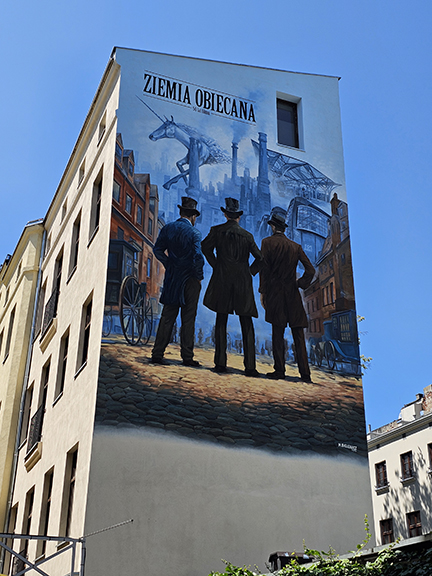
“The Promised Land” mural by Maciej Bielewicz, created in May 2025 to mark the 50th anniversary of Andrzej Wajda’s film. 120 Piotrkowska Street, Łódź. Photo: Jacek Gwizdka.

Joanna Sokołowska-Gwizdka

There are cities that take shape slowly, accumulating the memories of generations over centuries. And there are others that spring up almost overnight, born of human enterprise, ambition, and the desire for success. Nineteenth-century Łódź belonged to the latter. Within just a few decades, a small town surrounded by fields and forests was transformed into a mighty industrial center. Where wooden houses had stood not long before, multistory factories, palaces resembling aristocratic residences, and entire neighborhoods of workers’ housing sprang up. Smoke from factory chimneys drifted above the rooftops, and the city lived to the rhythm of machines that never seemed to rest.

People came here from all corners of Europe: Poles, Germans, Jews, and Russians. Some brought capital, others their skills, and still others nothing but the hope that here, at last, their fortunes might change. For many, Łódź was a place where they could begin anew, make a fortune, rise in society, and escape poverty and obscurity.

It was in this city, whose power was built on dreams but also on the ruthless pursuit of wealth, that Władysław Reymont found the inspiration for one of the most important novels in Polish literature — The Promised Land.

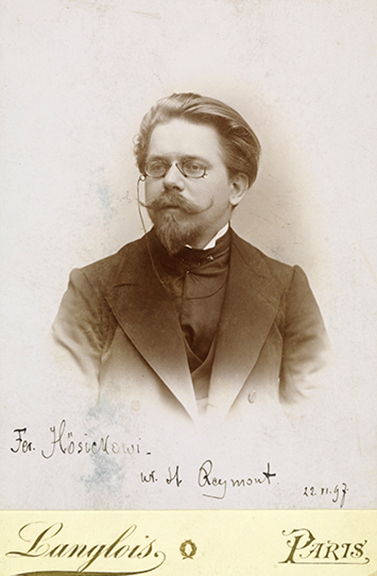
Władysław Stanisław Reymont, 1897. Photographer unknown. Collection of the National Library of Poland in Warsaw / Polona. Public domain.
Reymont and the Epic of Łódź

Władysław Stanisław Reymont, born in 1867 in Kobiele Wielkie, was not a writer shaped by academic circles or literary salons. Before gaining literary recognition, he experienced life in all its unpredictability. He trained as a tailor, worked for the railway, and performed with traveling theater companies. He observed people, their weaknesses, hopes, and passions. He was fascinated not only by everyday life but also by the powerful collective forces capable of overwhelming the individual.

In 1896, Reymont traveled to Łódź to see for himself a city growing at a pace unprecedented in the Polish lands. For several months, he observed its daily life, getting to know its people, factories, and the mechanisms behind the creation of vast fortunes. The city’s energy fascinated him, yet it also filled him with unease. In a letter to Jan Lorentowicz dated November 5, 1896, he described the growth of the city, its fortunes, and its business ventures as taking place „with truly American speed.” He saw Łódź as an unstoppable economic force, calling it „a vast stomach devouring people and land.” Yet within this restless, multicultural world, he discovered an extraordinary source of literary inspiration. „Łódź is an epic to me,” he confided to Lorentowicz.

This remarkable vision of the city found expression in his novel. Łódź is far more than the setting for its events. It becomes a character in its own right, an elemental force that imposes its laws upon the people who inhabit it. It draws them into its relentless motion, promises riches, but demands a heavy price in return. From his observations of the industrial metropolis, Reymont created an epic of modern capitalism, in which human dreams, ambitions, and passions intertwine with the ruthless laws of money.

The Promised Land was serialized between 1897 and 1898 and published in book form in 1899. A quarter of a century later, Reymont was awarded the Nobel Prize in Literature for The Peasants, his great epic of Polish rural life. Although these two works explore seemingly opposite worlds, they share an extraordinary ability to portray entire communities, their conflicts, customs, and struggles for survival.

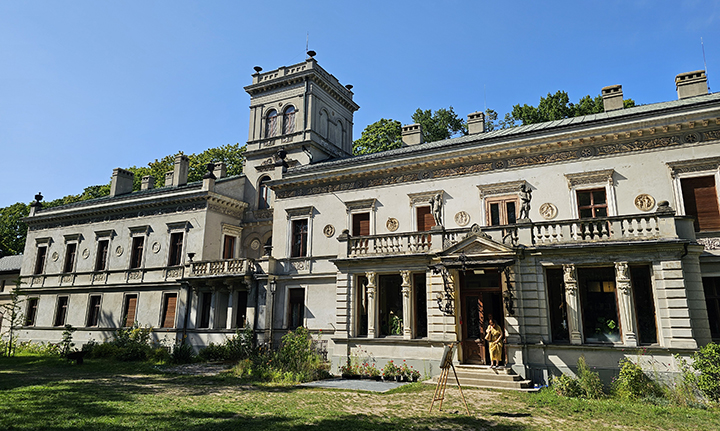
The Palace of Karol and Anna Scheibler in Łódź, now home to the Museum of Cinematography. Photo: Jacek Gwizdka.
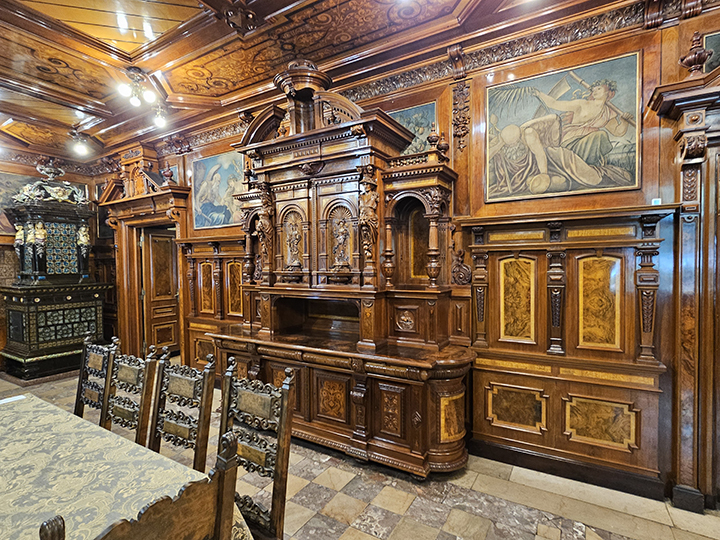
The Palace of Karol and Anna Scheibler in Łódź, now home to the Museum of Cinematography. The palace’s historic interiors were used as filming locations for Andrzej Wajda’s The Promised Land. Photo: Jacek Gwizdka.
Łódź Under Tsarist Rule

The history of industrial Łódź is all the more remarkable because the city flourished at a time when Poland no longer existed on the political map of Europe. The country had been partitioned among neighboring powers, and Łódź lay within the Kingdom of Poland, under Russian rule.

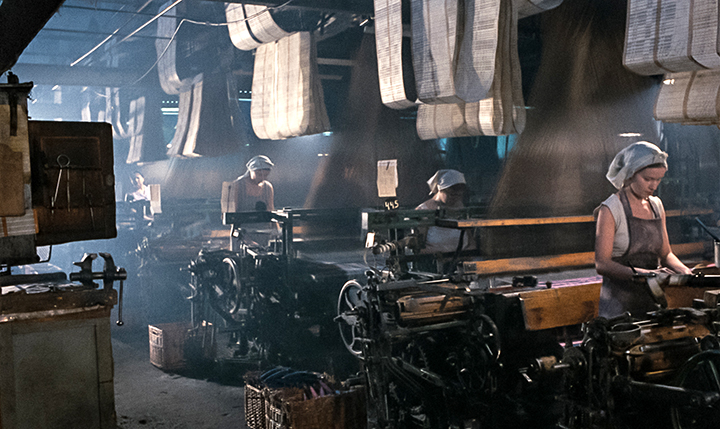
The city’s development was closely tied to the economy of the Russian Empire. Its vast eastern markets offered Łódź’s factory owners opportunities for selling their goods on a scale that proprietors of small weaving workshops could scarcely have imagined. At the same time, industrialists had to contend with the policies of the Russian authorities, their administrative decisions, customs duties, and transportation restrictions.

At the beginning of the nineteenth century, Łódź had only a few hundred inhabitants. By the end of the century, its population had grown to more than three hundred thousand. The transformation unfolded at a pace that inspired both admiration and unease.

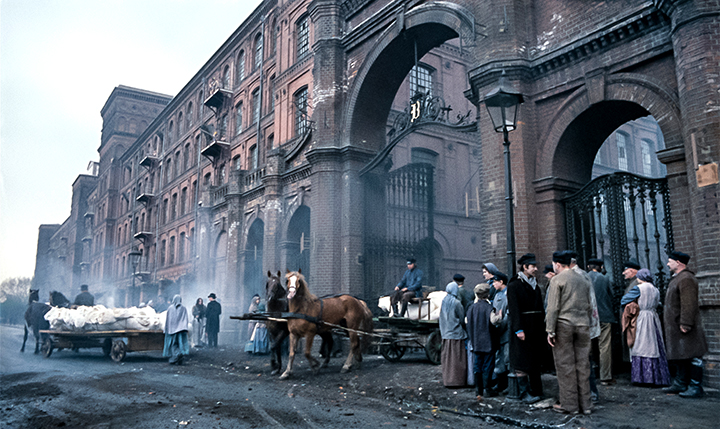
The city became home to the vast industrial enterprises of Karol Scheibler, Izrael Poznański, Ludwik Geyer, and other manufacturers. Alongside the factories rose the owners’ grand residences, hospitals, schools, churches, synagogues, and entire neighborhoods of workers’ housing. Wealth existed side by side with poverty, while the city’s rich cultural diversity was accompanied by fierce competition for economic power.

„Ziemia obiecana” (1974), reż. Andrzej Wajda, materiały fotograficzne: WFDiF / 35mm.online. Jeszcze przez ponad 100 lat pracowano na tych samych maszynach w Zakładach Przemysłu Bawełnianego im. Juliana Marchlewskiego, co za czasów Izaaka Poznańskiego.
Łódź – An Industrial Textile Empire

Reymont’s comparison of Łódź’s development to that of America was no coincidence. The nineteenth century witnessed the emergence of new industrial cities on both sides of the Atlantic, growing at a pace that seemed to defy the established course of history.

In the United States, a similar transformation could be observed in Lowell, Massachusetts, one of the leading centers of the American textile industry. Along the Merrimack River, vast spinning mills and weaving factories sprang up, powered first by water and later by steam. Young women from rural families came to the city seeking employment and financial independence, followed by successive waves of immigrants. Lowell became a symbol of the American Industrial Revolution, embodying both its extraordinary opportunities and its social tensions.

In Pittsburgh, Pennsylvania, fortunes were built on iron and steel. In Chicago, where railroads, the grain trade, and meatpacking fueled economic expansion, the pace of growth evoked the image of a city rising almost overnight. American industrialists such as Andrew Carnegie and John D. Rockefeller became symbols of an era in which capital could transform not only the physical landscape but also the social hierarchy.

Łódź was not an American city. It lacked political freedom and operated under different economic conditions. It remained part of the Russian Empire and developed within a distinct social and political environment. Yet the similarities between these two worlds were striking.

On both sides of the Atlantic, a powerful myth took hold: that through individual initiative, determination, and enterprise, anyone could build a fortune. It was a dream of upward mobility, independence, and seemingly limitless opportunity. In America, it eventually became known as the American Dream. In Łódź, it was the Promised Land.

There was also a less romantic parallel. In both worlds, immense fortunes existed alongside profound social inequalities, harsh working conditions, and conflicts between factory owners and workers.

Cotton from America – A Thread Connecting Continents

Yet there was a far more tangible connection between Łódź and America than their shared economic ambitions. That connection was cotton.

The essential raw material of Łódź’s textile industry had to be imported from distant lands. One of its principal sources was the United States, particularly the Southern states, where vast cotton plantations stretched across the landscape.

Texas was among the regions participating in this international trade. Cotton was transported to ports, shipped across the Atlantic, and passed through the hands of European merchants and intermediaries before eventually reaching the continent’s textile mills.

The textile industry of Łódź was therefore dependent on supplies of American cotton. This vulnerability became painfully apparent when the American Civil War broke out in 1861.

The blockade of Confederate ports and the disruption of cotton shipments led to what became known in Europe as the „cotton famine.” The crisis also reached Łódź. In January 1862, Ludwik Geyer’s factories suspended production, partly because of a shortage of raw cotton.

Few examples illustrate nineteenth-century globalization more vividly. From the plantations of the American South to the factories of Łódź stretched an invisible web of economic interdependence, connecting continents, people, and their destinies.

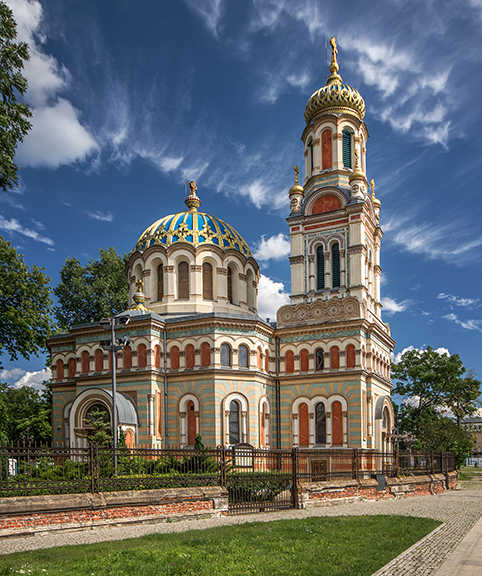
St. Alexander Nevsky Orthodox Cathedral in Łódź, built between 1879 and 1884 to a design by Hilary Majewski. Photo: Stevenlodz / Wikimedia Commons, CC BY-SA 4.0.
The Railway, the Orthodox Cathedral, and the Politics of Wealthy Industrialists

The rapid growth of industry required an efficient transportation system. Yet for many years, Łódź had no direct railway connection. Cotton, coal, and machinery had to be transported by horse-drawn wagons from railway stations outside the city. One such station was Rokiciny, located along the Warsaw–Vienna Railway.

For industrialists, this posed a serious problem. Expanding factories required ever-increasing quantities of raw materials, while finished textiles had to reach distant markets. Łódź’s factory owners therefore lobbied for the construction of a railway line.

It was not until 1865 that Tsar Alexander II authorized the construction of a railway connecting Łódź with Koluszki. Freight services began shortly afterward, followed by passenger services the next year. The opening of the Łódź Factory Railway marked a new chapter in the city’s economic history.

Not far from Łódź Fabryczna Railway Station stands St. Alexander Nevsky Orthodox Cathedral, whose richly ornamented architecture remains a reminder of the era of Russian rule.

The cathedral’s origins were closely tied to the political realities of the time. In 1879, following a failed assassination attempt on Tsar Alexander II, a decision was made to build the church. Among its benefactors were some of Łódź’s wealthiest industrialists, including Karol Scheibler and Izrael Poznański. Designed by Hilary Majewski, the cathedral was completed and consecrated in 1884.

In a city where different nationalities and religions converged, money often proved to be a common language. Economic pragmatism could transcend religious and national boundaries, even as political dependencies and social inequalities remained firmly in place.

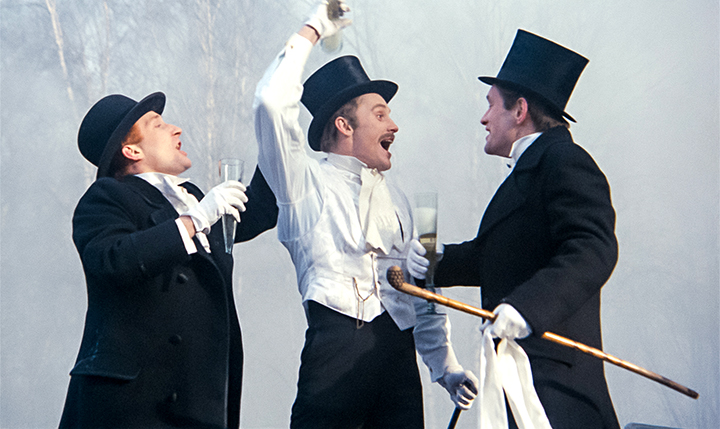
The Promised Land (1974), directed by Andrzej Wajda. Photographic materials: WFDiF / 35mm.online.
The Promised Land – Between Biblical Hope and the Illusion of Wealth

The title of Reymont’s novel has its origins in the Bible. The Promised Land, Canaan, was the land toward which Moses led the Israelites — a symbol of hope, freedom, and the fulfillment of God’s promise.

In nineteenth-century Łódź, however, these words took on an ironic meaning.

For thousands of newcomers, the city held the promise of dreams fulfilled. One did not have to inherit a great fortune to imagine becoming a factory owner someday. Courage, ingenuity, perseverance, and a little luck were supposedly all that was needed.

Yet Reymont reveals how easily the promise of happiness can turn into a relentless pursuit of money, and how success can become a force that destroys human relationships.

The novel’s three protagonists — Karol Borowiecki, a Pole; Maks Baum, a German; and Moryc Welt, a Jew — come from three different cultural worlds, yet they share a single dream: to establish their own factory and build a fortune.

Their friendship and joint venture become a metaphor for the multinational character of Łódź. At the same time, Reymont portrays a city in which traditional values gradually give way to the logic of profit. Honor, loyalty, love, and even human life can become elements of economic calculation.

Yet the writer does not offer a simple morality tale of wicked rich men and virtuous poor people. His characters are caught in the mechanisms of a world they themselves help create. Money grants them freedom, yet at the same time binds them ever more tightly.

It is precisely this paradox that gives The Promised Land its timeless significance.

The Promised Land (1974), directed by Andrzej Wajda. Outside the former Izrael Poznański factory. Photographic materials: WFDiF / 35mm.online.
Andrzej Wajda and His Adaptation of The Promised Land

More than seventy years after the publication of Reymont’s novel, Andrzej Wajda returned to the world the writer had created. His monumental film adaptation, produced in 1974 and released in theaters in February 1975, became one of the greatest achievements of Polish cinema. The film received an Academy Award nomination for Best Foreign Language Film.

Daniel Olbrychski as Karol Borowiecki, Wojciech Pszoniak as Moryc Welt, and Andrzej Seweryn as Maks Baum delivered unforgettable performances. The cinematography of Witold Sobociński, Edward Kłosiński, and Wacław Dybowski, together with Wojciech Kilar’s musical score, gave the film extraordinary expressive power. Łódź once again became a character in its own right — a city of movement, noise, fire, opulence, and human suffering.

Wajda did not simply transfer the novel faithfully to the screen. He offered his own interpretation of the story, particularly evident in his portrayal of Karol Borowiecki and in the film’s ending.

In Reymont’s novel, despite his moral compromises and accumulated wealth, the protagonist ultimately comes to a painful realization about his wasted life. He begins to recognize the possibility of finding meaning in serving others. In Wajda’s film, however, Borowiecki is denied this prospect of moral redemption. He remains a man governed by the logic of capital, while the final scene, depicting the brutal suppression of a workers’ protest, gives the story a far sharper social and political dimension.

Wajda also viewed nineteenth-century Łódź through the lens of twentieth-century experience, including the memory of workers’ protests and violence perpetrated by the communist authorities. The result was a film that not only reinterpreted Reymont’s novel but also spoke to the realities of the director’s own time.

Manufaktura, now an arts and shopping complex housed in the former Izrael Poznański textile factory. Photo: Jacek Gwizdka.
Artists in Former Industrial Spaces

The industrial Łódź of the past has vanished, but its traces remain visible throughout the city. The monumental factories of Scheibler and Poznański, the industrialists’ palaces, the workers’ housing estates of Księży Młyn, churches, Orthodox cathedrals, and former synagogues recall a time when Łódź was one of the most important textile centers in this part of Europe.

Today, these former industrial spaces are being given new life. Within the walls of old factories, museums, galleries, universities, residences, and gathering places are emerging. Łódź, once a city that produced textiles on an enormous scale, is increasingly shaping its identity around culture, art, cinema, and the memory of its own history.

One might say that the city is once again seeking to create its own promised land.

Reymont’s novel raises questions that have lost none of their relevance: Does achieving everything one has dreamed of truly bring happiness? Does wealth mean freedom, or can it become another form of captivity? Must great advances in civilization come at the expense of those who do not share in their rewards?

These dilemmas connected nineteenth-century Łódź with America’s industrial cities. And they continue to resurface wherever people believe that economic success will fulfill their deepest aspirations.

Perhaps this is precisely why The Promised Land remains such a compelling work. It is more than a story about the industrialists of the past, capitalism, and Łódź. It is a story about human nature, the power of dreams, and the price we are willing to pay to make them come true.

This article was prepared with the assistance of ChatGPT (GPT-6, OpenAI) in researching sources and verifying historical information.

See also:


Sources:

State Archives in Łódź
Łódź Industrialists (Łódzcy fabrykanci)

Central Museum of Textiles in Łódź
The Myth of Łódź as the Promised Land

Łódź–Poznań Orthodox Diocese
History of the Orthodox Parish in Łódź

Texas State Historical Association
Authors: Karen Gerhardt Britton, Fred C. Elliott, and E. A. Miller.
Cotton Culture – Handbook of Texas

Texas State Historical Association
Authors: Jack Becker and Matthew K. Hamilton.
Wartime Cotton Trade – Handbook of Texas

Texas State Historical Association
Antebellum Texas – Handbook of Texas

National Park Service
Author: Thomas Dublin.
Lowell: The Story of an Industrial City

National Park Service
The Mill Girls of Lowell

Władysław Stanisław Reymont
Ziemia obiecana (The Promised Land), 1899.

Władysław Stanisław Reymont
Korespondencja 1890–1925 (Correspondence, 1890–1925), edited and introduced by Barbara Koc, Ludowa Spółdzielnia Wydawnicza, Warsaw, 2002, pp. 208–209.

Dorota Samborska-Kukuć
“Reymonta osobiste i literackie spotkania z Łodzią” (Reymont’s Personal and Literary Encounters with Łódź), Acta Universitatis Lodziensis. Folia Litteraria Polonica, No. 1 (68), 2024.

National Film Archive – Audiovisual Institute (FINA)
The Promised Land – FINA

Andrzej Wajda – Official Website
The Promised Land – Andrzej Wajda

Polish Film Academy
The Promised Land – Polish Film Academy

Culture.pl
Chronology of Andrzej Wajda’s Life