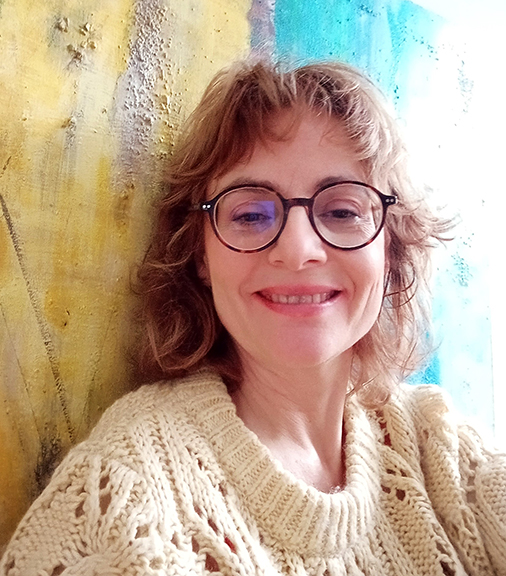
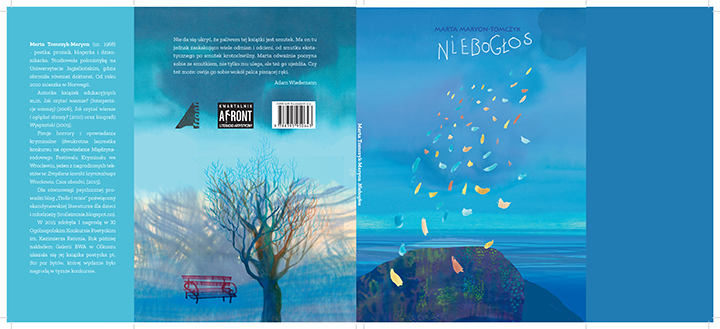
Marta Tomczyk-Maryon (ur. 1968), poetka, prozaiczka, blogerka i dziennikarka. Studiowała polonistykę na Uniwersytecie Jagiellońskim, gdzie obroniła również doktorat. Od roku 2010 mieszka w Norwegii. Autorka książek edukacyjnych m.in. Jak czytać wiersze? (Interpretacje wierszy) (2006), Jak czytać wiersze i oglądać obrazy? (2010) oraz biografii Wyspiański (2009). Pisuje horrory i opowiadania kryminalne (dwukrotna laureatka konkursu na opowiadanie kryminalne Międzynarodowego Festiwalu Kryminału we Wrocławiu). Dla równowagi psychicznej prowadzi blog „Trolle i misie” poświęcony skandynawskiej literaturze dla dzieci i młodzieży (https://trolleimisie.blogspot.com/). W 2015 zdobyła I nagrodę w XI Ogólnopolskim Konkursie Poetyckim im. Kazimierza Ratonia. Rok później nakładem Galerii BWA w Olkuszu ukazała się jej książka poetycka pt. Sto par bytów, której wydanie było nagrodą w tymże konkursie. W roku 2023 ukazał się jej drugi tomik pt. Niebogłos.
*
Niebogłos
Dla Marty Rusek
prosto w górę
wystrzał
kilka słów
jakieś pytanie
*
nie nazwałabym tego modlitwą
to rakieta
*
pytasz co się dzieje gdy kończy się paliwo?
właśnie wtedy spada niebogłos świetlisty
*
Wierzyć
ale nie ze słabości
tylko z czystej strzały czerwieni
– lancy serca
która przeszywa ciała chmur
i mknie najdalej jak tylko nie można
(Oslo, 22.04.2018)
*
Kosy
1.
Koty na Asklepiejonie
(znacznie ciekawsze niż ruiny)
dostaniesz we wszystkich kolorach i rozmiarach
większość przeraźliwe chuda i żądna głaskania
2.
Kocięta kręcą się wokół matek
robią wszystko na raz i na dwa
usiłują wdrapać się na drzewo
i nie spaść
ale to rzadko się udaje
bo łapy są aż cztery
a ogon syczy jak wąż
3.
Koty w tawernie wysiadują na murkach przed wybranym stolikiem
nie są nachalne
ich wzrok pozostawia pewną dozę wolności
„możesz zjeść ten kawałek wieprzowiny, jeśli naprawdę musisz”
*
są i takie które tylko się przechadzają nie proszą o nic
te dostają wszystko
(Kos, lipiec 2019)
*
Właściwa rola
W przedszkolu wszystkie dziewczynki marzą o tym
aby zagrać księżniczkę
po latach zdają sobie sprawę
że nie było o co zabiegać
zbyt późno przekonują się
że należało wziąć rolę czarownicy
i jeszcze pięknie za nią podziękować
*
[Wilgotna ziemia]
Wilgotna ziemia
mgła
przed-świt lasu
droga jak urwana nitka
pulsowanie samotności
szans
*
Pan M. znajduje na plaży damski but marki Franco Martini
Michał Drewnowski’s Concerts in Corpus Christi and Harlingen, Texas
*
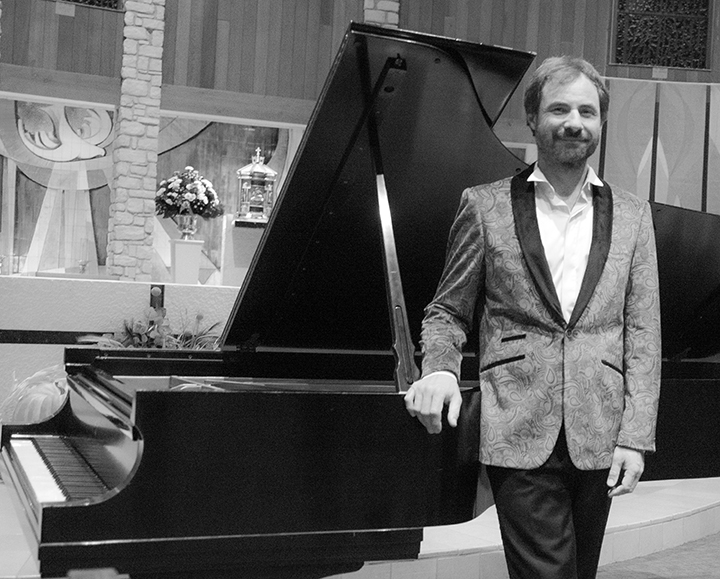
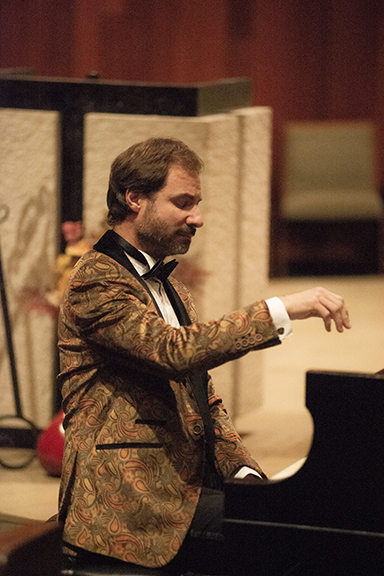
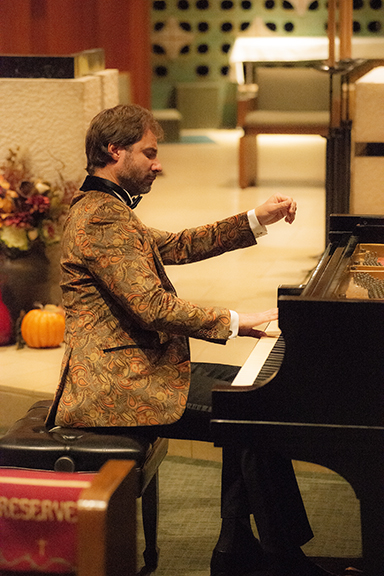
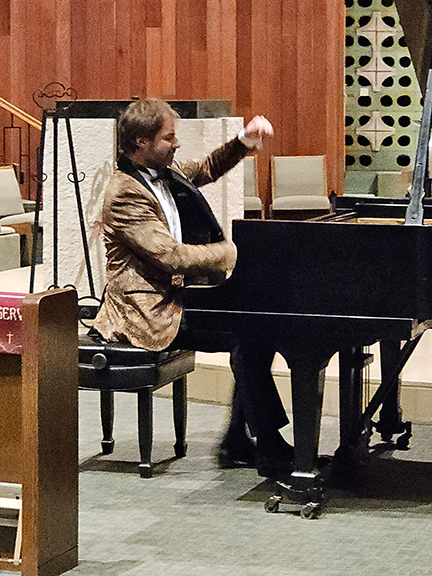
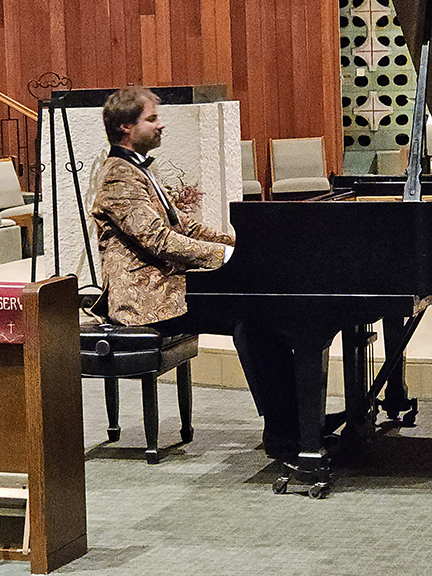
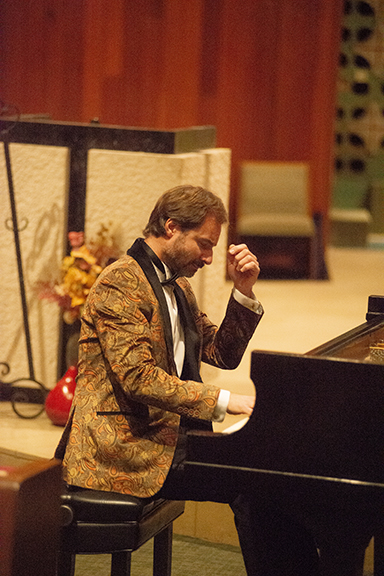
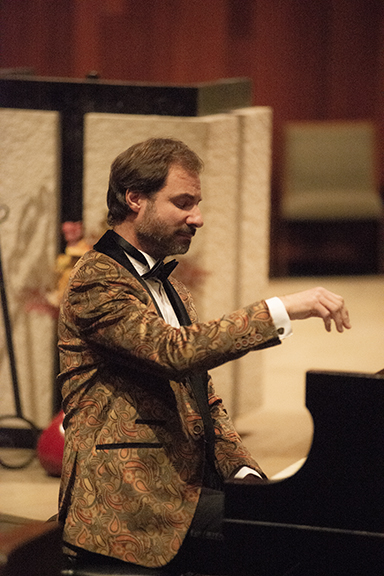
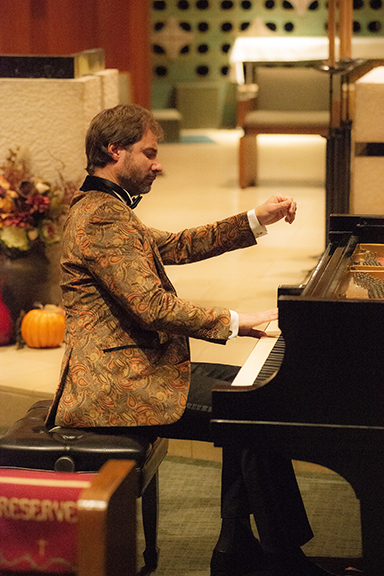
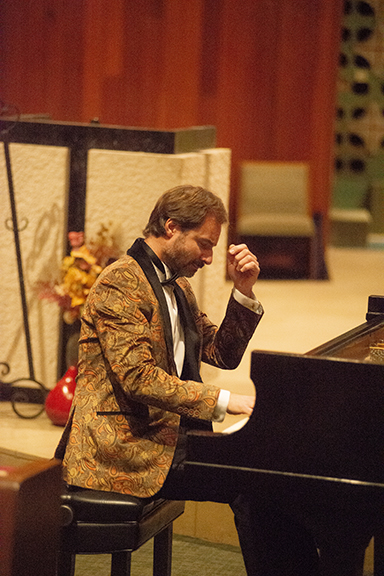
Michał Drewnowski during a concert in Corpus Christi, November 29, 2024, photo by Jacek Gwizdka
*
Joanna Sokołowska-Gwizdka (Austin, Texas)
The excitement from Marek Drewnowski’s October concert in Austin had barely settled when audiences in Texas had the opportunity to admire another outstanding pianist. On November 29 and 30, 2024, Michał Drewnowski, son of Marek Drewnowski and a representative of the younger generation of Polish pianists, performed in Corpus Christi and Harlingen. Educated in Poland and Italy, Michał continues his father’s musical legacy while forging his own unique artistic path.
– „Michał is the best of my students,” emphasizes Marek Drewnowski with pride at every opportunity.
*
Chopin and Liszt
Michał Drewnowski’s concert in Corpus Christi took place in the majestic interior of St. Pius X Church, while in Harlingen, the artist performed at the Cultural Arts Center. I had the pleasure of attending the first of these events. The vast space of the church initially raised my concerns—would the sound of the piano be overwhelmed in such an expansive setting? Fortunately, Michał Drewnowski handled it brilliantly, and his expressive playing enchanted the audience, perfectly filling the space with music.
The first part of the concert was dedicated to the music of Fryderyk Chopin, with Michał Drewnowski’s interpretations bringing freshness and new expression. Although these pieces are well-known and often heard, the artist managed to capture the audience’s attention and immerse them in a mood filled with emotion.
The evening began with two Nocturnes, Op. 9, in B-flat minor and E-flat minor—some of Chopin’s earliest works. These lyrical and contemplative pieces were performed with great sensitivity, as Michał Drewnowski brought out their emotions, painting musical pictures full of delicacy and reflection.
Next came Introduction and Rondo in E-flat Major, Op. 16, a piece requiring both virtuosity and narrative freedom from the performer. The pianist effortlessly combined technical perfection with musical energy, showcasing both the finesse of the composer and his own interpretative mastery.
In the Mazurkas Op. 33 performed by the pianist, one could hear the characteristic rhythm and references to Polish folklore. The mazurkas in G-sharp minor, D major, C major, and B minor resounded like a kaleidoscope of emotions—from joyful lightness to melancholic reflection.
The first part of the concert concluded with the monumental Scherzo in C-sharp Minor, Op. 39—a work full of drama. The artist led the audience through intense contrasts—from quiet, mysterious whispers to powerful, almost symphonic sounds that took their breath away.
After the intermission, Michał Drewnowski presented a piano transcription of Isolde’s Liebestod from Richard Wagner’s opera Tristan und Isolde, arranged by Franz Liszt. In this piece, the artist conveyed both the tragedy and the love of Isolde. The performance was filled with drama, a challenging feat when relying on the sound of a single instrument rather than the broad palette of means available in a stage production.
The evening’s climax was the monumental Sonata in B Minor by Franz Liszt—a masterpiece combining philosophical depth, virtuosic challenges, and profound narrative. The pianist masterfully guided the audience through shifting moods, from intimate confessions to tempestuous explosions and a triumphant conclusion.
During the performance of this sonata, it was impossible to tear oneself away from the music. I closed my eyes, barely daring to breathe, afraid of missing even a single note. The hall was enveloped in absolute silence. I will long remember the sound of this sonata in Michał Drewnowski’s virtuosic rendition.
*
Michał Drewnowski, photo by Jacek GwizdkaMichał Drewnowski, photo by Jacek Gwizdka
*
An artist of international renown
Michał Drewnowski is a mature pianist who has achieved success on the international music stage. His artistic achievements include performances in numerous European countries such as Italy, France, Switzerland, Belgium, Bulgaria, England, Austria, the Czech Republic, Germany, Spain, Denmark, and Finland. The artist has performed in prestigious concert halls such as Wigmore Hall in London and Palau de la Música Catalana in Barcelona. His participation in renowned music festivals, including the Chopin Festival in Geneva and the Bolzano Piano Festival, has cemented his position as one of the most compelling pianists of his generation.
Like his father, who portrayed Fryderyk Chopin in Krzysztof Zanussi’s film Chopin’s Concerto (screened during Marek Drewnowski’s October concert in Austin), Michał also has acting experience. From 1999 to 2002, he performed at the New Theatre in Warsaw in Adam Hanuszkiewicz’s production Chopin: His Life, His Love, His Music…, in which he played the role of Fryderyk Chopin. In 2018, Michał portrayed Ignacy Jan Paderewski in the production Paderewski, the Pianist Who Became Prime Minister, directed by Jessica Dalle, at Opera Lorraine in Nancy.
The artist also stands out as a promoter of the music of lesser-known Polish composers. A special place in his repertoire is occupied by Tadeusz Majerski, a Polish composer and pianist born in Lviv (1888–1963), who was one of the first Polish dodecaphonists, combining twelve-tone technique with folklore and emotional expression. Majerski became the subject of Michał’s doctoral dissertation. Additionally, Drewnowski revives the memory of artists such as Ludwik Grossmann, Jadwiga Sarnecka, and Stefan Kisielewski, promoting their work on the international stage.
Currently, Michał Drewnowski is an assistant professor at the Grażyna and Kiejstut Bacewicz Academy of Music in Łódź. Through the Kosciuszko Foundation’s exchange program, he also serves as a visiting professor at the Chicago College of Performing Arts at Roosevelt University.
His concert and teaching activities, along with his dedication to promoting Poland’s musical heritage, make him a true ambassador of Polish culture worldwide.
*
Michał Drewnowski, photo by Jacek GwizdkaMichał Drewnowski, photo by Jacek Gwizdka
*
Mission of the Fryderyk Chopin Society of Texas
The concerts by Michał Drewnowski in Corpus Christi and Harlingen were part of a concert series organized by the Fryderyk Chopin Society of Texas. Founded in 1989, this organization is dedicated to classical music enthusiasts in South Texas and provides the local audience with performances of the highest quality.
Each year, the Society organizes recitals by outstanding, award-winning pianists who promote the works of Fryderyk Chopin and other piano composers. A significant aspect of the Fryderyk Chopin Society of Texas’s activities is its piano competitions for young artists, which offer opportunities for the development of emerging talents.
*
Pianist Nina Drath – The Heart of the Society
The president, founder, and main inspiration behind the Society is Nina Drath, a pianist of international renown. For years, she has passionately dedicated herself to promoting the music of Fryderyk Chopin in Texas, combining her artistic expertise with organizational efforts. Nina Drath is the daughter of Dr. Jan Bogdan Drath (d. 2016), a concert pianist and music professor at Texas A&M University-Kingsville, where he taught generations of students for nearly 40 years. Assisting Nina Drath in organizing cultural events are her husband, Jerzy Nowicki, and their son, Jan Nowicki, a sound engineer working at the School of Music at Texas State University in San Marcos.
The Fryderyk Chopin Society of Texas remains one of the most important institutions promoting classical music in the region, contributing to the development of the local artistic scene and the international promotion of Polish musical culture.
*
Michał Drewnowski, photo by Jacek Gwizdka
*
Biography:
Michał Drewnowski
Born in 1977, Michał Drewnowski began his piano journey in Italy at the age of eight, under the guidance of his father. Upon returning to Poland, he continued his education at the Karol Szymanowski Secondary School of Music in Warsaw, studying under renowned teachers Bronisława Kawalla and Ewa Pobłocka. In 2001, he graduated with honors from the Academy of Music in Łódź, where he studied piano under his father.
Between 2002 and 2005, he further honed his skills at the Geneva Conservatory of Music, studying with Dominique Merlet and Pascal Devoyon, earning a diploma with distinction. His musical development was enriched by masterclasses with eminent pianists such as Naum Shtarkman, Miłosz Magin, Fou T’song, Rudolf Kehrer, and Eugen Indjic.
Michał Drewnowski is the recipient of numerous prestigious awards, including a special prize at the First International Competition for Musical Individualities in Łódź (1996), First Prize at the 13th Kiejstut Bacewicz Chamber Music Competition in Łódź (1998), and Second Prize at the International Mascia Masin Piano Competition in San Gemini, Italy (2000).
As a pianist, Michał Drewnowski has performed worldwide, collaborating with esteemed orchestras such as the Polish Radio Orchestra, Chopin Philharmonic Orchestra, Shumen Sinfonietta, Odessa Philharmonic Orchestra, Lviv Philharmonic Orchestra, and the Royal Scottish National Orchestra. He has played under the baton of distinguished conductors, including Massimiliano Caldi, Emil Tabakov, Emilian Madey, Tadeusz Kozłowski, Monika Wolińska, Stanislav Oushev, and Ruben Silva.
Michał’s discography includes recordings for renowned labels such as GEGA NEW, DUX, and PRO ART, featuring works for two pianos and percussion, compositions by American and Latin American composers, as well as contemporary Swiss composers.
He is a co-founder of the New Art Radio Philharmonic, where he has served as Artistic Director since 2009. Since 2008, Michał Drewnowski has been an assistant professor at the Grażyna and Kiejstut Bacewicz Academy of Music in Łódź.
*
Nina Drath
Nina Drath is a Polish pianist renowned for her exceptional interpretations of Fryderyk Chopin’s works. She began her musical education at the age of four in Katowice under the guidance of Wanda Chmielowska, quickly demonstrating extraordinary talent. By the age of eleven, she was performing internationally, including in Czechoslovakia, where she made her first radio recordings.
She continued her studies at the Fryderyk Chopin University of Music in Warsaw under the tutelage of the distinguished pianist Regina Smendzianka, earning a Master’s degree in piano performance. In 1980, she completed the Virtuoso Studies Program, refining her skills and developing a distinctive interpretative style.
From 1975 to 1980, Nina Drath performed with renowned symphony orchestras in Frankfurt and Leipzig, earning acclaim from both audiences and critics. During this period, she also participated in international piano competitions, achieving significant success. She won prizes at the Paloma O’Shea Piano Competition in Spain (1976) and the International Piano Competition in Senigallia, Italy (1979). In 1979, she triumphed in the Polish Piano Competition in Słupsk.
Her discography includes recordings of works by Fryderyk Chopin, Wolfgang Amadeus Mozart, and contemporary composers such as Peter Petroff from San Antonio.
Nina Drath maintained an active concert career worldwide. Between 1994 and 1996, she performed at prestigious festivals, including the Piano Festival in Venice, and led masterclasses at the Academia Ducale in Genoa, as well as in Poland, the Netherlands, and the United States.
In 2006, as a cultural ambassador, she performed with the Lebanese National Symphony Orchestra in Beirut, playing Leonard Bernstein’s The Age of Anxiety. The following year, she continued her European tours, with concerts in Italy and Belgium.
Nina Drath’s work encompasses solo and chamber music performances, as well as leading masterclasses, making her a prominent figure in the world of classical music. Her dedication to promoting Chopin’s legacy and her pedagogical efforts have contributed to the development of many young talents and the global appreciation of Polish music.
*
Dr. Jan Bogdan Drath
Dr. Jan Bogdan Drath was a distinguished concert pianist and professor of music at Texas A&M University-Kingsville. His artistic and pedagogical career left a significant mark on the world of classical music, both in the United States and internationally.
He graduated from the Academy of Music in Katowice, earning an artistic diploma and a master’s degree. He then pursued doctoral studies at the Academies of Music in Kraków and Warsaw, where he obtained the title of docent. He further solidified his credentials by earning a Doctor of Musical Arts degree from North Texas State University, establishing himself as an exceptional artist and scholar.
At the age of sixteen, he made his debut performing Franz Liszt’s Piano Concerto, marking the beginning of a rich concert career. Dr. Drath performed across Europe, Asia, the United States, and Mexico, offering solo recitals, concerts with orchestras, and participating in radio and television programs.
Dr. Drath was also a respected music editor. In 1980, he published two significant works at Texas A&I University: Waltzes of Fryderyk Chopin: Sources, Vol. 1 and Waltzes Published during Chopin’s Lifetime. These contributions were pivotal in advancing research on Chopin’s works and early keyboard music.
In 1980, he founded the Annual Chopin Workshop at Texas A&M University-Kingsville, which he directed for many years. This initiative became an important center for education and the promotion of Fryderyk Chopin’s works in the United States.
As an educator, Dr. Jan Bogdan Drath profoundly influenced the lives of many young musicians, including both his students and music teachers across the country. He was not only a mentor but also an inspiration for generations of artists who benefited from his knowledge, passion, and experience.
Koncerty Michała Drewnowskiego w Corpus Christi i Harlingen w Teksasie
*
Michał Drewnowski podczas koncertu w Corpus Christi, 29 listopada 2024 r., fot. Jacek Gwizdka
*
Joanna Sokołowska-Gwizdka (Austin, Teksas)
Jeszcze nie opadły emocje po październikowym koncercie Marka Drewnowskiego w Austin, a publiczność w Teksasie miała okazję podziwiać kolejnego wybitnego pianistę. Podczas koncertów w Corpus Christi i Harlingen 29 i 30 listopada 2024 roku wystąpił Michał Drewnowski, syn Marka Drewnowskiego, reprezentant młodego pokolenia polskich pianistów. Wykształcony w Polsce i we Włoszech, Michał kontynuuje muzyczne wychowanie ojca, będąc jednocześnie artystą o własnej drodze artystycznej.
– „Michał to najlepszy z moich uczniów” – podkreśla z dumą Marek Drewnowski przy każdej okazji.
*
Chopin i Liszt
Koncert Michała Drewnowskiego w Corpus Christi odbył się w majestatycznym wnętrzu Kościoła pw. Świętego Piusa X, podczas gdy w Harlingen artysta wystąpił w Cultural Arts Center. Miałam przyjemność uczestniczyć w pierwszym z tych wydarzeń. Olbrzymia przestrzeń kościoła początkowo wzbudzała moje obawy – czy dźwięk fortepianu nie zostanie przytłumiony w tak rozległym wnętrzu? Na szczęście Michał Drewnowski poradził sobie znakomicie, a jego ekspresyjna gra zaczarowała publiczność, doskonale wypełniając przestrzeń muzyką.
Pierwsza część koncertu była poświęcona muzyce Fryderyka Chopina, której interpretacje Michała Drewnowskiego nadały świeżości i nowego wyrazu. Mimo że utwory te są znane i wielokrotnie słuchane, artysta potrafił przyciągnąć uwagę słuchaczy i wprowadzić ich w nastrój pełen emocji.
Wieczór otworzyły dwa Nokturny op. 9 w tonacjach b-moll i e-moll – jedne z najwcześniejszych dzieł Fryderyka Chopina. Liryczne i pełne zadumy utwory zostały wykonane z dużą wrażliwością, a Michał Drewnowski wydobył z nich emocje, malując muzyczne obrazy pełne delikatności i refleksji.
Następnie zabrzmiało Introduction and Rondo Es-dur, op.16 – dzieło wymagające od wykonawcy zarówno wirtuozerii, jak i narracyjnej swobody. Pianista z lekkością połączył techniczną perfekcję z muzyczną energią, ukazując zarówno finezję kompozytora, jak i własne mistrzostwo interpretacyjne.
W cyklu Mazurków op. 33, wykonanych przez pianistę, można było usłyszeć zarówno charakterystyczny rytm, jak i nawiązanie do polskiego folkloru. Mazurki w tonacjach gis-moll, D-dur, C-dur i h-moll, zabrzmiały jak kalejdoskop emocji – od radosnej lekkości po melancholijną zadumę.
Pierwszą część koncertu zakończyło monumentalne Scherzo cis-moll, op. 39 – dzieło pełne dramatyzmu. Artysta poprowadził słuchaczy przez napięte kontrasty – od cichych, tajemniczych szeptów po potężne, niemal symfoniczne brzmienia, które zaparły dech w piersiach.
Po przerwie Michał Drewnowski zaprezentował transkrypcję fortepianową Śmierci Izoldy z opery Richarda Wagnera Tristan i Izolda w aranżacji Franciszka Liszta. W tym utworze artysta oddał zarówno tragizm, jak i miłość Izoldy. Utwór był pełen dramaturgii, co jest trudne mając do dyspozycji brzmienie jednego instrumentu, a nie, jak w przypadku utworu scenicznego, całej gamy różnorodnych środków przekazu.
Kulminacyjnym punktem wieczoru była monumentalna Sonata h-moll Franciszka Liszta – arcydzieło, które łączy w sobie filozoficzne przesłanie, wirtuozowskie wyzwania i głęboką narrację. Pianista z niezwykłą maestrią poprowadził słuchaczy przez zmieniające się nastroje, od intymnych wyznań po burzliwe eksplozje i triumfalne zakończenie.
Podczas wykonania tej sonaty trudno było oderwać się od muzyki. Zamknęłam oczy, bojąc się niemal oddychać, by nie zgubić żadnego dźwięku. Na sali panowała absolutna cisza. Jeszcze długo będę wspominać brzmienie tej sonaty w wirtuozerskim wykonaniu Michała Drewnowskiego.
*
Michał Drewnowski, fot. Jacek GwizdkaMichał Drewnowski, fot. Jacek Gwizdka
*
Artysta o międzynarodowej renomie
Michał Drewnowski to dojrzały pianista, który odnosi sukcesy na międzynarodowej scenie muzycznej. Jego dorobek artystyczny obejmuje koncerty w wielu krajach Europy, takich jak Włochy, Francja, Szwajcaria, Belgia, Bułgaria, Anglia, Austria, Czechy, Niemcy, Hiszpania, Dania i Finlandia. Artysta występował w prestiżowych salach koncertowych, takich jak Wigmore Hall w Londynie czy Palau de la Música Catalana w Barcelonie. Jego udział w renomowanych festiwalach muzycznych, m.in. Festiwalu Chopinowskim w Genewie czy Bolzano Piano Festival, utwierdził jego pozycję jako jednego z najbardziej interesujących pianistów swojego pokolenia.
Podobnie jak jego ojciec, który zagrał Fryderyka Chopina w filmie Krzysztofa Zanussiego Koncert Chopina (pokazanym podczas październikowego koncertu Marka Drewnowskiego w Austin), Michał również ma doświadczenie aktorskie. W latach 1999–2002 występował w Teatrze Nowym w Warszawie w przedstawieniu Adama Hanuszkiewicza Chopin, jego życie, jego miłość, jego muzyka… w roli Fryderyka Chopina. W 2018 roku Michał wcielił się w postać Ignacego Jana Paderewskiego w spektaklu Paderewski, le pianiste devenu Premier Ministre w reżyserii Jessiki Dalle w Opera Lorraine w Nancy.
Artysta wyróżnia się również jako propagator muzyki mniej znanych polskich kompozytorów. Szczególne miejsce w jego twórczości zajmuje Tadeusz Majerski, polski kompozytor i pianista urodzony we Lwowie (1888–1963), który był jednym z pierwszych polskich dodekafonistów, łączącym technikę dwunastotonową z folklorem i emocjonalnością. Postać Majerskiego stała się tematem pracy doktorskiej Michała. Ponadto Drewnowski przywraca pamięć o takich artystach jak Ludwik Grossmann, Jadwiga Sarnecka czy Stefan Kisielewski[1], popularyzując ich twórczość na arenie międzynarodowej.
Obecnie Michał Drewnowski jest adiunktem w Akademii Muzycznej im. Grażyny i Kiejstuta Bacewiczów w Łodzi, a także, dzięki programowi wymiany Fundacji Kościuszkowskiej, profesorem wizytującym w Chicago College of Performing Arts na Roosevelt University.
Jego działalność koncertowa i pedagogiczna oraz zaangażowanie w popularyzację polskiego dziedzictwa muzycznego czynią go ambasadorem polskiej kultury na świecie.
*
Michał Drewnowski, fot. Jacek GwizdkaMichał Drewnowski, fot. Jacek Gwizdka
*
Misja Fryderyk Chopin Society of Texas
Koncerty Michała Drewnowskiego w Corpus Christi i Harlingen odbyły się w ramach cyklu koncertów zorganizowanych przez Fryderyk Chopin Society of Texas. Organizacja ta, założona w 1989 roku, jest dedykowana miłośnikom muzyki klasycznej z południowego Teksasu i zapewnia lokalnej publiczności koncerty na najwyższym poziomie.
Co roku Towarzystwo organizuje recitale wybitnych, nagradzanych pianistów, promujących twórczość Fryderyka Chopina oraz innych kompozytorów muzyki fortepianowej. Ważnym elementem działalności Fryderyk Chopin Society of Texas są także konkursy pianistyczne dla młodych artystów, które dają możliwość rozwoju młodym talentom.
*
Pianistka Nina Drath – serce Towarzystwa
Prezesem, założycielką i główną inspiracją Towarzystwa jest Nina Drath, pianistka o międzynarodowej renomie. Od lat z pasją angażuje się w promowanie muzyki Fryderyka Chopina w Teksasie, łącząc swoje artystyczne doświadczenie z działalnością organizacyjną. Nina Drath jest córką dr Jana Bogdana Dratha (zm. 2016), pianisty koncertowego i profesora muzyki na Texas A&M University-Kingsville, gdzie przez prawie 40 lat uczył kolejne pokolenia studentów. W pracy przy organizacji wydarzeń kulturalnych pomagają Ninie Drath m.in. mąż Jerzy Nowicki oraz syn Jan Nowicki, reżyser dźwięku, pracujący w School of Music, na Texas State University w San Marcos.
Fryderyk Chopin Society of Texas pozostaje jednym z najważniejszych ośrodków propagujących muzykę klasyczną w regionie, przyczyniając się do rozwoju lokalnej sceny artystycznej oraz międzynarodowej promocji polskiej kultury muzycznej.
*
Michał Drewnowski, fot. Jacek Gwizdka
Biogramy:
Michał Drewnowski
Urodzony w 1977 roku, swoją przygodę z fortepianem rozpoczął we Włoszech w wieku ośmiu lat, pod kierunkiem ojca. Po powrocie do Polski kontynuował naukę w Liceum Muzycznym im. Karola Szymanowskiego w Warszawie, studiując pod okiem znakomitych pedagogów: Bronisławy Kawalli i Ewy Pobłockiej. W 2001 roku ukończył z wyróżnieniem Akademię Muzyczną w Łodzi w klasie fortepianu prowadzonej przez swojego ojca.
W latach 2002–2005 studiował w Konserwatorium Muzycznym w Genewie, gdzie rozwijał swoje umiejętności pod kierunkiem Dominique’a Merleta i Pascala Devoyona, zdobywając dyplom z wyróżnieniem. Jego muzyczna ścieżka była dodatkowo wzbogacona udziałem w kursach mistrzowskich prowadzonych przez wybitnych pianistów, takich jak Naum Shtarkman, Miłosz Magin, Fou T’song, Rudolf Kehrer i Eugen Indjic.
Michał Drewnowski jest laureatem wielu prestiżowych nagród. Otrzymał m.in. nagrodę specjalną na I Międzynarodowym Konkursie Indywidualności Muzycznych im. Aleksandra Tansmana w Łodzi (1996), I nagrodę na XIII Konkursie Muzyki Kameralnej im. Kiejstuta Bacewicza w Łodzi (1998) oraz II nagrodę na Międzynarodowym Konkursie Pianistycznym im. Mascii Masin w San Gemini we Włoszech (2000).
Jako pianista, Michał Drewnowski koncertował na całym świecie, współpracując z wieloma uznanymi orkiestrami, takimi jak Polska Orkiestra Radiowa, Chopin Philharmonic Orchestra, Shumen Sinfonietta, Odessa Philharmonic Orchestra, Lviv Philharmonic Orchestra oraz Royal Scottish National Orchestra. Grał pod batutą wybitnych dyrygentów, takich jak Massimiliano Caldi, Emil Tabakov, Emilian Madey, Tadeusz Kozłowski, Monika Wolińska, Stanislav Oushev i Ruben Silva.
Dyskografia Michała obejmuje nagrania dla uznanych wytwórni fonograficznych, takich jak GEGA NEW, DUX oraz PRO ART. Zawiera ona m.in. utwory na dwa fortepiany i perkusję, dzieła kompozytorów amerykańskich i latynoamerykańskich, a także współczesnych twórców szwajcarskich.
Michał jest współzałożycielem Radiowej Filharmonii New Art, gdzie od 2009 roku pełni funkcję dyrektora artystycznego. Od 2008 roku pracuje jako adiunkt w Akademii Muzycznej im. Grażyny i Kiejstuta Bacewiczów w Łodzi.
*
Nina Drath
Polska pianistka, która jest ceniona za wyjątkowe interpretacje dzieł Fryderyka Chopina. Edukację muzyczną rozpoczęła w wieku czterech lat w Katowicach pod kierunkiem Wandy Chmielowskiej, szybko ujawniając swój niezwykły talent. Już jako jedenastolatka koncertowała za granicą, m.in. w Czechosłowacji, gdzie dokonała swoich pierwszych nagrań radiowych.
Studia kontynuowała w Akademii Muzycznej w Warszawie pod okiem wybitnej pianistki Reginy Smendzianki, zdobywając tytuł magistra w zakresie gry na fortepianie. Następnie ukończyła Program Studiów Wirtuozowskich w 1980 roku, doskonaląc swoje umiejętności i rozwijając indywidualny styl interpretacyjny.
W latach 1975–1980 Nina Drath występowała z renomowanymi orkiestrami symfonicznymi we Frankfurcie i Lipsku, zdobywając uznanie zarówno publiczności, jak i krytyków. W tym czasie brała również udział w międzynarodowych konkursach pianistycznych, odnosząc znaczące sukcesy. Zdobyła nagrody na Konkursie Pianistycznym im. Palomy O’Shea w Hiszpanii (1976) oraz na Międzynarodowym Konkursie Pianistycznym w Senigallia we Włoszech (1979). W 1979 roku triumfowała w polskim konkursie pianistycznym w Słupsku.
Jej dyskografia obejmuje nagrania dzieł Fryderyka Chopina, Wolfganga Amadeusza Mozarta oraz współczesnych kompozytorów, takich jak Peter Petroff z San Antonio.
Nina Drath prowadziła aktywną działalność koncertową na całym świecie. W latach 1994–1996 występowała na prestiżowych festiwalach, takich jak Festiwal Pianistyczny w Wenecji oraz prowadziła mistrzowskie kursy w Academia Ducale w Genui, w Polsce, Holandii i Stanach Zjednoczonych.
W 2006 roku, jako kulturalny wysłannik, wystąpiła w Bejrucie z Narodową Orkiestrą Symfoniczną Libanu, wykonując „The Age of Anxiety” Leonarda Bernsteina. Rok później kontynuowała koncertowanie w Europie, występując m.in. we Włoszech i Belgii.
Działalność Niny Drath obejmuje zarówno koncerty solowe, jak i kameralne, a także prowadzenie kursów mistrzowskich, co czyni ją ważną postacią w świecie muzyki klasycznej. Jej zaangażowanie w promowanie twórczości Chopina oraz działalność pedagogiczna przyczyniły się do rozwoju wielu młodych talentów i popularyzacji polskiej muzyki na arenie międzynarodowej.
*
Dr Jan Bogdan Drath
Był wybitnym pianistą koncertowym i profesorem muzyki na Texas A&M University-Kingsville. Jego kariera artystyczna i pedagogiczna pozostawiła ślady w świecie muzyki klasycznej, zarówno w Stanach Zjednoczonych, jak i na arenie międzynarodowej.
Ukończył Akademię Muzyczną w Katowicach, uzyskując dyplom artystyczny i tytuł magistra. Następnie kontynuował studia doktoranckie w Akademiach Muzycznych w Krakowie i Warszawie, gdzie zdobył stopień docenta. Tytuł doktora sztuk muzycznych otrzymał w North Texas State University, co dodatkowo ugruntowało jego pozycję jako wybitnego artysty i naukowca.
Jako szesnastolatek zadebiutował wykonaniem „Koncertu fortepianowego” Franciszka Liszta, rozpoczynając tym samym bogatą karierę koncertową. Występował w Europie, Azji, Stanach Zjednoczonych i Meksyku, prezentując recitale solowe, koncerty z orkiestrami oraz programy radiowe i telewizyjne.
Był również cenionym redaktorem muzycznym. W 1980 roku opublikował w Texas A&I University dwa ważne dzieła: Waltzes of Fryderyk Chopin: Sources, Vol. 1 oraz Waltzes Published during Chopin’s Lifetime. Jego prace wnosiły istotny wkład w badania nad twórczością Chopina i wczesną muzyką klawiszową.
W 1980 roku założył Annual Chopin Workshop na Texas A&M University-Kingsville, którym kierował przez wiele lat. Inicjatywa ta stała się ważnym ośrodkiem edukacji i promocji twórczości Fryderyka Chopina w Stanach Zjednoczonych.
Jako pedagog dr Jan Bogdan Drath miał głęboki wpływ na życie wielu młodych muzyków, zarówno swoich studentów, jak i nauczycieli muzyki w całym kraju. Był nie tylko mentorem, ale także inspiracją dla pokoleń artystów, którzy czerpali z jego wiedzy, pasji i doświadczenia.
[1] Marek Drewnowski wykonał ostatni utwór Stefana Kisielewskiego „Koncert fortepianowy” podczas Warszawskiej Jesieni w Filharmonii Narodowej w 1991 r., za które otrzymał prestiżową nagrodę „Orfeusza”.
Impresje wokół „Listów z Londynu” Anny Marii Mickiewicz
*
Andrzej Jaroszyński
Dostałem książki dwóch Anien – poetek, które mam szczęście znać: Anny Frajlich z Nowego Jorku i Anny Mickiewicz z Londynu. Tomiki wydane starannie i gustownie, co jest rzadką kombinacją, przez nieznane mi wydawnictwo „Forma” z dalekiego Szczecina. O poezji Anny Frajlich porozmawiam z Nią w czasie Jej październikowego pobytu w Lublinie. O książce Anny Marii Mickiewicz chciałbym skreślić kilka słów, mimo, że zasługuje na dużo więcej.
„Listy z Londynu”, najświeższy owoc twórczości poetki, pisane są, jak gdyby w formie zapisu wspomnień czy wypowiedzi, które padają w czasie rozmowy a potem są redagowane i literacko wzbogacone. Nie należy więc je czytać „ciurkiem” ale wybierać co smakowitsze kęski tak jak zwykle delektujemy się wyrafinowana acz lekką z pozoru konwersacją.
Uderza wielka różnorodność tych „kartek z przeszłości”. Głównym bohaterem jest Londyn, ale wysłane z niego „listy” dotyczą także Lublina, Warszawy i innych miejsc w Polsce a także odniesień do miast Europy i Azji. Są to nade wszystko miejsca osobiście odwiedzone, uchwycone w szczególe, w zapachu, jednym słowem widziane oczyma poetki. Podobna różnorodność panuje wśród przywoływanych postaci. Jestem wdzięczny autorce za przywołanie postaci zasłużonych, ale zapomnianych. Należy do nich Krzysztof Muszkowski, emigracyjny pisarz i publicysta polski w Londynie, którego Anna słusznie nazywa „mistrzem pióra emigracyjnego”. Należy też zauważyć bardzo rzadkie wśród młodego pokolenia Polek i Polaków za granicą zainteresowanie i sympatię wobec starszej generacji, czyli udział w „pokoleniowych wędrówkach”.
Ciekawy jest szkic o postaci Anny Jones-Dębskiej, tłumaczki i propagatorki kultury polskiej na Wyspach. Osobiście żałuje, że o osobie Gilesa Harta, założyciela Polish Solidarity Campaign, poetka umieściła tylko krótką notkę. Zasługuje on niewątpliwie na bogatszy portret. Na marginesie, czeka na sprawne pióro przedstawienie wizerunku bardzo wielu angielskich przyjaciół spraw polskich: pisarzy, dziennikarzy, polityków i działaczy społecznych. To ważna misja do spełnienia przez takich twórców jak Anna Mickiewicz.
Natomiast w „Listach …” interesujące są także a i literacko inspirujące portrety i scenki z osobami nieznanymi publicznie. Na przykład chorwacka kobieta, którą ratuje od samotności i odrzucenia emigrantka z Polski; starszy pan spotkany w kawiarni, który przełamuje granice odosobnienia, a także Anglik, który w swojej ignorancji, pobudził autorkę do odkrycia meandrów przeszłość jej szkoły średniej. Mnie najbardziej podobał się wizerunek Mrs Rose „o nazwisku pachnącym jak słodka wanilia”. Wiele szkicowanych postaci pochodzi z różnych grup etnicznych. To obraz współczesnego Londynu, niekoniecznie z panami w melonikach. Dodać trzeba, że większości szkiców towarzyszy refleksja lub sugestia refleksji, tylko delikatnie wpleciona w rysunek postaci lub zdarzenia.
Czy takie poetyckie kartki są potrzebne w dobie sztucznej inteligencji i tysięcy tomów opisujący nasz skomplikowany świat. Właśnie dlatego, że ani sztuczna inteligencja ani opasłe tomy nie oddadzą ulotnych tajemnic, ani przemijających obrazów i zapachów, ani nie wiedzą nawet o istnieniu listów, warto je więc pisać i warto je czytać.
Andrzej Jaroszyński, Lublin 1.10. 2024
Andrzej Jaroszyński Ukończył filologię angielską na Uniwersytecie Marii Curie-Skłodowskiej w Lublinie. Asystent w Katedrze Literatury Porównawczej KUL, wieloletni dyrektor Szkoły Letniej Kultury i Języka Polskiego KUL, zastępca Konsula Generalnego RP w Chicago, zastępca Ambasadora w Ambasadzie RP w Waszyngtonie, dyrektor Departamentu Polityki Bezpieczeństwa i Departamentu Ameryk w MSZ, Ambasador w Królestwie Norwegii i Islandii (2001-2005) oraz w Australii i Papui Nowej Gwinei (2008-2013). Obecnie gościnny wykładowca w Katolickim Uniwersytecie Lubelskim, UMCS i WSPA. Tłumacz, autor kilkudziesięciu artykułów na temat literatury angielskiej, kultury, religii i polityki.
Sukcesy i dokonania polskich artystów plastyków żyjących i tworzących w Kanadzie ciągle są mało znane w kraju rodzinnym. Wynika to z faktu, że artysta w nowym świecie, starając się odnaleźć przestrzeń dla własnych działań, poświęca cały czas i aktywność na wejście w nową rzeczywistość, a w konsekwencji więzy z krajem poluzowują się. Musi przestawić się na „nowy język” rozumiany w szerokim tego słowa znaczeniu jako kody zawodowe i społeczne, relacje środowiskowe, nowe reguły kulturowe i międzyludzkie, skomplikowane tym bardziej, że Kanada jest krajem wielokulturowym. Nadchodzi jednak moment, gdy po aktywnym życiu pojawia się u artysty potrzeba włączenia dokonań na emigracji w nurt polskiego życia artystycznego, którego było się częścią i które, poprzez wykształcenie, pracę w Polsce, więzi rodzinne i środowiskowe, było zawsze ważnym odnośnikiem życia i działań.
*
Regina Czapiewska – malarka, architekt, wykładowczyni akademicka, odniosła sukces na emigracji w Kanadzie – jest ceniona w kanadyjskim środowisku artystycznym, zapraszana do udziału w jury konkursów artystycznych, jej dwa monumentalne murale zdobią wnętrza Casino du Lac-Leamy w Gatineau, które sąsiaduje przez rzekę z Ottawą.
To znakomity moment, by zaprezentować malarski dorobek artystki w Polsce, włączając go tym samym w powojenną historię sztuki polskiej, składającą się z twórczości powstającej w kraju i dokonań naszych artystów poza krajem. O takie rozumienie polskiej historii sztuki nieustannie zabiegają badacze dorobku polskich artystów emigrantów, przekonując muzea, by zainteresowały się artystami emigracyjnymi pokazując ich prace i włączając je do zbiorów muzealnych.
Regina Czapiewska, „Bulrush” (Sitowie)
Regina Czapiewska swoje zawodowe życie w Polsce związała z Gdańskiem. Ukończyła wydział architektury na Politechnice Gdańskiej i przez dwanaście lat wykładała malarstwo i rysunek na macierzystej uczelni. Wyjazd do Egiptu na stypendium w Kairze, w 1980 roku, otworzył nowe tematy, których zwieńczeniem był doktorat „Integracja architektury i sztuki w starożytnym Egipcie”, obroniony w 1985 roku. Przełomowym dla Czapiewskiej – malarki okazało się poznanie malarstwa naskalnego znajdującego się na pustynnym obszarze Sahary w Tassili n’Ajjer. Płaskowyż Tassili z niezwykłymi skałami zwanymi „kamiennym lasem”, uważany jest za największe na świecie centrum prehistorycznej sztuki. Ponad 15 tysięcy malowideł i rytów skalnych powstałych 12 tysięcy lat p.n.e. to bezcenne ślady twórczych działań, to znaki z przeszłości pozostawione przez naszych praprzodków – równie konkretne co tajemnicze. Malarstwo naskalne fascynuje i trudno ustalić gdzie kończy się w nim magia a zaczyna sztuka. Właśnie ten dialog plastyczny między znakiem a magią podjęła Czapiewska w swoim malarstwie. Zarys, kontur, znak zwierzęcia, ptaka, człowieka na kunsztownym tle, stały się charakterystycznymi cechami stylu artystki.
Regina Czapiewska, „Bulrush” (Sitowie)Regina Czapiewska, „Bulrush” (Sitowie)
W 1988 roku artystka wraz z mężem, Jackiem Czapiewskim, architektem, pracownikiem naukowym Państwowej Wyższej Szkoły Sztuk Plastycznych w Gdańsku, wyemigrowała do Kanady i zamieszkała w Ottawie. W Kanadzie, potrzeba malowania okazała się równie silna jak uprawianie zawodu architekta. W 1990 roku malarka wzięła udział w grupowej wystawie zorganizowanej przez ambasadę RP w Ottawa World Exchange Plaza. Kolejną prezentacją była indywidualna wystawa w Galerie Jacar, której następstwem stała się wieloletnia współpraca z Galerie Montcalm – publiczną galerią sztuki. Efektem indywidualnej wystawy prac w Galerie Montcalm w 1996 roku, był udział artystki w konkursie na mural w Casino du Lac-Leamy w Gatineau, zwycięstwo w konkursie i powierzenie jej prac nad muralem. Inspiracją dla fresków stały się właśnie ryty naskalne z Tassili n’Ajjer stąd nazwa muralu „La Grotte” (Grota). Sukces, z jakim spotkał się mural stworzony techniką marouflage’u, dwa lata później przyniósł artystce kontrakt na kolejny mural – „La Chasse” (Polowanie) jest również utrzymany w stylu malarstwa naskalnego.
Regina Czapiewska, „Entrave” (Przeszkoda), przykład malarstwa naskalnego
Idąc drogą poszukiwania dialogu między malarstwem a odbiorcą Czapiewska odkryła kaligrafię japońską, której technikę zgłębiała przez kilka lat w Ottawa School of Art i która to technika, stała się tematem cyklu prac malarskich integrujących rysunek i malarstwo – literę i znak plastyczny. Kolejnym cyklem namalowanym przez artystkę są oleje „Miasta – Filigrany” przywołane z pamięci lub ze szkiców: Paryż, Kair, Algier, Montreal, w których oszczędność znaków łączy się z kunsztowną kolorystyką. W 2003 roku ambasada RP w Ottawie, w celu upamiętnienia zamachów z 11 września, przyczyniła się do zorganizowania wystawy prac Reginy Czapiewskiej w konsulacie generalnym RP w Nowym Jorku. Pokazane zostały filigrany Nowego Jorku, pastele o tematyce ogrodów i kwiatów, dużego formatu tryptyk.
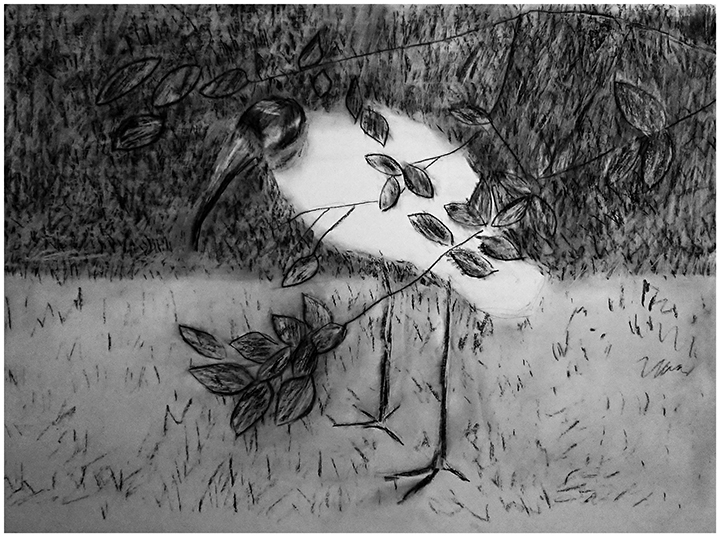
Od lat najsilniejszą inspiracją dla malarki jest natura. W 2006 roku Galerie Montcalm pokazała prace Czapiewskiej z serii „Morza”. Temat wody, mórz, potopu już wtedy zdawał się bliski ekologicznym obawom artystki. Na wystawie zaprezentowano obrazy i rysunki w oryginalny sposób, łącząc malarstwo z rysunkiem przytwierdzonym z drugiej strony obrazu, co dało efekt połączenia dwóch wystaw – barwnych olejów i czarno-białych rysunków dotyczących tego samego tematu – „Morza”. Rokrocznie zamieniając kanadyjską zimę na słońce Florydy, malarka dokumentuje tamtejszą florę i faunę, tworząc swoisty malarski pamiętnik złożony z rysunków, akwarel, pasteli. Egzotyczne ptaki, plaże, sitowia, drzewa i światło są bohaterami jej prac biało-czarnych, zaś cykl pięciu subtelnych semi-abstraktów zatytułowany „Sitowia” przypieczętowuje związek malarki z przyrodą.
Regina Czapiewska, z serii rysunków z Florydy
W 2010 roku artystka wyróżniona została nagrodą Prix d’Excellence za całokształt dokonań artystycznych. Ciekawie byłoby zaprezentować dorobek artystyczny Reginy Czapiewskiej publiczności w bliskim jej sercu Gdańsku, by poprzez jej prace pokazać długą i twórczą drogę jaką malarka odbyła z Gdańska do Ottawy, poprzez Egipt, Algierię, Saharę i Tassili n’Ajjer.
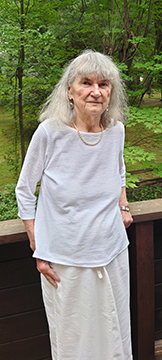
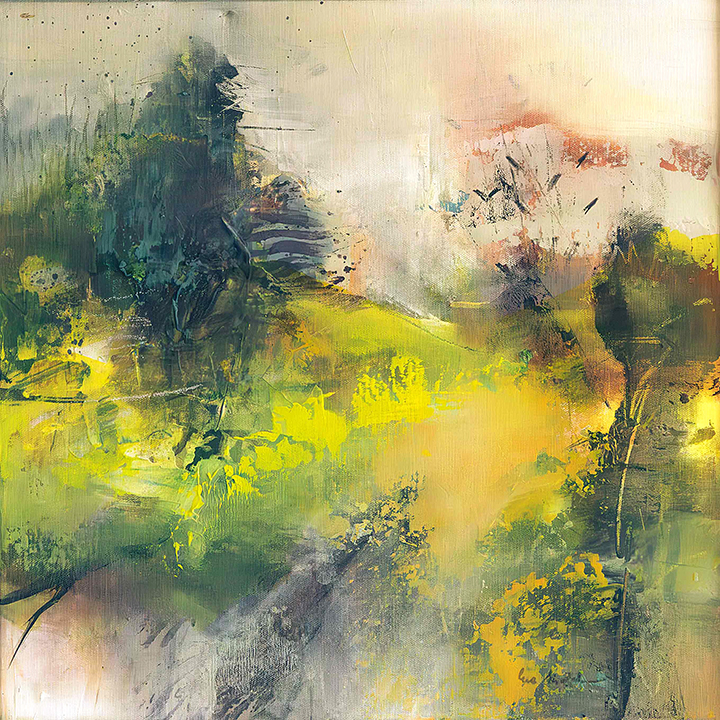
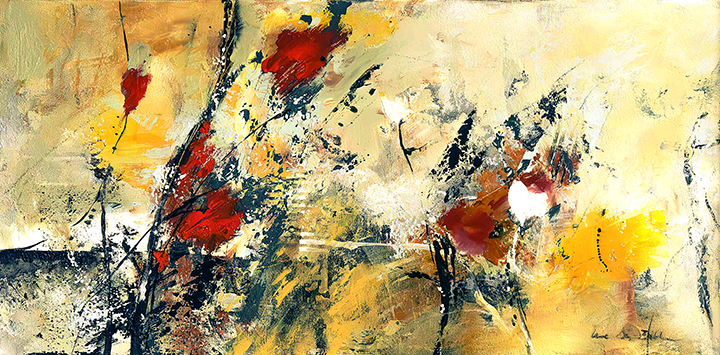
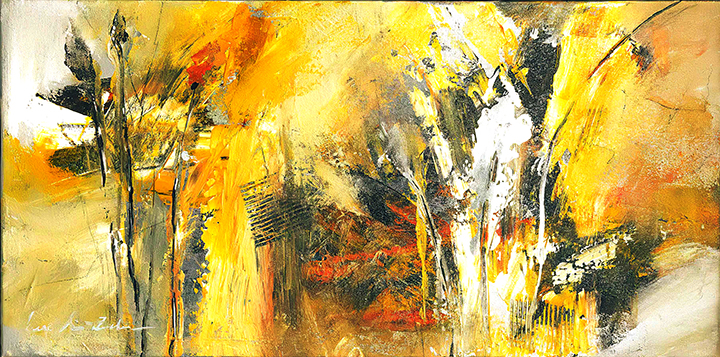
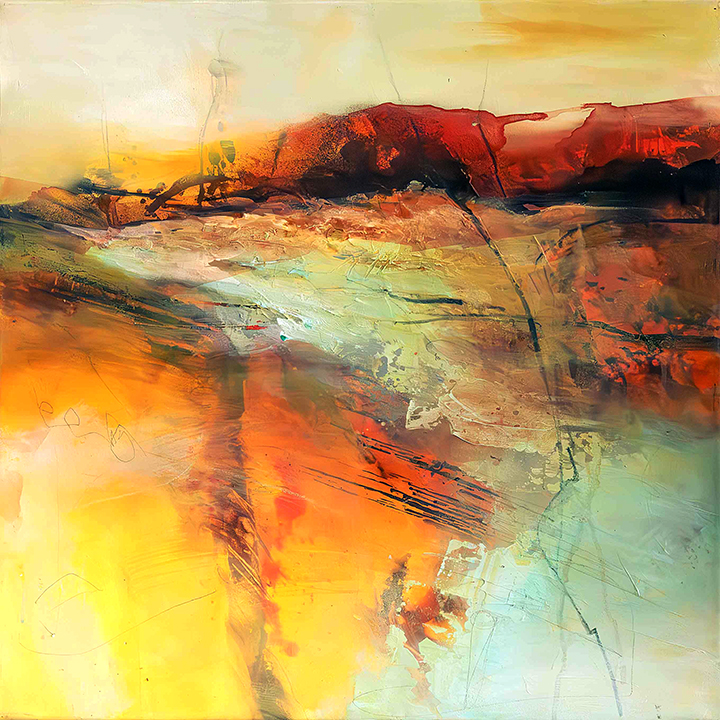
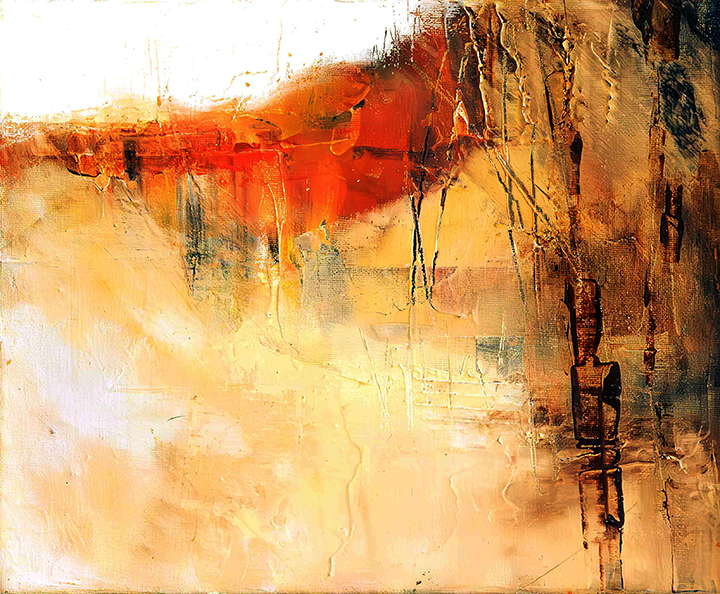
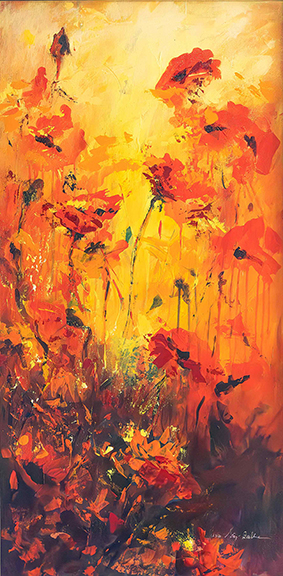
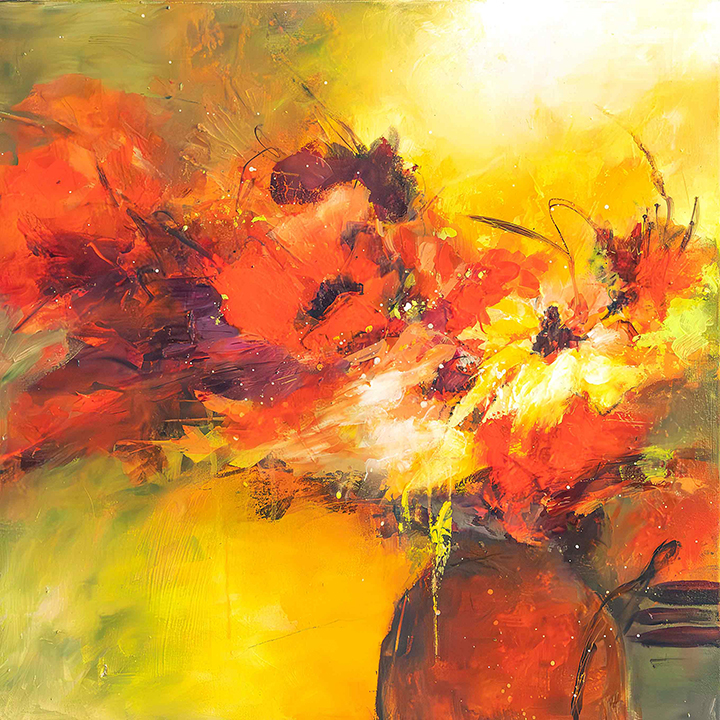
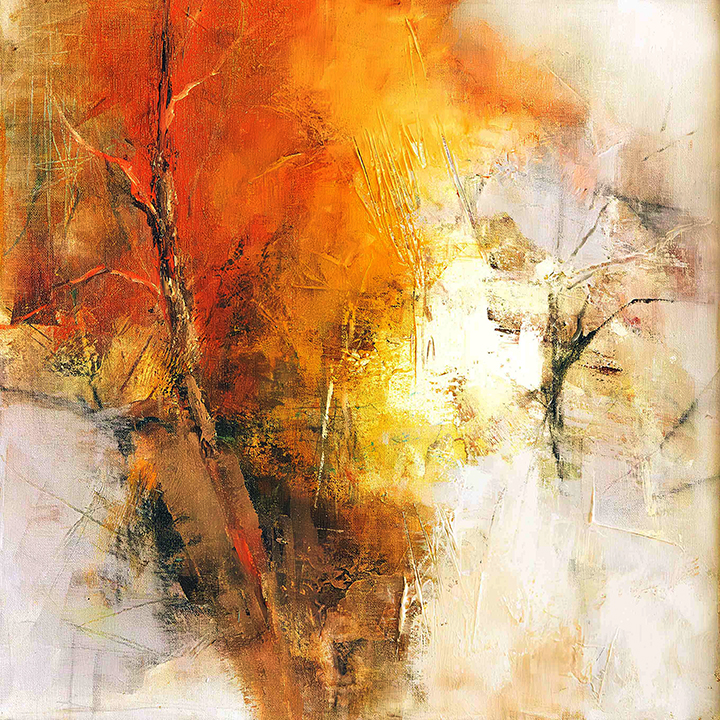
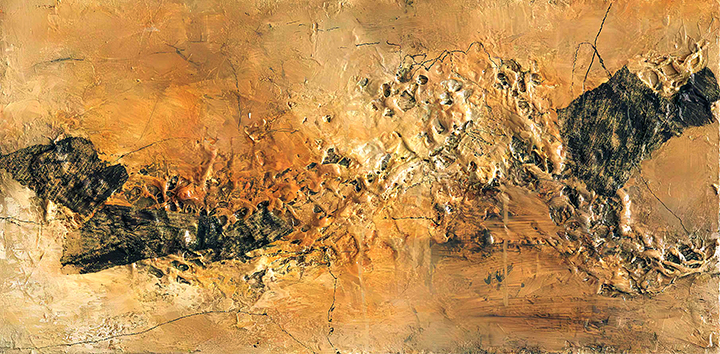
Eva Sim-Zabka loved life, people, and beauty. She loved dance and travel. She cherished the creative process, tuning into every rustle of her thoughts under the cover of night. She passed away in February 2024. She left behind her husband Irek and two children, Julia and Adrian. She left many emotions and colors encapsulated in her paintings. A gathering with Eva, her friends, and her vibrant artwork will take place on November 16, 2024, at her home in Leander, Texas. In the house with an endless view, where she could observe sunrises and sunsets, where she found peace and a place for meditation. In the house that embraced her with solitude when she needed loneliness to prepare for the longest journey of life…
I love life itself and the surprises it brings – said Eva. – I am inspired by people who share their deepest dreams, problems, and ideas. I am fascinated by human relationships. I perceive the world through colors, moods, changing lines, and shapes. Painting… is participating in the creative process that is natural to all of us.
*
*
Creative self-expression is as necessary to us as food or sleep. People who have suppressed the process of expressing what they feel become 'dead’, despondent, often fall into depression, and go through life without a sense of satisfaction and fulfillment. We are shaped to create. Writing, painting, art, dance, building a business—not for publicity or fame but to express one’s personality and showcase talent—are the gifts of our life.
*
*
*
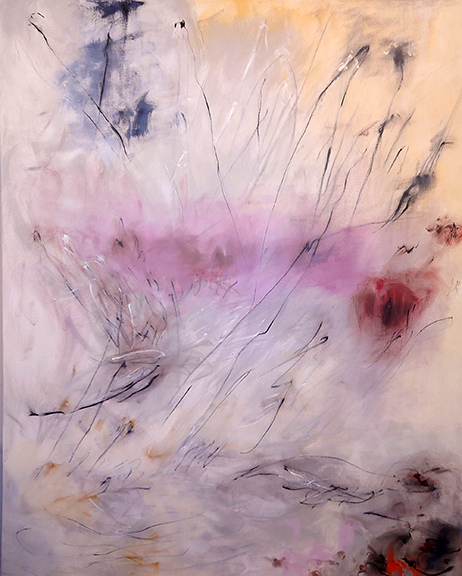
I paint intuitively. I never have a plan. I simply start playing with colors, shapes, lines, waiting for something to begin happening—something that fascinates me, draws me in, stimulates my imagination and inspiration. Sooner rather than later, it always does. And then the sense of time and place disappears. Nothing exists except me, the brush, and the canvas. Everything that emerges on the canvas comes from my imagination. I move colors and shapes around and watch what comes of it, what my intuition tells me. My goal is to capture a mood and feeling. Even if I paint nature or a person, I won’t rest until I feel sufficiently saturated with emotions.
*
*
I wait for inspiration, and if it doesn’t come within the first 30 minutes, I accept that it won’t come at all. I never try to 'finish’ one shape before beginning the next. Sometimes I don’t know whether I am creating art, or art is creating me. It’s a process of energy exchange.
*
*
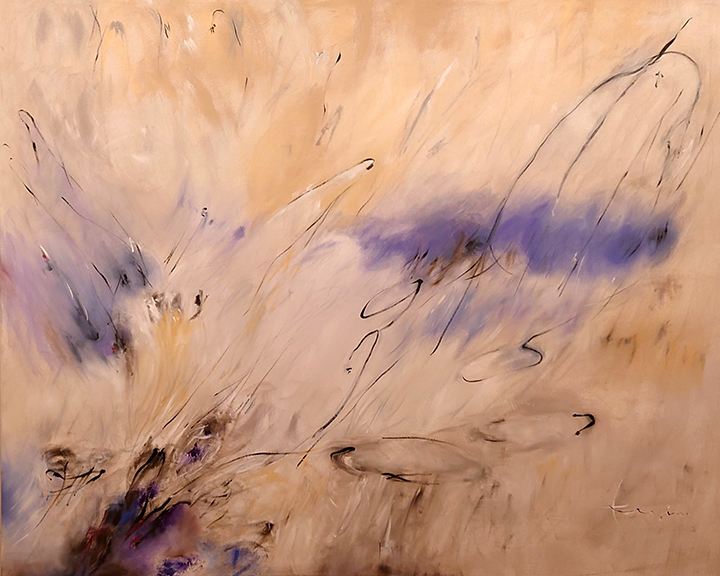
I love when the world sleeps, my hands are dirty with paint, and everything that has appeared on the canvas begins to live. I like to paint at night because then it’s easier for me to transition from everyday life to magic. I’m fascinated by large canvases. I struggle with small ones; it’s hard for me to express myself. The bigger the canvas, the more energy I feel inside me. I don’t analyze what I paint; I don’t know if it’s good or bad. I know that’s not what matters to me. Painting is not work for me but play.
*
*
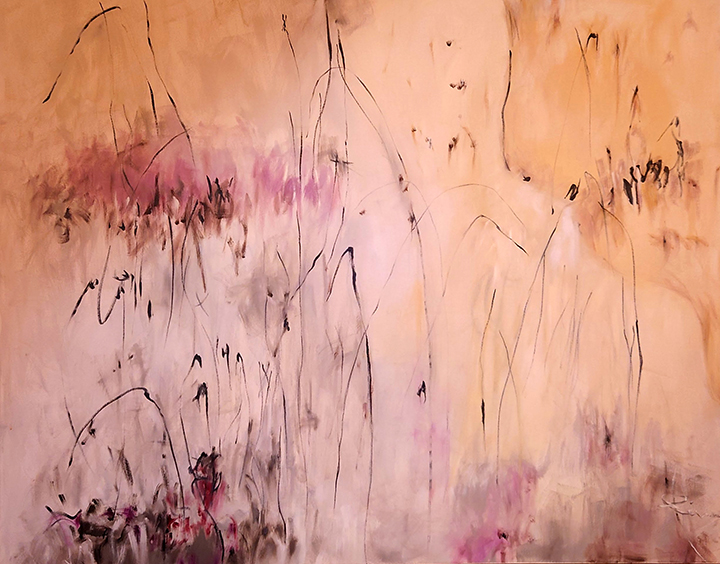
I don’t have a favorite theme. Themes come and go on their own, depending on what’s happening in my life, whom I’m talking to, what I’ve observed, where I am. For a while, I painted women; I wanted to capture their beauty, strength, fragility, charm. Then flowers came to me—meadows full of colors and the sound of the wind. I couldn’t help myself; I had to paint them. Lately, Polish poppies are with me. I don’t know where they came from or why poppies, but they reside somewhere within me. Life has taught me not to ask too many questions but to work with what is inside me. Sometimes there’s only abstraction and color. I like to play, laugh, dance, and experiment. And I want to pour all of that onto the canvas.
*
*
I never wanted to become a famous painter. I didn’t even intend to exhibit my works. I painted for myself. But I am happy when I see that my paintings move people, when I hear that they are fresh, unique, colorful, spontaneous, loaded with emotions. I don’t want to permanently tie myself to any gallery because such cooperation is often associated with deadlines and stress. And I like freedom. I nurture what made me start painting… the need to show the world as I see it with my heart and spirit, the need to share what moves and inspires me—the freshness of life, captured moments, and that elusive 'something’.
Ewa Sim-Zabka kochała życie, ludzi i piękno. Kochała taniec i podróże. Kochała proces tworzenia, wczuwając się w każdy szelest swoich myśli pod osłoną nocy. Odeszła w lutym 2024 r. Pozostawiła męża Irka i dwoje dzieci Julię i Adriana. Pozostawiła po sobie wiele emocji i kolorów zaklętych w obrazach. Spotkanie z Ewą, jej przyjaciółmi oraz tętniącym życiem malarstwem, odbędzie się 16 listopada 2024 r. w jej domu w Leander w Teksasie. W domu z niekończącym się widokiem, w którym mogła obserwować wschody i zachody słońca, gdzie znalazła spokój i miejsce na medytację. W domu, który otoczył ją ramieniem odosobnienia, kiedy potrzebowała samotności, aby przygotować się na najdalszą podróż życia…
Uwielbiam życie samo w sobie i niespodzianki, które ze sobą niesie – mówiła Ewa. Inspirują mnie ludzie, którzy dzielą się swoimi najgłębszymi marzeniami, problemami, pomysłami. Fascynują mnie więzi międzyludzkie. Odbieram świat poprzez kolory, nastroje, zmieniające się linie i kształty. Malowanie… to branie udziału w procesie twórczym, który jest naturalny dla nas wszystkich.
*
*
Kreatywne wyrażanie siebie jest nam potrzebne tak jak jedzenie, czy sen. Ludzie, którzy stłamsili w sobie proces wyrażania tego co czują, stają się „martwi”, przygnębieni, często wpadają w depresję, przechodzą przez życie bez poczucia satysfakcji i spełnienia. Jesteśmy tak ukształtowani, aby tworzyć. Pisarstwo, malarstwo, sztuka, taniec, budowanie biznesu nie dla rozgłosu czy sławy, ale dla wyrażenia własnej osobowości i pokazania talentu, są darami naszego życia.
*
*
*
Maluję intuicyjnie. Nigdy nie mam planu. Po prostu zaczynam bawić się kolorami, kształtami, linią, czekam aż coś się zacznie dziać, coś mnie zafascynuje, wciągnie, pobudzi moją wyobraźnię i natchnienie. Zawsze szybciej niż później to się stanie. I wtedy znika poczucie czasu i miejsca. Nie istnieje nic oprócz mnie, pędzla i płótna. Wszystko, co powstaje na płótnie pochodzi z mojej wyobraźni. Przesuwam kolory, kształty i patrzę, co z tego wyniknie, co mi podpowiada moja intuicja. Moim celem jest uchwycenie nastroju i uczucia. Nawet jeśli maluję przyrodę lub człowieka, nie spocznę, dopóki nie poczuję wystarczającego nasycenia emocjami.
*
*
Czekam na natchnienie, a jeśli nie przyjdzie w ciągu pierwszych 30 minut, to znaczy, że już nie przyjdzie. Nigdy nie staram się „dokończyć” jednego kształtu, zanim zacznę następny. Czasami nie wiem, czy ja kreuję sztukę, czy też sztuka kreuje mnie. To taki proces wymiany energii.
*
*
Uwielbiam, kiedy świat śpi, moje ręce są brudne od farby, a wszystko co powstało na płótnie zaczyna żyć. Lubię malować w nocy, bo wtedy łatwiej mi przejść od codzienności do magii. Fascynują mnie duże płótna. Z małymi się męczę, trudno mi się wyrazić. Im większe płótno tym więcej czuję w sobie energii. Nie analizuję tego, co namaluję, nie wiem, czy jest dobre, czy złe. Wiem, że nie o to mi chodzi. Malowanie nie jest dla mnie pracą, lecz zabawą.
*
*
Nie mam ulubionej tematyki. Tematy przychodzą i odchodzą same, w zależności od tego co się dzieje w moim życiu, z kim rozmawiam, co zaobserwowałam, gdzie jestem. Przez jakiś czas malowałam kobiety, chciałam uchwycić ich piękno, siłę, kruchość, czar. Potem przyszły do mnie kwiaty, łąki pełne kolorów i szumu wiatru. Nie mogłam się opanować, musiałam je malować. Ostatnio są ze mną polskie maki. Nie wiem skąd przyszły, dlaczego maki, ale gdzieś we mnie tkwią. Życie mnie nauczyło, żeby nie zadawać zbyt wielu pytań, tylko pracować z tym co we mnie jest. Czasami jest tylko abstrakcja i kolor. Lubię się bawić, śmiać, tańczyć i eksperymentować. I to wszystko chcę przelać na płótno.
*
*
Nigdy nie chciałam zostać sławną malarką. Nawet nie miałam zamiaru wystawiać swoich prac. Malowałam dla siebie. Ale cieszę się, gdy widzę, że moje obrazy poruszają ludzi, gdy słyszę, że są fresh, unique, colorful, spontaneous, loaded with emotions. Nie chcę na stałe związywać się z żadną galerią, bo taka współpraca jest często związana z terminami i stresem. A ja lubię wolność. Pielęgnuję to, co spowodowało, że zaczęłam malować… potrzebę pokazania świata takiego, jak go widzę sercem i duchem, potrzebę dzielenia się tym, co mnie porusza i inspiruje – świeżość życia, zatrzymane chwile i to nieuchwytne „coś”.
*
*
*
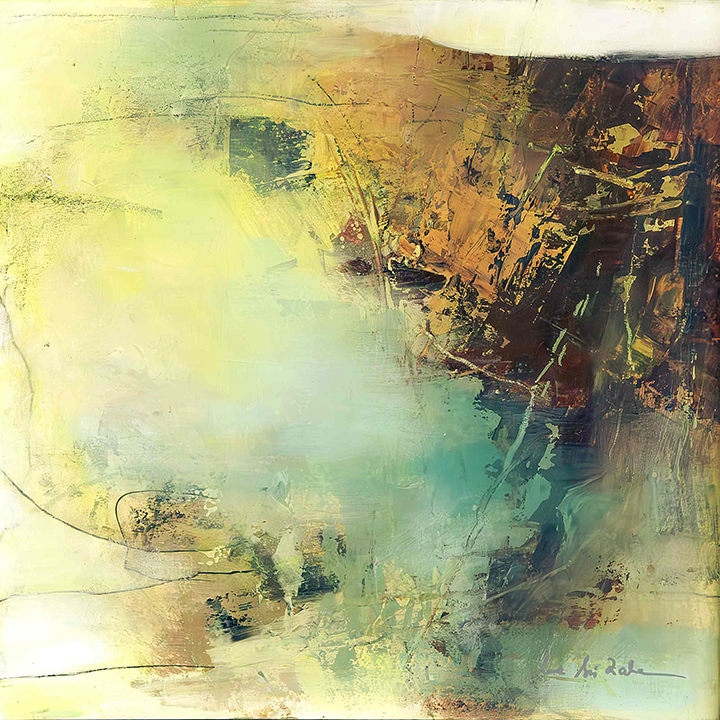
Malarstwo: Ewa Sim-Zabka, udostepnione dzięki uprzejmości Irka Zabki