Machulski and His “Vinci”: A Polish-Style Heist

„Vinci” – Press Materials

Juliusz Machulski has remained one of the most recognizable figures in Polish cinema for over four decades. A director, screenwriter, and producer, he is the author of films that both entertain and comment on reality. From the legendary Vabank and Sexmission, through Kingsajz and Kilerów 2-óch, to the more recent Vinci and Vinci 2, Machulski has consistently combined light, dynamic storytelling with an ironic view of the world.

His protagonists are often people who live on the border between law and transgression, and the director himself skillfully balances between comedy, crime, and the thriller genre. He knows how to create cinema in the middle ground — popular yet intelligent, with sharp dialogue and impeccable rhythm.

“Vinci” – A Classy Heist

The year is 2004. After a long break, Machulski returns to the genre in which he feels most at home — the heist story. Vinci is a film that could easily compete with Hollywood heist movies, were it not for the fact that its charm lies precisely in its Polish character.

The action unfolds in Kraków — a city that becomes one of the film’s main characters. It is here, within the walls of the Czartoryski Museum, that Leonardo da Vinci’s legendary Lady with an Ermine is kept — a masterpiece both priceless and steeped in myth. Two former partners, Robert “Cuma” Cumiński (Robert Więckiewicz) and Julian “Szerszeń” Wolniewicz (Borys Szyc), now stand on opposite sides of the law. One plans the heist; the other is determined to prevent it.

Their paths cross with Magda (Kamilla Baar), a student at the Academy of Fine Arts, who is commissioned to paint a copy of the masterpiece. It is art itself — its illusion, value, and power — that becomes the axis of the story.

Machulski guides the viewer through Kraków like through a labyrinth where past and present intertwine. On one side — the world of museums, conservators, and old masters. On the other — the streets of Nowa Huta, where romanticism clashes with the gritty reality of the criminal underworld.

„Vinci” – Press Materials

Cinema About Art — and About Illusions

Vinci is a film about illusions — both artistic and moral. Machulski asks: what defines the value of a work of art? Does the original matter more than the copy? And can a crime committed in the name of art ever be justified?

Machulski’s thieves are not brutal gangsters but gentlemen with principles. The heist becomes a kind of intellectual game. It’s not about money — it’s about the perfection of the plan and the thrill of outsmarting “the system.”

In this sense, Vinci recalls Machulski’s earlier Vabank — that film, too, was about revenge, but above all about finesse and style. Here, Machulski revisits his favorite motifs: friendship put to the test, loyalty, and a sense of honor in a world where such values have long lost their meaning.

It is no coincidence that the film was made at a time when Poland had just joined the European Union — a moment of transition, openness, and confrontation with a new reality. In this light, Vinci can be read as a metaphor for the passage from the era of romantic ideals to the era of calculation and profit.

„Vinci” – Press Materials

“Vinci 2” – A Return After Years

Twenty-one years later, Machulski returns to his characters. Vinci 2, which premiered in the summer of 2025, is one of the most anticipated comebacks in the history of Polish cinema.

Robert Więckiewicz once again plays Cuma — this time a man tired of life, living in Spain, far from the thrill and danger of his past. Yet peace doesn’t last long. When his former partner “Chudy” plans another heist in Kraków, Cuma is drawn back into a game whose stakes are not only a painting but also the past, friendship, and memory.

Machulski makes no effort to hide the irony: his heroes have aged along with the audience. They still try to “pull off” something in life, though the times have changed. Now, stealing takes place in a world of drones, surveillance cameras, artificial intelligence, and instant connectivity. In the old days, Cuma could rely on wit and intuition. In this new world, he needs technology — and a younger generation of accomplices.

Between Nostalgia and Modernity

Vinci 2 is not merely a continuation. It is a film about the passage of time and how reality shifts around us. Machulski, with characteristic distance, observes his protagonists as they attempt to find their place in an era they no longer fully understand.

We see here the balance so typical of his work — between nostalgia and irony. Once again, Kraków serves as the stage for the action, though its image has changed: now it is crowded, touristy, filled with ads and screens. Art has lost its aura of mystery — it has become part of the commercial flow.

And yet, Machulski still manages to capture that singular moment when a protagonist — despite the passing years — tries once more to “pull off his thing.” In this sense, Vinci 2 is not just a film about stealing a painting, but about reclaiming meaning.

„Vinci” – Press Materials

Art as Metaphor

In both parts of Vinci, the motif of art serves as the key. Leonardo da Vinci’s Lady with an Ermine becomes a symbol of perfection and beauty — something humanity endlessly strives to possess. Yet it is also a metaphor for the human longing for immortality.

With his characteristic sense of humor, Machulski shows that in a world where everything can be copied, true value lies not in the original, but in emotion. In this sense, his cinema also serves as a commentary on the contemporary era — one of artificial intelligence, deepfakes, replicas, and simulations.

Is Vinci 2 therefore a film about forgery? Yes, but in a far deeper sense. It reveals that memories, friendships, and even ideals can be false. Machulski doesn’t moralize — he simply smiles and says, “that’s just the way things are.”

Machulski and His Style

It is worth remembering that Juliusz Machulski is the filmmaker who shaped the language of modern Polish comedy. The son of actor Jan Machulski (the legendary Kwinto from Vabank), he studied filmmaking at the Łódź Film School and later in the United States. His debut film (Vabank, 1981) already demonstrated his ability to blend narrative elegance with wit and rhythm.

His films are crafted with meticulous attention to detail: pace, dialogue, music, and color all work together toward a unified effect. Vinci and Vinci 2 are no exception. In both, the editing is brisk, the set design realistic, and the dialogue sharp and witty. Machulski still has an ear for street language and an eye for perfect framing.

Prepared by Joanna Sokołowska-Gwizdka

20th Austin Polish Film Festival – Austin, Texas

As part of the 20th Austin Polish Film Festival, on Friday, November 7, we invite you to a special screening of two crime comedies directed by Juliusz Machulski – Vinci and Vinci 2.

A great time is guaranteed!

For more information, please visit our website:
www.austinpolishfilm.com


Machulski i jego „Vinci”, czyli heist po polsku

„Vinci”, materiały prasowe

Juliusz Machulski od ponad czterech dekad pozostaje jednym z najbardziej rozpoznawalnych twórców polskiego kina. Reżyser, scenarzysta, producent – autor filmów, które bawią, ale i komentują rzeczywistość. Od legendarnego Vabanku i Seksmisji, przez Kingsajz i Kilerów 2-óch, aż po współczesne Vinci i Vinci 2 – Machulski konsekwentnie łączy lekkość narracji z ironicznym spojrzeniem na świat.

Jego bohaterowie to często ludzie z pogranicza prawa i porządku, a sam reżyser z wyczuciem balansuje między komedią, kryminałem i filmem sensacyjnym. Potrafi stworzyć kino środka – popularne, ale inteligentne, z błyskotliwym dialogiem i doskonale poprowadzonym rytmem.

„Vinci” – kradzież z klasą

Rok 2004. Machulski wraca po latach do gatunku, w którym czuje się najlepiej – opowieści o skoku. Vinci to film, który mógłby spokojnie konkurować z hollywoodzkimi heist-movies, gdyby nie fakt, że jego urok tkwi właśnie w polskości.

Akcja rozgrywa się w Krakowie – mieście, które staje się jednym z bohaterów filmu. To tutaj, w murach Muzeum Czartoryskich, znajduje się legendarna Dama z gronostajem Leonarda da Vinci. Dzieło nie tylko bezcenne, ale i obrosłe mitami. Dwóch dawnych wspólników – Robert „Cuma” Cumiński (Robert Więckiewicz) i Julian „Szerszeń” Wolniewicz (Borys Szyc) – staje po przeciwnych stronach prawa. Jeden planuje skok, drugi – ma go udaremnić.

Na ich drodze pojawia się Magda (Kamilla Baar), studentka Akademii Sztuk Pięknych, która ma stworzyć kopię obrazu. To właśnie sztuka – jej iluzja, wartość i siła oddziaływania – staje się osią fabuły.

Machulski prowadzi widza po Krakowie niczym po labiryncie, w którym przeszłość miesza się ze współczesnością. Z jednej strony – świat muzeów, konserwatorów, dawnych mistrzów. Z drugiej – ulice Nowej Huty, zderzenie romantyzmu z realiami przestępczego półświatka.

„Vinci”, materiały prasowe

Kino o sztuce, czyli o złudzeniach

„Vinci” to film o złudzeniach – tych artystycznych i moralnych. Machulski pyta: czym jest wartość dzieła? Czy liczy się oryginał, czy kopia? Czy przestępstwo w imię sztuki może być usprawiedliwione?

Złodzieje Machulskiego to nie brutalni gangsterzy, lecz dżentelmeni z zasadami. Skok staje się rodzajem gry intelektualnej. Nie chodzi o pieniądze – chodzi o perfekcję planu i o to, by „system” dało się przechytrzyć.

W tym sensie Vinci przypomina wcześniejsze Vabank – tam również chodziło o zemstę, ale przede wszystkim o finezję i styl. Machulski wraca tu do swoich ulubionych motywów: przyjaźni wystawionej na próbę, lojalności i poczucia honoru w świecie, w którym te pojęcia dawno się zdewaluowały.

Nie bez znaczenia jest też fakt, że film powstał w czasach, gdy Polska dopiero co weszła do Unii Europejskiej – był to moment przełomu, otwarcia, ale i konfrontacji z nową rzeczywistością. W tym sensie Vinci można czytać jako metaforę przejścia: z epoki romantycznych ideałów w epokę kalkulacji i zysku.

„Vinci 2”, materiały prasowe

„Vinci 2” – powrót po latach

Dwadzieścia jeden lat później Machulski wraca do swoich bohaterów. Vinci 2, którego premiera odbyła się latem 2025 roku, to jeden z najbardziej oczekiwanych powrotów w historii polskiego kina.

Robert Więckiewicz znów wciela się w Cumę – tym razem zmęczonego życiem, mieszkającego w Hiszpanii, z dala od dawnych emocji i ryzyka. Spokój nie trwa jednak długo. Kiedy dawny partner „Chudy” organizuje kolejny skok w Krakowie, Cuma zostaje wciągnięty w grę, której stawką jest nie tylko obraz, lecz także przeszłość, przyjaźń i pamięć.

Machulski nie kryje ironii: jego bohaterowie zestarzeli się razem z widzami. Wciąż próbują „ugrać” coś z życia, choć czasy się zmieniły. Teraz kradnie się w świecie dronów, kamer, sztucznej inteligencji i błyskawicznego Internetu. W dawnym świecie Cuma mógł liczyć na spryt i intuicję. W nowym – potrzebna jest technologia i młodsze pokolenie wspólników.

Między nostalgią a nowoczesnością

Vinci 2 nie jest jedynie kontynuacją. To film o przemijaniu i o tym, jak zmienia się rzeczywistość wokół nas. Machulski z dystansem przygląda się bohaterom, którzy próbują odnaleźć się w epoce, której już nie rozumieją.

Widać tu charakterystyczny dla jego twórczości balans między nostalgią a ironią. Kraków znowu staje się sceną wydarzeń, ale tym razem jego obraz jest inny: zatłoczony, turystyczny, wypełniony reklamami i ekranami. Sztuka traci aurę tajemnicy – staje się częścią komercyjnego obiegu.

A jednak Machulski wciąż potrafi uchwycić ten szczególny moment, gdy bohater – mimo upływu czasu – jeszcze raz próbuje „zrobić swoje”. W tym sensie Vinci 2 to nie tylko film o kradzieży obrazu, ale o odzyskiwaniu sensu.

„Vinci 2”, materiały prasowe

Sztuka jako metafora

W obu częściach Vinci motyw sztuki jest kluczem. Obraz Leonarda da Vinci – Dama z gronostajem – to symbol doskonałości i piękna, które człowiek próbuje sobie przywłaszczyć. Ale też – metafora ludzkiego pragnienia nieśmiertelności.

Machulski, z właściwym sobie poczuciem humoru, pokazuje, że w świecie, gdzie wszystko można skopiować, prawdziwa wartość leży nie w oryginale, lecz w emocji. W tym sensie jego kino to również komentarz do współczesności – epoki sztucznej inteligencji, „deepfake’ów”, replik i symulacji.

Czy Vinci 2 jest więc filmem o fałszerstwie? Tak, ale w znacznie głębszym sensie. Pokazuje, że fałszywe mogą być wspomnienia, przyjaźnie, a nawet ideały. Machulski nie moralizuje – raczej z uśmiechem mówi: „takie są czasy”.

Machulski i jego styl

Warto przypomnieć, że Juliusz Machulski to twórca, który ukształtował język współczesnej polskiej komedii. Syn aktora Jana Machulskiego (legendarnego Kwinty z Vabanku), reżyser uczył się filmowego rzemiosła w Łódzkiej Szkole Filmowej i w USA. Już jego debiut (Vabank, 1981) pokazał, że potrafi połączyć elegancję narracji z żartem i rytmem.

Jego filmy są przemyślane w każdym detalu: tempo, dialog, muzyka, kolorystyka – wszystko pracuje na efekt. Vinci i Vinci 2 nie są tu wyjątkiem. W obu częściach montaż jest szybki, scenografia realistyczna, a dialogi – błyskotliwe. Machulski wciąż ma ucho do języka ulicy i oko do kompozycji kadru.

Oprac. Joanna Sokołowska-Gwizdka

20. Festiwal Polskich Filmów w Austin, Teksas

W ramach 20. Festiwalu Polskich Filmów w Austin, w piątek, 7 listopada zapraszamy na pokaz dwóch komedii kryminalnych w ręż. Juliusza Machulskiego „Vinci” i „Vinci 2”. Gwarantujemy dobrą zabawę.

Więcej informacji na naszej stronie Internetowej.

https://www.austinpolishfilm.com/


Franz Kafka. A Prophet of Our Times.

Idan Weiss as Franz Kafka in Agnieszka Holland’s film, photo: Marlene Film Production

*

Franz Kafka. A surname that became an adjective. The Kafkaesque world means one that is absurd, dark, without escape. A bureaucratic labyrinth in which a human being faces invisible power, guilt without cause, and fate without justification. Yet Kafka, although so deeply embedded in the collective imagination of the 20th and 21st centuries, was a surprisingly intimate, almost quiet writer. He wrote mostly at night, alone, in pauses between his duties as an insurance clerk in Prague. He wanted his works destroyed. He never imagined that his voice would become one of the most important in the history of literature.

Today Kafka is part of the global cultural canon — not because of loud grandeur, but thanks to the subtle, pulsing undercurrent of anxiety that he captured with extraordinary intuition.

A Man Under the Pressure of Existence

Franz Kafka was born in 1883 in multicultural Prague — a city where languages and cultures intersected: German, Czech, and Jewish. He wrote in German, though he grew up in a Czech environment, which from the outset placed him at the threshold of identities, belonging, and place. This inability to fully root himself, the inner split, and the constant sense of estrangement would later become a fundamental tone of his writing.

His relationship with his father — Hermann Kafka, a strict, domineering merchant full of expectations — was a source of deep suffering and the inspiration for one of his most important texts, Letter to His Father. In it, we encounter the drama of a crushed individual who cannot find a voice against overwhelming authority — a central motif that echoes through all of his prose.

Kafka is a writer of existential anxiety — but anxiety transformed into art, into precise, cool, almost surgical language.

Idan Weiss as Franz Kafka in Agnieszka Holland’s film, photo: Marlene Film Production

Worlds Without Exit

Although his body of work is not extensive in volume, each of Kafka’s texts has become a point of reference for generations of readers, philosophers, and artists.

His most important novels are:

“The Trial” (1925) — the story of Josef K., who is suddenly put on trial without being told the nature of his supposed crime. A multilayered metaphor for bureaucracy, alienation, and helplessness in the face of a faceless system.

“The Castle” (1926) — the tale of a man attempting to gain access to a mysterious authority — the Castle, whose doors never truly open.

“America” (1927) — a vision of the New World as a realm of chaos and loss of control.

To these one may add numerous short stories, among them “The Metamorphosis,” “In the Penal Colony,” “A Hunger Artist,” “The Judgment,” and “The Country Doctor” — works that complete his panorama of loneliness, fear, and the absurdity of everyday existence.

Kafka’s prose is clear, almost ascetic. His sentences are dense with meaning yet stripped of ornament. That starkness is precisely where the power lies — a pared-down form that reveals the essence: the vulnerable human being confronted with a world he cannot comprehend.

Idan Weiss as Franz Kafka in Agnieszka Holland’s film, photo: Marlene Film Production

The Culture of the 20th and 21st Century in Kafka’s Shadow

Kafka published little during his lifetime. His works were meant to be burned according to his will. They were saved by his friend Max Brod — against the author’s explicit wishes. It remains one of the most paradoxical “betrayals” in literary history, thanks to which the world came to know the work of the Prague visionary.

Today, Kafka’s influence is undeniable.
In literature — from Albert Camus to José Saramago.
In philosophy — from existentialism to Hannah Arendt’s reflections on totalitarianism.
In mass culture — in film, theatre, visual arts, and even contemporary video games.

What is most extraordinary, however, is how Kafkaesque our era has become:

  • Bureaucratic systems in which a clash with “the regulations” becomes a metaphysical experience.
  • A social sense of guilt and control — from media scrutiny to digital surveillance.
  • Difficulties in defining one’s identity in an age of migration and digital existence.
  • Fear of a seemingly rational world that brings with it absurdity and helplessness.

Kafka does not describe the past — he diagnoses the present.

Idan Weiss as Franz Kafka in Agnieszka Holland’s film, photo: Marlene Film Production

Why Is Franz Kafka Still Relevant Today?

Because Kafka did not offer answers. He offered questions — questions that remain with us:

What does it mean to be human in a world that cannot be fully understood?

Can guilt exist without wrongdoing?

Are we truly free — or only persuaded to believe we are?

His characters — nameless or identified only by an initial, trapped in an eternal state of waiting — are us. Inhabitants of a world that demands we understand its rules even though we cannot grasp them.

Franz Kafka died in 1924, at the age of only 40. A silent genius who did not believe in his own voice. And yet that voice still resonates today — in every search for meaning, in every confrontation with a system stronger than the individual, in every human fear before the infinite.

Prepared by Joanna Sokołowska-Gwizdka

20th Austin Polish Film Festival, Texas

As part of the 20th Austin Polish Film Festival, audiences will have the opportunity to see Franz, directed by Agnieszka Holland — Poland’s official submission for the Academy Awards — during the Closing Gala on November 9, 2025.

More information is available on our website:

www.austinpolishfilm.com


Franz Kafka. Prorok naszych czasów.

Idan Weiss jako Franz Kafka w filmie Agnieszki Holland, fot. Marlene Film Production

Franz Kafka. Nazwisko, które stało się przymiotnikiem. Kafkowski świat oznacza świat absurdalny, mroczny, bez wyjścia. Biurokratyczne labirynty, w których człowiek mierzy się z niewidzialną władzą, winą bez przyczyny, losem bez uzasadnienia. Ale Kafka, choć tak mocno obecny w wyobraźni zbiorowej XX i XXI wieku, był pisarzem zaskakująco intymnym, wręcz cichym. Pisał głównie nocą, w samotności, w przerwach od pracy urzędniczej w Towarzystwie Ubezpieczeniowym w Pradze. Chciał swoje dzieła zniszczyć. Nie przypuszczał, że jego głos zostanie jednym z najważniejszych w historii literatury.

Dziś Kafka należy do kanonu światowej kultury — jednak nie dzięki hałaśliwej wielkości, lecz poprzez pulsujący podskórny niepokój, który uchwycił z niezwykłą intuicją.

Człowiek pod presją istnienia

Franz Kafka urodził się w 1883 roku w wielokulturowej Pradze – w mieście, w którym przenikały się języki i kultury: niemiecka, czeska i żydowska. Sam pisał po niemiecku, choć dorastał w środowisku czeskim, co już od początku ustawiło go na granicy tożsamości, miejsca i przynależności. Ta niemożność pełnego zakorzenienia, wewnętrzne rozdarcie i nieustanne poczucie obcości stanie się później kluczowym tonem jego twórczości.

Jego relacja z ojcem — surowym, dominującym, pełnym oczekiwań kupcem Hermanem Kafką — była źródłem cierpienia i inspiracją do jednego z najważniejszych tekstów pisarza, Listu do ojca. W nim pojawia się dramat jednostki stłamszonej, która nie potrafi znaleźć głosu wobec siły — motyw przewodni całej jego prozy.

Kafka to pisarz egzystencjalnego lęku — ale lęku przetworzonego w sztukę, w słowa precyzyjne, chłodne, niemal chirurgiczne.

Idan Weiss jako Franz Kafka w filmie Agnieszki Holland, fot. Marlene Film Production

Światy, z których nie ma wyjścia

Choć jego dorobek nie jest objętościowo imponujący, każde dzieło stało się punktem odniesienia dla kolejnych pokoleń czytelników, filozofów, artystów.

Najważniejsze powiesci Kafki to:

„Proces” (1925) – historia Józefa K., który zostaje postawiony w stan oskarżenia bez wyjaśnienia winy. Wielopiętrowa metafora biurokracji, alienacji i bezradności wobec systemu.

„Zamek” (1926) – opowieść o człowieku próbującym uzyskać dostęp do tajemniczej władzy — zamku, do którego drzwi nigdy się nie otwierają.

„Ameryka” (1927) – wizja Nowego Świata jako miejsca chaosu i utraty kontroli.

Do tego liczne opowiadania, m.in. „Przemiana”, „Kolonia karna”, „Głodomór”, „Wyrok”, „Lekarz wiejski”, które dopełniają jego panoramę samotności, strachu i absurdu codzienności.

Kafka pisał prozą klarowną, niemal ascetyczną. Jego zdania są gęste od znaczeń, lecz pozbawione ornamentu. W tej surowości tkwi siła – odarta z ozdobników forma pozwala czytelnikowi zobaczyć sedno: bezbronnego człowieka wobec świata, którego nie rozumie.

Idan Weiss jako Franz Kafka w filmie Agnieszki Holland, fot. Marlene Film Production

Kultura XX i XXI wieku w cieniu Kafki

Kafka nie publikował wiele za życia. Jego dzieła miały zostać spalone zgodnie z testamentem. Uratował je przyjaciel, Max Brod — wbrew woli autora. To jedna z największych paradoksalnych „zdrad” w historii literatury, dzięki której świat poznał twórczość praskiego wizjonera.

Dziś wpływ Kafki jest niepodważalny. W literaturze — od Alberta Camusa po José Saramago. W filozofii — od egzystencjalizmu po prace Hannah Arendt o totalitaryzmie. W kulturze masowej — w filmie, teatrze, grafice, a nawet współczesnych grach komputerowych.

Najbardziej niezwykłe jest jednak to, jak kafkowskie stały się nasze czasy:

Systemy biurokratyczne, w których zderzenie z „regulaminem” staje się metafizycznym doświadczeniem.

Społeczne poczucie winy i kontroli — od mediów po kontrolowanie nas przez systemy cyfrowe.

Trudności z odnalezieniem swojej tożsamości w epoce migracji i cyfrowego życia.

Lęk przed światem pozornie racjonalnym, który niesie absurd i bezradność.

Kafka nie opisuje przeszłości — on diagnozuje teraźniejszość.

Idan Weiss jako Franz Kafka w filmie Agnieszki Holland, fot. Marlene Film Production

Dlaczego Franz Kafka jest aktualny do dziś?

Bo Kafka nie dawał odpowiedzi. Dawał pytania, które nadal są z nami:

Co oznacza być człowiekiem w świecie, którego nie da się w pełni zrozumieć?

Czy wina może istnieć bez winy?

Czy jesteśmy wolni — czy tylko wydaje nam się, że jesteśmy?

Jego bohaterowie — bez imion lub z inicjałem, w wiecznym stanie oczekiwania — to my. Mieszkańcy świata, który wymaga od nas zrozumienia zasad, których nie rozumiemy.

Franz Kafka zmarł w 1924 roku, w wieku zaledwie 40 lat. Milczący geniusz, który nie wierzył w swój własny głos. A jednak ten głos rozbrzmiewa do dziś — w każdym pytaniu o sens, w każdym zetknięciu z systemem silniejszym niż jednostka, w każdym ludzkim strachu przed nieskończonym.

Oprac. Joanna Sokołowska-Gwizdka

20. Festiwal Polskich Filmów w Austin, Teksas

W ramach 20. Festiwalu Polskich Filmów w Austin, będzie można zobaczyć film „Franz”, w reż. Agnieszki Holland – polski kandydat do Oskara, podczas Gali zamknięcia, 9 listopada 2025.

Więcej informacji na naszej stronie Internetowej.

https://www.austinpolishfilm.com/


The True Chopin

Reżyser Michał Kwieciński, fot. Bożena Rożek

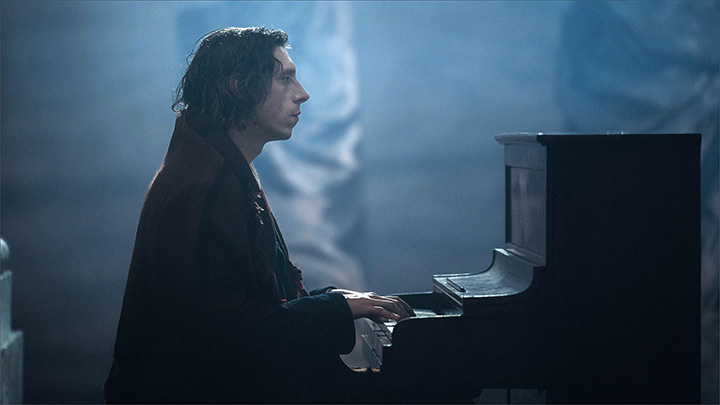
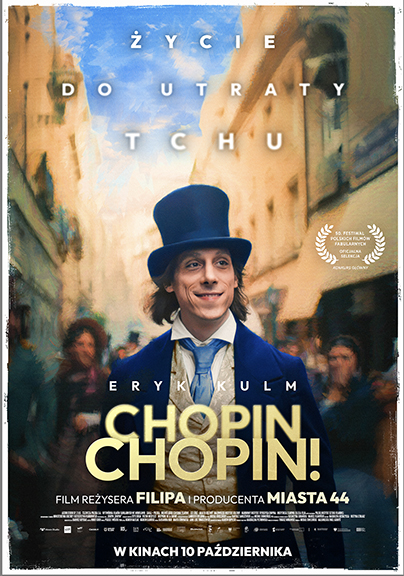
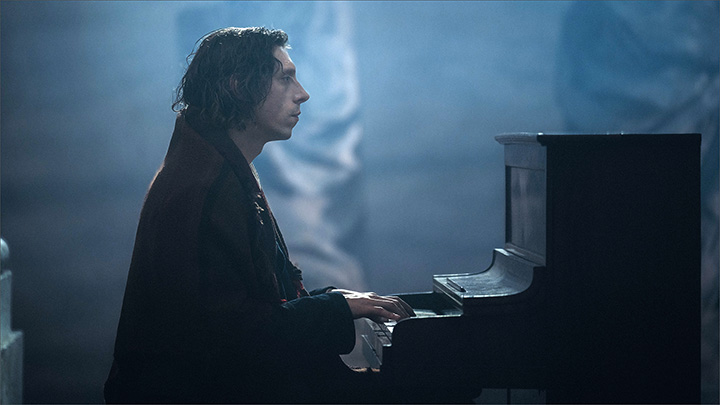
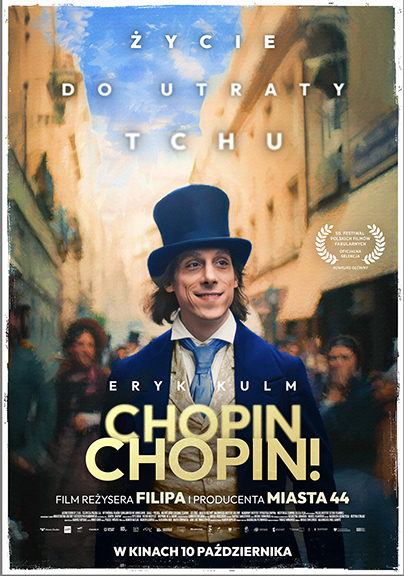
Michał Kwieciński’s new film Chopin, Chopin! has stirred a wave of emotions and discussions in Poland. For some, it is a groundbreaking work in the way it portrays the composer; for others – a controversial one. The director departs from the romantic myth of the “suffering poet of the piano” and instead shows a living, energetic man struggling with illness, fame, and his own genius.

Joanna Sokołowska-Gwizdka talks with the director about the film, its origins, and the Chopin we have never known.

***

Joanna Sokołowska-Gwizdka:
The film „Chopin, Chopin!” made a profound impression on me. It presents a completely different Chopin from the one we know in our culture. It is not a biography in the classical sense – it is a film about the process of saying farewell to life, about the struggle of genius with the passing moment, about creativity that grants immortality. Was this your intention from the very beginning?

Michał Kwieciński:
Yes. From the very beginning, I wanted Chopin to be a universal symbol – the embodiment of the creator and the genius. I did not personally know many geniuses, but based on his letters and on the literature, I came to understand that Chopin truly was one. My main inspiration was Ferdinand Hoesick’s four-volume biography Chopin. Life and Works. It is a brilliant scholarly study, published at the beginning of the 20th century, based on rich literature and 19th-century sources. After reading it, most later books seemed to me trivial, failing to capture Chopin as he appears in Hoesick’s work. That is why I wanted to portray our great composer in a way that, in my view, comes closest to the truth.

Joanna Sokołowska-Gwizdka:
So you devoted a great deal of time to preparation and to studying the literature from Chopin’s era.

Michał Kwieciński:
For more than six months, I read letters, documents, and memoirs. I know French, so I could access the originals—many of them referenced by Hoesick. Among other things, I read George Sand’s letters to Wojciech Grzymała, which revealed what plans she had for Chopin. Over time, my perception of Chopin changed completely—his patriotism, his illness, his relationships with people. I assumed that letters do not lie.

Joanna Sokołowska-Gwizdka:
I noticed that some quotations from the letters are almost literally transferred onto the screen.

Michał Kwieciński:
I tried to stay true to the sources. For instance, in the scene where Chopin receives a letter from his favorite student, Carl Filtsch, the words spoken are almost exactly the ones that were actually written. Viewers might think that many scenes were invented for the film, but wherever possible, I clung tightly to historical truth.

Still from the film „Chopin, Chopin!„, photo by Jarosław Sosiński

Joanna Sokołowska-Gwizdka:
Whose letters provide the most detailed insights into Chopin’s everyday life?

Michał Kwieciński:
You should read the letters of his student, Friederike Müller. She came to him for lessons and then wrote forty-page letters to her aunts, describing each lesson in minute detail. She must have watched him very closely, because she even notes how Chopin “bent his hand” or “spat into the fireplace.” She was a person who practically obsessed over him—today we would call her a stalker.

Joanna Sokołowska-Gwizdka:
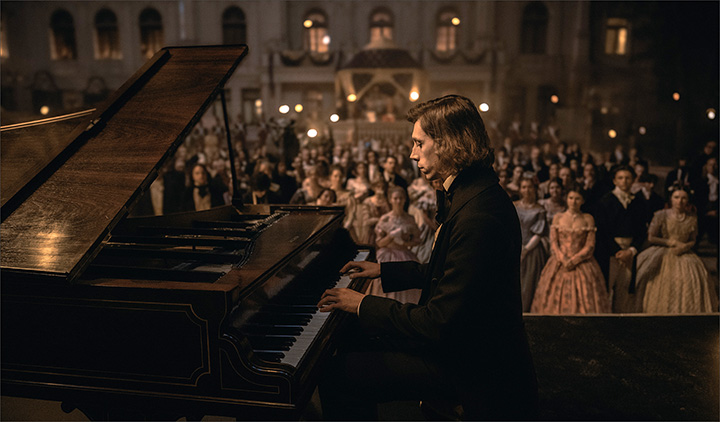
In his book The Purgatory of Fame: Chopin and His Paris, Piotr Witt describes the composer’s life before his spectacular success. He shows that Chopin’s Paris debut did not, as is often claimed, take place immediately in the prestigious Pleyel Hall, but earlier, at the Palace of the Society of Friends of the Arts, known as the Hôtel de Monaco. In your film, however, we see Chopin at the very beginning riding to the Pleyel Hall, surrounded by a crowd of admirers.

Michał Kwieciński:
I wanted to show Chopin right away as a celebrity. We don’t know whether he enjoyed that—I think he would rather not have been a servant to the crowds. Fame may have been a burden to him. My goal, however, was not to reconstruct the facts of his life but to reach into his psyche. In many places, I deliberately abandoned literal accuracy if it did not serve to express what he might have felt.

For example, in Mallorca—I knew it was raining heavily, that the owner expelled them from the villa when he learned of Chopin’s tuberculosis, and that they took refuge in the abandoned Carthusian monastery in Valldemossa. These facts helped me depict his state of mind. But I did not include the thread of George Sand’s children or her conflict with them, because I wanted to focus on the emotions and experiences that influenced Chopin’s decisions.

Still from the film „Chopin, Chopin!„, photo by Jarosław Sosiński

Joanna Sokołowska-Gwizdka:
When I was a representative of the Chopin Festival in Nohant, France, I often visited George Sand’s house. Chopin’s presence could still be felt there. The soundproofed door to his room has been preserved—he was often nervous and dissatisfied with what he composed. He would strike the keys, shout, throw himself on the floor. That is how people remembered him—the household couldn’t sleep.

Michał Kwieciński:
There is also a scene of creative torment in the film. Paris is in the grip of a cholera epidemic; people are terrified, and the sounds coming from Chopin’s apartment become increasingly unbearable. Finally, someone shouts to him: “Stop playing already! You are unbearable!”

Joanna Sokołowska-Gwizdka:
In Nohant, recipes from George Sand’s time have survived. We know that Chopin was on a special diet—he ate light dishes; his favorite meals were pullet and rice stew. This also shapes our image—we tend to imagine Chopin as a frail, sickly, withdrawn man. But your Chopin is not like that.

Michał Kwieciński:
I was surprised to learn that Chopin walked very quickly. That contradicts the myth of the delicate artist barely dragging his feet. He couldn’t have moved slowly, since his contemporaries said he loved to joke around, did excellent voice imitations, was sociable, and returned from night outings at ten in the morning. All those “soirées” fascinated him. In the film, he is therefore a lively, energetic man.

Joanna Sokołowska-Gwizdka:
I always thought Chopin was an introvert, withdrawn, spending long hours at the piano.

Michał Kwieciński:
I think he was an introvert—but an introvert often plays the role of an extrovert, not wanting to be seen as closed off. An introvert isn’t necessarily a recluse—he can be the soul of the company, only showing a different face to the world.

Still from the film „Chopin, Chopin!„, photo by Jarosław Sosiński

Joanna Sokołowska-Gwizdka:
The film is set in nineteenth-century Paris. We see many social and cultural details, the richness of costumes, and magnificent sets. What was the work on this historical layer like?

Michał Kwieciński:
The film was prepared with great care—we worked on it meticulously for a year and a half. Modern Paris no longer resembles the nineteenth-century city, so we filmed in Bordeaux instead. That city still looks the way Paris did in Chopin’s time—gray, stone streets, old townhouses, and the atmosphere of that era. It’s no surprise that many films seeking to capture the spirit of nineteenth-century Paris are shot there.

Joanna Sokołowska-Gwizdka:
For me, „Chopin, Chopin!” is one of the best biographical films I’ve ever seen. It’s deeply human and authentic—each of us can find a part of ourselves in it. The film’s Chopin evokes compassion as we witness his dramatic struggle for immortality, for capturing every fleeting moment in music. Why, then, do you think the film has caused such controversy?

Michał Kwieciński:
Probably because viewers expect a typical biography, whereas this is a psychological drama. When I attend screenings, I always step onto the stage and say: “Let go of your own Chopin.” Each of us carries an image of him—from school, from trips to Żelazowa Wola, from concerts. That’s why it’s important to encourage audiences not to approach the film defensively, but simply to let themselves be immersed in it.

20th Austin Polish Film Festival, Texas
As part of the 20th Austin Polish Film Festival, the film Chopin, Chopin! will be screened during the Opening Gala on November 2, 2025.
More information is available on our website:

https://www.austinpolishfilm.com/


Chopin prawdziwy

Reżyser Michał Kwieciński, fot. Bożena Rożek

Nowy film Michała Kwiecińskiego Chopin, Chopin! wywołał w Polsce falę emocji i dyskusji. Dla jednych to dzieło przełomowe w sposobie ukazania postaci kompozytora, dla innych – kontrowersyjne. Reżyser odchodzi od romantycznego mitu „cierpiącego poety fortepianu” i pokazuje człowieka żywego, pełnego energii, zmagającego się z chorobą, sławą i własnym geniuszem.

Z reżyserem o filmie, jego genezie i o Chopinie, jakiego nie znaliśmy – rozmawia Joanna Sokołowska-Gwizdka.

***

Joanna Sokołowska-Gwizdka:
Film Chopin, Chopin! zrobił na mnie ogromne wrażenie. Pokazuje zupełnie innego Chopina niż ten, który funkcjonuje w naszej kulturze. Nie jest to biografia w klasycznym sensie – to film o procesie żegnania się z życiem, o zmaganiu się geniuszu z uciekającą chwilą, o twórczości, która daje nieśmiertelność. Czy taki był Pana zamysł od początku?

Michał Kwieciński:
Tak. Od początku chciałem, by Chopin był symbolem uniwersalnym – uosobieniem twórcy i geniusza. Wprawdzie nie znałem osobiście wielu geniuszy, ale na podstawie listów i literatury zrozumiałem, że Chopin właśnie nim był. Zainspirowała mnie głównie czterotomowa biografia Ferdynanda Hoesicka Chopin. Życie i twórczość. To genialne, naukowe opracowanie wydane na początku XX wieku, oparte na bogatej literaturze i XIX-wiecznych źródłach. Po jej lekturze większość późniejszych książek wydała mi się banalna, nieoddająca Chopina takiego, jakim jawi się u Hoesicka. Dlatego chciałem pokazać naszego wielkiego twórcę w sposób, który – moim zdaniem – jest najbliższy prawdzie.

Joanna Sokołowska-Gwizdka:
Poświęcił Pan zatem wiele czasu na przygotowania i zgłębianie literatury z czasów Chopina.

Michał Kwieciński:
Przez ponad sześć miesięcy czytałem listy, dokumenty, wspomnienia. Znam francuski, więc sięgałem po oryginały, w dużej części wskazane przez Hoesicka. Czytałem między innymi listy George Sand do Wojciecha Grzymały, z których wynikało, jakie miała wobec Chopina plany. Z czasem całkowicie zmieniło się moje wyobrażenie o Chopinie – o jego patriotyzmie, chorobie, relacjach z ludźmi. Wyszedłem z założenia, że listy nie kłamią.

Joanna Sokołowska-Gwizdka:
Zauważyłam, że niektóre cytaty z listów są niemal dosłownie przeniesione na ekran.

Michał Kwieciński:
Starałem się być wierny źródłom. Na przykład w scenie, gdy Chopin dostaje list od swojego ulubionego ucznia Carla Filtscha, pojawiają się niemal dokładne słowa, które wtedy rzeczywiście padły. Widzowie mogą sądzić, że wiele scen jest wymyślonych na potrzeby filmu, tymczasem ja, tam gdzie mogłem, kurczowo trzymałem się historii.

Kadr z filmu „Chopin, Chopin!”, fot. Jarosław Sosiński

Joanna Sokołowska-Gwizdka:
Czyje listy dostarczają najwięcej szczegółów z codziennego życia Chopina?

Michał Kwieciński:
Proszę przeczytać listy jego uczennicy Friederike Müller. Przychodziła do niego na lekcje, a potem pisała do swoich ciotek czterdziestostronicowe listy, relacjonując każdą z tych lekcji w najdrobniejszych szczegółach. Musiała go bacznie obserwować, bo opisuje, jak Chopin „zgiął rękę” czy „splunął do kominka”. To była osoba, która go wręcz prześladowała – dziś nazwalibyśmy ją stalkerką.

Joanna Sokołowska-Gwizdka:
W książce Przedpiekle sławy. Chopin i jego Paryż Piotr Witt opisuje życie kompozytora przed spektakularnym sukcesem. Udowadnia, że jego debiut w Paryżu nie odbył się – jak się często podaje – od razu w prestiżowej sali Pleyela, lecz wcześniej, w Pałacu Towarzystwa Przyjaciół Sztuk Pięknych, zwanym Hôtel de Monaco. W filmie już na początku widzimy Chopina jadącego do Sali Pleyela, otoczonego tłumem wielbicieli.

Michał Kwieciński:
Chciałem od razu pokazać Chopina jako celebrytę. Nie wiemy, czy on to lubił, myśle, że raczej nie chciał być sługą tłumów. Popularność mogła mu ciążyć. Moim celem nie było jednak odtwarzanie faktów z jego życia, lecz dotarcie do jego psychiki. W wielu miejscach świadomie odrzuciłem dosłowność, jeśli nie służyła pokazaniu tego, co mógł czuć. Na przykład na Majorce – wiedziałem, że była ulewa, że właściciel wyrzucił ich z willi, gdy dowiedział się o gruźlicy Chopina, że schronili się w opuszczonym klasztorze kartuzów w Valldemossie. Te fakty były mi potrzebne do opisania jego stanu ducha. Nie włączyłem natomiast wątku dzieci George Sand i konfliktu z nimi, bo zależało mi na skupieniu się na emocjach i przeżyciach, które miały wpływ na jego decyzje.

Kadr z filmu „Chopin, Chopin!”, fot. Jarosław Sosiński

Joanna Sokołowska-Gwizdka:
Kiedy byłam przedstawicielką Festiwalu Chopinowskiego w Nohant we Francji, wielokrotnie odwiedzałam dom George Sand. Chopin był tam wciąż obecny. Zachowały się choćby wygłuszone drzwi do jego pokoju, bo komponując, bywał bardzo nerwowy i niezadowolony z tego, co tworzył. Uderzał w klawisze, krzyczał, rzucał się na podłogę. Tak go zapamiętano – domownicy nie mogli spać.

Michał Kwieciński:
W filmie też jest scena męki twórczej. W Paryżu panuje epidemia cholery, ludzie są przerażeni, a dźwięki dochodzące z mieszkania Chopina stają się coraz bardziej uciążliwe. W końcu ktoś krzyczy do niego: „Niech pan wreszcie przestanie grać, jest pan nieznośny!”.

Joanna Sokołowska-Gwizdka:
W Nohant zachowały się przepisy z czasów George Sand. Wiemy, że Chopin był na specjalnej diecie – jadł potrawy lekkostrawne, jego ulubionymi daniami była pularda i potrawka z ryżu. To również kształtuje nasz obraz – wyobrażamy sobie Chopina jako człowieka wątłego, schorowanego, wycofanego. Pana Chopin taki nie jest.

Michał Kwieciński:
Zaskoczyła mnie informacja, że Chopin chodził bardzo szybko. To zaprzeczenie mitu o wątłym artyście, który ledwo powłóczy nogami. Nie mógł poruszać się wolno, skoro współcześni mówili, że lubił się wygłupiać, świetnie naśladował głosy, był towarzyski i wracał po nocnych zabawach dopiero o dziesiątej rano. Te wszystkie „melanże” bardzo go pociągały. W filmie jest więc człowiekiem żywym, energetycznym.

Joanna Sokołowska-Gwizdka:
Myślałam, że Chopin był introwertykiem, zamkniętym w sobie, spędzającym długie godziny przy fortepianie.

Michał Kwieciński:
Wydaje mi się, że był introwertykiem – ale introwertyk często gra ekstrawertyka, nie chce, by postrzegano jako zamkniętego. Introwertyk to niekoniecznie odludek – często jest duszą towarzystwa, tylko na zewnątrz pokazuje inną twarz.

Kadr z filmu „Chopin, Chopin!”, fot. Jarosław Sosiński

Joanna Sokołowska-Gwizdka:
Diagnoza śmiertelnej choroby dopada więc Chopina w pełni sił – człowieka żywotnego, odnoszącego sukcesy, a nie ospałego, schorowanego, biednego artysty. W filmie pokazane są wszystkie etapy umierania: zaprzeczanie, ignorowanie, bunt i wreszcie pogodzenie się z losem.

Michał Kwieciński:
Dokładnie o to mi chodziło – dlatego oparłem film na tej diagnozie. Wiemy, że śmierć jest nieuchronna, ale i tak szukamy nadziei. Chodzimy do znachorów, którzy nie gwarantują wyzdrowienia, a mimo to wierzymy, że może nasze działania opóźnią to, co nieuniknione.

Joanna Sokołowska-Gwizdka:
W postać Chopina wcielił się Eryk Kulm. Jego kreacja jest niezwykła – miałam wrażenie, że aktor stał się Chopinem, a nie tylko go grał. Wiem, że sam wykonywał wszystkie utwory fortepianowe.

Michał Kwieciński:
Tak, Eryk Kulm sam grał – to był mój warunek. Nie jest zawodowym pianistą, więc nie wszystko brzmiało perfekcyjnie, dlatego w niektórych fragmentach dźwiękowo wspierał go pianista Tomasz Ritter. Ale wszystkie ujęcia gry są autentyczne.
Kulm przygotowując się do roli, wyjechał na cztery miesiące do Francji, odciął się od świata i uczył się gry na fortepianie oraz francuskiego. To duży koszt – skazanie się na samotność i pustelnię. Wtedy zapewne narodził się w nim ten Chopin, którego widzimy na ekranie. Myślę też, że aktor sam ma wiele cech wspólnych z Chopinem – i to pomogło mu stworzyć tę rolę.

Kadr z filmu „Chopin, Chopin!”, fot. Jarosław Sosiński

Joanna Sokołowska-Gwizdka:
Film osadzony jest w XIX-wiecznym Paryżu. Widać wiele obyczajowych detali, bogactwo kostiumów, wspaniałą scenografię. Jak wyglądała praca nad tą warstwą historyczną?

Michał Kwieciński:
Film został bardzo starannie przygotowany – pracowaliśmy nad nim z pietyzmem przez półtora roku. Współczesny Paryż nie przypomina już XIX-wiecznego, dlatego zdjęcia realizowaliśmy w Bordeaux. To miasto wygląda tak, jak Paryż w czasach Chopina – szare, kamienne ulice, stare kamienice, klimat tamtej epoki. Nic dziwnego, że kręci się tam wiele filmów mających oddać atmosferę XIX-wiecznej stolicy Francji.

Joanna Sokołowska-Gwizdka:
Dla mnie Chopin, Chopin! jest jednym z najlepszych filmów biograficznych, jakie widziałam. To film bardzo ludzki, prawdziwy – każdy z nas może się w nim odnaleźć. Filmowy Chopin budzi współczucie, gdy widzimy jego dramatyczną walkę o nieśmiertelność, o zatrzymanie w muzyce każdej uciekającej chwili. Dlaczego więc, według Pana, film budzi takie kontrowersje?

Michał Kwieciński:
Pewnie dlatego, że widzowie spodziewają się typowej biografii, a to jest dramat psychologiczny. Kiedy uczestniczę w pokazach, zawsze wchodzę na scenę i mówię: „Wyrzućcie z siebie swojego Chopina”. Każdy z nas ma w sobie jakiś jego obraz – ze szkoły, z wycieczek do Żelazowej Woli, z koncertów. Dlatego trzeba widzów zachęcić, by nie stawali w pozie konfrontacyjnej, tylko po prostu poddali się temu filmowi.

20. Festiwal Polskich Filmów w Austin, Teksas

W ramach 20. Festiwalu Polskich Filmów w Austin, będzie można zobaczyć film „Chopin, Chopin!” podczas Gali otwarcia, 2 listopada 2025. Więcej informacji na naszej stronie Internetowej.

https://www.austinpolishfilm.com/


Krystyna Skarbek – Spy, Lady, the Inspiration for James Bond

Krystyna Skarbek, also known as Christine Granville, France, August 1944, photographer unknown, source: Wikimedia Commons

She was a woman from another time — an era when people still believed in honor, truth, and courage. Krystyna Skarbek, the daughter of a Polish count, was born in Warsaw in 1908, when the old empires still stood and Poland was yet to be reborn. Her childhood unfolded in the shadow of the manor house, among whispers of ancestors who had served kings and emperors, of horses, hunts, and salons where people discussed Chopin and Sienkiewicz.

Her father, Count Jerzy Skarbek, came from an old noble family bearing the Abdank coat of arms, whose history dated back to the Middle Ages. Family stories echoed with the past glory of the Skarbeks — landowners, benefactors, and patrons of the arts. It was the Skarbeks of Żelazowa Wola who owned the manor where Fryderyk Chopin was born and who became his godparents. Yet, by Krystyna’s time, that world was fading. Debts, squandered fortunes, and social change meant that noble titles had become mere echoes of former grandeur.

Krystyna’s mother, Stefania Goldfeder, came from a completely different world — that of Jewish bankers from Łódź, wealthy and modern, whose fortunes were built in banks and factories. It was her dowry that saved the Skarbek name from ruin. And yet, deep in Krystyna’s soul lived what she had inherited from her father: pride and an untamed need for freedom.

From Polish Manors to the Underground

When war broke out, Krystyna was already a woman seasoned by life and marriage, but it was the war that became her true destiny. In 1939, in Paris, she volunteered for the British secret service. She was 31, with the beauty of a film star, flawless French, and a courage that would become legendary. She was accepted into the Special Operations Executive (SOE) — the secret organization created by Churchill to “set Europe ablaze.”

Under the alias Christine Granville, she embarked on a game where the stakes were life and death — her own and that of hundreds of others. Her first mission already made her a near-mythical figure. In the winter of 1940, wearing a fur coat and ski boots, she crossed the Tatra Mountains, carrying messages and microfilms from Hungary into occupied Poland. In the cold and wind, often alone, she was guided only by instinct and bravery. Her mountain guide from Zakopane later recalled that he had “never seen a woman so calm in the face of death.”

In Budapest, where she was stationed for several months, she built a network of contacts and communications that delivered the first credible reports on the situation in occupied Poland to London. She used many aliases — including Paulina Armand and Madame Granville — and could win over aristocrats, diplomats, and simple soldiers alike.

After the fall of France and Hungary, she was sent on new missions to North Africa and France. There she performed one of the boldest acts in the history of Allied intelligence — she rescued two SOE agents, Francis Cammaerts and Xan Fielding, who had been captured by the Gestapo. She walked into the prison and spoke to a German officer, relying not only on her charm but also on financial persuasion and the threat of swift retribution once the Allies triumphed. Within hours, the prisoners were free.

Morgane Polanski as Krystyna Skarbek in the film “The Partisan”, directed by James Marquand, 2024, photo: press materials

Krystyna Skarbek never carried a weapon and never used violence. Her weapons were intelligence, courage, and feminine charm. In British intelligence reports, she was described as “irreplaceable,” “brilliant,” and “unpredictable.” She had the gift of winning people over — one moment she could laugh lightheartedly, and the next, look with cold determination, like someone who already knew the price of death.

She was also a master of disguise. When needed, she changed her accent, her walk, or the color of her hair. One day she played a French countess, another a poor refugee. She could infiltrate enemy circles with astonishing ease. Her superior, Colonel Colin Gubbins, once said that he had “never before seen anyone play with fate so gracefully.”

For her service, she was awarded the Order of the British Empire (OBE) and the George Medal — among the highest British civilian honors. To the French, she was a heroine; to the Poles, a legend. To herself, simply a woman who had fulfilled her duty to her country.

After the War – The Loneliness of a Heroine

When victory came, there was no longer a place for people like her. Krystyna was too brave to fade quietly into postwar London and too proud to ask for help. She worked as a stewardess, cleaner, and receptionist — a woman of noble birth who had saved lives, now struggling to survive.

In the Shelbourne Hotel on Lexham Gardens in London, in a stuffy room overlooking a brick courtyard, time seemed to stop. It was there, on June 15, 1952, that she was murdered by a man who was in love with her.

She died as she had lived — beautiful, independent, and untamed. At her funeral in St. Mary’s Cemetery in Kensal Green, only a handful of people were present.

Inspiration for James Bond

Her extraordinary personality — elegance, magnetism, and fearlessness — became an inspiration for writer Ian Fleming, who worked in British intelligence during the war. Fleming knew Krystyna personally and was deeply impressed by her charm and audacity. Many biographers believe that Krystyna Skarbek was one of the prototypes for James Bond, and that her life and adventures also inspired the creation of Fleming’s female characters.

The Legacy of the Skarbek Family

The Skarbek family has vanished from the map of Polish aristocracy — their manors and estates now exist only as names on yellowed maps. But the memory of Krystyna endures. In London, on the wall of the building where she died, a blue plaque reads: Christine Granville – Krystyna Skarbek (1908–1952), Agent of the Special Operations Executive.

Compiled by Joanna Sokołowska-Gwizdka

Blue commemorative plaque unveiled in 2020 by English Heritage at 1 Lexham Gardens, Kensington, London, W8 5JL, Royal Borough of Kensington and Chelsea, source: Wikimedia Commons
20th Austin Polish Film Festival, Texas

As part of the 20th Austin Polish Film Festival, audiences will have the opportunity to see the film “Skarbek”, inspired by the story of Krystyna Skarbek and directed by James Marquand. The Festival’s special guest will be Morgane Polanski, daughter of Roman Polanski, who stars in the leading role.

You are warmly invited!

https://www.austinpolishfilm.com/