


An Interview with Isabella Skrzypczak
Listen to AI generated conversation by Google NotebookLM
Some stories begin the moment someone knocks on the door in the middle of the night.
The history of the twentieth century left Europe marked by countless tragedies. Yet not all of them have found equal space in the world’s collective memory. In the shadow of dominant World War II narratives lies the fate of hundreds of thousands of Poles deported by Soviet authorities to Siberia and Kazakhstan.
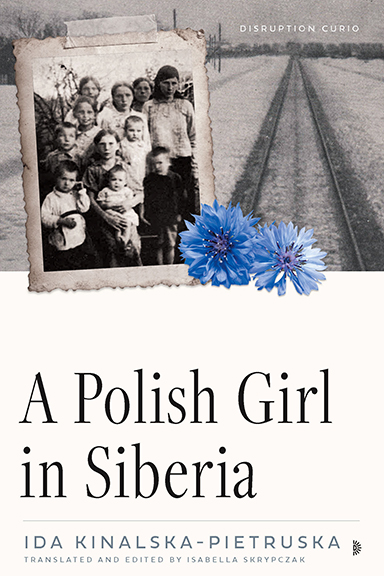
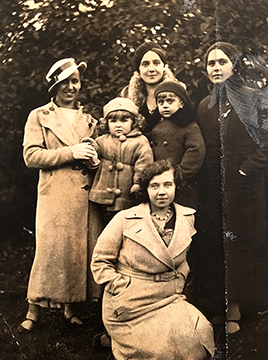
One of them was Ida Kinalska-Pietruska. She was only six years old when, in 1940, Soviet soldiers broke down the door of her home and sent her, together with her mother, into exile — in cattle cars, deep into Stalin’s empire. Her memories, recorded years later from the perspective of a child, remain a haunting testimony of that time.
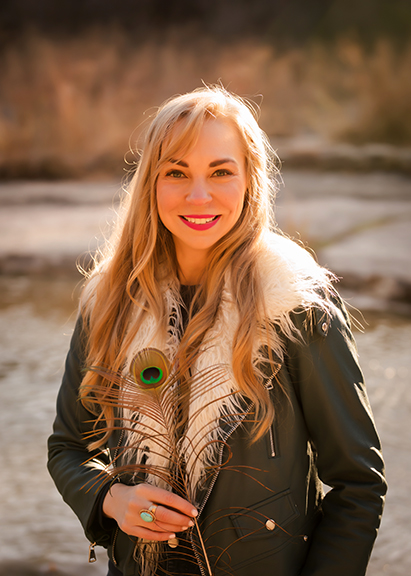
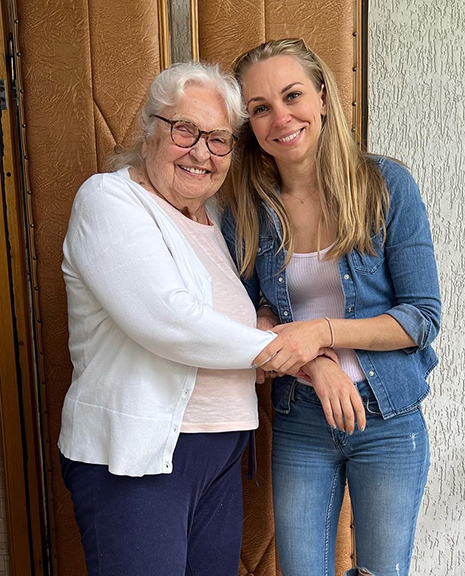
Decades later, her story has been brought to new audiences by her granddaughter, Isabella Skrzypczak, who translated the memoir into English and enriched it with her own reflections. In doing so, she not only preserved a family history, but also gave voice to a larger, often overlooked human experience.
With Isabella Skrypczak — translator of her grandmother Ida Kinalska-Pietruska’s book A Polish Girl in Siberia — Joanna Sokołowska-Gwizdka discusses how family memory shapes subsequent generations, why certain experiences remain invisible in Western narratives of the war, and what it means to tell one’s grandmother’s story to the world.
*
Joanna Sokołowska-Gwizdka:
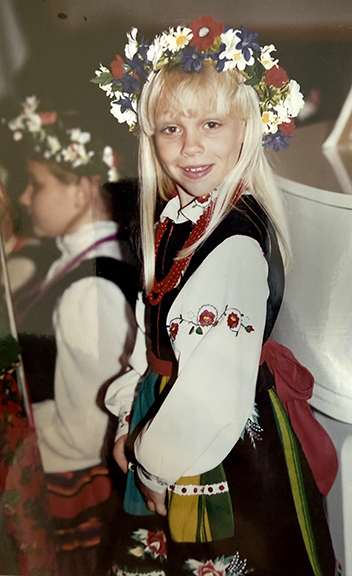
You were born and raised in Houston, yet you speak Polish beautifully. What kind of Poland did you come to know during your childhood visits to your grandmother?
Isabella Skrypczak:
I grew up in a home where Polish was the only language spoken, so it naturally became my first language. My parents sent me to a Polish school in Houston, so Polish identity was always a central part of who I am. But it was the time I spent in Poland with my family that truly shaped me.
The Poland I first encountered in the 1980s was marked by scarcity and grayness — a lack of basic goods, rows of concrete apartment blocks, a certain heaviness in the air. As a child, I felt a quiet sadness there, as if something essential was missing, even within myself.
Then came the 1990s — a country in transition, newly independent, slowly opening itself to the world. There was a sense that Poland was finally beginning to breathe again, although the process was far from easy. I remember small Fiat cars, Polonez vehicles, and even horse-drawn carts still present on the roads. In the countryside, there were houses with thatched roofs, and most families lived in apartment blocks, escaping on weekends to modest garden plots on the outskirts of cities.
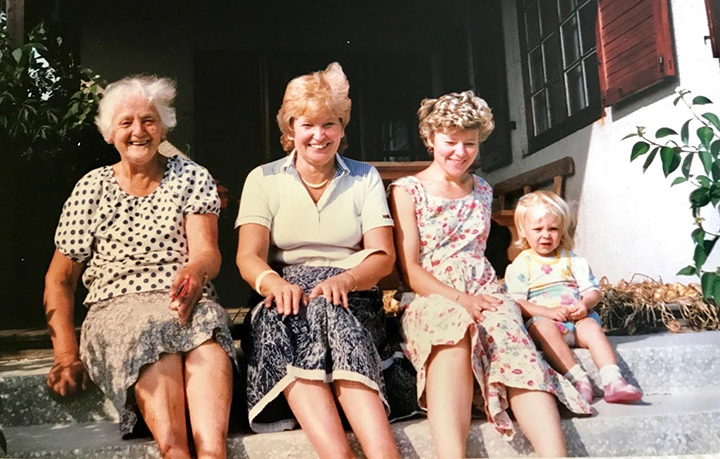
Shops were few, and their shelves often empty. My grandmother treated rural patients, and in return received eggs, cream, or milk — simple exchanges that felt deeply human. There was no internet, only a handful of television channels, so we children lived mostly outdoors, often barefoot, inventing our own worlds. Those memories remain among the most vivid and joyful of my childhood.
By the early 2000s, Poland had changed dramatically. Joining the European Union and NATO, it began to flourish. New buildings appeared, the streets filled with different cars, and there was a sense of renewal. I remember feeling relief — as if Poland was finally being seen and valued.
At that time, I was interning at a law firm, volunteering, and studying abroad at the Warsaw School of Economics. Despite occasional remarks — being called “the American,” or gently teased about my grammar — I felt a deep sense of belonging in Poland. In many ways, more than in the United States, where I often felt like an outsider despite being born there.
Today, the Poland I see is vibrant, stable, and forward-looking — a place where people are consciously working to heal the wounds and traumas of previous generations. I feel grateful to be part of that process.
*
Joanna Sokołowska-Gwizdka:
Your grandmother’s story begins like a scene from a drama — a night raid, Soviet soldiers, deportation. When did you first hear this story?
Isabella Skrypczak:
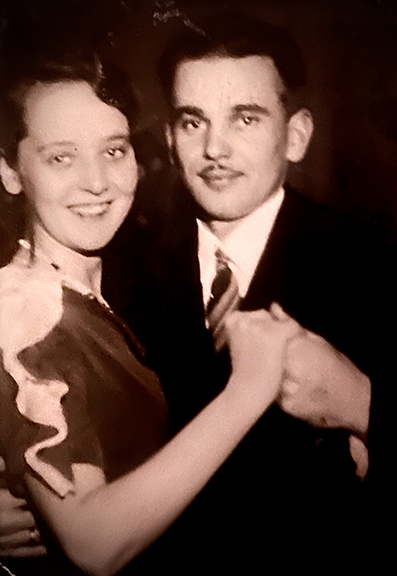
I must have been about two years old. My grandmother was telling someone about that night — how soldiers entered her home with weapons. She didn’t realize I was in the room, listening.
I remember feeling an overwhelming fear, as though the story were happening to me.
Joanna Sokołowska-Gwizdka:
You write that, as a child in Texas, you were afraid of a “Soviet soldier,” even though the war had long ended. Would you say this reflects intergenerational trauma?
Isabella Skrypczak:
Yes — without question.
After years of therapy, personal healing, and studying intergenerational trauma and epigenetics — as well as working with others in similar contexts — I can say with certainty that this was a clear example of inherited trauma. There is substantial research that supports this phenomenon.
Joanna Sokołowska-Gwizdka:
Did your grandmother speak openly about her experiences, or was there a long silence?
Isabella Skrypczak:
She did speak — with family, with colleagues, with neighbors. She shared fragments of her story: the deportation, the hunger, the uncertainty about her father, the people who helped her.
But these were general recollections. She rarely entered into detail.
Even so, we could feel the emotional weight behind her words — the grief of a lost childhood, the fear, the longing. It was only when she wrote everything down that the full depth of her experience became clear — and, with it, the origins of emotions I had carried myself.
Joanna Sokołowska-Gwizdka:
What prompted you to bring this story to an English-speaking audience?
Isabella Skrypczak:
At first, I translated the memoir for my daughter. I wasn’t sure she would be able to read it in Polish one day.
Then the war in Ukraine began.
My family has roots in Lviv, and I felt a deep sense of pain seeing war return to that part of the world. My grandmother took in a young Ukrainian woman and her eight-year-old daughter, Kira. I spoke with them often over FaceTime.
Kira was clearly traumatized — her breathing shallow, her body tense, her responses hesitant. It was unmistakable.
My grandmother said to her:
“Kira, my dear, I know what this is like. Russia invaded my country too. I was afraid too. But I survived — and you will survive as well. You will return home. Right now, you are safe.”
I watched my 88-year-old grandmother comfort that child — as if she were speaking to her younger self.
In that moment, something became very clear to me. I could not remain passive. In Kira, I saw my grandmother — and my daughter.
That was when I decided to translate and publish the book. So that children like Kira could live in peace. So that no child, anywhere in the world, would have to grow up in fear.
*
Joanna Sokołowska-Gwizdka:
How did you approach translating such a deeply personal story into English?
Isabella Skrypczak:
It was a long and demanding process, one that required many pauses — moments to search for the right words. Polish allows for a remarkable range of emotional nuance, and when I first translated my grandmother’s text literally into English, I realized that something essential was missing. The emotional depth, the imagery — the elements that allow a reader to truly enter the experience — were not fully there.
So I had to reshape the narrative. In many places, I expanded descriptions and restructured passages in order to convey not only the meaning, but also the emotional truth of the original.
At some point, I realized that the story did not truly end with my grandmother’s departure from Siberia. I began speaking with her for hours, conducting dozens of conversations to fill in the missing parts. Her two years in Kharkiv were extremely difficult, and her journey back to Poland was far from simple.
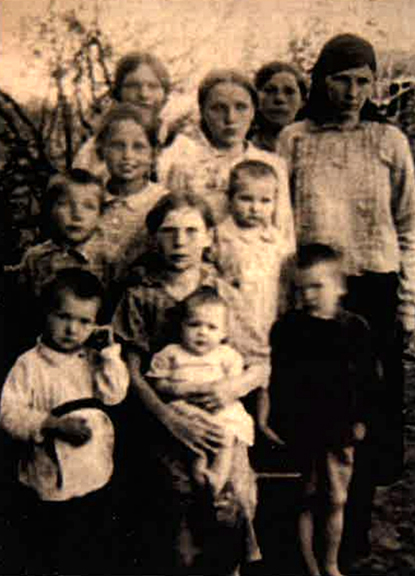
I also spoke with my mother, who sent me archival materials — articles about my great-grandfather, as well as documents detailing my grandmother’s later achievements in medicine. I studied all of these carefully and incorporated them into the book.
When I shared the manuscript with my father, he told me: “Iza, this is excellent. But an English-speaking audience will not understand Soviet terminology or the historical context. You need to provide more background.” He was right.
I turned to historical works — books by Anne Applebaum, Norman Davies, and others — and gradually expanded the contextual framework of the narrative. It was a time-consuming process, because I wanted to be as precise and responsible as possible. The final text was reviewed by my godmother, who has worked with the United Nations and is an outstanding historian, as well as by professional fact-checkers at my publishing house.
Joanna Sokołowska-Gwizdka:
In the book, you reflect on how American education covers World War II extensively, yet says very little about the deportations of Poles to the Soviet Union. Why do you think this part of history remains relatively unknown?
Isabella Skrypczak:
The Soviet Union was part of the Allied forces. The United States, together with Stalin, emerged victorious from the war. Afterward, the U.S. became involved in the Nuremberg Trials, and by that time, the Cold War had already begun.
Including Stalin in those processes would have significantly escalated tensions. As a result, certain aspects of history — including the fate of deported Poles — became politically inconvenient and were largely left unaddressed.
In a sense, this history was pushed aside in order to avoid further conflict.
Joanna Sokołowska-Gwizdka:
Were there moments during the translation when the story stopped being “a story” and became something deeply personal and emotionally overwhelming?
Isabella Skrypczak:
Yes — many times.
The most difficult passages for me were those describing my grandmother’s separation from her father, the experience of hunger, the loneliness, and the impossibility of returning home.
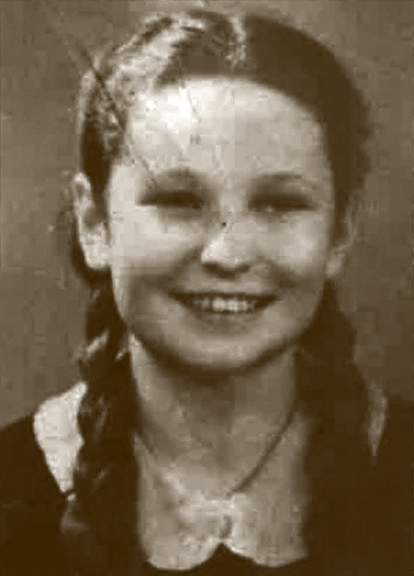
It felt as though entire generations of family history had been erased — as if they had never existed.
What affected me most profoundly was the dehumanization — the stripping away of dignity, of identity.
Joanna Sokołowska-Gwizdka:
Your grandmother’s story is not only about suffering, but also about extraordinary resilience. What qualities do you admire most in her?
Isabella Skrypczak:
She has an extraordinary intuition. She connects with people very easily — there is something about her that naturally draws others in.
And she carries within her an immense inner strength. It is something you can feel — something she radiates.
Joanna Sokołowska-Gwizdka:
After returning from Siberia, your grandmother became a distinguished physician and scientist — a diabetologist and endocrinologist, and a recipient of multiple honorary doctorates. Do you believe her childhood experiences influenced her later path?
Isabella Skrypczak:
Yes, I do.
I believe her achievements are deeply connected to what she received from others during her time in Siberia — acts of kindness, gestures of the heart.
In the midst of fear and displacement, she encountered humanity. And I think she carried that energy within her throughout her life — passing it on to her patients and to everyone she encountered.
Joanna Sokołowska-Gwizdka:
You describe translating this book as “an act of love.” Do you feel that this publication closes a chapter in your family’s history — or opens a new one?
Isabella Skrypczak:
It allows my family to understand ourselves more deeply — our relationships, our emotional world.
It helps us recognize our pain and release it — to separate our own lived experiences from the trauma we have inherited.
It teaches us how to honor our family history without passing its weight on to future generations.
Joanna Sokołowska-Gwizdka:
Do you feel that, through this book, you are giving voice not only to your grandmother, but to an entire generation of children deported to Siberia?
Isabella Skrypczak:
Absolutely.
This is not only the story of my grandmother, or even of Polish deportees. It is also the story of many other nations — Russian, Ukrainian, Belarusian, Jewish, and people from the Baltic countries.
There are many of us in the world who share this history.
Joanna Sokołowska-Gwizdka:
What universal message do you believe readers can take from this book today?
Isabella Skrypczak:
That the force of life is the most powerful force in the world.
That human pain is real — and deserves to be seen and met with compassion.
That acts of kindness matter.
And that a human being, stripped of labels, is sacred.
If we take the time to understand our family histories and work through intergenerational trauma, we may find peace.
And perhaps — just perhaps — we may move closer to a world without war.
*
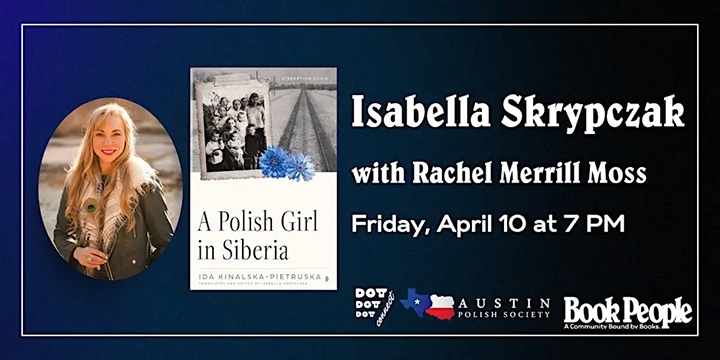
We invite you to a meeting with the author at the Book People bookstore in Austin:
The interview shows how translation can preserve a family memory while making an overlooked historical experience accessible to new readers. The connection between Ida’s testimony and the care offered to Kira makes that legacy feel especially immediate.