

Ahead of her recital in Austin, Texas, Polish soprano Dominika Zamara speaks about artistic journeys, the meaning of voice, and the inner work behind performance. She reflects on Italy as her artistic home, the emotional truth of opera, and why music continues to transcend borders.
Interview by Joanna Sokołowska-Gwizdka.
Joanna Sokołowska-Gwizdka: You come from Wrocław, but you left for Italy very early. What shaped that decision?
Dominika Zamara: It felt like destiny. Italy was, for me, a kind of Promised Land. Opera was born there, and I knew I had to go. I received a scholarship to the Conservatory in Verona, where I completed my vocal studies. Italy also gave me my operatic debut—Puccini’s La Bohème in Padua. Only by living there can you truly enter into a kind of symbiosis with opera.
Joanna Sokołowska-Gwizdka: You worked with remarkable teachers in Italy. Is there someone who left a lasting impression?
Dominika Zamara: There are many, but Maestro Enrico De Mori was especially important. He worked with Maria Callas and had a profound influence on me, both musically and personally. He gave me lessons, supported my development, and conducted my operatic debut. He was demanding—nothing escaped his attention—but he also had great generosity. He believed in me, and that stays with me.
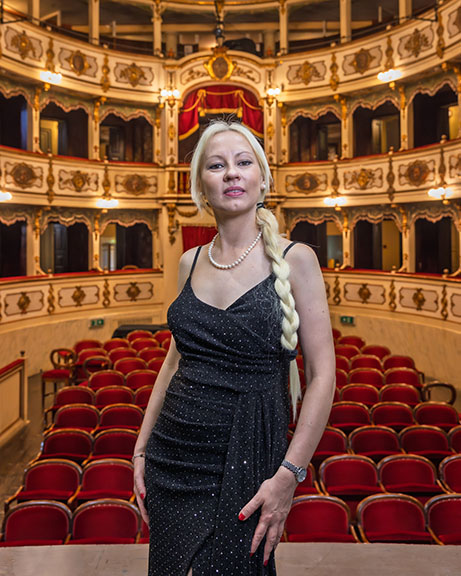
Joanna Sokołowska-Gwizdka: You’ve performed on major stages worldwide—from Carnegie Hall to European opera houses. How do audiences differ between Europe and the United States?
Dominika Zamara: American audiences are very warm and open. In Europe, audiences can be more reserved, sometimes more analytical. Italy is unique—listeners are often deeply knowledgeable, even critical, many knowing entire librettos by heart. But what I truly appreciate in the U.S. is that immediate warmth.
Joanna Sokołowska-Gwizdka: Your repertoire ranges from Baroque to contemporary music. What connects these different worlds?
Dominika Zamara: Music itself. If we look at someone like Vivaldi, he was already innovative in his time, and his influence continues to this day. I see historical periods as a way of understanding evolution. At the same time, I am fortunate that contemporary composers write for my voice. I enjoy premiering new works—it feels like being part of something alive, still unfolding.
Joanna Sokołowska-Gwizdka: Chopin holds a special place in your repertoire. How do you approach his songs?
Dominika Zamara: Chopin’s songs are, for me, the essence of the Polish soul. They carry tradition, memory, even the rhythms of Polish dances. I have recorded and performed them in many places, including Teatro alla Scala. I sing them with a sense of longing—something deeply rooted in my identity.
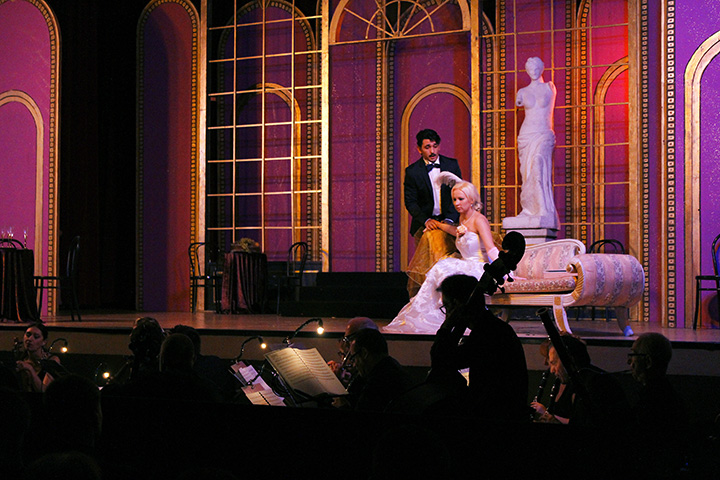
Joanna Sokołowska-Gwizdka: You often promote Polish music abroad. How is it received?
Dominika Zamara: Very well. Many listeners know only Chopin’s piano works and are surprised by his vocal music. When they hear it, they are moved. With composers like Karłowicz or Moniuszko, there is often a sense of discovery—especially in places like Italy, where audiences respond with genuine enthusiasm.
Joanna Sokołowska-Gwizdka: What can audiences in Texas expect from your recital?
Dominika Zamara: A surprise [laughs]. There will certainly be Polish songs, including Chopin, as well as Italian bel canto repertoire.
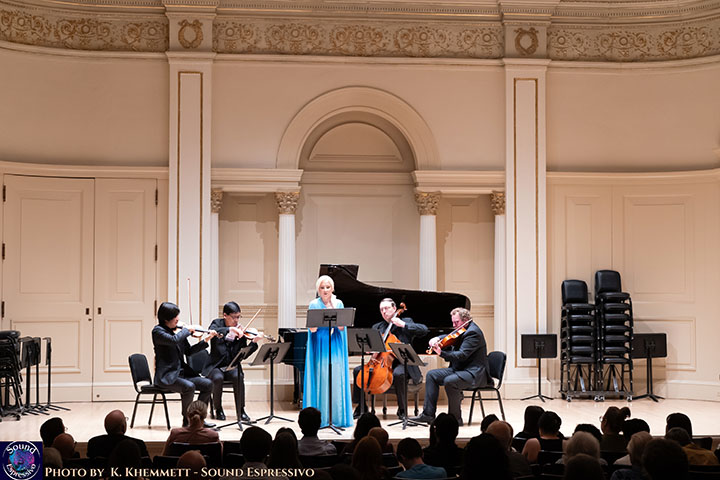
Joanna Sokołowska-Gwizdka: What do you discover about yourself through singing?
Dominika Zamara: It is a continuous process of self-reflection. Each role reveals something new. Sometimes you are pushed physically or emotionally, especially in opera, where you must fully enter the character. Working with a score for hours is like standing in front of a mirror—it’s a confrontation with yourself, with the text, with emotion.
Joanna Sokołowska-Gwizdka: Is there still a role you dream of?
Dominika Zamara: Of course. Art has no boundaries. I am always developing, always learning new repertoire. In recent years, I’ve been involved in many world premieres of contemporary works—in Italy, Poland, and the U.S. I collaborate with the New York Composers Circle and perform premieres, including at Carnegie Hall.
About the Artist
Dominika Zamara is a Polish soprano and graduate of the Academy of Music in Wrocław. She continued her studies in Italy, including at the Conservatory in Verona, working with distinguished teachers such as Alida Ferrarini, Bruno Pola, and Enrico De Mori. She made her operatic debut in 2010 as Mimì in Puccini’s La Bohème.
She has performed internationally across Europe, the United States, Latin America, Asia, and Australia. Her appearances include Carnegie Hall and Lincoln Center in New York, Teatro alla Scala in Milan, Teatro Olimpico in Vicenza, and the Protomoteca Hall in Rome. Her repertoire spans opera, art song, chamber music, and contemporary works.
She is the recipient of numerous awards, including the American Prize (2023) in chamber vocal music, and has been featured in encyclopedias of Polish musicians worldwide. In 2023, she joined the New York Composers Circle.
Recital in Austin
Austin Polish Society invites you to a recital by Dominika Zamara
May 3, 2026 | 5:30 PM
Draylen Mason Music Studio
KMFA Classical 89.5
41 Navasota St, Austin, TX