


*
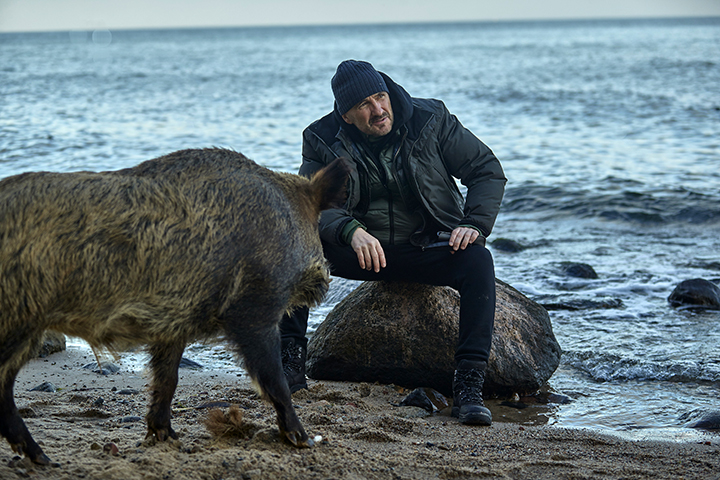
Joanna Sokołowska-Gwizdka interviews Maciej Żak, director of the film Memories of Insignificance.
Maciej Żak’s film Memories of Insignificance explores a subject that contemporary society often prefers to look away from—the mental health crisis of a middle-aged man, his loneliness, and suicidal thoughts. Yet it is far from the bleak drama one might expect. With irony, subtlety, and a sense of humor, the director addresses questions of life and death, creating a portrait of a man who seemingly has everything, yet struggles to find meaning in his own life.
The film, featured at the 21st Austin Polish Film Festival, invites a conversation about male vulnerability, the passage of time, unfulfilled dreams, and the need for human connection. As the director emphasizes, he did not set out to tell a story about suicide, but about the human condition. And although the story begins with tragedy, there is also room for hope.
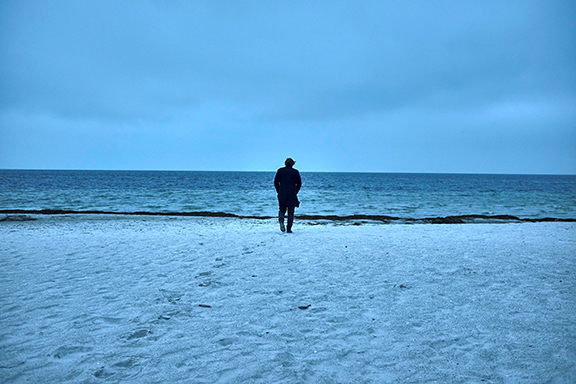
Joanna Sokołowska-Gwizdka: When I watched Memories of Insignificance, I found myself wondering whether I was watching a drama or a comedy. The subject is extremely serious, yet there is humor, sometimes even absurdity. How would you describe the genre of your film?
Maciej Żak: I came up with the term “serious comedy” specifically for this film. I deal with difficult subjects that touch on the deepest aspects of human experience, but I approach them with a sense of perspective and humor.
Comedy is, after all, a very broad concept. Chekhov wrote comedies, although it would be difficult to say that his plays are particularly funny or that they end happily. In Poland, however, comedy is generally associated with light entertainment. I was concerned that audiences might come to the film with the wrong expectations.
If I had made this film in England, I would have called it a black comedy without hesitation. The British have a wonderful understanding of that kind of humor. There is also a very fitting English term, dramedy—a combination of drama and comedy.
I was particularly struck by the conversations between the protagonist and his wife. There is something both funny and sad about them. A man is going through an inner crisis, yet an ordinary conversation reduces his experience to trivial, everyday matters. We laugh, but there is sadness behind that laughter.
That is very close to the way I see the world. My literary writing, from which this film emerged, often relies on this kind of duality. The world can be dark, and the characters struggle with profound existential questions, yet they are not without humor or the ability to see things from a distance.
Memories of Insignificance is particularly important to me because it is based on one of my short stories. I have written quite a few literary pieces that I have never published. Perhaps I will finally find the courage to do so.
In my stories, the external and internal worlds exist on equal terms. Reality blends with imagination, memory, and even religious experience. After all, the ghost of the protagonist’s father appears in the film. This element of magical realism is a natural part of my storytelling.
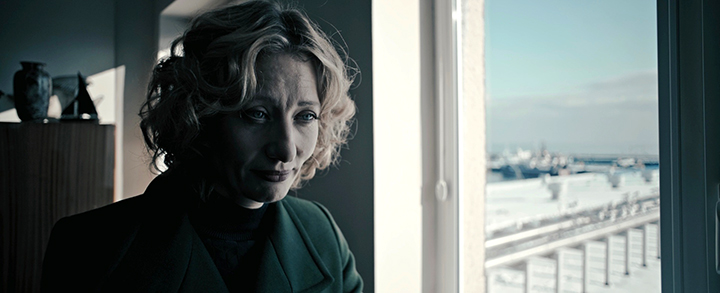
Your protagonist is a man in his fifties. He has a family, an established career, and has achieved success. From the outside, he seems to have everything. Yet he is going through a profound crisis. What drew you to this particular kind of character?
Above all, I wanted to tell this story from a male perspective.
Think about how men have been portrayed in cinema for decades. The male protagonist is usually strong, decisive, unyielding, someone who can handle any situation. There is hardly any room for vulnerability.
Yet men are human too. They are sensitive, they experience disappointment, fear, and uncertainty. They often struggle with the social and family roles imposed upon them. We supposedly live in a world of gender equality, yet men are still expected to be strong, responsible, and capable of carrying every burden.
My protagonist has achieved success. He has a family, a child, and a stable life. But there is also his inner life. A moment comes when he realizes that not everything has turned out as he hoped. That perhaps he has failed to achieve what truly mattered most to him.
When we are young, we have dreams, sometimes naive, but deeply meaningful. Then come careers, responsibilities, and everyday routines. And suddenly, after turning fifty, a person begins to wonder what has actually become of those dreams. That awareness of unfulfilled aspirations can lead to a serious crisis.
After watching the film, I said to my husband, “This is a story about how men are human too.” From childhood, boys are told, “Boys don’t cry,” “Be brave,” “Don’t be a sissy.” This kind of upbringing leaves very little room for showing vulnerability.
Exactly. Men are human too. And often deeply sensitive human beings.
There is another important aspect of this story. Contemporary men have to find their place in a world where women’s position has changed dramatically. Women have become independent and strong, and they are achieving professional success. Some men find it difficult to come to terms with that.
This is not about questioning women’s emancipation, but about the psychological struggle of a man who realizes that a woman may be stronger than he is, more independent, and better equipped to deal with life.
My protagonist struggles with this as well. He seeks validation of his self-worth outside his marriage. He has a mistress, but that does not resolve his inner conflict.
I wanted to portray a man with all his weaknesses, mistakes, and unfulfilled aspirations. Not to idealize him, but not to judge him either.
The film also explores the subject of death. I have the impression that modern society tries to push death out of our consciousness.
We live in a world where death has practically ceased to exist as a natural part of everyday life. In the past, people died at home, surrounded by their families. Children witnessed old age, illness, and the passing of loved ones. Death was part of life.
Today, we have pushed it out of our everyday experience. It exists in films, literature, and the media, but until it affects us personally, we prefer not to think about it.
My film is not intended to dwell on death for its own sake, but rather to confront its presence while also asking what gives life meaning.
One of the most moving aspects of the film is the loneliness of a man who is, after all, surrounded by other people. Is his inability to communicate with those closest to him one of the sources of his crisis?
I think so. My protagonist has a family, but that does not mean he knows how to communicate with them, or that anyone truly understands what he is going through.
You can live among people and still feel utterly alone. Men often find it difficult to talk about their emotions. They were never taught how to do so, and they are not accustomed to revealing vulnerability. Sometimes they do not even know how to ask for help.
That is why I would not want this film to be seen solely as a story about suicide. Above all, it is a story about a human being trying to understand himself.
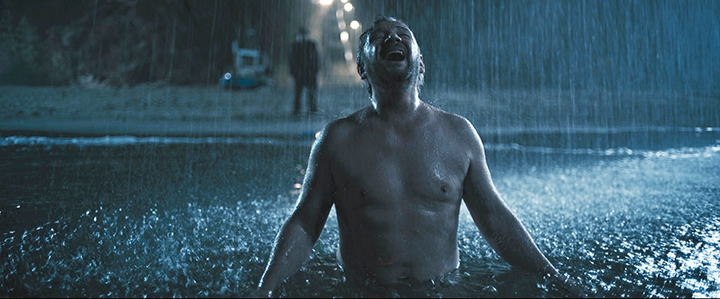
Joanna Sokołowska-Gwizdka: The subject of suicide may discourage some people from seeing the film. Yet I believe a film festival should not only entertain audiences but also raise awareness and encourage empathy. How have audiences in Poland responded to the film?
Maciej Żak: What surprised me most was that people left the cinema not feeling depressed, but often genuinely uplifted. They had expected a much darker film, but instead saw a story that allowed them to look at their own lives from a different perspective.
I remember the reactions after screenings at the Warsaw Film Festival. People would say, “My God, I’m so glad I saw this film.”
Particularly meaningful to me were screenings organized by therapists and meetings with people who had experienced mental health crises themselves or had encountered them within their families. Some therapists told me they would like to show the film to their patients. That was deeply moving. I never intended to make a therapeutic film, yet people found something in it that could offer hope.
While preparing for our conversation, I looked at suicide statistics in Poland. I was struck by the scale of the problem, particularly among men. Did these statistics influence the making of the film?
I was aware of them while working on the screenplay, and I found them deeply disturbing. In Poland, the vast majority of people who die by suicide are men.
But I did not want to make a film about statistics. What mattered most to me was the individual—a particular human being and his personal tragedy.
During discussions after the screenings, I also found myself wondering whether we truly understand how men experience emotional crises and whether we know how to reach them.
And what do you think a man going through a crisis needs most?
I think, above all, the presence of another person.
Men often withdraw into themselves and find it difficult to talk about their suffering. That is why simply encouraging them to talk is not always enough. Another form of connection is needed as well.
Words are not always necessary. Sometimes you simply need to be there. To let another person feel that he is not alone, without pressuring him to open up, but creating a space for closeness and connection.
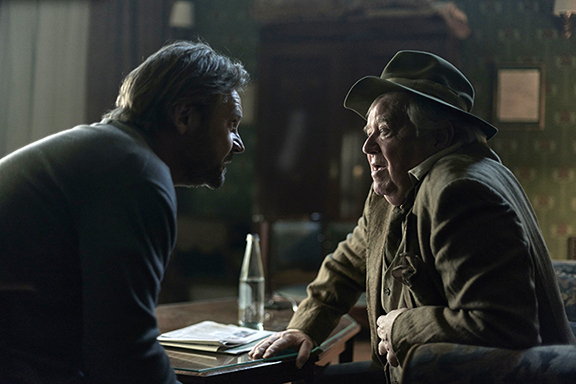
Joanna Sokołowska-Gwizdka: Another important character in the film is the protagonist’s father, who appears as a ghost. Is their relationship meant to show how the experiences of one generation shape the lives of the next?
Maciej Żak: Yes. It raises questions about inherited tendencies and the fear of repeating one’s father’s fate. But I did not want to present this in an overly simplistic or definitive way.
We are shaped by many experiences, including those within our families, and we often try to understand ourselves through the stories of those closest to us.
The father had his weaknesses and made mistakes. The same is true of the protagonist. He is not innocent either. He was unfaithful to his wife and did not always understand his daughter’s needs.
This is not a story about a perfect man who has been wronged by the world. It is about someone who has made mistakes of his own.
And yet, there is a possibility of transformation in this story. The protagonist begins to recognize things he had previously overlooked, particularly in his relationship with his daughter.
Exactly. It is only in these extraordinary circumstances that he begins to understand that he should be there for his daughter, give her more attention, and truly take care of her.
Perhaps he comes to this realization late, but he makes an attempt to change, to put something right in his life. That is why I do not consider this a pessimistic film. There is a great deal of hope in it.
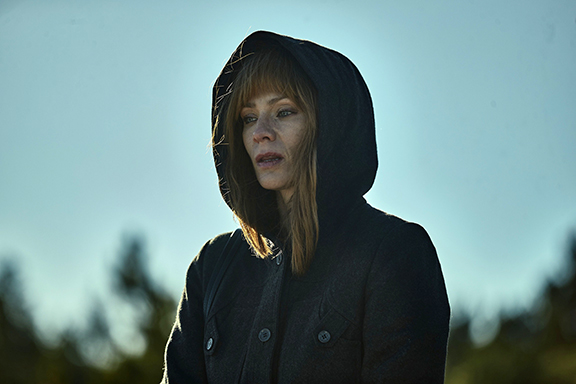
Joanna Sokołowska-Gwizdka: You said that this is primarily a film about men. But is it also a film for women?
Maciej Żak: Of course. I would even say that, in a special way, it is intended for women.
If you really want to understand the men in your lives, watch this film.
It portrays a man in a way we are not accustomed to seeing. Without armor, without the heroic pose, without pretending to be strong.
My characters stand before the audience almost naked, exposing their weaknesses, fears, mistakes, and unfulfilled expectations. This is a film about a man who stops playing the role society has assigned him.
You describe the film as a personal statement. Does contemporary cinema still leave room for this kind of reflection, or is it becoming increasingly driven by commercial interests?
I have the impression that what matters more and more are emotions that can be quickly stirred up and commercially exploited. The media thrive on sensationalism, conflict, and polarization. A thoughtful conversation seems less appealing than an argument, yet it is through conversation that we can begin to understand another human being.
I am interested in something more than simply provoking an intense emotional reaction. I want my stories to encourage reflection on human nature and the world around us.
That is why I have been writing more and more. Literature gives me the opportunity to express myself in a more personal way. If even one person understands what I wanted to say, if my story makes someone stop and reflect, I consider that a success.
Art does not have to be fashionable or conform to prevailing trends.
Interview conducted by Joanna Sokołowska-Gwizdka.
Maciej Żak’s film “Memories of Insignificance” will be screened at the 21st Austin Polish Film Festival, taking place November 5–8, 2026, at AFS Cinema in Austin, Texas.


